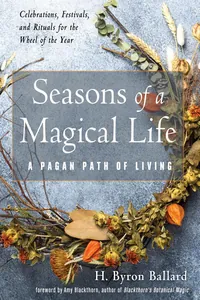
Ostara

 84
84

Ostara
Edain McCoy’s Ostara offers a competent, if somewhat conventional, primer on the spring equinox festival. McCoy’s strength lies in her clear presentation of established lore, making the complex web of seasonal symbolism accessible to newcomers. The book effectively outlines the common associations of Ostara with fertility, rebirth, and the balance of light and dark. However, the work rarely ventures beyond well-trodden paths. While the 2002 publication date places it within a wave of popular Neopagan literature, it lacks the critical historical depth found in contemporary scholarly works like those by Ronald Hutton, which question some of the reconstructed pagan traditions. A notable passage is its explanation of the Norse goddess Eostre, often cited as a namesake, though its historical basis remains debated. For those seeking a straightforward guide to contemporary Ostara practices, it serves its purpose, but those desiring novel interpretations or rigorous historical deconstruction may find it wanting. It provides a solid foundation for understanding the festival's common narrative.
📝 Description
84
Edain McCoy's 2002 book Ostara examines the pagan festival of the vernal equinox.
Ostara, written by Edain McCoy and published in 2002, focuses on the pagan festival of Ostara, which aligns with the vernal equinox. The book details the historical background and current uses of this spring celebration. It discusses the recurring patterns of life, death, and renewal as seen in the season, linking ancient farming societies with modern spiritual practices. McCoy details the mythological figures and natural events connected to this period.
This book is for individuals interested in the Wheel of the Year, particularly those wanting a better grasp of the spring equinox from a pagan and Wiccan viewpoint. It suits practitioners aiming to enhance their seasonal rituals with historical information and symbolic depth. Readers studying comparative mythology, folklore, or the development of religious festivals will also find useful content. The work is appropriate for those who prefer a scholarly yet approachable look at esoteric topics.
Published in the early 2000s, Ostara emerged during a period of increased public interest in Neopaganism and Wicca. This era saw more accessible guides and historical examinations of pagan traditions become available. McCoy's work fits within this context, contributing to a wider academic and popular engagement with pre-Christian European religious practices. Unlike some scholars who focused on historical accuracy, McCoy synthesized existing lore and offered practical interpretations for contemporary practitioners.
💡 Why Read This Book?
• Gain practical ritual insights: Learn specific correspondences for herbs, colors, and deities relevant to Ostara, enabling you to enhance your own spring equinox celebrations beyond generic themes. • Understand seasonal mythology: Explore the historical and mythological underpinnings of Ostara, including the potential connection to the goddess Eostre, to deepen your appreciation of the spring festival's symbolic layers. • Contextualize modern practice: Discover how the themes of rebirth and fertility in Ostara connect to broader pagan traditions and the cyclical Wheel of the Year, providing a framework for your spiritual path.
⭐ Reader Reviews
Honest opinions from readers who have explored this book.
❓ Frequently Asked Questions
What is the primary focus of Edain McCoy's book Ostara?
The book primarily focuses on the pagan festival of Ostara, commonly associated with the vernal equinox. It explores its historical roots, mythological connections, and modern applications within Neopagan and Wiccan traditions.
When was Ostara by Edain McCoy first published?
Edain McCoy's book Ostara was first published in 2002, placing it within a period of growing interest in Neopaganism and seasonal celebrations.
What key themes are explored in the book Ostara?
Key themes include fertility, rebirth, the awakening of nature, the symbolism of the spring equinox, the balance of light and dark, and the divine feminine and masculine in their spring aspects.
Who is the intended audience for Ostara?
The book is intended for practitioners of pagan and Wiccan traditions, students of mythology and folklore, and anyone interested in understanding the spring equinox festival from a historical and spiritual perspective.
Does the book discuss the goddess Eostre?
Yes, the book discusses the goddess Eostre, who is often cited as a namesake for the festival, though it acknowledges the ongoing scholarly debate regarding the historical evidence for her worship.
What kind of approach does McCoy take in Ostara?
Edain McCoy takes a scholarly yet accessible approach, synthesizing existing lore and offering practical interpretations for contemporary adherents of pagan traditions.
🔮 Key Themes & Symbolism
Spring Equinox Symbolism
The book meticulously details the symbolic significance of the vernal equinox, known as Ostara in many pagan traditions. It emphasizes themes of balance, as day and night are of equal length, and the subsequent shift towards longer daylight hours. This celestial event is linked to the awakening of the earth from winter dormancy, symbolizing new beginnings, fertility, and the resurgence of life. McCoy explores how these concepts are reflected in nature's cycles and in the spiritual journey of individuals, making the equinox a potent time for personal renewal and growth.
Deities of Fertility and Rebirth
Central to the Ostara festival are the divine figures associated with fertility, new life, and the generative forces of nature. The work examines various pantheons, often referencing the Norse goddess Eostre (or Ostara) as a potential namesake for the festival, though acknowledging the limited historical evidence. It also discusses the archetypal Great Mother and the youthful God, representing the earth's bounty and the burgeoning energies of spring. These deities embody the cyclical nature of life, death, and rebirth, offering a framework for understanding creation and sustenance.
The Wheel of the Year
Ostara is presented as a crucial point within the larger framework of the Wheel of the Year, a concept central to many modern pagan paths, particularly Wicca. This cyclical model divides the year into eight seasonal festivals, marking the earth's journey through its transformations. Ostara represents the transition from the introspective energies of winter to the outward-expanding forces of spring. Understanding Ostara's place on the Wheel helps practitioners contextualize their spiritual work throughout the year, highlighting themes of growth, balance, and the increasing power of the sun.
Ritual and Practice
Beyond historical and mythological exploration, McCoy provides practical guidance for celebrating Ostara. This includes suggestions for creating altars, developing personal rituals, and incorporating correspondences such as specific colors (like pale yellow and green), flowers (daffodils, tulips), and scents associated with spring. The book encourages practitioners to connect with the energies of the season through offerings, meditation, and activities that honor the earth's renewal. These elements aim to empower individuals to actively participate in the spiritual significance of the spring equinox.
💬 Memorable Quotes
Direct passages from the work, attributed to the author.
“The spring equinox marks the moment when light and darkness achieve perfect balance, before light begins its ascendant reign.”
— This highlights the astronomical significance of Ostara, emphasizing the equilibrium of day and night as a metaphor for inner balance and the turning point towards growth and increased energy.
“Many traditions link the awakening of the earth to the stirring of fertility deities, embodying the promise of new life.”
— This points to the widespread mythological association of spring with powerful feminine and masculine divine forces responsible for procreation and the abundance of the natural world.
“The goddess Eostre, though her historical worship is debated, lends her name to the season and embodies its themes of dawn and renewal.”
— This acknowledges the common attribution of the festival's name to a Germanic goddess, while also addressing the scholarly uncertainty surrounding her actual historical cult.
“Ostara is a time for celebrating beginnings, whether it's the first green shoots pushing through soil or a new phase in one's spiritual path.”
— This emphasizes the personal and spiritual application of Ostara's themes, encouraging practitioners to see the season as an opportune moment for personal transformation and setting intentions.
“Rituals for Ostara often incorporate symbols of eggs and hares, ancient emblems of fertility and abundant life.”
— This identifies specific, commonly used symbols in Ostara celebrations, linking them to their deep roots in ancient fertility traditions and their representation of potent life forces.
🌙 Esoteric Significance
Tradition
Ostara fits within the broad spectrum of Western Esotericism, specifically its modern pagan and Wiccan branches. It draws upon interpretations of pre-Christian European folklore and mythology, attempting to reconstruct or adapt seasonal observances. While not strictly Hermetic, Gnostic, or Kabbalistic, it shares with these traditions an emphasis on symbolic understanding, cyclical time, and the divine manifested in nature. It represents an effort to create a coherent spiritual cosmology rooted in the earth's cycles, aligning with the broader Neopagan movement's search for pre-industrial, nature-centered spiritual paths.
Symbolism
Key symbols explored include the egg, representing potential, rebirth, and the unmanifested life force, often associated with fertility goddesses. The hare (or rabbit) is another prominent symbol, linked to fecundity, speed, and the wild, untamed aspects of spring. The balance of light and dark at the equinox itself is a potent symbol of equilibrium, transition, and the waxing power of the sun, signifying the triumph of life over the dormancy of winter.
Modern Relevance
Contemporary practitioners of Wicca, Druidry, and various forms of Neo-Paganism continue to draw upon the principles and practices outlined in works like McCoy's *Ostara*. The book's emphasis on celebrating seasonal cycles remains relevant for those seeking nature-based spirituality and connection to the earth's rhythms. Thinkers and groups focused on ecospirituality and sustainable living often find resonance in the themes of renewal and fertility inherent in the Ostara festival.
👥 Who Should Read This Book
• Beginning practitioners of Wicca and Neo-Paganism: Those new to seasonal celebrations will find a clear introduction to the history, symbolism, and ritual aspects of the spring equinox festival. • Students of folklore and comparative religion: Individuals interested in the evolution of seasonal festivals and the mythological figures associated with spring will gain valuable contextual information. • Experienced pagans seeking ritual enrichment: Practitioners looking for specific ideas and deeper symbolic understanding to enhance their Ostara rituals will benefit from the detailed correspondences and interpretations.
📜 Historical Context
Edain McCoy's *Ostara*, published in 2002, emerged during a significant period for Neopagan literature. The early 2000s witnessed a burgeoning public and academic interest in earth-based spiritualities, following the foundational work of scholars like Margaret Murray and the popularization efforts of figures like Gerald Gardner. McCoy's book contributed to this trend by offering a focused exploration of the spring equinox festival, a key observance within the Wheel of the Year framework common in Wicca and other modern pagan paths. This period saw a proliferation of books aimed at practitioners, often synthesizing folklore, mythology, and ritual practice. While McCoy's work provided accessible interpretations for adherents, it existed alongside more critical historical scholarship. For instance, authors like Ronald Hutton were publishing extensively on the history of witchcraft and paganism, questioning the historical accuracy of some reconstructed traditions and offering more nuanced views on the origins of modern practices. McCoy's contribution lies in its direct engagement with ritual application rather than extensive historical revisionism, providing a guide for those seeking to actively celebrate the season.
📔 Journal Prompts
The awakening earth's promise: How does the concept of new beginnings at Ostara relate to your personal growth aspirations?
Reflect on the symbolism of the egg in relation to potential within your life.
Consider the balance of light and dark: How do you currently integrate opposing forces in your daily existence?
Explore the role of fertility deities in your understanding of creation and abundance.
Connect the themes of Ostara to your own experiences of seasonal change and renewal.
🗂️ Glossary
Ostara
The pagan festival typically celebrated around the vernal equinox, symbolizing spring, fertility, and rebirth. It is often associated with the Germanic goddess Eostre.
Vernal Equinox
The astronomical moment when the Sun crosses the celestial equator, resulting in day and night being of approximately equal length everywhere on Earth. Marks the beginning of spring in the Northern Hemisphere.
Wheel of the Year
A cyclical calendar used in many modern pagan traditions, particularly Wicca, marking eight seasonal festivals (solstices, equinoxes, and cross-quarter days).
Eostre
A Germanic goddess of dawn and spring, often cited as the namesake of the Easter and Ostara festivals, though historical evidence for her worship is limited.
Fertility Symbols
Objects or images representing the power of procreation and abundance, such as eggs, hares, seeds, and blooming flowers, commonly associated with spring festivals.
Correspondences
In esoteric traditions, these are symbolic associations between elements, colors, herbs, deities, and specific times or concepts, used to enrich ritual practice.
Neo-Paganism
A modern religious movement encompassing various traditions, often drawing inspiration from ancient pagan beliefs and practices, with an emphasis on nature and polytheism.
🔮 Readers Also Liked
Browse all →







More by Edain McCoy
All books →



More Free Witchcraft & Paganism Books
View all →