Oriental mysticism

 75
75

Oriental mysticism
E. H. Palmer’s *Oriental Mysticism* offers a welcome, if somewhat dry, academic survey of Eastern spiritual traditions. Unlike many popular accounts, Palmer grounds his discussion in the historical and philosophical contexts from which these practices arose, a strength that lends the work significant authority. His explanation of the concept of *Nirvana* in Buddhism, for example, meticulously traces its development and distinguishes it from simpler notions of oblivion, highlighting its complex role in the Eightfold Path. However, the book's academic tone, while its virtue, can also be its limitation; the prose is dense and occasionally lacks the evocative power needed to fully convey the experiential dimensions of mysticism. A passage detailing the intricacies of Tantric visualization, while accurate, feels more like a lecture than an initiation. Nevertheless, for its scholarly depth and commitment to accurate portrayal, *Oriental Mysticism* serves as a solid, if uninspiring, introduction to its subject matter.
📝 Description
75
E. H. Palmer's Oriental Mysticism was first published in 2017.
This 2017 publication by E. H. Palmer offers a scholarly examination of mystical traditions from the East. It aims to move past common superficial accounts by detailing the philosophical ideas and practices that shape these spiritual paths. Palmer structures the book to provide a clear overview, treating the diverse spiritual scene in Asia not as a single entity, but as a collection of distinct yet related systems of thought and practice.
This work is suited for students of comparative religion, philosophy, and esoteric studies who have some background in intellectual inquiry. Palmer addresses complex theological and metaphysical ideas directly. Readers looking for a solid introduction to Eastern spiritual philosophies, their history, and their main principles will find this book useful. It is especially recommended for those who value academic seriousness when discussing subjects often treated in popular, less rigorous ways.
Palmer's book addresses "Oriental mysticism" within the context of late 19th and early 20th century Western interest in Eastern philosophies. This period saw figures like Helena Blavatsky and the Theosophical Society popularize Eastern concepts. Palmer's work represents an academic effort to offer more historically accurate and detailed accounts of these traditions. It seeks to distinguish Eastern mystical practices from Western esoteric currents, providing a grounded categorization of diverse spiritual beliefs and practices.
💡 Why Read This Book?
• Gain a structured understanding of core Eastern spiritual philosophies, such as the Buddhist concept of *Nirvana*, moving beyond superficial interpretations. • Appreciate the historical development of mystical thought in the East, understanding how figures and movements shaped distinct traditions around the late 19th century. • Learn about the symbolic language and metaphysical frameworks of traditions like Yoga, differentiating them from Western esoteric systems.
⭐ Reader Reviews
Honest opinions from readers who have explored this book.
❓ Frequently Asked Questions
What specific Eastern traditions does E. H. Palmer's *Oriental Mysticism* cover?
The book explores a range of traditions, including Hinduism, Buddhism, and Taoism, examining their unique mystical dimensions and philosophical underpinnings.
When was *Oriental Mysticism* originally written and when was it first published?
While the concepts explored are historical, the edition available from Esoteric Library was first published in 2017, making it a modern edition of foundational scholarship.
Is E. H. Palmer considered a mystical practitioner or an academic scholar?
Palmer is primarily recognized as a scholar and orientalist, approaching the subject matter with academic rigor and historical analysis rather than as a practicing mystic.
How does *Oriental Mysticism* differ from popular books on Eastern spirituality?
This work distinguishes itself through its scholarly depth, historical contextualization, and avoidance of sensationalism, focusing on the philosophical and theological aspects.
What kind of reader would benefit most from *Oriental Mysticism*?
Students of comparative religion, philosophy, and serious seekers interested in the academic study of Eastern esoteric traditions will find this book particularly valuable.
Does the book discuss specific meditation techniques?
Yes, the work touches upon various contemplative practices and their theoretical frameworks within traditions like Yoga and Buddhism, though it prioritizes philosophical exposition.
🔮 Key Themes & Symbolism
The Concept of Nirvana
Palmer's work meticulously unpacks the Buddhist concept of Nirvana, moving beyond simplistic notions of annihilation. He traces its philosophical roots and its role within the Noble Eightfold Path, presenting it not as an end state of nothingness but as a profound liberation from suffering and the cycle of rebirth. The text emphasizes the nuanced understanding required to grasp Nirvana, differentiating it from mere cessation and highlighting its significance as the ultimate goal in Buddhist soteriology.
Yoga and Spiritual Discipline
The book examines the philosophical underpinnings of Yoga, particularly as articulated in traditions like Patanjali's Yoga Sutras. It studies the concept of *Samadhi* and the eight limbs of Yoga, presenting them as a systematic path toward spiritual realization and union. Palmer contextualizes these practices within the broader Hindu philosophical landscape, highlighting their role in achieving liberation (*moksha*) and understanding the nature of consciousness.
Taoist Principles
Oriental Mysticism also explores the foundational principles of Taoism, focusing on concepts such as the Tao, *Wu Wei* (non-action), and the balance of Yin and Yang. Palmer elucidates how these principles guide a way of life aimed at harmony with the natural order of the universe. The work contrasts the active striving often seen in Western thought with the Taoist emphasis on yielding and effortless action for achieving profound balance and spiritual insight.
Symbolism in Eastern Traditions
A significant theme is the exploration of the rich symbolic language inherent in Eastern mystical traditions. From the lotus flower representing purity and enlightenment in Buddhism to the various deities and cosmic diagrams in Hinduism, Palmer illustrates how symbols serve as vehicles for conveying complex metaphysical truths. These symbols are presented not as mere decoration but as integral components of the spiritual path, offering deeper meaning and facilitating meditative focus.
💬 Memorable Quotes
Direct passages from the work, attributed to the author.
“The ultimate aim of Buddhist practice is the attainment of Nirvana.”
— This statement captures the central goal of Buddhist soteriology, emphasizing that Nirvana is not just a philosophical concept but the practical, experiential culmination of the spiritual path.
“Yoga offers a systematic discipline for the mind and body.”
— This highlights the structured and methodical approach inherent in Yoga, suggesting it is a practical science for spiritual development rather than a purely abstract philosophy.
“Eastern mysticism often employs a collection of symbols to convey profound truths.”
— This interpretation points to the visual and metaphorical language used across various Eastern traditions, suggesting that understanding these symbols is key to unlocking deeper spiritual meanings.
“The concept of *Wu Wei* advocates for action through non-action.”
— This captures the paradox at the heart of Taoist practice, implying that true effectiveness comes not from forceful intervention but from a state of spontaneous, effortless alignment with natural processes.
💡 Key Ideas
Editorial paraphrase of the work's core concepts — not direct quotes.
The Tao is the natural order, and to live in accordance with it is the path to harmony.
This paraphrased concept underscores the central tenet of Taoism: aligning one's life with the fundamental, underlying principle of the universe for achieving balance and peace.
🌙 Esoteric Significance
Tradition
Palmer's work primarily engages with the esoteric dimensions of Indic traditions (Hinduism and Buddhism) and Taoism, within the broader context of comparative mysticism. While not strictly aligned with a single Western esoteric lineage like Hermeticism or Kabbalah, it serves as a foundational text for understanding Eastern philosophies that often intersect with or inform Western esoteric thought, particularly within Theosophy and later New Age movements.
Symbolism
Key symbols explored include the *Om* (Aum) mantra in Hinduism, representing the primordial sound and the essence of the universe, and the Wheel of Dharma in Buddhism, symbolizing the Buddha's teachings and the cycle of rebirth and liberation. The concept of the *Tao* itself functions as a profound, albeit abstract, symbol of the ultimate reality and the natural order that mystics seek to align with.
Modern Relevance
Contemporary practitioners and scholars of Yoga, mindfulness meditation, and comparative spirituality continue to draw upon Palmer's foundational scholarship. His work provides a historical and philosophical anchor for understanding the roots of these practices, informing modern interpretations and applications of ancient Eastern mystical traditions in the West.
👥 Who Should Read This Book
• Students of comparative religion seeking academic rigor in their study of Eastern mystical traditions, benefiting from Palmer's structured approach to complex philosophies. • Researchers of historical esoteric movements who need to understand the source material that influenced figures and organizations in the late 19th and early 20th centuries. • Individuals interested in a scholarly introduction to core concepts like Nirvana, Tao, and Yoga, who prefer detailed analysis over anecdotal accounts.
📜 Historical Context
E. H. Palmer's *Oriental Mysticism* emerged within a milieu of intense Western scholarly and popular interest in Eastern religions and philosophies during the late 19th and early 20th centuries. This era saw the rise of comparative religion as an academic discipline and the widespread influence of movements like Theosophy, which introduced concepts like karma and reincarnation to a Western audience. Palmer's work, however, aimed for a more academic and less speculative approach, differentiating itself from the more esoteric interpretations championed by figures such as Helena Blavatsky. His scholarship engaged with the historical development of traditions like Buddhism and Hinduism, situating them within their original cultural contexts. This period also saw the publication of seminal works by scholars like Max Müller, who also sought to make Eastern texts accessible, though often through different theoretical lenses. Palmer's contribution lies in providing a structured, analytical overview that sought to clarify the complex doctrines and practices for a Western readership increasingly curious about these ancient traditions.
📔 Journal Prompts
The Buddhist concept of Nirvana: its nature and attainment.
The Taoist principle of *Wu Wei* and its application.
Reflect on the eight limbs of Yoga as a path to self-realization.
Eastern mystical symbolism: its role in conveying spiritual truths.
The historical scholarly reception of Oriental mysticism in the West.
🗂️ Glossary
Nirvana
In Buddhism, the ultimate state of liberation from suffering and the cycle of rebirth, characterized by profound peace and enlightenment.
Tao (Dao)
The fundamental principle in Taoism, often translated as 'the Way,' representing the natural order of the universe and the source of all things.
Wu Wei
A Taoist concept meaning 'non-action' or 'effortless action,' signifying acting in harmony with the natural flow of the universe without forced intervention.
Samadhi
A state of profound meditative consciousness in Yoga and Hinduism, characterized by intense concentration and absorption, often leading to spiritual insight.
Moksha
In Hinduism, the ultimate goal of liberation from the cycle of birth, death, and rebirth (samsara), achieved through spiritual knowledge and practice.
Eightfold Path
The foundational path in Buddhism, comprising eight interconnected practices that lead to the cessation of suffering and the attainment of Nirvana.
Om (Aum)
A sacred syllable and mantra in Hinduism, Buddhism, and Jainism, considered the primordial sound of creation and representing the ultimate reality.
🔮 Readers Also Liked
Browse all →









More by E. H. Palmer
All books →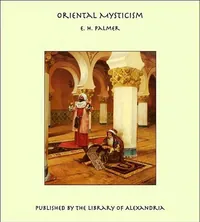
More Free Occult Philosophy Books
View all →