Nostradamus

 71
71

Nostradamus
McCann's "Nostradamus" presents a commendably grounded approach to a subject often swamped by sensationalism. The author succeeds in situating Michel de Nostredame within his specific 16th-century milieu, avoiding anachronistic interpretations of his quatrains. A particular strength lies in the detailed exploration of the linguistic and astrological tools Nostradamus likely employed, offering a scholarly perspective on how these predictions were formulated. However, the book occasionally falters in providing a definitive framework for assessing the accuracy or intent behind the prophecies, leaving some ambiguity for the reader. The discussion around the "Great Comet" quatrain, for instance, while informative, doesn't quite resolve the interpretative challenges. Ultimately, McCann provides a valuable, scholarly entry point for understanding Nostradamus, prioritizing historical context over speculative futurism.
📝 Description
71
Lee McCann's 1984 book examines Michel de Nostredame's life and prophecies.
Published in 1984, Lee McCann's "Nostradamus" investigates the life and prophecies of the 16th-century astrologer and physician Michel de Nostredame. The book aims to clarify the enigmatic predictions attributed to him, looking into their origins, construction, and possible meanings. McCann considers whether prophecy stems from divine insight, intuition, or careful observation of historical patterns. The study also analyzes the quatrain structure and the deliberately vague language Nostradamus used.
The author situates Nostradamus within a history of Western prophetic traditions. McCann discusses Nostradamus's life during a time of religious and political change in 16th-century France. The book covers how these predictions have been referenced during periods of unrest and public interest. It is for anyone interested in prophecy's history, esoteric studies, and the lives of those who claimed foresight, as well as those who question such claims.
McCann's study places Nostradamus within a lineage of Western prophetic figures, connecting him to traditions stretching back through history. It examines how figures like Joanna Southcott and later individuals claimed foresight, contrasting their methods and societal reception. The book explores the very nature of prophecy, questioning its sources and the psychological or historical underpinnings that might inform predictive claims, rather than treating them as purely supernatural events.
💡 Why Read This Book?
• Gain insight into the historical milieu of 16th-century France, understanding the societal pressures and intellectual currents that shaped Nostradamus's prophetic work, particularly his life in Salon-de-Crau. • Learn about the specific literary and astrological techniques Nostradamus utilized in composing his quatrains, moving beyond vague notions of prophecy to concrete methods. • Develop a more critical lens for evaluating prophetic claims by examining the historical reception and interpretation of Nostradamus's predictions over centuries.
⭐ Reader Reviews
Honest opinions from readers who have explored this book.
❓ Frequently Asked Questions
When was Lee McCann's Nostradamus book first published?
Lee McCann's "Nostradamus" was first published in 1984, offering a study of the famous 16th-century prophet during a period of renewed interest in esoteric subjects.
What historical period does the book cover regarding Nostradamus?
The book primarily covers the life and times of Michel de Nostredame, who lived from 1503 to 1566 in 16th-century France, a time of significant religious and political upheaval.
What are the primary subjects explored in McCann's "Nostradamus"?
McCann's "Nostradamus" explores the life, prophecies, and historical context of Michel de Nostredame, focusing on the interpretation of his cryptic quatrains and the astrological and literary methods he employed.
Does the book offer definitive interpretations of Nostradamus's predictions?
While the book aims to demystify the prophecies, it generally leans towards exploring potential interpretations and historical context rather than offering singular, definitive meanings for Nostradamus's cryptic quatrains.
What is the author's approach to Nostradamus's work?
Lee McCann adopts a scholarly and historical approach, aiming to understand Nostradamus's predictions within his 16th-century context and examining the linguistic and astrological foundations of his writings.
Is this book suitable for beginners in esoteric studies?
Yes, the book serves as a good introduction for beginners in esoteric studies due to its clear explanations of Nostradamus's life, prophecies, and the historical context, without being overly speculative.
🔮 Key Themes & Symbolism
The Art of Prophecy
McCann's work investigates prophecy not as mere fortune-telling, but as a complex interplay of historical observation, astrological knowledge, and linguistic artistry. The book examines how Michel de Nostredame, a physician in 16th-century France, synthesized these elements to create his famous quatrains. It explores the idea that prophecy, as practiced by Nostradamus, involved a deep understanding of cyclical patterns in history and human affairs, rather than direct divine dictation. The text studies the psychological and intellectual framework required to produce such enduringly debated predictions.
Nostradamus's Language and Structure
A significant theme is the enigmatic nature of Nostradamus's writing style. McCann focuses on the deliberate ambiguity and multi-layered meanings embedded within the quatrains. The book dissects the use of allegorical language, anagrams, and mixed French, Latin, and Greek terms. This linguistic complexity is presented not as a flaw, but as a key component of the prophecies' longevity and adaptability to various interpretations across different eras. Understanding this structure is crucial to appreciating how the predictions have been applied to events from the French Revolution to modern times.
Historical and Astrological Framework
The book places Nostradamus firmly within his historical context, exploring the astrological and medical knowledge prevalent in 16th-century Europe. McCann details how figures like Nostradamus drew upon established systems of celestial interpretation and humoral theory. The work investigates the specific astronomical conjunctions and planetary influences that may have informed his predictions, as well as the political and social climate of his time, particularly his life in Salon-de-Crau. This grounding reveals how esoteric practices were integrated into the intellectual range of the Renaissance.
The Legacy of Interpretation
McCann's analysis extends to the enduring legacy of how Nostradamus's prophecies have been received and interpreted throughout history. The book touches upon how subsequent generations have selectively applied the quatrains to major world events, often with a retroactive justification. It explores the psychological allure of prophecy and the human tendency to seek patterns and meaning in chaos. This theme highlights the ongoing dialogue between the text of Nostradamus and the evolving concerns of those who consult it, from scholars to occult enthusiasts.
💬 Memorable Quotes
Direct passages from the work, attributed to the author.
“Nostradamus's quatrains were not direct visions, but rather complex calculations and observations.”
— This interpretation posits that Michel de Nostredame approached prophecy as an intellectual discipline, employing astrological charts and historical pattern recognition, rather than receiving spontaneous divine insights. It frames his work as a sophisticated synthesis of contemporary knowledge.
“The ambiguity in the language is the key to the prophecies' survival.”
— This statement highlights how the deliberate vagueness and multi-lingual nature of Nostradamus's quatrains allow them to be reinterpreted and applied to an ever-changing series of historical events, contributing to their persistent relevance.
“Understanding the 16th-century context is paramount to deciphering the quatrains.”
— This emphasizes the necessity of historical scholarship when studying Nostradamus. It argues that without knowledge of the political, social, and intellectual environment of 16th-century France, attempts to understand his prophecies are likely to be misdirected and anachronistic.
“The physician's eye saw patterns others missed.”
— This interpretation suggests that Nostradamus's background as a medical practitioner, trained in observation and diagnosis, may have informed his prophetic method. It implies his ability to discern subtle patterns in human behavior and historical trends.
💡 Key Ideas
Editorial paraphrase of the work's core concepts — not direct quotes.
The prophecies are a mirror reflecting the fears and hopes of those who gaze into them.
This paraphrased concept suggests that the enduring appeal and varied interpretations of Nostradamus's predictions stem less from their inherent accuracy and more from their ability to capture the zeitgeist of different historical periods and the psychological needs of their readers.
🌙 Esoteric Significance
Tradition
McCann's work engages with the Western esoteric tradition, specifically the lineage of prophetic figures and astrological interpreters. While not strictly Kabbalistic or Hermetic in its methodology, it examines a figure whose practices drew upon Renaissance astrology and numerology, elements common within these traditions. Nostradamus can be seen as a bridge between medieval prophecy and the more systematized occultism that would develop later. The book positions him as a significant, albeit unique, practitioner within the broader stream of Western foresight traditions, distinct from purely religious prophecy.
Symbolism
The primary symbolic motif is the quatrain itself, representing a condensed, multi-layered vessel of meaning. Another key symbol is the astrological chart, which Nostradamus used as a framework for his predictions, representing cosmic order and destiny. Furthermore, recurring symbols within the prophecies themselves, such as celestial bodies (comets, stars) and natural disasters (floods, fires), function as archetypal representations of societal upheaval and transformation, mirroring the anxieties of the eras in which they are interpreted.
Modern Relevance
Contemporary interest in Nostradamus, often fueled by online communities and speculative analyses, continues to draw from the foundational understanding provided by scholars like McCann. His work informs discussions in fields ranging from comparative religion to popular occultism. Thinkers exploring the psychology of belief, the nature of predictive language, and the historical construction of prophecy often reference the methods and context McCann illuminates. Modern practitioners of divination, while perhaps using different tools, often echo Nostradamus's blend of astrological calculation and symbolic language.
👥 Who Should Read This Book
• Students of Renaissance history and intellectual currents seeking to understand the practical application of astrology and prophecy in the 16th century. • Enthusiasts of esoteric studies and historical divination looking for a balanced perspective on Nostradamus's life and writings. • Skeptical readers interested in a critical examination of prophetic claims, focusing on historical context and linguistic analysis rather than sensationalism.
📜 Historical Context
Published in 1984, Lee McCann's "Nostradamus" emerged during a period of significant public fascination with the occult and prophecy, fueled by popular culture and a resurgence of interest in esoteric traditions. The era saw contemporaries like Michel Gauquelin exploring psychological astrology and various authors reinterpreting ancient prophecies. McCann's work distinguished itself by attempting a more grounded, historical analysis of Michel de Nostredame, who lived from 1503 to 1566. This was a time of intense religious reformation and political change in Europe, providing a fertile ground for pronouncements about the future. Unlike purely speculative works, McCann's study grappled with the linguistic and astrological frameworks of the 16th century. While the book itself may not have sparked major academic debate, it contributed to the broader discourse surrounding Nostradamus, a figure whose predictions had been invoked during events ranging from the rise of Napoleon to the World Wars, a evidence of his enduring, albeit controversial, place in popular consciousness.
📔 Journal Prompts
Nostradamus's use of ambiguous language.
The physician's perspective on predicting future events.
Mapping astrological symbols to historical outcomes.
The role of quatrains in preserving prophetic meaning.
Comparing 16th-century anxieties to modern ones.
🗂️ Glossary
Quatrain
A stanza of four lines, especially one having a rhyme scheme of ABAB or ABCB. Nostradamus famously composed his prophecies in this four-line verse form.
Michel de Nostredame
The full name of the 16th-century French astrologer, physician, and reputed seer, known by the Latinized version of his name, Nostradamus.
Prophecy
A prediction of future events, often attributed to divine inspiration or extraordinary insight. In the context of Nostradamus, it refers to his cryptic verses.
Astrology
The study of the movements and relative positions of celestial bodies interpreted as having an influence on human affairs and the natural world. A key tool for Nostradamus.
Salon-de-Crau
A town in Provence, France, where Nostradamus lived for a significant period of his life and composed many of his prophecies.
Renaissance
The period in European history, roughly from the 14th to the 17th century, marked by a revival of classical art, architecture, literature, and learning. Nostradamus was a figure of this era.
Esoteric
Intended for or likely to be understood by only a small number of people with a specialized knowledge or interest. Refers to mystical or secret knowledge.
🔮 Readers Also Liked
Browse all →









More by Lee McCann
All books →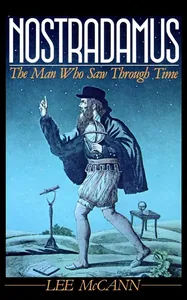
More Free Occult Philosophy Books
View all →