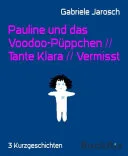
Pauline und das Voodoo-Püppchen // Tante Klara // Vermisst
 79
79

Pauline und das Voodoo-Püppchen // Tante Klara // Vermisst
Gabriele Jarosch's "Pauline und das Voodoo-Püppchen // Tante Klara // Vermisst" opens with an image of chilling potential: a white doll, its beaded eyes shimmering with an unnerving gaze. This potent visual sets the stage for stories that excel in their creation of atmosphere, slowly building a sense of dread. The strength of the collection lies in its ability to evoke unease through suggestion, focusing on the psychological impact of the uncanny on its characters. The narrative voice in "Tante Klara," for instance, effectively conveys a panic that feels immediate and suffocating. However, the collection's brevity, presenting three distinct yet interconnected vignettes, leaves one wishing for further exploration of these unsettling premises. The resolution, or lack thereof, in some of the tales might leave readers desiring a more concrete unraveling of the mysteries presented. Ultimately, Jarosch offers a compelling, if concise, exploration of fear and the intrusion of the strange into the mundane.
📝 Description
79
Gabriele Jarosch's 2016 collection gathers three tales of psychological unease.
The 2016 publication "Pauline und das Voodoo-Püppchen // Tante Klara // Vermisst" by Gabriele Jarosch collects three stories centered on psychological dread. The title story, "Pauline und das Voodoo-Püppchen," features a voodoo doll that instills a sense of unease and a foreign presence. The following stories, "Tante Klara" and "Vermisst," continue this tone of fear and confusion. They suggest deep psychological distress and the feeling of being lost or in danger.
This collection is for readers who like psychological horror and gothic atmospheres that depend on suggestion instead of outright gore. Those interested in stories about the darker sides of the human mind, the disturbing power objects can hold, and the constant presence of anxiety will find these tales engaging. It suits readers who want literary fiction that touches on the supernatural and the intensely personal.
Published in 2016, this collection taps into a contemporary interest in folk magic and the subconscious. While not tied to a specific historical esoteric movement, it reflects an ongoing fascination with how objects can channel unsettling energies. The stories' focus on the uncanny within everyday settings aligns with modern horror's tendency to explore intimate, personal fears over grand supernatural events. It echoes themes found in authors who examine the darker corners of the human psyche.
💡 Why Read This Book?
• Gain insight into the psychological impact of ritual objects, as exemplified by the "weiße Püppchen" in the title story, and how such items can manifest unease. • Experience the visceral portrayal of fear, as described in "Tante Klara" where anxiety "nimmt mir fast die Atemluft," offering a potent depiction of panic. • Explore themes of disorientation and loss through the narrative of "Vermisst," providing a literary lens on existential anxieties and the feeling of being adrift.
⭐ Reader Reviews
Honest opinions from readers who have explored this book.
❓ Frequently Asked Questions
What is the primary theme explored in "Pauline und das Voodoo-Püppchen"?
The primary theme is the unsettling power and mystique associated with ritual objects, specifically a voodoo doll, which evokes a palpable sense of dread and an otherworldly presence upon sight.
How is fear depicted in the story "Tante Klara"?
In "Tante Klara," fear is depicted as a suffocating, almost physical force that overwhelms the narrator, described as anxiety "taking away breath," highlighting its immediate and debilitating psychological impact.
What does the story "Vermisst" generally concern?
"Vermisst" generally concerns the themes of disorientation and loss, exploring the unsettling feeling of being lost or threatened within one's circumstances, touching upon existential anxieties.
When was the book "Pauline und das Voodoo-Püppchen // Tante Klara // Vermisst" first published?
The book was first published on September 9, 2016.
Who is the author of these three interconnected stories?
The author of these three interconnected stories is Gabriele Jarosch.
What kind of atmosphere does the collection aim to create?
The collection aims to create an atmosphere of psychological unease and the intrusion of the uncanny into ordinary life, focusing on suggestion and subtle horror.
🔮 Key Themes & Symbolism
The Uncanny Object
The collection frequently employs objects that carry a disturbing aura, most notably the "weiße Püppchen" in the title story. This doll, with its beaded eyes, transcends mere representation to become a focal point of dread, suggesting a connection to forces beyond rational understanding. The narrative explores how mundane items can become imbued with unsettling energy, reflecting a deep-seated human fascination with the symbolic power of artifacts and their potential to influence psychological states or even reality.
Visceral Fear and Anxiety
Fear is not merely an emotion but a physical experience within these stories. In "Tante Klara," the onset of anxiety is so profound it is described as literally stealing breath. This portrayal emphasizes the corporeal nature of psychological distress, suggesting that intense fear can manifest as a tangible, incapacitating force. The collection captures the primal terror that can grip an individual when confronted with perceived threats, whether external or internal.
Disorientation and Loss
The narrative "Vermisst" directly confronts the feeling of being lost, both physically and existentially. This theme taps into a profound human anxiety about control and place in the world. When familiar surroundings or a sense of self become uncertain, the result is deep unease. The stories suggest that the boundaries of reality can be fragile, and that the experience of being "missing" or adrift can be a powerful metaphor for deeper psychological fragmentation.
Psychological Intrusion
These tales look at how the external world can intrude upon the internal range of the mind, and vice versa. The voodoo doll is an external object that provokes internal dread, while the overwhelming anxiety in "Tante Klara" is an internal state with external consequences. The collection probes the blurred lines between subjective experience and objective reality, where the psychological can manifest in uncanny ways, and external stimuli can trigger profound internal disturbances.
💬 Memorable Quotes
Direct passages from the work, attributed to the author.
“Bleich lag es da und die Augen, die aus zwei silberblauen Perlen bestanden, schimmerten geheimnisvoll und schienen sie anzustarren.”
— This description focuses on the doll's eyes, emphasizing their mysterious shimmer and the unnerving sensation of being watched, a key element in evoking the doll's uncanny presence.
“Angst stieg in mir hoch und nahm mir fast die Atemluft.”
— A powerful depiction of fear as a physical sensation, illustrating how intense anxiety can manifest as a suffocating, breath-taking experience for the narrator.
“Ich musste ruhig bleiben und überlegen, wie ich mich am besten v”
— This incomplete sentence fragment suggests a moment of crisis and desperate rationalization, where the character attempts to regain control amidst overwhelming fear or a perplexing situation.
💡 Key Ideas
Editorial paraphrase of the work's core concepts — not direct quotes.
Vorsichtig hob sie den Deckel der Schachtel ab und legte ihn behutsam zur Seite. Eine eigenartige Stimmung erfasste sie, als sie das weiße Püppchen auf dem dunkelblauen Seidentuch ansah.
This passage establishes the immediate atmosphere of the title story, highlighting the unsettling nature of the voodoo doll and its ability to create a peculiar mood upon being revealed.
The collection centers on psychological unease and the intrusion of the uncanny into ordinary life.
This summarizes the core thematic focus of the book, indicating a narrative style that prioritizes internal states and subtle, unsettling supernatural or strange occurrences within everyday settings.
🌙 Esoteric Significance
Tradition
While not explicitly tied to a single esoteric lineage, the collection engages with themes common in folk magic and animism, where objects are believed to possess inherent power or be conduits for spiritual forces. The "Voodoo-Püppchen" itself evokes imagery associated with sympathetic magic, a concept found across various magical traditions. The work's exploration of psychological states and their perceived influence on reality touches upon ideas present in Hermeticism's principle of 'As Above, So Below,' suggesting a connection between the inner and outer worlds, albeit explored through a lens of dread rather than spiritual ascent.
Symbolism
The primary symbol is the "weiße Püppchen" (white doll), which functions as a focal point for fear and the uncanny. Its pallor and the mysterious shimmer of its beaded eyes suggest innocence corrupted or a vessel for something sinister. The "silberblauen Perlen" (silver-blue beads) could symbolize an otherworldly gaze or a connection to a different plane of existence. The "dunkelblauen Seidentuch" (dark blue silk cloth) provides a stark, luxurious contrast, perhaps highlighting the doll's isolation or the unnaturalness of its presence within a seemingly ordinary setting.
Modern Relevance
Contemporary horror fiction and psychological thrillers continue to draw on the power of unsettling objects and the exploration of deep-seated anxieties. Authors exploring themes of folk horror, the uncanny valley, and the psychological impact of trauma often echo the subtle dread found in Jarosch's work. Readers interested in modern interpretations of sympathetic magic, the power of intent, and the psychological underpinnings of fear will find resonance with the collection's focus on the intrusion of the strange into the mundane.
👥 Who Should Read This Book
• Readers of psychological horror and gothic literature seeking atmospheric dread over explicit scares. • Individuals interested in the symbolic power of objects and their potential to evoke uncanny feelings. • Those who appreciate narratives that explore the fragility of the human psyche when confronted with inexplicable unease.
📜 Historical Context
Published in 2016, Gabriele Jarosch's "Pauline und das Voodoo-Püppchen // Tante Klara // Vermisst" arrived during a period of resurgence for literary horror and psychological thrillers. While not directly aligned with a specific historical esoteric movement, the work speaks to contemporary interests in folk magic, the uncanny, and the darker aspects of the subconscious, themes explored by authors like Shirley Jackson and more recently by practitioners of New Weird literature. The collection's focus on intimate, domestic dread and the power of symbolic objects echoes a broader trend in horror that moved away from grand, supernatural specters towards the insidious anxieties that lurk beneath the surface of ordinary life. Unlike the more overtly theological explorations found in some Gnostic texts, Jarosch's work grounds its unease in psychological realism, making the uncanny feel more immediate and personal. The collection's reception would likely have been within circles appreciating subtle, atmospheric horror rather than overt genre scares.
📔 Journal Prompts
The "weiße Püppchen" and its beaded eyes, reflecting a mysterious shimmer.
The sensation of "Angst" that "nimmt mir fast die Atemluft."
Contemplating the feeling of being "vermisst" (lost or missing).
The atmosphere evoked by the "dunkelblauen Seidentuch" upon which the doll rests.
Reflecting on the intrusion of the uncanny into ordinary settings.
🗂️ Glossary
Voodoo-Püppchen
A small doll, often associated with sympathetic magic, used in some folk traditions to represent a person for the purpose of influencing them through ritualistic actions performed on the doll.
Eigenartige Stimmung
An unusual or peculiar atmosphere or mood, suggesting a subtle but palpable shift in the emotional or psychic environment of a place or situation.
Silberblauen Perlen
Silver-blue beads, used here to describe the doll's eyes, implying a mysterious, perhaps unnatural, or otherworldly quality to its gaze.
Angst
A German term for anxiety or dread, often implying a profound and overwhelming sense of fear or unease that can be physically debilitating.
Vermisst
The German word for 'missing' or 'lost,' suggesting themes of disappearance, disorientation, and existential unease within the narrative.
Seidentuch
A silk cloth, described here as dark blue, providing a visual and tactile detail that enhances the description of the doll's presentation.
Uncanny
A concept referring to something that is strangely familiar yet unsettlingly alien at the same time, often evoking a sense of unease or dread.