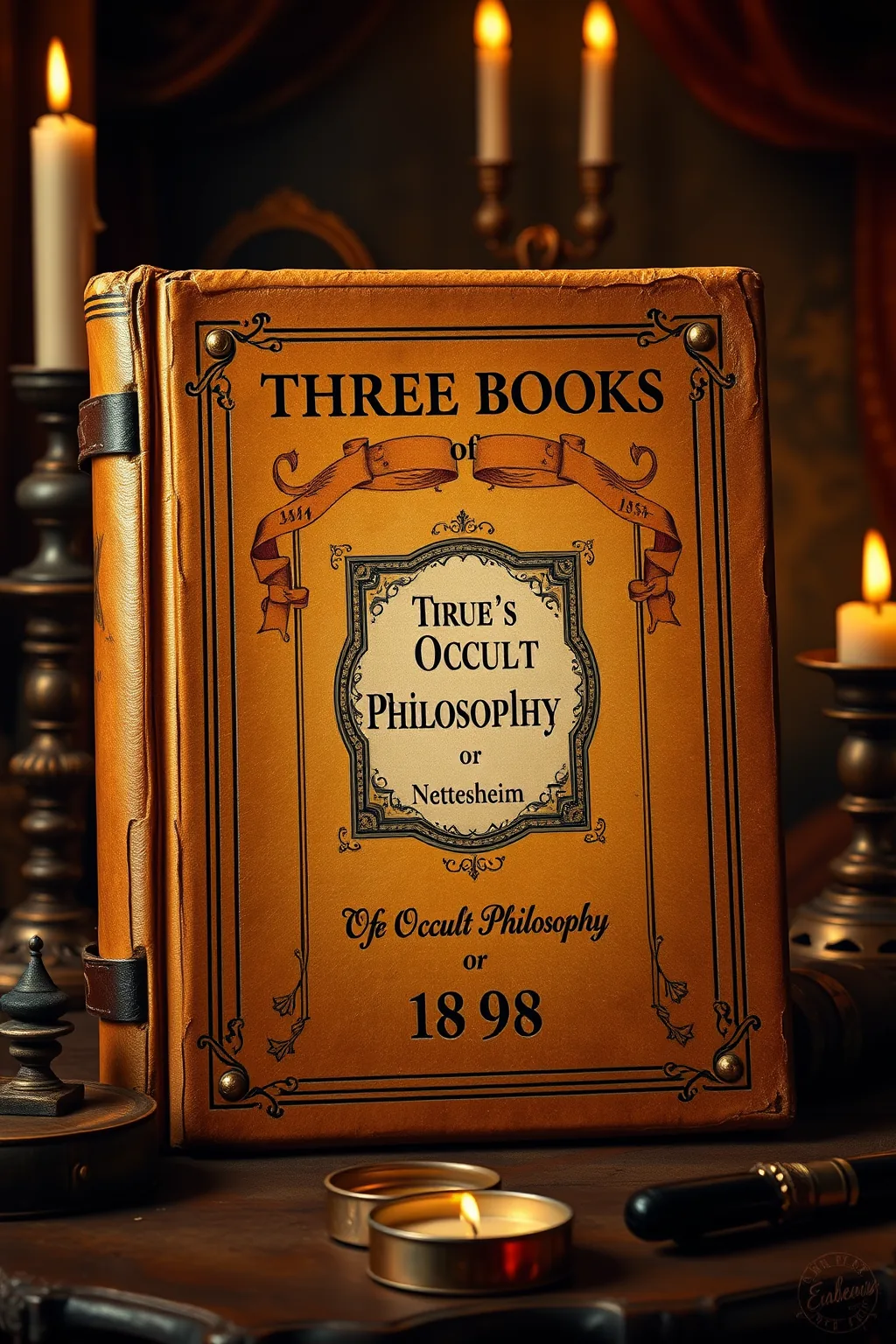
Three Books Of Occult Philosophy Or Magic ( 1898)
 95
95

Three Books Of Occult Philosophy Or Magic ( 1898)


Three Books Of Occult Philosophy Or Magic is a timeless classic that continues to captivate modern esoteric seekers. The depth and breadth of its content make it an indispensable resource for anyone delving into the mysteries of the occult. Agrippa's meticulous research and profound insights into the natural world and the divine provide a solid foundation for understanding the principles of magic. The book's historical significance adds an extra layer of intrigue, offering readers a glimpse into the intellectual pursuits of the Renaissance. For contemporary practitioners, this text serves as a bridge between ancient wisdom and modern esoteric practices. Its practical rituals and spells are as relevant today as they were centuries ago, making it a valuable tool for both study and application. The only drawback is the dense language, which may require some effort to decipher. Overall, Three Books Of Occult Philosophy Or Magic is a must-read for anyone serious about exploring the occult.
📝 Description
95
First published in 1531, Agrippa's Three Books of Occult Philosophy remains a cornerstone of Western esotericism.
Heinrich Cornelius Agrippa von Nettesheim's Three Books of Occult Philosophy, first appearing in 1531, is a significant text in the history of Western esotericism. It systematically organizes and presents magical knowledge, drawing from Neoplatonism, Hermeticism, and Kabbalah. The work is divided into three parts, each addressing a different aspect of occult philosophy. The first book discusses natural magic, focusing on the elements, celestial influences, and the human microcosm. The second book covers celestial or astrological magic, detailing how to harness cosmic powers through talismans and incantations. The third book is dedicated to ceremonial or theurgic magic, explaining rituals and methods for communion with higher spiritual beings.
Agrippa's aim was to synthesize various occult traditions and present them in a structured, philosophical manner, distinguishing his work from more purely practical grimoires. While he claims to reveal the hidden workings of the universe, he also cautions against misuse and emphasizes the importance of moral and intellectual preparation for the practitioner. The book reflects the intellectual climate of the Renaissance, a period where the lines between philosophy, science, and magic were often fluid. Its comprehensive approach and detailed descriptions have made it a reference point for subsequent magical traditions.
Three Books of Occult Philosophy emerged during the Renaissance, a period of renewed interest in ancient texts and philosophies. It synthesized Neoplatonic ideas, Hermetic treatises like the Corpus Hermeticum, and Jewish Kabbalistic concepts. Agrippa sought to frame these traditions within a coherent philosophical system, bridging the gap between late medieval scholasticism and the emerging humanist worldview. This approach made magic appear as a legitimate field of philosophical inquiry, not merely superstition, and positioned it as a means to understand God's creation and ascend spiritually.
💡 Why Read This Book?
Reading Three Books Of Occult Philosophy Or Magic today offers a unique opportunity to connect with ancient mystical traditions. This book provides a comprehensive overview of occult philosophy, making it an essential resource for both beginners and advanced practitioners. By studying this text, readers can gain a deeper understanding of the principles that underlie magical practices, enriching their spiritual journeys. The practical rituals and spells included in the book can be adapted for modern use, offering tangible benefits in personal and spiritual growth.
⭐ Reader Reviews
Honest opinions from readers who have explored this book.
❓ Frequently Asked Questions
Who is the author of Three Books Of Occult Philosophy Or Magic?
The authorship of Three Books Of Occult Philosophy Or Magic is attributed to Heinrich Cornelius Agrippa, a renowned scholar and occultist of the Renaissance era.
Is this book suitable for beginners in the occult?
While the book is dense and complex, it is suitable for beginners with a strong interest in the occult, as it provides foundational knowledge and historical context.
Are the rituals and spells in the book still relevant today?
Yes, the rituals and spells in the book are still relevant and can be adapted for modern use, offering practical applications in esoteric practices.
🔮 Key Themes & Symbolism
Symbolism
The book looks at the detailed symbolism of the occult, exploring the hidden meanings behind astrological symbols, alchemical processes, and magical rituals. Agrippa's work is a deep study in deciphering the language of the divine, revealing the intricate web of symbols that connect the microcosm to the macrocosm.
Astrology
Astrology is a central theme in the Three Books of Occult Philosophy, with Agrippa providing detailed insights into the celestial influences that shape our lives. The book explores the astrological correspondences that govern the natural world, offering a profound understanding of the cosmic forces that guide human destiny.
Magical Practices
The book offers a comprehensive guide to the magical practices of the occult, including theurgy, alchemy, and ritual magic. Agrippa's detailed descriptions of these practices provide a roadmap for those seeking to harness the hidden powers of the universe, offering a pathway to spiritual enlightenment and divine communion.
💬 Memorable Quotes
Direct passages from the work, attributed to the author.
“Magic is the highest, most absolute, and most divine power of knowledge.”
— Agrippa's view of magic as the ultimate form of knowledge underscores its spiritual and philosophical significance.
“The wise man is he who knows the causes of things.”
— This statement underscores the importance of understanding the underlying principles that govern the universe.
“The key to the mysteries of nature lies in the study of astrology.”
— Agrippa's emphasis on astrology as a means to unlock the secrets of nature reveals its central role in occult philosophy.
💡 Key Ideas
Editorial paraphrase of the work's core concepts — not direct quotes.
The world is a book, and those who do not travel read only one page.
This quote emphasizes the importance of exploring the world to gain a fuller understanding of its mysteries.
The microcosm is the image of the macrocosm.
This quote highlights the interconnectedness of all things, reflecting the Hermetic principle of correspondence.
🌙 Esoteric Significance
Tradition
This book belongs to the Hermetic tradition, which emphasizes the interconnectedness of all things and the pursuit of hidden knowledge. It draws upon ancient wisdom and mystical practices to offer a comprehensive guide to the occult arts.
Symbolism
Key symbols in the book include astrological signs, alchemical emblems, and magical sigils. These symbols represent the hidden forces that govern the universe and serve as a language for communicating with the divine.
Modern Relevance
This book remains relevant today for modern practitioners of the occult, offering insights into the mystical arts and hidden knowledge. Its exploration of symbolism, astrology, and magical practices continues to inspire seekers and scholars alike.
👥 Who Should Read This Book
Beginners may find this book challenging due to its depth and complexity, but it is an invaluable resource for those willing to delve deeply into the mystical arts. Scholars of esoteric studies will appreciate the book's comprehensive exploration of occult philosophy, while spiritual seekers will find inspiration in its clear insights into the divine mysteries. Practitioners of magic will benefit from the detailed descriptions of magical rituals and practices.
📜 Historical Context
The Three Books of Occult Philosophy was written during the Renaissance, a time when the boundaries between science and magic were fluid. The era was marked by a resurgence of interest in ancient wisdom and a quest for hidden knowledge. Agrippa's work reflected the intellectual curiosity of the time, blending astrology, alchemy, and theurgy into a cohesive philosophical framework. The book's influence can be seen in the works of later occultists and mystics, who drew upon its insights to deepen their understanding of the mystical arts.
📔 Journal Prompts
Reflect on the symbolism in the Three Books of Occult Philosophy and how it relates to your own spiritual journey?
How does Agrippa's exploration of astrology influence your understanding of the cosmos?
Consider the role of magical practices in the book and how they can be applied to your own spiritual development?
What insights into the Hermetic tradition have you gained from reading this book?
How does the interconnectedness of all things, as described in the book, manifest in your own life?
🗂️ Glossary
Theurgy
The practice of ritual magic aimed at invoking the presence of divine beings for the purpose of spiritual enlightenment and divine communion.
Alchemy
An ancient mystical practice involving the transformation of base metals into gold, often symbolizing the spiritual transformation of the self.
Astrology
The study of the movements and relative positions of celestial bodies and their influence on human affairs and the natural world.
Hermetic Tradition
A philosophical and spiritual tradition based on the writings attributed to Hermes Trismegistus, emphasizing the pursuit of hidden knowledge and the interconnectedness of all things.
Sigils
Symbolic representations used in magical rituals to invoke specific energies or entities, often incorporating astrological and alchemical symbols.
This book appears in 3 collections
🔮 Readers Also Liked
Browse all →








From the “Occultism” Collection
View all →




More Free Occult Philosophy Books
View all →