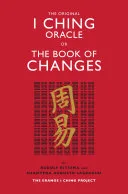
The Original I Ching Oracle or The Book of Changes
 74
74

The Original I Ching Oracle or The Book of Changes
The Ritsema and Sabbadini translation of the I Ching, often termed the Eranos edition, distinguishes itself through its scholarly rigor and updated approach. Unlike more accessible versions, this work presents the oracle with a critical apparatus that illuminates the textual evolution and interpretive layers accumulated over centuries. The meticulous attention to detail in translating the classical Chinese is evident, offering a perspective that feels both ancient and newly clarified. One particular strength lies in the detailed commentaries on each hexagram, which move beyond simplistic fortune-telling to explore the philosophical and ethical dimensions embedded within the text. However, for the uninitiated, the sheer depth of scholarship might present a barrier; this is not a casual introduction. A passage discussing the subtle shifts in meaning derived from specific character choices in the original text underscores the work's academic value but may deter readers seeking immediate practical application. The Original I Ching Oracle is a significant scholarly contribution for serious students of the text.
📝 Description
74
Published in 2018, The Original I Ching Oracle is a scholarly revision of the ancient Chinese text.
Rudolf Ritsema and Shantena Augusto Sabbadini's 2018 work, The Original I Ching Oracle, revises the ancient Chinese text known as the Book of Changes. It builds upon Richard Wilhelm's 1920s translation, aiming for a more complete understanding of this oracular system. The book includes all 64 hexagrams, each with detailed commentary, textual analysis, and historical background drawn from Chinese intellectual history.
This edition is for students of Chinese philosophy, comparative religion, and divination. Scholars and practitioners looking for a rigorous, updated interpretation beyond older translations will find it valuable. It also appeals to those interested in the philosophy of ancient traditions and the development of textual scholarship in esoteric studies. Individuals dedicated to studying oracular methods and their history will find it most beneficial.
This translation emerges from a long history of I Ching scholarship, seeking to refine understanding after Richard Wilhelm's initial German version. Its connection to the Eranos Foundation suggests an interdisciplinary approach to myth, religion, and psychology. The revision addresses textual ambiguities, offering an interpretation informed by modern scholarship to better reflect the original Chinese intent.
💡 Why Read This Book?
• Gain a deeper understanding of the Yin-Yang duality and its representation through the 64 hexagrams, moving beyond surface-level interpretations as presented in the foundational commentaries. • Explore the historical development of the I Ching as an oracular system, appreciating the scholarly revisions since Richard Wilhelm’s initial introduction to the West in the 1920s. • Engage with the philosophical underpinnings of change and cosmic order as articulated through specific textual analyses within the extensive commentaries provided for each hexagram.
⭐ Reader Reviews
Honest opinions from readers who have explored this book.
❓ Frequently Asked Questions
When was the first English edition of The Original I Ching Oracle published?
The revised and updated translation by Rudolf Ritsema and Shantena Augusto Sabbadini, often referred to as the Eranos edition, was first published on May 15, 2018.
What makes the Ritsema and Sabbadini translation different from earlier I Ching versions?
This edition offers a substantial scholarly advance, providing a revised and updated translation that aims for greater accuracy and deeper insight into the ancient Chinese text compared to earlier introductions, such as Richard Wilhelm's from the 1920s.
What is the significance of the 'Eranos edition' designation?
The 'Eranos edition' designation suggests a connection to the scholarly traditions and interdisciplinary dialogues fostered by the Eranos Foundation, known for its work on myth, psychology, and comparative religion.
How many chapters or hexagrams are in the I Ching?
The I Ching, as presented in this work, is divided into 64 chapters, each corresponding to a specific hexagram composed of six lines.
Who were the primary translators and editors of this 2018 edition?
The primary translators and editors of this edition are Rudolf Ritsema and Shantena Augusto Sabbadini.
What kind of content can be expected beyond the hexagrams themselves?
Beyond the hexagrams, the book includes extensive commentary, textual analysis, historical context, imagery, advice, philosophy, and poetry accumulated over 2,500 years of the oracle's tradition.
🔮 Key Themes & Symbolism
The Dynamics of Change
The I Ching fundamentally explores the nature of change, presenting it not as chaos but as an ordered, cyclical process. The 64 hexagrams serve as archetypal patterns of situations and transformations that individuals and the cosmos undergo. Ritsema and Sabbadini's translation emphasizes the dynamic interplay between yin and yang, illustrating how stability emerges from and dissolves back into flux. This perspective offers a framework for understanding life's inherent impermanence and navigating transitions with wisdom, recognizing that every situation contains the seeds of its own evolution.
Oracular Wisdom and Guidance
As one of the world's oldest oracles, the I Ching provides a sophisticated system for seeking counsel. This edition clarifies the oracular function by presenting the textual layers that have accumulated over millennia, from ancient diviners to sages. The advice embedded within each hexagram's commentary offers insights into potential outcomes and appropriate actions. It moves beyond simple prediction, encouraging contemplation of the underlying principles at play, fostering a more conscious engagement with one's circumstances and the unfolding of events.
Philosophical Foundations
Beneath its oracular surface, the I Ching is a profound philosophical text deeply rooted in Taoist and Confucian thought. Ritsema and Sabbadini's work highlights the ethical and cosmological dimensions, revealing how the hexagrams map onto principles of balance, harmony, and the natural order of the universe. The text explores the relationship between human action, cosmic forces, and the attainment of wisdom. It offers a worldview where understanding the patterns of change allows for alignment with the Tao, promoting virtue and insightful living.
Textual Scholarship and Interpretation
This specific translation, the Eranos edition, represents a significant effort in textual scholarship. It addresses the complexities and potential ambiguities in earlier interpretations, striving for a more accurate rendition of the original Chinese meanings. The scholarly apparatus and updated linguistic approach allow readers to appreciate the evolution of the text and the nuances lost in prior translations. This focus on the integrity of the text makes it important for those interested in the academic study of ancient Chinese philosophy and divination.
💬 Memorable Quotes
Direct passages from the work, attributed to the author.
“The I Ching is a collection of texts, imagery and advice, philosophy and poetry, divided into 64 chapters.”
— This statement expresses the multi-faceted nature of the I Ching, highlighting that it functions simultaneously as a divinatory tool, a philosophical treatise, and a repository of ancient wisdom and artistic expression.
“Accumulated from over 2,500 years of diviners, sages and shamans...”
— This emphasizes the I Ching's deep historical roots and the collective wisdom it embodies, gathered from diverse sources and practices across a vast span of time.
“The world’s oldest oracle.”
— This assertion underscores the I Ching's unique status as a venerable system of divination and wisdom, suggesting a profound connection to humanity's earliest attempts to understand the cosmos and its workings.
“This revised and updated translation offers the most substantial advance in I Ching since Richard Wilhelm introduced the oracle to the West in the 1920s.”
— This positions the Ritsema and Sabbadini edition as a significant modern scholarly achievement, directly building upon and improving the foundational Western understanding established by Wilhelm.
“Born out of the oral tradition...”
— This points to the I Ching's origins, suggesting that its core meanings and functions were initially transmitted through spoken word and practice before being codified into written text.
🌙 Esoteric Significance
Tradition
The I Ching is foundational to Taoism but its influence extends broadly across Chinese philosophical and esoteric traditions, including aspects that intersect with Neidan (Internal Alchemy) and Feng Shui. It can be seen as a cosmic diagram mapping the fundamental principles of change and balance that underpin reality. Its cyclical nature and emphasis on dynamic equilibrium resonate with Hermetic principles of correspondence and rhythm, while its divinatory aspect aligns with systems seeking direct communication with cosmic intelligences or universal patterns.
Symbolism
Key symbols include the Yin (broken line, representing receptivity, darkness, femininity) and Yang (unbroken line, representing creativity, light, masculinity), which combine to form trigrams and hexagrams. The 64 hexagrams themselves are potent archetypal symbols, each representing a specific stage or dynamic in the cycle of change, from creation (Qian) to completion (Kun). The imagery associated with each hexagram, such as 'The Creative' or 'The Receptive,' provides allegorical layers that enrich its symbolic meaning.
Modern Relevance
Contemporary esoteric practitioners, particularly those interested in divination, comparative mythology, and systems thinking, frequently draw upon the I Ching. Its principles of interconnectedness and dynamic change inform fields like integral theory and systems psychology. Thinkers exploring archetypal psychology, influenced by Jung's engagement with the text, continue to find its hexagrams a rich source for understanding psychological patterns. The I Ching remains a vital tool for personal development and philosophical inquiry in the modern era.
👥 Who Should Read This Book
• Students of traditional Chinese philosophy and divination seeking a scholarly and updated translation that moves beyond earlier Western interpretations. • Practitioners of esoteric arts and comparative religion researchers interested in the historical development and symbolic language of ancient oracular systems. • Individuals engaged in deep self-reflection and philosophical inquiry who wish to explore a framework for understanding change, balance, and cosmic order.
📜 Historical Context
Rudolf Ritsema and Shantena Augusto Sabbadini's 2018 translation of the I Ching emerges from a rich scholarly tradition that gained significant traction in the West following Richard Wilhelm's German version, published in 1925 and translated into English by Cary Baynes in 1950. This period saw a burgeoning interest in Eastern philosophies, partly influenced by figures like Carl Jung, who wrote a foreword to Wilhelm's translation, seeing the I Ching's hexagrams as expressions of archetypes. The Eranos Foundation, where Ritsema was a long-time collaborator, has historically been a nexus for such cross-cultural intellectual exchange, fostering dialogue between Western psychology, comparative religion, and Eastern wisdom traditions. This 2018 edition represents a scholarly effort to refine the understanding of the I Ching, addressing textual nuances and interpretive layers that may have been less apparent in earlier, more generalized introductions, offering a more specialized engagement for serious students and scholars.
📔 Journal Prompts
The concept of the 64 hexagrams as archetypal situations.
Reflections on the interplay of Yin and Yang lines within a chosen hexagram.
The accumulated wisdom from diviners, sages, and shamans over 2,500 years.
How the imagery and advice associated with a specific hexagram might apply to a current life challenge.
The philosophical underpinnings of change as presented in the text.
🗂️ Glossary
Hexagram
A figure composed of six stacked horizontal lines, where each line is either Yang (unbroken) or Yin (broken). There are 64 possible hexagrams, each representing a fundamental situation or process of change.
Yin
The passive, receptive, feminine principle in Taoist philosophy, symbolized by a broken line (--) in the I Ching.
Yang
The active, creative, masculine principle in Taoist philosophy, symbolized by an unbroken line (—) in the I Ching.
Trigram
A figure composed of three stacked lines (Yin or Yang). There are eight basic trigrams, which are combined to form the 64 hexagrams.
Eranos edition
Refers to this specific translation and revision of the I Ching, suggesting a scholarly approach aligned with the intellectual tradition of the Eranos Foundation.
Oral tradition
Knowledge, customs, and beliefs passed down verbally from generation to generation, forming a significant part of the I Ching's historical transmission before written codification.
Diviners, sages, and shamans
The historical figures and practitioners from whom the accumulated wisdom and interpretations of the I Ching have been derived over millennia.