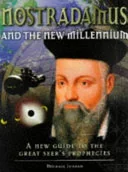
Nostradamus and the New Millennium
 78
78

Nostradamus and the New Millennium
Michael Jordan's "Nostradamus and the New Millennium" is a welcome recalibration of how we approach the seer's cryptic verse. Unlike many works that sensationalize or fixate on apocalyptic readings, Jordan presents a more hopeful lens, suggesting that the quatrains can be interpreted as pointing toward potentials for human advancement and spiritual growth, particularly as the year 2000 approached. A notable strength is the re-examination of verses commonly associated with disaster, proposing alternative, less dire readings that resonate with a desire for positive change. However, the book occasionally feels constrained by its optimistic premise, sometimes forcing interpretations to fit the desired outcome rather than allowing the text to speak more freely. The passage discussing the "Great King" quatrains, usually linked to war, as potentially referring to a spiritual leader or a paradigm shift, exemplifies this approach. While not a definitive dismantling of all dire predictions, it offers a refreshing counter-narrative.
📝 Description
78
Published in 1998, Michael Jordan's Nostradamus and the New Millennium reinterprets the seer's quatrains beyond apocalyptic predictions.
Michael Jordan's 1998 book, Nostradamus and the New Millennium, proposes a different way to read the 16th-century prophet's verses. Instead of focusing on doomsday scenarios, Jordan suggests that Nostradamus's quatrains contain the potential for positive future events. The book systematically examines common interpretations, arguing that many current readings miss opportunities for optimistic outlooks within the cryptic poetry. Jordan's aim is to encourage readers to reconsider how prophetic texts are understood.
This work is for people interested in esoteric studies, comparing different prophetic traditions, and the historical study of visionary writings. It will appeal to those who find standard Nostradamus interpretations too fixed or negative. Readers who ponder questions about time, fate, and what humans can achieve will find much to consider. It also suits students of Renaissance occultism who want to grasp the wider context of prophecy beyond sensationalist claims.
The late 20th century saw renewed interest in esoteric subjects and prophecy, with Nostradamus's verses often appearing in popular culture and New Age discussions. This book emerged when many interpretations favored disaster predictions, especially with the approaching millennium. Jordan's work offers a contrast, challenging these prevailing gloomy narratives. It connects with the historical figure of Michel de Nostredame, a physician to King Henry II of France, and the intellectual atmosphere of 16th-century Europe, where astrology and prophecy were part of scholarly work, unlike modern scientific thinking.
Nostradamus and the New Millennium fits within a long tradition of prophetic interpretation, particularly focusing on the legacy of Michel de Nostredame. While many approaches to his work emphasize cataclysmic events, this book aligns with a less common, more hopeful current within esoteric thought that seeks constructive or transformative messages from prophecy. It engages with the historical practice of divination in the Renaissance, a period where such pursuits were integrated into intellectual life, contrasting with modern skepticism.
💡 Why Read This Book?
• Gain a fresh perspective on Nostradamus's quatrains, moving beyond apocalyptic interpretations to explore potentials for societal and spiritual advancement, as discussed in the book's re-evaluation of verses related to the turn of the millennium. • Understand the historical context of Michel de Nostredame's work, recognizing prophecy as an integrated part of 16th-century intellectual life, not merely a fringe curiosity. • Develop critical thinking skills for analyzing prophetic texts by learning to question established interpretations and consider alternative hermeneutic frameworks, particularly regarding the concept of 'potential futures'.
⭐ Reader Reviews
Honest opinions from readers who have explored this book.
❓ Frequently Asked Questions
Does "Nostradamus and the New Millennium" focus on predicting specific events for the 21st century?
While the book was written in 1998 and addresses the approach of the new millennium, its primary focus is on reinterpreting Nostradamus's quatrains with a more optimistic outlook, rather than offering a definitive list of future events. It explores potential positive developments.
How does this book differ from other analyses of Nostradamus?
This work distinguishes itself by challenging prevalent negative or apocalyptic interpretations. It advocates for an optimistic hermeneutic, suggesting that the quatrains can signify periods of great innovation and spiritual awakening, departing from common fatalistic readings.
Is "Nostradamus and the New Millennium" based on extensive research into Nostradamus's life?
The book draws upon the historical figure of Michel de Nostredame, a 16th-century physician, and the intellectual milieu of his time. It analyzes his quatrains within the context of Renaissance prophetic traditions and esoteric thought.
What is the author's view on the accuracy of Nostradamus's prophecies?
The author, Michael Jordan, approaches the prophecies with a critical yet hopeful perspective. The work suggests that interpretations have often been skewed towards negativity and that a more positive framework can reveal different potentials within the verses.
Who is the author Michael Jordan mentioned in relation to this book?
The author Michael Jordan, who wrote "Nostradamus and the New Millennium," is distinct from the famous basketball player. This work focuses on esoteric analysis and historical interpretation of prophetic texts.
Can "Nostradamus and the New Millennium" be considered an esoteric text itself?
Yes, the book engages directly with esoteric traditions and the practice of interpreting prophetic literature. It aims to provide a more nuanced understanding of Nostradamus within the broader spectrum of occult and mystical studies.
🔮 Key Themes & Symbolism
Optimistic Hermeneutics
The book champions an optimistic approach to interpreting Nostradamus's quatrains, directly countering the prevalent fatalistic and apocalyptic readings that dominated discussions, especially leading up to the year 2000. Jordan suggests that many verses, often seen as harbingers of doom, can be understood as indicators of potential positive societal shifts, spiritual awakenings, or periods of significant human innovation. This framework encourages readers to see the seer's work not as a fixed script of inevitable disasters, but as a map of possibilities, where human agency plays an important role in shaping the future.
Re-evaluation of Quatrains
Central to the work is the critical re-examination of specific quatrains traditionally associated with war, plague, or cataclysm. Jordan proposes alternative interpretations, suggesting that these verses might allude to profound transformations in consciousness, the rise of spiritual leaders, or technological advancements that reshape human existence. This involves a deep dive into the linguistic nuances and historical context of Michel de Nostredame's writings, aiming to uncover layers of meaning often obscured by sensationalist or fear-driven analysis prevalent in the late 20th century.
Prophecy and Human Agency
The book posits that Nostradamus's prophecies are not deterministic decrees but rather descriptions of potential futures contingent on human choices and collective evolution. It introduces the idea of 'branching timelines' or 'potential realities' within the prophetic framework. This concept empowers the reader, suggesting that understanding these potentials allows for conscious participation in shaping a more positive outcome. The work explores how the seer's visions might serve as guidance or warnings, enabling humanity to navigate challenges and consciously steer towards beneficial futures.
Historical Context of Prophetic Tradition
Nostradamus and the New Millennium situates the seer's work within the broader context of Renaissance Europe and the historical role of prophecy. It contrasts the integrated view of prophecy in the 16th century—where figures like Michel de Nostredame served as physicians and advisors—with modern, often skeptical, perspectives. The book argues against anachronistic readings, emphasizing the importance of understanding the cultural, religious, and intellectual currents of Nostradamus's time to grasp the original intent and potential meanings of his quatrains.
💬 Memorable Quotes
Direct passages from the work, attributed to the author.
“The quatrains often point to potential futures, not inescapable destinies.”
— This captures the book's core thesis: that Nostradamus's verses describe possibilities shaped by human action, rather than a predetermined script of events. It encourages a proactive approach to understanding the future.
“Many interpretations of Nostradamus have been colored by fear of the unknown.”
— This observation highlights the author's critique of traditional prophetic analysis, suggesting that prevalent negative readings stem more from psychological projection and cultural anxieties than from the inherent meaning of the quatrains themselves.
“The approach of the new millennium offered a unique lens for re-examining these ancient verses.”
— This points to the specific temporal context of the book's publication (1998) and its aim to leverage the millennial transition as an opportunity to reassess and reinterpret Nostradamus's prophecies with a fresh, less fearful perspective.
“A positive societal transformation can be glimpsed within the seer's cryptic lines.”
— This interpretation suggests that contrary to common belief, Nostradamus's work contains intimations of progress, enlightenment, and beneficial societal change, challenging the widespread association of his prophecies solely with disaster.
“Understanding the historical context is crucial to deciphering the quatrains' layered meanings.”
— This emphasizes the importance of historical hermeneutics, arguing that anachronistic interpretations miss the original intent and cultural significance of Nostradamus's prophecies, which were deeply embedded in 16th-century thought.
🌙 Esoteric Significance
Tradition
This work engages with the Western esoteric tradition, specifically the branch concerned with divination and prophetic literature, drawing heavily from the legacy of Renaissance occultism. While not strictly adhering to a singular lineage like Hermeticism or Kabbalah, it situates Nostradamus's quatrains within a broader historical practice of seeking hidden knowledge and understanding cosmic patterns. It departs from purely deterministic views often found in astrological or divinatory texts, introducing a more humanistic and agency-focused interpretation of prophetic visions.
Symbolism
The book likely explores symbols such as the 'Great King' (often interpreted as a ruler or a transformative force), celestial events (representing cosmic shifts or significant temporal markers), and animal imagery (potentially symbolizing nations, forces, or characteristics). The interpretation of these symbols moves beyond literal predictions of war or political upheaval, suggesting they may represent archetypal forces, spiritual awakenings, or paradigm shifts in human consciousness relevant to the turn of the millennium.
Modern Relevance
The ideas presented in "Nostradamus and the New Millennium" continue to resonate with contemporary thinkers interested in alternative futures studies, consciousness exploration, and non-deterministic models of prophecy. It provides a counterpoint to the often dire predictions circulating in both popular culture and some esoteric circles. Modern practitioners exploring themes of societal transformation, spiritual evolution, and the potential for positive human development may find its optimistic hermeneutic a valuable tool for re-evaluating historical prophetic texts.
👥 Who Should Read This Book
• Students of esoteric history seeking to understand prophetic traditions beyond sensationalism, particularly those interested in the Renaissance occult milieu. • Skeptics or critical thinkers intrigued by Nostradamus, who are looking for analyses that challenge common interpretations and offer alternative frameworks for understanding the quatrains. • Individuals interested in the turn-of-the-millennium zeitgeist and how prophecies were interpreted during that era, offering a contrast to more apocalyptic viewpoints.
📜 Historical Context
Published in 1998, "Nostradamus and the New Millennium" emerged during a period of heightened global interest in prophecy, largely fueled by the approaching year 2000. This era saw a proliferation of apocalyptic interpretations, with Nostradamus's quatrains frequently cited as evidence of impending global catastrophes. Jordan's work stands in direct opposition to this prevailing trend, advocating for a more optimistic and nuanced understanding. The book engages with the historical figure of Michel de Nostredame, a respected physician and astrologer in 16th-century France, whose work was considered within the intellectual framework of Renaissance humanism and occult sciences. Unlike modern sensationalist accounts, Nostradamus's contemporaries often viewed his prophecies as a form of symbolic guidance or exploration of potential futures. This book implicitly contrasts its approach with the more deterministic or fear-based interpretations common in popular esotericism of the late 20th century, notably those found in fringe publications and media specials of the era.
📔 Journal Prompts
The 'potential futures' concept within Nostradamus's quatrains.
Reinterpreting a commonly feared quatrain from an optimistic viewpoint.
The role of human agency in shaping the future as suggested by prophetic texts.
Comparing optimistic vs. pessimistic interpretations of the same prophetic verse.
The historical context of prophecy in 16th-century Europe.
🗂️ Glossary
Quatrain
A stanza of four lines, especially one having a rhyme scheme. Nostradamus famously composed his prophecies in quatrains, which are the primary focus of interpretive analysis.
Hermeneutics
The theory and methodology of interpretation, especially the interpretation of biblical texts, wisdom literature, or, in this context, prophetic writings like those of Nostradamus.
Michel de Nostredame
The 16th-century French astrologer, physician, and reputed seer, known by the Latinized name Nostradamus, author of the prophecies 'Les Propheties'.
Millennium
A period of one thousand years. The book specifically addresses the transition into the third millennium CE (around the year 2000), a time often associated with eschatological expectations.
Esotericism
Belief systems, philosophical or religious, that are revealed only to initiates or through direct personal experience, often involving hidden knowledge, mystical practices, or occult sciences.
Divination
The practice of seeking knowledge of the future or the unknown by supernatural means. Nostradamus's work is often viewed as a form of divinatory prophecy.
Apocalyptic Interpretation
A reading of prophetic texts that emphasizes their role in predicting a final, often catastrophic, end-time conflict or judgment.
This book appears in 1 collection
🔮 Readers Also Liked
Browse all →








From the “Nostradamus” Collection
View all →






More Free Occult Philosophy Books
View all →