Neoplatonism
 72
72

Neoplatonism
Remes’s treatment of Neoplatonism is commendably direct, sidestepping the usual academic posturing to present a clear exposition of the school's central figures and ideas. Her strength lies in rigorously dissecting the philosophical architecture, particularly the intricate metaphysics of Plotinus and his successors like Porphyry and Iamblichus. The work’s limitation, however, is its almost exclusive focus on the philosophical credentials, which can leave the more speculative and mystical dimensions feeling somewhat understated for the esoteric reader. The exploration of Iamblichus's theological system, for instance, is philosophically rigorous but could benefit from a deeper engagement with its ritualistic and practical implications. Nevertheless, Remes provides an essential, scholarly foundation for understanding this pivotal tradition. Verdict: A precise and authoritative philosophical survey.
📝 Description
72
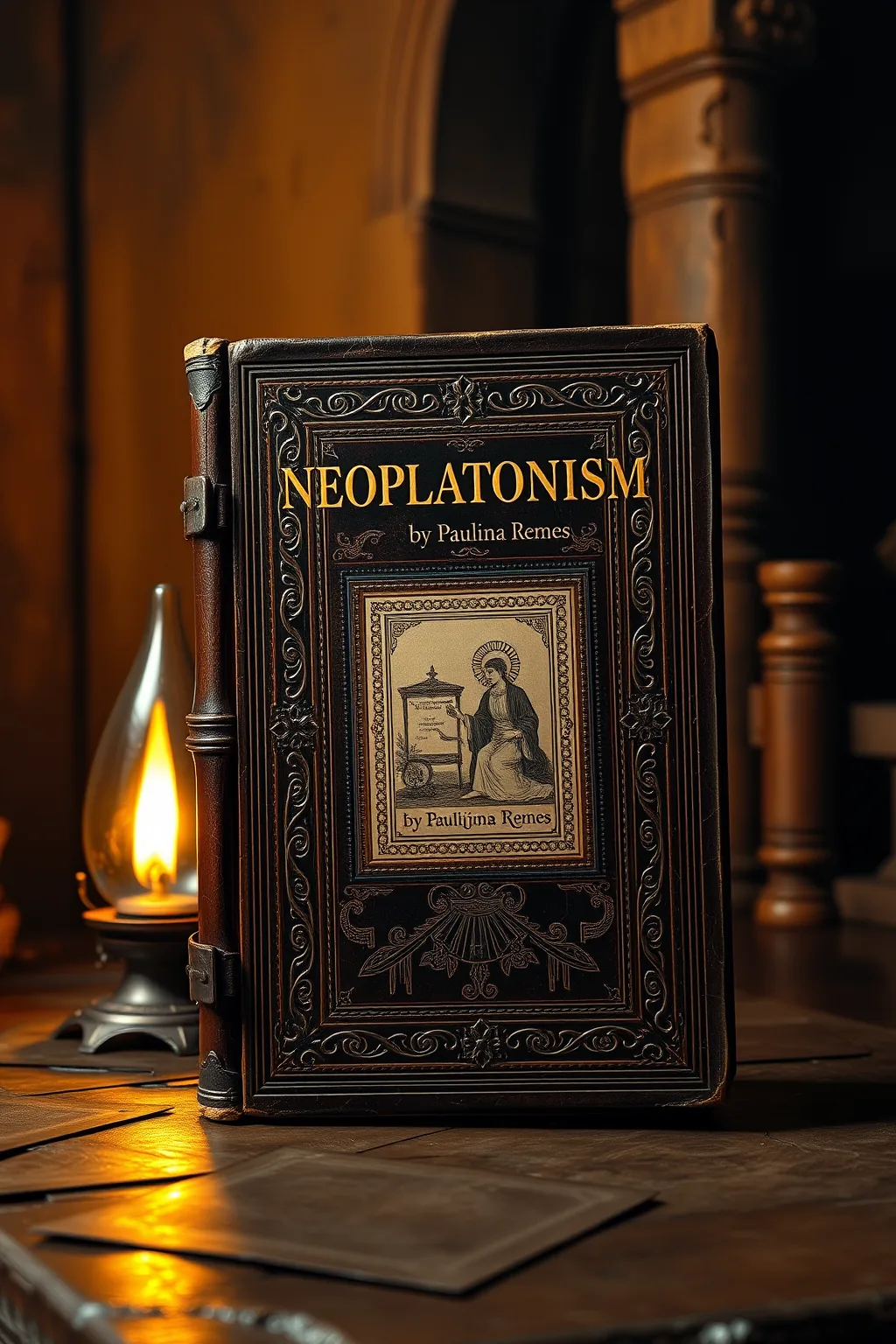
Pauliina Remes's 2008 study examines Neoplatonism from Plotinus to the closure of the Athenian Academy.
Pauliina Remes's book provides a focused study of Neoplatonism, a philosophical tradition that significantly influenced Western thought. The work traces the development of this school from its principal figure, Plotinus, up to the symbolic closing of the Academy in Athens in 529 CE. Remes systematically examines the central doctrines and intellectual evolution within Neoplatonism.
The book is aimed at students and scholars of ancient philosophy, particularly those with an interest in the Hellenistic and Roman periods. It also serves as an introduction for readers of esoteric traditions who wish to grasp the philosophical roots of later mystical movements. The text offers a clear entry into complex metaphysical concepts. Remes highlights the common assumptions uniting Neoplatonic thinkers, including their views on metaphysics, especially the concept of the One and its emanations, and their epistemology, which centers on intellectual ascent and divine illumination.
Neoplatonism formed a bridge between ancient Greek philosophy and later mystical thought. Its emphasis on emanation from a singular divine source, the soul's journey back to this source, and the pursuit of spiritual illumination made it a fertile ground for esoteric traditions. Thinkers like Plotinus, Porphyry, and Iamblichus developed complex systems that would be revisited and adapted by mystics and occultists for centuries, influencing Kabbalah, Hermeticism, and various forms of Western esotericism.
💡 Why Read This Book?
• Gain a precise understanding of Plotinus's metaphysical doctrines, including the concept of the One, which forms the bedrock of Neoplatonic thought, allowing you to trace its influence on later esoteric systems. • Explore the philosophical psychology articulated by Porphyry, focusing on the soul's journey and its practical implications for spiritual development, offering insights distinct from purely theoretical contemplation. • Grasp the historical trajectory of Neoplatonism from its inception to the closure of the Academy in Athens in 529 CE, providing crucial context for its enduring impact on both Western philosophy and mystical practices.
⭐ Reader Reviews
Honest opinions from readers who have explored this book.
❓ Frequently Asked Questions
Who was the founder of Neoplatonism discussed in Remes's book?
The book identifies Plotinus (204-70 CE) as the foundational figure of Neoplatonism. His philosophical system, as transmitted through his writings compiled by Porphyry, established the core principles that subsequent Neoplatonists would develop.
What are the key areas of philosophy Remes examines in Neoplatonism?
Remes focuses on metaphysics, epistemology, philosophical psychology, the philosophy of self, ethics, and politics. These areas are explored through the lens of the shared assumptions and doctrines of leading Neoplatonists.
Which prominent Neoplatonists are covered in this introduction?
The book covers major figures such as Plotinus, Porphyry, Iamblichus, Proclus, Simplicius, and Damascius, detailing their contributions and the evolution of the school.
When did the philosophical tradition of Neoplatonism effectively end, according to the book?
The work references the closure of the Academy in Athens in 529 CE as a significant historical marker for the cessation of official pagan philosophical instruction, often seen as an endpoint for the classical Neoplatonic era.
Does Remes's book discuss the practical or mystical aspects of Neoplatonism?
While primarily focused on philosophical credentials, the book explores concepts like divine illumination and the soul's journey, which have direct relevance to mystical practices. However, the emphasis is on the philosophical framework.
What is the primary goal of Remes's introduction to Neoplatonism?
The book aims to reassess Neoplatonism's philosophical standing by examining its core teachings and historical development, providing a clear and comprehensive overview for academic and interested readers.
🔮 Key Themes & Symbolism
The Emanation of the One
Remes details the Neoplatonic cosmology, beginning with the absolute transcendence of the One. This primary principle, beyond being and description, generates all existence through a process of emanation. Understanding this hierarchy, from the Intellect (Nous) and Soul (Psyche) down to the material world, is crucial for grasping the Neoplatonic worldview and its influence on subsequent Gnostic and Hermetic traditions.
The Soul's Ascent and Return
A central theme is the philosophy of the self, viewed as a divine spark fallen into materiality. Remes explores the Neoplatonic conception of the soul's journey, emphasizing ethical purification and intellectual contemplation as means to achieve a return to the divine source. This appeals to ascetic and mystical practices across various esoteric lineages.
Epistemology and Divine Illumination
The work examines how Neoplatonists understood knowledge acquisition. It goes beyond empirical or rational methods to include mystical or intellectual intuition, often described as divine illumination or ecstasy. This concept is vital for understanding how Neoplatonism provided a philosophical framework for direct experience of the divine.
Integration of Diverse Traditions
Neoplatonism, as presented by Remes, represents a sophisticated synthesis of Platonic philosophy with elements from Aristotelianism, Stoicism, and even Pythagoreanism. This syncretic approach allowed it to address a wide range of philosophical and spiritual questions, becoming a dominant intellectual force in late antiquity.
💬 Memorable Quotes
Direct passages from the work, attributed to the author.
“Founding by Plotinus (204-70 CE)”
— This anchors the historical development of Neoplatonism to its principal architect, Plotinus, providing a specific temporal and intellectual origin point for the philosophical system explored in the book.
“Closure of the Academy in Athens in 529”
— This marks a significant historical endpoint discussed in the book, symbolizing the transition from classical pagan philosophy to the dominance of Christian thought in the Byzantine Empire.
“Teachings of the leading Neoplatonists such as Plotinus, Porphyry, Iamblichus, Proclus, Simplicius and Damascius”
— This enumerates the key figures whose doctrines and contributions are systematically examined, providing a clear roadmap of the intellectual lineage covered in Remes's comprehensive study.
“Reassesses Neoplatonism's philosophical credentials”
— This indicates the book's objective: to evaluate and present Neoplatonism not merely as a mystical or religious phenomenon, but as a rigorous and coherent philosophical system worthy of serious academic consideration.
💡 Key Ideas
Editorial paraphrase of the work's core concepts — not direct quotes.
Shared assumptions about metaphysics, epistemology, philosophical psychology, philosophy of self, as well as ethics and politics.
This summarizes the core focus of Remes's analysis, highlighting the interconnectedness of Neoplatonic thought across its major philosophical branches and its systematic approach to understanding reality and the human condition.
🌙 Esoteric Significance
Tradition
Neoplatonism serves as a foundational pillar for much of Western esotericism. While not a singular esoteric school itself, its philosophical system, particularly the concepts of emanation, the transcendent One, and the soul's journey, provided the intellectual scaffolding for later Hermetic, Gnostic, Kabbalistic, and Renaissance magical traditions. It offered a coherent cosmology and soteriology that resonated deeply with those seeking direct experience of the divine.
Symbolism
Key symbols include the 'One,' representing absolute unity and transcendence, often symbolized by light or the ineffable. The 'Intellect' (Nous) embodies divine thought and the Platonic Forms, while the 'Soul' (Psyche) represents the mediating principle between the spiritual and material realms, often depicted as a charioteer guiding horses. The concept of 'emanation' itself functions symbolically, illustrating the necessary outpouring of being from the divine source.
Modern Relevance
Contemporary thinkers and esoteric practitioners continue to draw from Neoplatonism. Its influence is evident in modern Idealism, process philosophy, and various forms of contemporary spirituality that emphasize interconnectedness, consciousness, and the pursuit of higher knowledge. The philosophical rigor applied to concepts of transcendence and immanence remains a vital resource for those exploring the relationship between the material world and ultimate reality.
👥 Who Should Read This Book
• Students of ancient philosophy seeking a clear, philosophically rigorous introduction to Neoplatonic thought, moving beyond simplistic interpretations. • Aspiring practitioners of Western esoteric traditions who need to understand the intellectual origins of concepts found in Hermeticism, Gnosticism, and Renaissance magic. • Comparative religion scholars interested in the philosophical synthesis that bridged classical paganism and early monotheistic thought, providing a crucial link in intellectual history.
📜 Historical Context
Pauliina Remes's "Neoplatonism" situates its subject within the dynamic intellectual range of the Roman Empire, a period marked by the waning influence of classical Greek philosophy and the rise of new spiritual and philosophical syntheses. Emerging in the 3rd century CE, Neoplatonism offered a complex metaphysical framework that profoundly influenced later Christian, Jewish, and Islamic thought, as well as subsequent esoteric traditions. It stood in contrast to prevailing Stoicism and Aristotelianism by emphasizing a transcendent, unified divine source and a path of spiritual ascent. The work highlights the intellectual currents leading up to the closure of the Athenian Academy in 529 CE by Emperor Justinian I, an event that symbolized the end of an era for pagan philosophical schools, although Neoplatonic ideas continued to evolve and spread.
📔 Journal Prompts
The Neoplatonic concept of the One and its relation to multiplicity.
Plotinus's theories on the soul's descent and ascent.
Iamblichus's integration of theurgy and philosophical practice.
Proclus's system of divine triads and their implications.
The philosophical significance of the closure of the Academy in Athens in 529 CE.
🗂️ Glossary
The One
The ultimate, transcendent principle in Neoplatonism, beyond being and intellect, from which all reality emanates. It is ineffable and the source of all existence.
Nous (Intellect)
The second hypostasis in Neoplatonic cosmology, emanating from the One. It contains the Platonic Forms and represents divine thought and the intelligible realm.
Psyche (Soul)
The third hypostasis, emanating from Nous. It bridges the intelligible and sensible worlds, encompassing individual souls and the universal soul that animates the cosmos.
Emanation
The Neoplatonic doctrine that describes the procession of reality from the One through successive levels (hypostases) without diminishing the source. It is a necessary outpouring of divine being.
Theurgy
A practice, particularly emphasized by Iamblichus, involving ritual and prayer aimed at purification and communion with the divine, seen as a means to facilitate the soul's ascent.
Henosis
The Neoplatonic goal of mystical union or spiritual reintegration with the One, achieved through philosophical contemplation and purification.
Hypostasis
A fundamental reality or principle in Neoplatonic metaphysics; distinct levels of being or existence, such as the One, Nous, and Psyche.