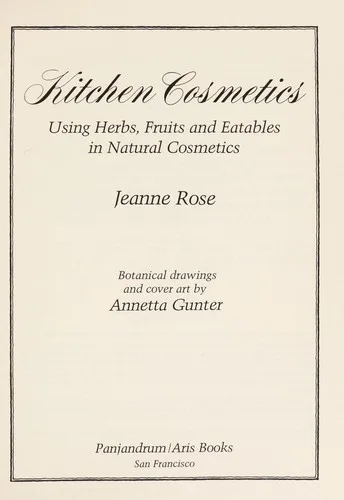
Kitchen Cosmetics
 81
81

Kitchen Cosmetics
Jeanne Rose’s Kitchen Cosmetics is less a book of mere recipes and more a primer on mindful self-creation. Its enduring strength lies in its unpretentious wisdom, grounding the reader in the tangible reality of plant-based ingredients. Rose doesn't just tell you how to mix rose petals with almond oil; she implicitly guides you toward a deeper appreciation for the botanical world. The limitation, perhaps, is its original publication date; some of the specific product formulations might feel dated to contemporary readers accustomed to highly specialized natural ingredients. However, the foundational principles remain robust. A passage detailing the careful infusion of herbs into oil, for instance, perfectly encapsulates the book’s patient, sensory-driven methodology. This is a foundational text for anyone seeking an authentic connection to personal care.
📝 Description
81
Jeanne Rose published Kitchen Cosmetics in 1977, advocating for homemade beauty products.
Published in 1977, Jeanne Rose's Kitchen Cosmetics offers a practical guide to making beauty and personal care items from everyday and natural ingredients. Rose, a recognized figure in natural perfumery and herbalism, shares recipes and advice based on her knowledge of plant properties and their effects on skin and the senses. The book steers clear of synthetic additives, highlighting the effectiveness and natural appeal of plant-based components.
This book is for anyone interested in rediscovering self-care through straightforward, accessible techniques. It will appeal to those drawn to herbalism, natural perfumery, and a more mindful approach to beauty. Readers who prioritize knowing what is in their products and where ingredients come from will find it particularly valuable. It also speaks to those curious about historical methods of creating cosmetics at home.
Kitchen Cosmetics appeared during a time of increasing interest in natural lifestyles and a move away from mass-produced goods. This period saw a renewed focus on herbal practices and a questioning of conventional beauty ideals. Rose's contribution helped this movement by making cosmetic creation accessible to individuals, not just commercial labs.
Kitchen Cosmetics connects the creation of beauty products to a broader philosophy of natural living and personal ritual. It suggests that plants possess energetic qualities that can benefit the user, a concept found in various folk traditions and early materia medica. The book’s emphasis on purity, simplicity, and harnessing nature’s own formulations aligns with an approach that views the body and environment as interconnected systems. This perspective moves beyond mere topical application to a more holistic understanding of well-being and sensory engagement.
💡 Why Read This Book?
• Gain practical skills in crafting your own skincare and perfumes using the specific infusion techniques detailed by Jeanne Rose, allowing for a personalized approach to beauty not found in mass-produced items. • Understand the historical context of natural cosmetic creation, referencing the 1977 publication date and the burgeoning herbalism movement of that era to appreciate the book's foundational impact. • Learn to identify and utilize specific botanical ingredients and their properties, as Rose elaborates on the benefits of elements like rose hips and lavender for skin and sensory well-being.
⭐ Reader Reviews
Honest opinions from readers who have explored this book.
❓ Frequently Asked Questions
When was Jeanne Rose's Kitchen Cosmetics first published?
Kitchen Cosmetics by Jeanne Rose was first published in 1977, marking a significant contribution to the natural living and herbalism movement of that era.
What kind of ingredients does Kitchen Cosmetics focus on?
The book primarily focuses on natural, readily available ingredients such as essential oils, carrier oils, herbs, flowers, and common kitchen staples, eschewing synthetic chemicals.
Is Kitchen Cosmetics suitable for beginners in herbalism?
Yes, the book is highly suitable for beginners due to its clear instructions and focus on accessible ingredients and practical applications of herbal knowledge.
What is the philosophy behind the recipes in Kitchen Cosmetics?
The philosophy centers on harnessing the inherent properties of plants for beauty and well-being, emphasizing purity, simplicity, and a connection to nature in self-care practices.
Does the book cover perfumery as well as cosmetics?
Yes, Jeanne Rose was a renowned perfumer, and Kitchen Cosmetics includes guidance on creating natural perfumes using essential oils and other botanical essences.
Where can I find more information about Jeanne Rose's work?
Jeanne Rose was a prolific author and educator in herbalism and natural perfumery, with many of her works exploring similar themes of plant wisdom and natural living.
🔮 Key Themes & Symbolism
Botanical Efficacy
This theme explores the inherent power and specific properties of plants for cosmetic use. Rose details how ingredients like calendula, rose, and chamomile can soothe, nourish, and beautify the skin. The book moves beyond mere aesthetics, examining the therapeutic and energetic qualities of each botanical, suggesting that true beauty is cultivated from nature's own pharmacopeia. It emphasizes understanding the active compounds and traditional uses of herbs and flowers to create effective, gentle formulations.
Ritualistic Self-Care
Kitchen Cosmetics frames the creation of beauty products as a sacred, mindful practice rather than a mere routine. The act of gathering ingredients, mixing them, and applying them is presented as a form of personal ritual that connects the user to the natural world and their own senses. This perspective elevates simple cosmetic preparation into an act of self-love and reverence, fostering a deeper appreciation for the process and the resulting creations.
Ingredient Transparency
A central tenet of the book is advocating for complete transparency in ingredients, a stark contrast to the often-hidden chemical formulations of commercial products. Rose empowers readers by teaching them exactly what goes into their cosmetics, from essential oils to carrier bases. This knowledge allows individuals to make informed choices, avoid potential irritants, and understand the direct impact of natural substances on their skin and overall well-being.
Democratization of Beauty
Jeanne Rose aimed to make the creation of high-quality, natural cosmetics accessible to everyone, regardless of their background or access to specialized suppliers. By focusing on ingredients that could be sourced from gardens, local markets, or even the kitchen pantry, the book democratized the art of beauty. This empowered individuals to take control of their self-care, moving away from reliance on expensive, industrially produced goods towards self-sufficiency.
💬 Memorable Quotes
Direct passages from the work, attributed to the author.
“Making your own cosmetics is an act of love and respect for yourself.”
— This captures the essence of the book's philosophy, framing DIY beauty as a form of self-care ritual. It suggests that the process of creation itself is as beneficial as the final product, fostering a deeper connection and appreciation for one's own body.
“Nature provides the finest ingredients for beauty.”
— This core belief from Rose emphasizes the superiority of natural elements over synthetic ones. It suggests that the complexity and efficacy found in plants are unmatched, encouraging readers to look to the natural world for their cosmetic needs.
“Learn the properties of each herb before you use it.”
— This is a direct piece of advice promoting informed practice. It stresses the importance of research and understanding the specific benefits and potential interactions of botanical ingredients before incorporating them into personal care products.
“Essential oils are powerful and should be used with knowledge.”
— This statement serves as a crucial caution regarding the potency of essential oils. It advocates for responsible use, implying that understanding dilution, application methods, and individual sensitivities is vital for safe and effective perfumery and skincare.
💡 Key Ideas
Editorial paraphrase of the work's core concepts — not direct quotes.
The skin is the largest organ of the body, and it is important to treat it with care.
This paraphrased concept highlights the book's foundational emphasis on the physiological importance of skin health. It underscores that cosmetic choices are not merely superficial but have a direct impact on bodily well-being, advocating for a holistic approach to beauty.
🌙 Esoteric Significance
Tradition
While not explicitly tied to a single esoteric lineage like Hermeticism or Kabbalah, Jeanne Rose's work draws heavily from ancient traditions of herbalism and natural perfumery that have esoteric underpinnings. These traditions often view plants as possessing not only physical properties but also subtle energies and spiritual essences. Her approach aligns with a broader animistic or pagan worldview where nature is imbued with spirit and power, accessible through respectful interaction and careful preparation. It represents a practical manifestation of nature-based spirituality.
Symbolism
The book subtly engages with symbolism through its ingredient choices. For instance, rose is frequently referenced, symbolizing love, beauty, and the heart in many traditions. Lavender, another common ingredient, is associated with purification, peace, and clarity. The act of infusing herbs into oils can be seen as a symbolic process of extracting and concentrating the plant's vital essence, mirroring alchemical principles of distillation and refinement, albeit on a more accessible, cosmetic level.
Modern Relevance
Kitchen Cosmetics remains relevant today for contemporary practitioners of natural perfumery, herbal skincare formulators, and those interested in sustainable living. It informs modern movements like the 'clean beauty' industry, albeit with a more authentic, less commercialized approach. Thinkers and practitioners in fields ranging from slow living to eco-consciousness find inspiration in Rose's emphasis on mindful creation and connection to natural cycles, demonstrating the enduring appeal of her foundational principles.
👥 Who Should Read This Book
• Aspiring natural perfumers and skincare formulators seeking foundational knowledge on working with botanical ingredients and understanding their properties. • Individuals interested in herbalism and holistic wellness looking for practical applications beyond medicinal uses, focusing on self-care and beauty rituals. • Consumers seeking to transition away from commercial beauty products towards DIY alternatives, valuing ingredient transparency and control over what they apply to their skin.
📜 Historical Context
Published in 1977, Jeanne Rose’s Kitchen Cosmetics arrived during a significant cultural moment in the United States. The counterculture movement had fostered a deep skepticism towards industrialized consumerism, leading to a surge of interest in natural living, organic foods, and herbal remedies. This period saw the rise of figures like Rosemary Gladstar, who were reviving traditional herbal practices. Rose’s work aligned perfectly with this zeitgeist, offering practical, accessible ways for individuals to reclaim aspects of their well-being that had been outsourced to corporations. Unlike the more academic or purely medicinal focus of some herbalists, Rose’s approach was explicitly geared towards personal care and beauty, democratizing the field. Her emphasis on creating perfumes and cosmetics from scratch resonated with a desire for authenticity and self-sufficiency, providing an alternative to the chemical-laden products prevalent in the market at the time. The book tapped into a growing awareness of holistic health and environmental consciousness.
📔 Journal Prompts
The ritual of infusing herbs into oil: personal reflections on patience and transformation.
Connecting with the energetic properties of plants: what does lavender communicate to you?
Your personal definition of 'natural beauty' after exploring these recipes.
Comparing the 1977 approach to modern 'clean beauty' standards.
The sensory experience of creating a simple botanical blend.
🗂️ Glossary
Carrier Oil
Vegetable oils, such as almond, jojoba, or olive oil, used to dilute essential oils and other potent ingredients before application to the skin. They form the base for many cosmetic preparations.
Essential Oil
Concentrated hydrophobic liquids containing volatile aroma compounds from plants. They are highly potent and require careful dilution for cosmetic and perfumery use.
Hydrosol
The aromatic water co-produced during the steam distillation of essential oils. Also known as floral water, it contains water-soluble compounds and is gentler than essential oils.
Infusion
A process where plant material is steeped in a liquid (like oil or alcohol) to extract its beneficial properties and aroma. This is a key method for creating cosmetic bases.
Maceration
A method of extraction similar to infusion, often used for delicate plant materials, where they are steeped in oil or alcohol, sometimes with gentle heat, to release their constituents.
Botanical
Relating to or derived from plants. In cosmetics, it refers to any ingredient sourced from plants, including herbs, flowers, roots, and essential oils.
Emulsifier
A substance that helps to mix liquids that normally do not mix, such as oil and water. While less common in Rose's simpler recipes, it's fundamental for lotions and creams.
🔮 Readers Also Liked
Browse all →








More by Jeanne Rose
All books →


More Free Occult Philosophy Books
View all →