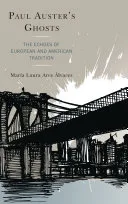
Paul Auster's Ghosts
 75
75

Paul Auster's Ghosts
Álvarez's "Paul Auster's Ghosts" offers a precise cartography of "The New York Trilogy's" literary DNA. It moves beyond simple influence studies to map a complex web of explicit citations and tacit acknowledgments that define Auster's early breakthrough. The strength lies in its granular analysis of specific passages, demonstrating how Auster's narrative strategies echo, and sometimes subvert, the philosophical inquiries of figures like Samuel Beckett. A limitation, perhaps, is that the intense focus on intertextuality might occasionally overshadow the novels' own internal thematic explorations for readers less invested in literary theory. The detailed dissection of Auster's engagement with the very concept of the detective novel, as presented in the early sections, is particularly illuminating. Álvarez's work is a rigorous scholarly contribution, essential for dedicated Auster scholars.
📝 Description
75
María Laura Arce Álvarez's 2018 study examines the literary dialogue within Paul Auster's "The New York Trilogy."
This 2018 book analyzes the literary connections in Paul Auster's "The New York Trilogy." Álvarez traces the influences and dialogues that shaped Auster's 1987 novel, showing how it references and admires earlier writers. The study investigates the role of "The New York Trilogy" in Auster's later work.
The book is for advanced students and scholars of American literature, comparative literature, and postmodern fiction. Readers interested in intertextuality, the influence of Samuel Beckett on modern writing, and the literary background of Auster's early career will find this analysis valuable. It helps readers understand how literary works relate to each other across time.
Álvarez situates "The New York Trilogy" within late 20th-century postmodern literature. This period saw writers engage self-consciously with literary tradition and question narrative authority. The book touches on academic discussions about Auster, his connection to existentialist and minimalist traditions, and figures like Samuel Beckett. It also considers scholarship that followed the re-evaluation of postmodernism in the early 21st century.
This work fits within the scholarly tradition of literary criticism that examines the hidden structures and influences within texts. It follows a line of inquiry that looks beyond the surface narrative to uncover the layers of meaning derived from a writer's engagement with their predecessors. By focusing on intertextuality and specific literary dialogues, Álvarez participates in an ongoing academic conversation about how texts are built upon, respond to, and transform earlier works, particularly within the context of postmodernism's self-aware approach to literary history.
💡 Why Read This Book?
• Gain a nuanced understanding of intertextuality by examining how Paul Auster's "The New York Trilogy" (1987) explicitly names and implicitly engages with authors like Samuel Beckett, revealing a conscious dialogue with literary precursors. • Appreciate the foundational role of "The New York Trilogy" in Auster's broader oeuvre by understanding how its intertextual strategies informed his subsequent works, as detailed in Álvarez's analysis. • Grasp the specific literary and philosophical currents of the late 20th century that shaped postmodern fiction, using this book's exploration of Auster's engagement with existentialist and minimalist traditions as a case study.
⭐ Reader Reviews
Honest opinions from readers who have explored this book.
❓ Frequently Asked Questions
What is the primary focus of María Laura Arce Álvarez's book on Paul Auster?
The book focuses on the intertextual relationships within Paul Auster's "The New York Trilogy," exploring its connections to American and European writers who influenced Auster's early and subsequent works.
Which specific authors are discussed in relation to Paul Auster's "The New York Trilogy"?
The book discusses authors who shaped Auster's novel, with a notable emphasis on Samuel Beckett, and other American and European writers whose works are in explicit or implicit dialogue with Auster's.
When was Paul Auster's "The New York Trilogy" originally published?
Paul Auster's "The New York Trilogy" was originally published in 1987.
What does "intertextual relationship" mean in the context of this book?
It refers to how "The New York Trilogy" engages with other literary works, either by direct mention of authors and books or through implicit stylistic and thematic echoes, creating a literary dialogue.
Is this book suitable for casual readers of Paul Auster?
This book is more suited for academic readers, scholars, and serious students of literature who are interested in literary theory and detailed textual analysis of "The New York Trilogy."
What is the publication year of María Laura Arce Álvarez's analysis?
María Laura Arce Álvarez's book was first published on June 13, 2018.
🔮 Key Themes & Symbolism
Intertextual Dialogue
The work examines "The New York Trilogy" as a text deeply embedded in a conversation with prior literature. Álvarez demonstrates how Auster consciously incorporates or alludes to other works, creating layers of meaning. This dialogue is not merely decorative but foundational to Auster's narrative construction, revealing how his fiction emerges from and responds to a rich literary heritage, particularly evident in his engagement with existentialist thinkers and stylistic precursors.
Influence of Samuel Beckett
A central theme is the profound influence of Samuel Beckett on Auster's "The New York Trilogy." Álvarez details how Auster's minimalist prose, existential concerns, and exploration of language's limits echo Beckett's own groundbreaking work. This influence is presented not as simple imitation but as a complex engagement, where Auster adopts certain philosophical and stylistic elements to forge his unique narrative voice within the postmodern landscape.
The Detective Novel Framework
The book analyzes how "The New York Trilogy" utilizes and subverts the conventions of the detective novel genre. Álvarez explores how Auster employs the mystery structure to investigate philosophical questions about identity, reality, and the nature of narrative itself. The intertextual links extend to how Auster engages with the tradition of detective fiction, using its familiar tropes as a springboard for more complex literary and existential inquiries.
Literary Lineage and Legacy
Álvarez situates Auster's work within a specific literary lineage, tracing the intellectual and artistic threads that connect him to earlier American and European writers. The analysis reveals how "The New York Trilogy" functions as both a product of and a contributor to this lineage, shaping Auster's future literary endeavors and solidifying his place within postmodern American literature. The book emphasizes the continuous, evolving nature of literary creation.
💬 Memorable Quotes
Direct passages from the work, attributed to the author.
“Auster's "The New York Trilogy" engages in an intertextual dialogue, sometimes explicit, sometimes implicit.”
— This statement highlights the core analytical approach of Álvarez's book, emphasizing that Auster's work actively converses with other texts, drawing upon them in overt and subtle ways to construct its meaning and identity.
“The works of certain American and European writers shaped this novel and Auster’s future works.”
— This observation emphasizes the foundational impact of external literary influences not only on "The New York Trilogy" but also on the trajectory of Paul Auster's entire career, suggesting a consistent engagement with literary tradition.
“Auster’s "The New York Trilogy" is a novel formed by an intertextual dialogue.”
— This core assertion frames Auster's important work not as an isolated creation but as a piece participating in a broader literary conversation, built upon and responding to existing textual landscapes.
“The book explores the intertextual relationship between Paul Auster’s first and most remarkable work, The New York Trilogy (1987).”
— This emphasizes the book's specific focus on Auster's early, highly regarded work and its detailed examination of how it relates to other literary creations, setting the stage for a deep dive into its influences.
💡 Key Ideas
Editorial paraphrase of the work's core concepts — not direct quotes.
The novel is formed by an intertextual dialogue which in some cases it is explicit, mentioning authors and books intentionally, and in others implicit, provoked by Auster’s admiration for authors such as Samuel Beckett.
This paraphrase points to the dual nature of intertextuality explored: direct references versus subtle influences. It underscores the deliberate construction of Auster's fiction as a response to admired predecessors like Beckett.
🌙 Esoteric Significance
Tradition
While "Paul Auster's Ghosts" is primarily an academic literary analysis, its focus on the labyrinthine nature of identity, the search for meaning in fragmented realities, and the construction of narrative can be viewed through an esoteric lens. It aligns with traditions that explore the illusory nature of the manifest world and the hidden structures underlying perceived reality. The book's dissection of how meaning is constructed and deconstructed echoes Gnostic concerns with hidden knowledge and the interpretation of symbols within a complex textual cosmos.
Symbolism
The "ghosts" in Auster's work, as explored by Álvarez, can be interpreted esoterically as lingering influences, unresolved pasts, or archetypal presences that haunt the narrative. The city of New York itself functions as a symbol of the labyrinth, a complex, often disorienting space mirroring the search for truth or self-knowledge. The very act of writing and reading within Auster's fiction becomes a symbolic quest, an attempt to impose order or uncover hidden patterns in a seemingly chaotic existence.
Modern Relevance
Contemporary thinkers and practitioners in fields ranging from literary theory to psychoanalysis continue to draw upon the deconstructive and self-reflexive techniques exemplified in "The New York Trilogy." Álvarez's analysis provides a scholarly framework for understanding how these postmodern strategies, which question objective reality and authorial intent, remain relevant in an age saturated with digital information and alternative narratives. The book's exploration of how meaning is negotiated through textual dialogue informs current discussions on hermeneutics and the fluid nature of interpretation.
👥 Who Should Read This Book
• Advanced literary scholars and graduate students focusing on postmodern American fiction, particularly the works of Paul Auster and his contemporaries. • Readers interested in the theoretical application of intertextuality and deconstruction in literary analysis, seeking concrete examples from a canonical postmodern text. • Students of comparative literature and philosophy who wish to understand the specific influence of authors like Samuel Beckett on late 20th-century narrative techniques and existentialist themes.
📜 Historical Context
Published in 2018, María Laura Arce Álvarez's "Paul Auster's Ghosts" arrives in an era of mature reflection on postmodernism. "The New York Trilogy," released in 1987, was a product of the late 20th century, a period characterized by literary self-awareness and a focus on narrative construction. Álvarez's work engages with the ongoing academic discourse that treats Auster's trilogy not just as a postmodern artifact but as a text deeply enmeshed in literary history. The book's detailed analysis of Auster's engagement with existentialist and minimalist traditions, particularly the influence of Samuel Beckett, places it within a critical lineage that has continued to re-evaluate these themes. While not a direct contemporary engagement, Álvarez's scholarship speaks to how the legacy of authors like Beckett continued to inform literary production and critical reception long after their own major works appeared, a key point in understanding the sustained relevance of postmodern dialogues.
📔 Journal Prompts
The concept of the "literary dialogue" in "Paul Auster's Ghosts": how does it manifest in your own reading?
Samuel Beckett's influence: identify a contemporary work that seems to echo his philosophical or stylistic concerns.
"The New York Trilogy's" engagement with the detective novel: what hidden structures does this genre reveal about reality?
The nature of "ghosts" in literature: explore how absent or past presences shape narrative and character.
Intertextuality as a critical lens: apply the concept to a book you recently finished.
🗂️ Glossary
Intertextuality
A literary theory suggesting that any text is not an isolated creation but is shaped by and refers to other texts, creating a network of meanings through explicit or implicit connections.
The New York Trilogy
Paul Auster's collection of three interconnected novels: 'City of Glass' (1985), 'Ghosts' (1986), and 'The Locked Room' (1986), first published together in 1987.
Postmodern Literature
A literary movement characterized by skepticism towards grand narratives, self-reflexivity, irony, fragmentation, and a questioning of objective reality and truth.
Samuel Beckett
An Irish avant-garde playwright, novelist, and poet, known for his minimalist, existentialist works like 'Waiting for Godot' and 'Endgame'.
Literary Dialogue
The concept that literary works engage in a continuous conversation with each other, influencing, responding to, and reinterpreting previous texts and traditions.
Existentialism
A philosophical movement emphasizing individual existence, freedom, and choice, often exploring themes of alienation, meaninglessness, and anxiety in a godless universe.
Minimalism
In literature, a style characterized by sparse prose, limited description, and a focus on surface action rather than internal thought or emotion.