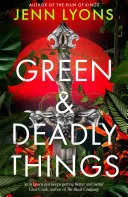
Green and Deadly Things
 80
80

Green and Deadly Things
Lyons crafts a narrative that immediately subverts expectations regarding the history of necromancy. The premise that history has deliberately misremembered the near-world-ending events of centuries past is a potent hook. Mathaiik’s journey, presented as a lifelong study to join a forgotten order, is immediately intriguing. While the novel excels in presenting deeply terrifying monsters and incredibly compelling magical ideas, as noted by Daniel M. Ford, the pacing in the initial chapters can feel deliberate, perhaps a touch too much so for readers seeking immediate action. The exploration of Mathaiik’s awakening to the true nature of necromancy, moving beyond its historical condemnation to understand its intricate mechanics, is where the book truly shines. This isn't merely a story about forbidden magic; it's a critical examination of how power structures control narrative. *Green and Deadly Things* is a sophisticated fantasy that demands careful attention, rewarding readers with a unique perspective on magical history and its custodians.
📝 Description
80
Jenn Lyons's 2026 novel *Green and Deadly Things* reexamines the history of necromancy.
Published in March 2026, Jenn Lyons's *Green and Deadly Things* challenges the accepted history of necromancy. The story follows Mathaiik, whose lifelong study of this forbidden art is confronted by a reality far different from historical accounts. This standalone fantasy novel reframes magical conflict, moving beyond simple good versus evil.
The narrative positions necromancy not as an inherently evil force, but as a power whose ancient, potentially destructive capabilities have been deliberately altered by historical revisionism. Lyons questions how narratives of magic and power are shaped, suggesting that the 'accepted' history of magic is a fabrication designed to obscure truths about its origins. The book's core concept is 'cursed magic,' a force fraught with danger and ethical quandaries, alongside the idea of historical revisionism within a magical setting.
Monsters, terrifying yet possibly misunderstood, suggest a complex view of the monstrous, where fear may arise from ignorance or manipulation. Readers who appreciate detailed magic systems and morally gray characters will find *Green and Deadly Things* engaging. Fans of authors like S.A. Chakraborty and Robin Hobb, who enjoy world-building with deep historical roots and a dark atmosphere, will likely connect with this work. It suits those who seek fantasy that questions established lore and examines the consequences of hidden truths.
This novel engages with esoteric themes by questioning established magical doctrines and their historical recording. It posits that the understanding of powerful, forbidden arts like necromancy has been actively shaped and distorted over time. This echoes traditions that examine the suppression or manipulation of knowledge, suggesting that 'accepted' magical history is a construct. The book explores how fear and control are maintained through the deliberate obscuring of potent magical truths, a theme found in various occult philosophies that analyze the hidden structures of power and belief.
💡 Why Read This Book?
• Gain an understanding of how historical narratives can be manipulated to control the perception of forbidden arts like necromancy, a concept central to the novel's premise. • Experience deeply terrifying monsters, challenging the reader's assumptions about the nature of the monstrous and its origins. • Explore intricate magical ideas that move beyond conventional fantasy tropes, particularly concerning the mechanics and ethical implications of cursed magic.
⭐ Reader Reviews
Honest opinions from readers who have explored this book.
❓ Frequently Asked Questions
What is the central conflict in Green and Deadly Things?
The central conflict stems from the protagonist Mathaiik discovering that the historical accounts of necromancy, which led to its near-universal condemnation, are a deliberate fabrication designed to obscure its true nature and origins.
Who are the key influences for fans of Jenn Lyons's Green and Deadly Things?
Fans of S.A. Chakraborty, Robin Hobb, and Martha Wells's *Witch King* will likely enjoy *Green and Deadly Things* due to its intricate magic, compelling characters, and dark fantasy elements.
What makes the necromancy in this book unique?
The necromancy in *Green and Deadly Things* is presented as a force that was nearly world-ending but whose history has been intentionally rewritten, suggesting a complex truth beyond simple villainy.
Is Green and Deadly Things a standalone novel?
Yes, *Green and Deadly Things* is a standalone fantasy novel, meaning it tells a complete story within a single volume, unlike a series.
What is the significance of Mathaiik's lifelong study?
Mathaiik's lifelong study is significant because it prepares him to uncover the distorted history of necromancy and confront the true, dangerous nature of cursed magic.
When was Green and Deadly Things first published?
Jenn Lyons's *Green and Deadly Things* was first published on March 5, 2026.
🔮 Key Themes & Symbolism
Histories of Forbidden Magic
The novel critically examines how historical events, particularly those involving powerful and feared magic like necromancy, are recorded and disseminated. It posits that accepted historical accounts can be deliberate fabrications, serving the interests of those in power. The near-apocalyptic past involving necromancy is re-contextualized, suggesting that the narrative of its inherent evil is a construct designed to suppress its true nature and potential, a theme that speaks to real-world historical revisionism and the control of knowledge.
The Nature of Monstrosity
Lyons presents 'deeply terrifying monsters' that challenge conventional interpretations of the monstrous. Rather than purely evil entities, these creatures may be products of misunderstood forces or victims of the same historical manipulation that distorts the understanding of necromancy. This theme encourages readers to question fear-based narratives and consider the possibility of hidden truths behind monstrous appearances or actions.
Cursed Magic and Its Consequences
The concept of 'cursed magic' is central, implying a form of sorcery that carries inherent dangers, ethical quandaries, and profound consequences for its wielders and the world. This goes beyond simple 'dark magic' tropes, suggesting a magic that is intrinsically tied to destruction or corruption, yet potentially misunderstood or misrepresented in historical accounts. Mathaiik's journey involves navigating these perilous magical currents.
The Power of Narrative Control
At its heart, *Green and Deadly Things* explores how narratives are shaped to maintain power structures. The 'history' of necromancy is presented as a prime example of how suppressing or altering information can control populations and perceptions. This theme invites readers to consider the authority of historical accounts and the potential for hidden realities beneath the surface of accepted knowledge.
💬 Memorable Quotes
Direct passages from the work, attributed to the author.
“History remembers it wrong.”
— This concise statement is the novel's thesis, immediately challenging the reader's perception of established lore and setting the stage for a narrative that will reveal hidden truths about magic and power.
“Incredibly compelling magical ideas pairs with deeply terrifying monsters”
— This observation highlights the novel's dual strength: its imaginative and intricate magic systems, coupled with its creation of formidable, fear-inducing creatures that push the boundaries of fantasy horror.
“Mathaiik has studied all his life to join the...”
— This sets up the protagonist's dedication and the mystery surrounding his quest. It implies a deep personal investment in uncovering forbidden knowledge and suggests a world where such pursuits are secretive and potentially dangerous.
“Necromancy almost destroyed the world.”
— This phrase represents the 'accepted' historical narrative that the book intends to deconstruct, serving as the foundation for the mystery and the eventual revelation of a different, perhaps more complex, truth.
“A page-turning standalone fantasy of necromancy and cursed magic”
— This blurb excerpt promises an engaging, self-contained story focused on the dark arts, particularly necromancy and its inherent dangers, signaling a fast-paced narrative with a dark, magical core.
🌙 Esoteric Significance
Tradition
While not directly aligned with a singular esoteric lineage like Hermeticism or Kabbalah, *Green and Deadly Things* engages with themes common in occult philosophy, particularly the idea of hidden knowledge and suppressed truths. It touches upon Gnostic concepts of a false demiurge or creator who has misled humanity, here manifested as historical forces that have deliberately misrepresented the nature of necromancy. The narrative interrogates how power maintains itself through controlling information and fear, a recurring concern in esoteric thought.
Symbolism
The 'cursed magic' itself functions as a potent symbol, representing forces that are inherently dangerous and misunderstood, much like primal energies in various esoteric systems. The concept of necromancy, often associated with death and the underworld, is employed not just as a magical practice but as a symbol of what society fears and seeks to control, and how those fears are manipulated. The 'terrifying monsters' can be interpreted as symbols of the primal, chaotic forces that lie beneath the veneer of ordered society.
Modern Relevance
Contemporary practitioners and scholars of esoteric studies, particularly those interested in critical theory applied to magical traditions, find resonance in Lyons's work. The novel's exploration of narrative control and the potential for 'hidden histories' within magical systems speaks to modern discussions about decolonizing esoteric knowledge and questioning established authorities. Thinkers examining the psychology of fear and the social construction of the 'occult' might draw parallels to the way necromancy is portrayed as a tool for societal control.
👥 Who Should Read This Book
• Readers interested in the philosophical underpinnings of magic systems, particularly those who enjoy questioning established lore and exploring the ethical dimensions of power. • Aspiring authors and world-builders seeking examples of how to create intricate magic and subvert common fantasy tropes through historical revisionism. • Students of comparative religion and mythology who are curious about how societies construct narratives around feared or forbidden practices, using magic as a lens.
📜 Historical Context
Jenn Lyons's *Green and Deadly Things*, published in March 2026, arrives in an era where fantasy literature continues to push boundaries, often engaging with complex themes of power, history, and identity. While not directly tied to a specific historical movement, the novel's premise of historical revisionism concerning forbidden magic echoes late 20th and early 21st-century scholarship that re-examined suppressed narratives. The work engages with a tradition of dark fantasy that gained prominence alongside authors like V.E. Schwab and N.K. Jemisin, who explore morally grey areas and challenging world-building. It stands apart by focusing specifically on the manipulation of magical history, offering a counter-narrative to straightforward accounts of good versus evil in fantasy. Contemporary authors like Tamsyn Muir, with her own unique take on death and magic, represent a similar spirit of genre innovation that *Green and Deadly Things* taps into.
📔 Journal Prompts
Mathaiik's lifelong study and the 'history' of necromancy.
The nature of 'cursed magic' and its terrifying manifestations.
Historical revisionism within magical narratives.
The concept of the monstrous beyond simple evil.
The power dynamics behind controlling knowledge about forbidden arts.
🗂️ Glossary
Necromancy
A branch of magic concerned with the dead, often depicted as raising spirits or corpses, but in this context, its historical narrative has been deliberately distorted.
Cursed Magic
A form of magic that carries inherent dangers, ethical complexities, and potentially destructive consequences, often tied to its origins or methods.
Historical Revisionism
The reinterpretation of orthodox historical accounts, particularly in *Green and Deadly Things*, concerning the true nature and impact of necromancy.
Mathaiik
The protagonist of *Green and Deadly Things*, whose lifelong study of necromancy leads him to uncover the fabricated history surrounding it.
Standalone Novel
A novel that tells a complete story within a single volume, not requiring readers to follow a series to understand the plot and characters.
S.A. Chakraborty
Author of the Daevabad Trilogy, known for epic fantasy with complex world-building and political intrigue, often cited as a comparative influence.
Robin Hobb
Acclaimed author of fantasy series like the Area of the Elderlings, recognized for deep character development and intricate plotting, also a comparative influence.