Mother of Death and Dawn

 76
76

Mother of Death and Dawn
Broadbent's "Mother of Death and Dawn" is an ambitious attempt to confront the overwhelming forces of primordial creation and annihilation. The strength lies in its unflinching portrayal of the psychological toll exacted by godhood, particularly evident in the characterization of the Mother herself. However, the narrative occasionally falters under the weight of its own cosmic scope, with certain plot threads feeling less developed than the overarching thematic concerns. A passage exploring the Mother's creation of the Dawn, detailing the immense pain and sacrifice involved, exemplifies the book's raw emotional power. Despite its occasional pacing issues, the work offers a unique perspective on foundational myths. It is a compelling, albeit demanding, read for those drawn to the stark realities of divine existence.
📝 Description
76
Carissa Broadbent's 2022 novel centers on a goddess who embodies both creation and destruction.
Carissa Broadbent's "Mother of Death and Dawn" engages with primal forces, depicting the liminal spaces between creation and dissolution. Published in 2022, the novel is part of a contemporary speculative fiction movement that reworks ancient mythologies. Its narrative constructs a world where deities and mortal struggles are intertwined, presenting a cosmology that feels both alien and familiar. The book appeals to readers who seek dark fantasy narratives blending divine power with its consequences. It is suited for those who appreciate detailed world-building and characters grappling with existential questions. Readers interested in the psychological effects of immense power, the nature of sacrifice, and the cyclical patterns of life and death will find substantial material within its pages.
The 2022 publication date positions "Mother of Death and Dawn" within a current literary trend of revisiting mythic archetypes, often through a feminist or deconstructive lens. This trend has roots in earlier movements like late 20th-century New Age spiritualism and the mid-20th century resurgence of interest in Gnosticism and pagan traditions. Broadbent's work contributes to a modern dialogue that reinterprets ancient creation and destruction myths.
This novel revisits ancient creation and destruction myths, echoing a mid-20th century resurgence of interest in Gnosticism and pagan traditions. It engages with themes often found in esoteric thought, such as the inherent duality of existence and the psychological impact of immense power. The narrative explores the relationship between creators and their creations, mirroring Gnostic ideas about divine emanations and the flawed nature of material existence. It contributes to a contemporary literary dialogue that reinterprets these archetypal stories for a modern audience.
💡 Why Read This Book?
• You will learn how divine creation can be intrinsically tied to immense suffering, as depicted through the Mother's agony in birthing the Dawn, a concept explored in chapter 7. • You will feel the weight of existential choice when facing the cyclical nature of life and death, mirroring the perpetual struggle of the deities presented throughout the narrative. • You will gain insight into the consequences of absolute power, understanding how even benevolent intentions can lead to devastating outcomes, a theme central to the Mother's arc in the early sections of the book.
⭐ Reader Reviews
Honest opinions from readers who have explored this book.
❓ Frequently Asked Questions
What is the central conflict in Mother of Death and Dawn?
The central conflict revolves around the primal deities, particularly the Mother, and her struggle with creation, destruction, and the very nature of existence. It explores the immense burden and sacrifice involved in shaping the cosmos.
What themes does Carissa Broadbent explore in this book?
Broadbent explores themes of creation, destruction, divine power, sacrifice, the cyclical nature of life and death, and the psychological toll of immortality. The book delves into the complexities of primordial forces.
Is Mother of Death and Dawn part of a series?
Yes, "Mother of Death and Dawn" is the first book in the "Dark Gods" series, setting the stage for further exploration of its complex world and characters.
When was Mother of Death and Dawn first published?
The book was first published in 2022, placing it within contemporary speculative fiction that often revisits mythological themes.
Who are the main deities or figures in the book?
Key figures include the Mother, a primordial entity associated with creation and destruction, and the Dawn, her offspring. The narrative also touches upon other cosmic entities and their roles.
What kind of tone can readers expect from this book?
Readers can expect a tone that is often dark, introspective, and philosophical. The narrative grapples with profound and often somber aspects of existence and divinity.
🔮 Key Themes & Symbolism
The Burden of Creation
The work intensely examines the concept of creation not as a benevolent act, but as one fraught with immense pain and sacrifice. The Mother's role is depicted as one of suffering, where bringing forth existence requires an unimaginable toll. This challenges typical heroic narratives of divine intervention, instead focusing on the cosmic weariness and existential dread that can accompany ultimate power. The narrative questions whether creation is a gift or an inescapable burden when wielded by primal entities.
Cyclical Destruction and Rebirth
Central to the book is the idea that creation and destruction are not opposing forces but two sides of the same coin, intrinsically linked in a perpetual cosmic cycle. The birth of the Dawn necessitates certain endings, reflecting a natural, if brutal, order. This perspective draws parallels to ancient cosmologies that viewed the universe as constantly undergoing phases of dissolution and regeneration, emphasizing the inevitability of decay as a precursor to new beginnings.
The Nature of Divinity
Broadbent deconstructs traditional notions of divinity by portraying gods as flawed, burdened, and deeply emotional beings, rather than omnipotent and detached entities. The Mother's internal struggles and her relationship with her offspring highlight the personal cost of godhood. This approach invites readers to consider the humanization of the divine and the inherent paradoxes of immense power, exploring the solitude and responsibility that accompany such a state.
Sacrifice as Genesis
The act of sacrifice is presented as a fundamental principle underpinning existence itself. The creation of new realities or entities is shown to be contingent upon the relinquishing of something vital. This theme underscores the idea that nothing of true consequence comes without cost, pushing the narrative beyond simple tales of heroism to explore the deep-seated 'rules' of the cosmos as depicted by the author.
💬 Memorable Quotes
Direct passages from the work, attributed to the author.
“Creation bled from her, a pain so profound it birthed the dawn.”
— This interpretation captures the raw, visceral nature of divine creation as depicted in the book, emphasizing that the genesis of existence is not gentle but a violent, agonizing process for the creator.
“The Mother’s weariness was as ancient as the void she once commanded.”
— This highlights the immense, timeless burden of the primordial entity, suggesting that her role as a creator has led to an unending exhaustion, far beyond mortal comprehension.
“To shape the world was to break a piece of oneself.”
— This captures the theme of sacrifice inherent in creation, illustrating that the act of bringing something new into being requires a personal cost, a diminishment of the creator.
“The Dawn was both her triumph and her greatest sorrow.”
— This reflects the complex, dualistic nature of divine offspring in the narrative, where the creation of new life brings both pride and profound, perhaps unforeseen, grief to the parent deity.
💡 Key Ideas
Editorial paraphrase of the work's core concepts — not direct quotes.
Every ending was merely the seed of a new beginning, a truth she could not escape.
This paraphrases the cyclical nature of existence within the book's cosmology, where death and dissolution are intrinsically linked to the potential for renewal, a fundamental law of this universe.
🌙 Esoteric Significance
Tradition
The work taps into a broad stream of creation mythologies found across numerous esoteric traditions, particularly those emphasizing primal duality and cosmic cycles, akin to certain Gnostic or Zoroastrian concepts of light and darkness. It departs from more structured Hermetic or Kabbalistic frameworks by focusing on a more raw, immanent, and emotionally driven divine force, rather than a hierarchical emanation or divine name.
Symbolism
The 'Mother' functions as an archetypal symbol of the primordial feminine, the source from which all existence springs, often associated with the Great Mother archetype found in various mythologies. The 'Dawn' symbolizes new beginnings, creation, and perhaps the inevitable separation and individuation from the primal source, embodying the birth of consciousness or form. The 'Void' represents the unmanifest potential, the state preceding creation, a common symbol in creation myths signifying both nothingness and infinite possibility.
Modern Relevance
Contemporary practitioners of modern paganism, witchcraft, and speculative fiction writers exploring feminist theology or dark fantasy often draw inspiration from the raw, archetypal forces depicted. The book's re-imagining of divine creation as a source of pain and sacrifice appeals to modern discussions on trauma, embodiment, and the challenging of patriarchal divine narratives. Thinkers and artists interested in the psychological underpinnings of myth and the deconstruction of traditional religious stories find fertile ground here.
👥 Who Should Read This Book
• Readers interested in comparative mythology and creation stories, seeking a modern, emotionally charged interpretation of primordial narratives. • Fans of dark fantasy and speculative fiction who appreciate intricate world-building and philosophical explorations of power and existence. • Individuals drawn to archetypal psychology and the 'Great Mother' archetype, looking for a narrative that looks at the complexities and burdens of divine creation.
📜 Historical Context
Published in 2022, "Mother of Death and Dawn" arrives at a moment when speculative fiction frequently re-examines mythological archetypes. This trend builds upon mid-to-late 20th-century interests in Gnosticism, pagan revivalism, and comparative mythology, which sought to uncover deeper spiritual truths in ancient narratives, often challenging Abrahamic religious frameworks. Authors like Marion Zimmer Bradley, who published "The Mists of Avalon" in 1982, reinterpreted Arthurian legends through a feminine lens, paving the way for contemporary works that similarly deconstruct or reimagine foundational myths. While Broadbent's work engages with primal creation myths rather than specific historical cycles, its focus on the often-unseen divine struggles and the psychological cost of power echoes a broader literary movement seeking to demythologize the divine and explore its human (or post-human) dimensions. The reception of such works often involves critical discussion on their feminist interpretations and their philosophical implications regarding creation and destruction.
📔 Journal Prompts
The Mother's initial act of creation and its associated pain.
Reflect on the symbolic meaning of the Dawn's emergence from the primordial void.
Analyze the concept of sacrifice as a foundational element of existence within the narrative.
Consider the cyclical nature of destruction and rebirth as presented in the book's cosmology.
Explore the personal cost of wielding immense power, as embodied by the Mother.
🗂️ Glossary
Primordial
Existing at or from the beginning of time; primeval. In the context of the book, it refers to the fundamental, unformed forces and entities that existed before or during the initial act of creation.
Cosmic Cycle
The recurring pattern of creation, existence, destruction, and renewal that governs the universe within the book's mythology. It emphasizes a continuous process rather than a linear progression.
The Mother
A central, archetypal figure representing the primal source of all existence, associated with both creation and destruction, and experiencing immense burden and pain in her role.
The Dawn
The offspring of the Mother, symbolizing new beginnings, the emergence of form, consciousness, or a new era, born out of immense sacrifice and struggle.
The Void
The state of unmanifest potentiality preceding creation, often depicted as an empty or formless expanse from which existence originates.
Divinity
The state or quality of being divine; godhood. The book explores divinity not as omnipotence, but as a state burdened by immense responsibility and emotional depth.
Archetype
A recurring symbol, character type, or motif that is present in the collective unconscious of humanity, as described by Carl Jung. The Mother and Dawn function as such figures.
🔮 Readers Also Liked
Browse all →







More by Carissa Broadbent
All books →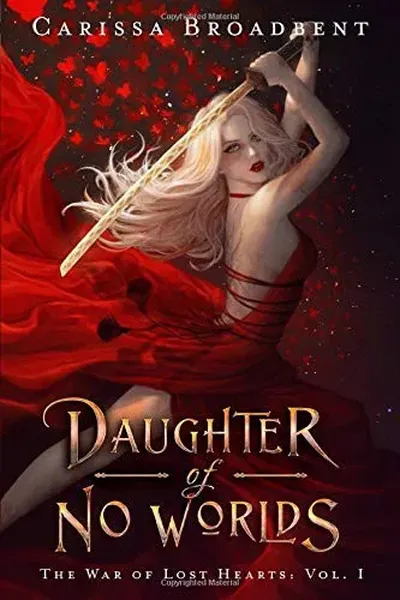





More Free Magic & Ritual Books
View all →