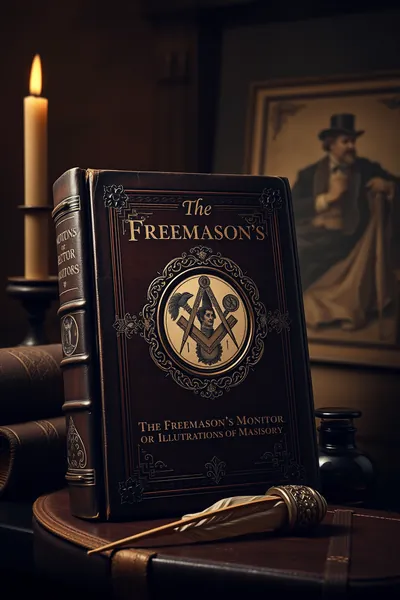
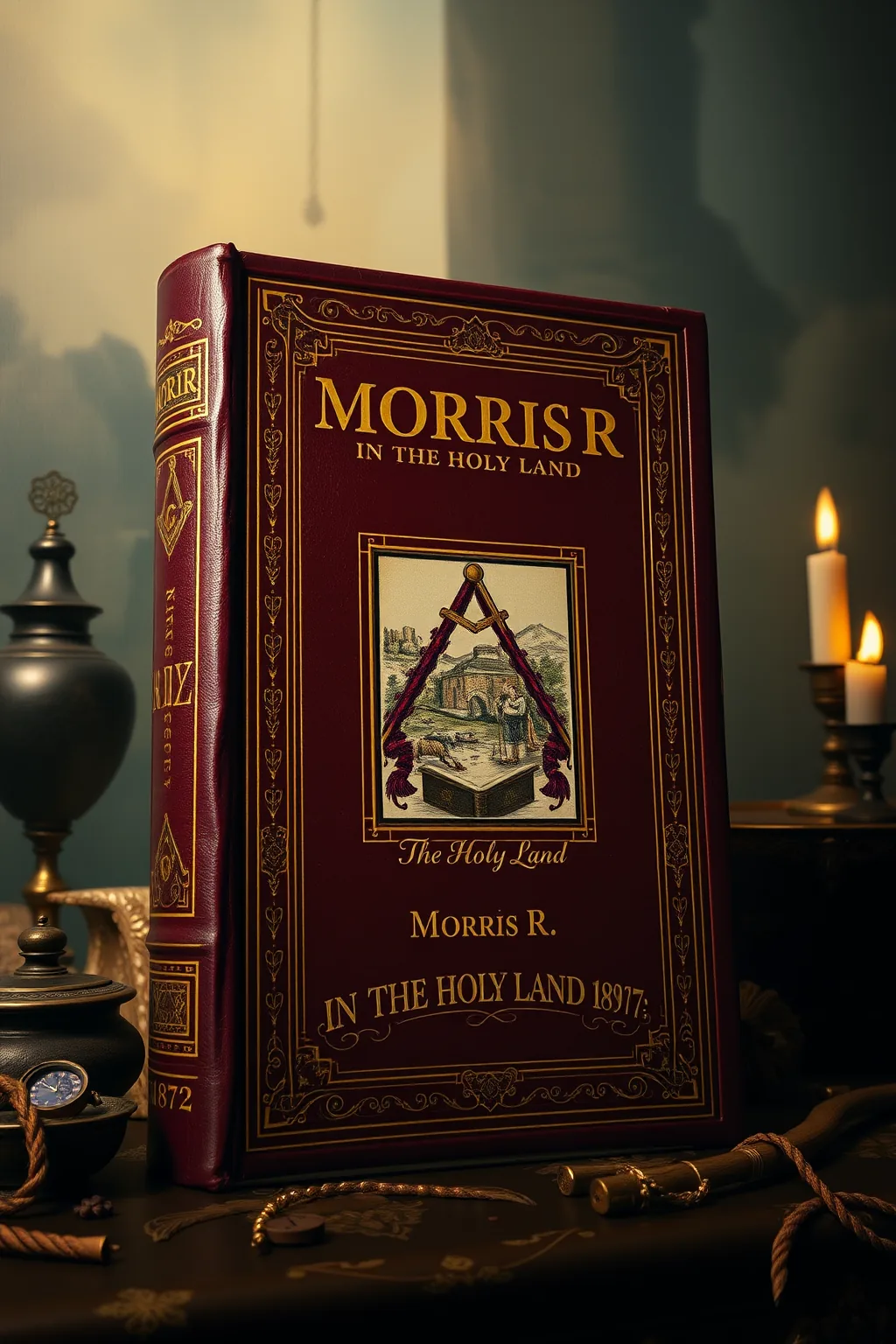
Morris R Freemasonry In The Holy Land 1872
 74
74

Morris R Freemasonry In The Holy Land 1872


Morris R's "Freemasonry In The Holy Land 1872" is a treasure trove of esoteric knowledge for modern seekers of the occult. The book's detailed descriptions of Masonic rituals and their spiritual significance provide a deep understanding of the mystical underpinnings of Freemasonry. Morris R's writing style is both engaging and informative, making complex esoteric concepts accessible to a wide audience. The historical context provided in the book enriches the reader's understanding of how Freemasonry evolved in the Holy Land, and how its practices were influenced by the region's rich spiritual heritage. For anyone interested in the hidden histories of secret societies and the esoteric traditions of the Holy Land, this book is an invaluable resource. It is a must-read for esoteric seekers and historians alike.
📝 Description
74
Published in 1872, 'Morris R Freemasonry In The Holy Land' examines Masonic presence in the Holy Land.
This 1872 text investigates Freemasonry's connection to the Holy Land. It discusses the rituals and symbols employed by the brotherhood, aiming to reveal the philosophical and spiritual foundations of their ancient organization. The author describes how these elements relate to the sacred and occult in the region, weaving together symbolism and mysticism. The book is suited for individuals interested in understanding the deeper aspects of Masonic practices and their symbolic language. It presents a philosophical perspective on the ongoing search for enlightenment and concealed knowledge.
This work fits within the broader tradition of 19th-century Masonic literature that sought to connect the fraternity's origins and practices to ancient historical and spiritual sites. Such texts often aimed to legitimize Freemasonry by linking it to biblical narratives and sacred geography, particularly the Holy Land, viewed as a source of primal wisdom. It reflects an esoteric interest in finding universal truths embedded in ritual and symbol, often drawing on Kabbalistic, Hermetic, or Rosicrucian ideas prevalent in esoteric circles of the era.
💡 Why Read This Book?
Reading "Freemasonry In The Holy Land 1872" today offers a unique opportunity to explore the mystical and esoteric practices of Freemasonry in a historical context. This book provides valuable insights into the spiritual and moral teachings of Freemasonry, revealing how these teachings were shaped by the Holy Land's rich spiritual heritage. Readers will gain a deeper understanding of the hidden rituals and symbols of Freemasonry, and how these practices have influenced modern esoteric traditions. This book is an essential read for anyone interested in the occult, Freemasonry, and the hidden histories of secret societies.
⭐ Reader Reviews
Honest opinions from readers who have explored this book.
❓ Frequently Asked Questions
What is the main focus of "Freemasonry In The Holy Land 1872"?
The main focus of the book is the exploration of Freemasonry's rituals, symbols, and philosophies as they were practiced in the Holy Land during the 19th century.
Is this book suitable for beginners in the study of Freemasonry?
Yes, this book is suitable for beginners as it provides a detailed and accessible introduction to the mystical and esoteric practices of Freemasonry.
What makes this book unique compared to other works on Freemasonry?
This book stands out due to its detailed historical context and focus on the influence of the Holy Land on Masonic traditions, offering a fresh perspective on the subject.
🔮 Key Themes & Symbolism
Hidden Knowledge
Freemasonry In The Holy Land 1872 reveals the hidden knowledge that has been guarded by the Freemasons for centuries. The book explores the arcane rituals and symbols that are central to Freemasonry, providing readers with a deeper understanding of its mystical and esoteric traditions.
Symbolism
The book studies the detailed symbolism of Freemasonry, offering insights into the deeper meanings behind its rituals and emblems. Readers will discover the profound philosophical and spiritual underpinnings of this ancient brotherhood.
Philosophical Significance
This text provides a philosophical significance that transcends time, inviting readers to explore the eternal quest for enlightenment and hidden wisdom. It is a must-read for scholars, practitioners, and spiritual seekers alike.
💡 Key Ideas
Editorial paraphrase of the work's core concepts — not direct quotes.
The quest for hidden knowledge is an eternal journey.
This quote underscores the timeless search for enlightenment and spiritual wisdom that is central to Freemasonry.
Symbols hold the keys to the mysteries of the universe.
This line emphasizes the importance of symbolism in understanding the deeper meanings of Freemasonry's rituals and emblems.
The Holy Land is a sacred ground for the seeker of truth.
This passage highlights the spiritual significance of the Holy Land in the context of Freemasonry's mystical traditions.
The rituals of Freemasonry are a path to inner enlightenment.
This quote underscores the spiritual and philosophical foundations of Freemasonry's rituals.
The ancient brotherhood guards the secrets of the ages.
This line emphasizes the enduring legacy of Freemasonry's hidden knowledge and esoteric traditions.
🌙 Esoteric Significance
Tradition
This book belongs to the Hermetic and Gnostic traditions, which emphasize the pursuit of hidden knowledge and spiritual enlightenment. It draws on ancient wisdom and symbolism to illuminate the mysteries of Freemasonry.
Symbolism
Key symbols in the book include the Square and Compass, the All-Seeing Eye, and various architectural motifs. These symbols are explored in depth, revealing their profound meanings and connections to esoteric traditions.
Modern Relevance
Today, this book remains relevant for modern practitioners of Freemasonry and esoteric traditions. It provides valuable insights into the hidden knowledge and symbolism that continue to captivate seekers of spiritual enlightenment.
👥 Who Should Read This Book
Beginners in the study of Freemasonry will find this book accessible and enlightening, providing a solid foundation for further exploration. Scholars of the occult will appreciate the depth of research and analysis, while spiritual seekers will be inspired by the philosophical and spiritual insights. Practitioners of esoteric traditions will find valuable guidance and inspiration in the book's exploration of hidden knowledge and symbolism.
📜 Historical Context
Published in 1872, Morris R Freemasonry In The Holy Land emerged during a time of significant interest in the occult and esoteric traditions. The Victorian era saw a renewed fascination with hidden knowledge and mystical practices, making this book an important contribution to the literary and spiritual field of the time. The book's influence can be seen in the ongoing study and practice of Freemasonry, as well as in the broader field of esoteric studies.
📔 Journal Prompts
Reflect on the significance of Freemasonry's rituals in your own spiritual journey.
Consider the role of symbolism in understanding the deeper meanings of Freemasonry's emblems.
Explore the philosophical foundations of Freemasonry and how they relate to your own beliefs.
Think about the eternal quest for enlightenment and hidden wisdom in your life.
Reflect on the spiritual significance of the Holy Land in the context of Freemasonry's mystical traditions.
🗂️ Glossary
Freemasonry
An ancient brotherhood that focuses on hidden knowledge, symbolism, and spiritual enlightenment.
Esoteric
Relating to knowledge that is intended for a small, select group of people.
Hermetic
Relating to the teachings of Hermes Trismegistus, which emphasize hidden wisdom and spiritual enlightenment.
Gnostic
Relating to ancient religious beliefs that emphasize personal spiritual knowledge.
Symbolism
The use of symbols to represent ideas or qualities, often in a mystical or esoteric context.
This book appears in 2 collections
🔮 Readers Also Liked
Browse all →



From the “Secret Societies” Collection
View all →


More Free Freemasonry & Secret Societies Books
View all →