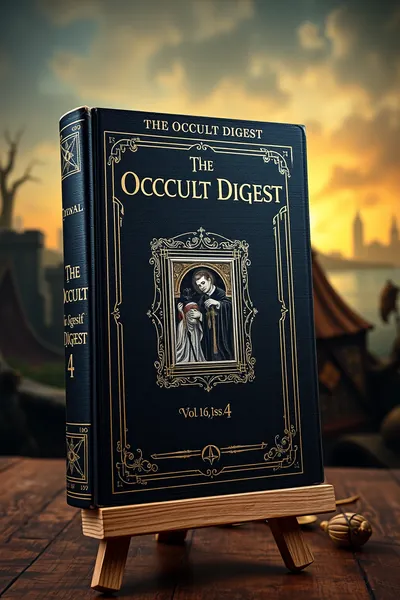
Monty Python, Sacré Graal! de Terry Gilliam et Terry Jones

 82
82

Monty Python, Sacré Graal! de Terry Gilliam et Terry Jones
Justine Breton’s "Monty Python, Sacré Graal!" undertakes the formidable task of dissecting the comedic brilliance of "Monty Python and the Holy Grail" through a lens that, at times, approaches the esoteric. Breton’s strength lies in her ability to connect the film’s absurdist scenarios to deeper symbolic currents. For instance, her examination of the quest for the Grail as a metaphor for the unattainable spiritual goal is particularly insightful. However, the book occasionally strains to find overt esoteric meaning where perhaps none was intended by the creators, leading to moments that feel slightly forced. The section on the Knights Who Say Ni as embodiments of linguistic or conceptual barriers is a compelling, though speculative, interpretation. Ultimately, Breton offers a sophisticated, if sometimes overly earnest, scholarly appreciation of a film that prioritizes mirth.
📝 Description
82
Justine Breton's 2021 book examines the esoteric subtext in Monty Python's 1975 film.
Justine Breton's study, published in 2021, analyzes Monty Python's 1975 film "Monty Python and the Holy Grail." It moves beyond standard film critique to uncover the movie's surprising connections to historical, mythological, and potentially esoteric ideas. Breton shows how the film's absurd humor and deliberate historical inaccuracies serve to both mock and question notions of quests, chivalry, and religious symbols.
The book suits readers who enjoy academic scrutiny of popular culture, especially those interested in the links between comedy, medieval history, and the symbolic foundations of Western stories. Film academics, cultural historians, and anyone curious about how seemingly secular works can touch on deeper, archetypal patterns will find it valuable. Monty Python fans looking for a fresh view on the film's many meanings will also find this analysis insightful. The film, released in 1975, appeared during a time of cultural change and growing interest in questioning old narratives. Its parody of Arthurian legend and the Grail quest, themes central to Western literature and religious thought since the Middle Ages, offers fertile ground for Breton's work. She places the film within this larger cultural discussion, showing how its comedic style contrasted with more serious historical and mythical retellings.
This work engages with the esoteric tradition by examining how a popular, secular film can reflect deeper, archetypal structures often discussed in esoteric circles. It looks at how "Monty Python and the Holy Grail," through its comedic deconstruction of Arthurian legend and Christian symbolism, inadvertently touches upon themes of the sacred quest, initiation, and the nature of reality. Breton's analysis suggests that even absurdist humor can reveal underlying patterns of meaning that resonate with esoteric interpretations of myth and consciousness.
💡 Why Read This Book?
• Gain a new perspective on the quest narrative by analyzing the film's satirical deconstruction of Arthurian legend, understanding how "Monty Python and the Holy Grail" critiques archetypal journeys. • Explore the symbolic weight of the "Holy Grail" through Breton's interpretation, seeing how its representation in the 1975 film subverts traditional religious and romantic connotations. • Understand the comedic use of anachronism and absurdity as tools for cultural commentary, learning how these techniques in the film challenge perceptions of history and belief.
⭐ Reader Reviews
Honest opinions from readers who have explored this book.
❓ Frequently Asked Questions
What is the primary focus of Justine Breton's "Monty Python, Sacré Graal!"?
The book offers a scholarly analysis of the 1975 film "Monty Python and the Holy Grail," examining its humor, its engagement with medieval themes, and its underlying symbolic and potentially esoteric dimensions.
Does the book suggest "Monty Python and the Holy Grail" is an esoteric text?
Breton's work explores how the film, intentionally or not, touches upon symbolic and archetypal themes common in Western esoteric traditions, particularly concerning quests and the pursuit of meaning.
When was Justine Breton's "Monty Python, Sacré Graal!" first published?
The book was first published in 2021.
What historical period does the film "Monty Python and the Holy Grail" reference, and how does the book address this?
The film parodies the Arthurian period and medieval quests. Breton's analysis uses this historical setting to explore how the film satirizes historical narratives and chivalric ideals.
Who would benefit most from reading this book?
Film scholars, cultural historians, fans of Monty Python seeking deeper analysis, and readers interested in the intersection of comedy, myth, and symbolic interpretation will find this book valuable.
What specific concepts from Arthurian legend are discussed?
The book examines concepts like the quest for the Holy Grail, Arthurian knights, chivalry, and the symbolic representation of these elements as satirized in the film.
🔮 Key Themes & Symbolism
The Subverted Quest
Breton analyzes how "Monty Python and the Holy Grail" masterfully subverts the traditional heroic quest narrative. The pursuit of the Grail, a symbol of ultimate spiritual attainment in medieval romance, becomes a vehicle for absurdist humor and a critique of human folly. The book explores how the film’s episodic structure and the characters' repeated failures highlight the futility and often ridiculous nature of grand endeavors, offering a counterpoint to more serious medieval quests for divine meaning.
Symbolism of the Grail
The "Holy Grail" itself is examined not merely as a plot device but as a potent symbol with deep roots in Christian theology and Arthurian legend. Breton investigates how the film's irreverent portrayal plays with the audience's expectations of this sacred object. The work considers the Grail as representing unattainable ideals, spiritual enlightenment, or even the elusive nature of truth itself, all filtered through the troupe's unique brand of satire.
Anachronism and Satire
Breton highlights the deliberate use of anachronism in the film as a key satirical tool. By juxtaposing medieval settings and characters with modern sensibilities and language, the film critiques both historical representation and contemporary society. The book explores how these temporal incongruities expose the constructed nature of history and myth, prompting viewers to question established narratives and the very concept of objective truth, often with comedic effect.
Archetypes of Folly
The characters and scenarios within the film are interpreted as archetypes of human folly and the absurd. From King Arthur's earnest but bumbling knights to the bizarre challenges they face, Breton suggests the film offers a commentary on the inherent ridiculousness of human ambition and the search for meaning. This theme connects the film's humor to a broader philosophical inquiry into the nature of existence and the often-comical human condition.
💬 Memorable Quotes
Direct passages from the work, attributed to the author.
“The quest for the Grail becomes a metaphor for the human condition's inherent absurdity.”
— This interpretation suggests that the film uses the legendary pursuit of a sacred artifact to comment on the often-futile and comical nature of human endeavors and the search for ultimate meaning in life.
“The Knights Who Say Ni represent the arbitrary nature of dogma and linguistic barriers.”
— This interpretation posits that the peculiar and demanding Knights Who Say Ni symbolize how rigid beliefs and communication failures can obstruct progress and understanding, even in a quest for something as profound as the Grail.
“The film deconstructs chivalric ideals through relentless parody.”
— This highlights how the movie, through its comedic imitation and exaggeration of knightly codes and heroic tropes, dismantles the traditional romanticized notions of chivalry prevalent in medieval literature.
💡 Key Ideas
Editorial paraphrase of the work's core concepts — not direct quotes.
Anachronism serves as a primary engine for the film's critique of historical narrative.
This paraphrased concept highlights how the intentional placement of modern elements within a medieval setting is used by the filmmakers to question and satirize how history is presented and understood.
Absurdity is employed to expose the fragile foundations of belief systems.
This paraphrased concept suggests that the film's use of illogical and nonsensical situations serves to undermine and reveal the often-unexamined and tenuous nature of various belief systems, both religious and secular.
🌙 Esoteric Significance
Tradition
While "Monty Python and the Holy Grail" is primarily a comedic film, Justine Breton's analysis positions it as an accidental touchstone for certain modern esoteric interpretations. It engages with the archetype of the spiritual quest, a central theme in Hermeticism and Gnosticism, albeit through a lens of profound satire. The film's treatment of the Grail can be seen as reflecting a modern disillusionment with traditional religious dogma, aligning with certain critical perspectives found in esoteric thought that seek direct experience over institutionalized belief.
Symbolism
The "Holy Grail" itself functions as a primary symbol, representing the unattainable object of spiritual desire or ultimate truth. The film's absurd obstacles, such as the Killer Rabbit of Caerbannog or the French taunters, can be interpreted as symbolic representations of psychic barriers or tests encountered on an inner journey. The very act of the quest, despite its farcical execution, carries the alchemical or Hermetic pursuit of transformation and enlightenment.
Modern Relevance
Contemporary thinkers and practitioners interested in Jungian psychology, archetypal studies, and even certain branches of performance art might draw parallels to the film's depiction of the quest and its archetypal characters. The deconstruction of heroic narratives speaks to postmodern critiques of foundational myths. Furthermore, individuals exploring the intersection of humor and spirituality may find the film, as analyzed by Breton, a provocative example of how profound themes can be approached through comedic subversion.
👥 Who Should Read This Book
• Film studies students and cultural historians seeking to understand the deconstruction of medieval myths in 20th-century cinema, particularly how "Monty Python and the Holy Grail" functions as satire. • Readers interested in comparative mythology and religious studies who want to explore how iconic symbols like the Holy Grail are reinterpreted through comedic and postmodern lenses. • Fans of Monty Python who are looking for a deeper, academic analysis that moves beyond simple appreciation to examine the film's layers of meaning and potential symbolic resonance.
📜 Historical Context
"Monty Python and the Holy Grail," released in 1975, emerged during a period of significant cultural and intellectual shifts in the West. Post-war skepticism, counter-cultural movements, and a growing academic interest in deconstructing traditional narratives created fertile ground for satire. The film's approach to Arthurian legend and the quest for the Holy Grail directly challenged the earnest romanticism often associated with medieval literature, a tradition that had been continuously reinterpreted since the Middle Ages. While contemporary literary criticism might have focused on structuralism or historical accuracy, the Monty Python troupe, including Terry Gilliam and Terry Jones, employed a postmodern sensibility. Their work can be seen as a comedic parallel to the more serious deconstructionist critiques appearing in academia, offering a popular, accessible form of challenging established myths. The film's reception was overwhelmingly positive, cementing its status as a cult classic and influencing subsequent comedic and satirical works, demonstrating a cultural appetite for irreverent engagement with historical and mythical subjects.
📔 Journal Prompts
The Knights Who Say Ni and their arbitrary demands, as discussed in Breton's analysis.
King Arthur's leadership contrasted with the chaotic quest for the Grail.
The symbolic weight of the "Holy Grail" and its subversion in the film.
Anachronisms as a tool for cultural critique in the context of the film.
The archetypal nature of the quest narrative and its comedic failure.
🗂️ Glossary
Anachronism
The chronological misplacement of a person, event, or object in a historical setting. In the film, this is used deliberately for comedic and critical effect, juxtaposing medieval elements with modern concepts.
Arthurian Legend
A body of medieval literature and subsequent adaptations concerning the legendary King Arthur, his knights (like the Knights of the Round Table), and their quests, most famously the quest for the Holy Grail.
Chivalry
The medieval knightly system of conduct, including military courage, honor, and courtesy. The film satirizes many aspects of this code.
Quest Narrative
A story centered around a protagonist's journey to achieve a specific goal, often involving trials and tribulations. The film parodies this structure.
Satire
The use of humor, irony, exaggeration, or ridicule to expose and criticize people's stupidity or vices, particularly in the context of contemporary politics and other topical issues. The film is a prime example.
Symbolism
The use of symbols to represent ideas or qualities. Breton's work explores the symbolic meanings within the film, particularly concerning the Grail.
Subversion
Undermining the power and authority of an established system or institution. The film subverts traditional notions of heroism and religious quests.
🔮 Readers Also Liked
Browse all →






More Free Occult Philosophy Books
View all →