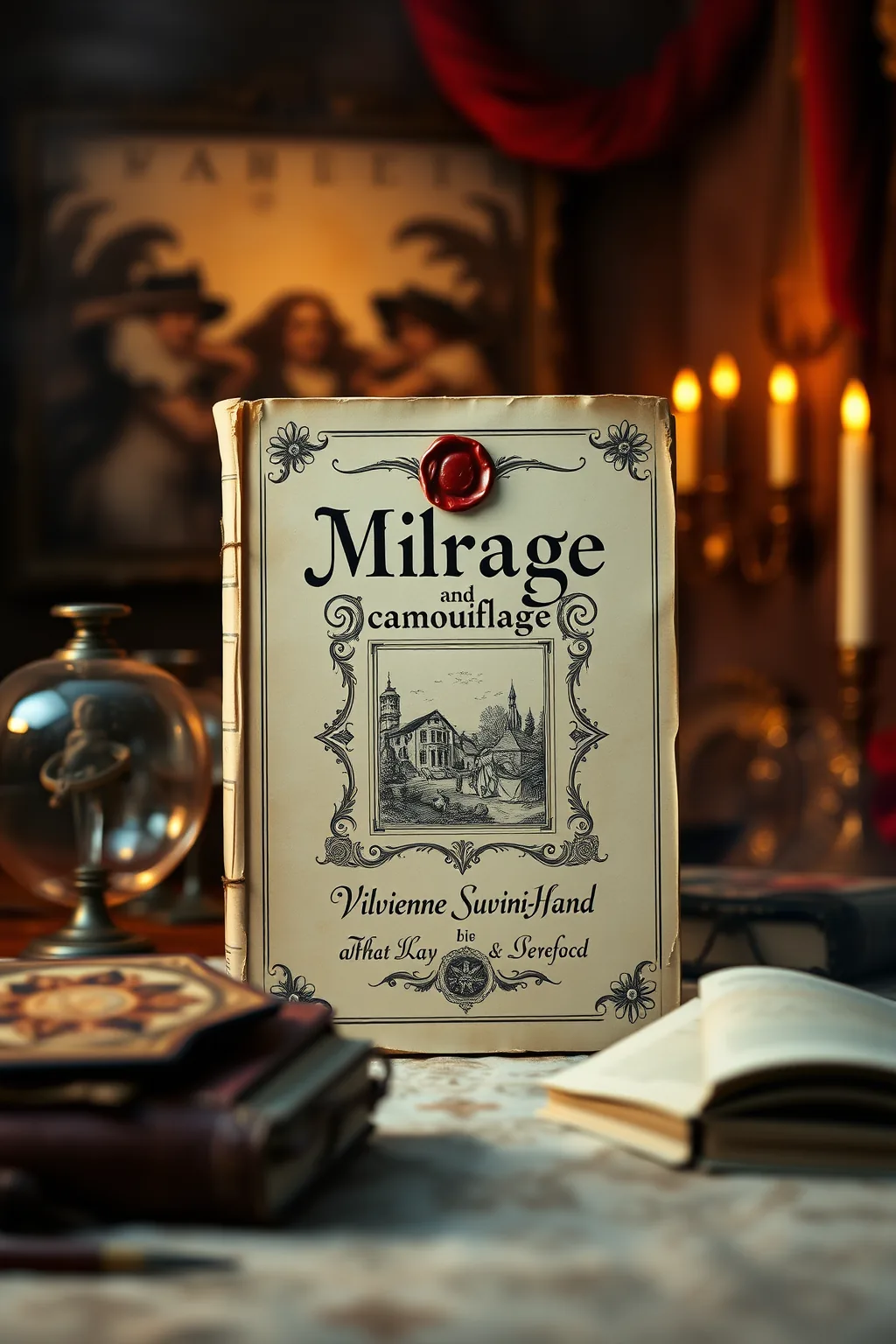
Mirage and Camouflage
 76
76

Mirage and Camouflage
Vivienne Suvini-Hand's "Mirage and Camouflage" offers a bracingly critical lens through which to view Giuseppe Ungaretti's L'Allegria. The author rightly challenges the comfortable myth of Ungaretti as a detached lyrical voice, particularly in her examination of the war poems. Suvini-Hand's assertion that Ungaretti used the "obscure nature of Hermetic language" to express "proto-Fascist and Nietzschean sympathies" is a bold, albeit potentially contentious, reinterpretation. This is where the book truly provokes. The strength lies in its meticulous linking of Ungaretti's verse to contemporaneous artistic movements like Cubism and Surrealism, providing a rich visual analogue for his linguistic strategies. However, the dense academic prose occasionally obscures the very clarity the author seeks to reveal about Ungaretti's intent. While the analysis of L'Allegria's stylistic contradictions is compelling, a more direct engagement with critical responses to Ungaretti's politics post-publication might have further solidified the argument. Nevertheless, Suvini-Hand compels us to look anew at a cornerstone of Italian modernism, forcing a confrontation with its uncomfortable undercurrents.
📝 Description
76
Vivienne Suvini-Hand's 2000 study reexamines Giuseppe Ungaretti's L'Allegria.
Published in 2000, Vivienne Suvini-Hand's Mirage and Camouflage moves past common readings of Giuseppe Ungaretti's poetry collection, L'Allegria. The book focuses on the tensions and contradictions within Ungaretti's writing, linking his verse to European avant-garde movements. Suvini-Hand traces connections to French Symbolism and examines parallels with visual arts like Cubism, Futurism, and Surrealism. The analysis also considers the influence of Giorgio de Chirico's metaphysical painting on Ungaretti's style.
This study is for students and scholars of 20th-century literature interested in poetry, philosophy, and art history. It appeals to those who value close textual analysis and want to understand the ideological basis of artistic expression. Readers researching World War I's effect on modern poetry, the development of Hermetic language, or the complex relationship between art and political views will find relevant material. The book challenges established literary interpretations.
Mirage and Camouflage places L'Allegria within the context of early 20th-century European intellectual and political currents. It addresses the collection's reception after World War I, a conflict that significantly impacted Ungaretti's early work. Suvini-Hand questions the view of Ungaretti as solely a lyrical poet, contrasting it with his proto-Fascist and Nietzschean leanings. This perspective illuminates the 'obscure nature of Hermetic language' as a means of veiled ideological expression, distinguishing it from typical modernist trends of the period.
This book engages with the esoteric dimensions of early 20th-century European modernism, particularly through its examination of Hermeticism in poetry. It situates Giuseppe Ungaretti's work within a broader context of artistic and intellectual currents that often employed coded language and symbolic systems to express complex ideas, sometimes tied to controversial political or philosophical leanings. The study highlights how artistic expression can serve as a vehicle for veiled ideological content, a concept that resonates with esoteric traditions seeking deeper, often hidden, meanings within cultural artifacts.
💡 Why Read This Book?
• Gain a new perspective on Giuseppe Ungaretti's L'Allegria by understanding his use of "Hermetic language" as a deliberate tool for both aesthetic effect and ideological expression. • Explore the connections between early 20th-century Italian poetry and visual arts, specifically how Ungaretti's work relates to movements like Cubism and Surrealism as discussed in the text. • Re-evaluate the impact of World War I on modern poetry by examining the "war poems" within L'Allegria through the lens of "Mirage and Camouflage," uncovering potential proto-Fascist sympathies.
⭐ Reader Reviews
Honest opinions from readers who have explored this book.
❓ Frequently Asked Questions
What is the primary focus of Vivienne Suvini-Hand's study, "Mirage and Camouflage"?
The book focuses on the thematic and stylistic contradictions within Giuseppe Ungaretti's poetry collection L'Allegria, exploring how Ungaretti used "Hermetic language" to convey complex, sometimes controversial, ideas.
How does "Mirage and Camouflage" connect Ungaretti's poetry to other art forms?
It establishes links between Ungaretti's verse and French Symbolism, and examines affinities with visual arts such as Cubism, Futurism, Surrealism, and the work of painter Giorgio de Chirico.
What controversial interpretation does the book offer regarding Ungaretti's "war poems"?
The study suggests that Ungaretti employed the obscurity of "Hermetic language" in his "war poems" to express proto-Fascist and Nietzschean sympathies, challenging the traditional view of him as solely a lyrical poet.
When was "Mirage and Camouflage" first published?
The book was first published in the year 2000.
What literary tradition does the "Hermetic language" mentioned in the book relate to?
The "Hermetic language" relates to a tradition of esoteric and symbolic writing, characterized by its deliberate obscurity and layered meanings, often found in mystical or philosophical texts.
Does the book discuss Ungaretti's relationship with political movements?
Yes, it specifically re-examines the collection's affinity with proto-Fascist and Nietzschean sympathies, proposing that Ungaretti's stylistic choices were intertwined with these ideologies.
🔮 Key Themes & Symbolism
The Dual Nature of Language
The central thesis posits that Ungaretti's poetry in L'Allegria functions as both "Mirage and Camouflage." The "mirage" refers to the evocative, almost dreamlike imagery that captivates the reader, while the "camouflage" denotes the deliberate obscurity employed to mask or convey more complex, potentially controversial, philosophical and political leanings. This duality is explored through the "Hermetic language," which serves as a sophisticated veil, allowing for layered interpretations and the subtle expression of sympathies that might otherwise be overtly rejected.
Artistic Affinities and Influences
This theme meticulously traces the connections between Ungaretti's poetic style and various avant-garde movements of the early 20th century. The study highlights Ungaretti's affinity with French Symbolist poets, demonstrating how their aesthetic principles informed his approach to language and imagery. Furthermore, it draws parallels with the visual arts, specifically the fragmented perspectives of Cubism, the dynamic energy of Futurism, the dreamlike qualities of Surrealism, and the metaphysical explorations of Giorgio de Chirico's paintings, suggesting a cross-pollination of ideas in the era.
War Poetry and Ideological Undercurrents
A significant focus is placed on re-examining the "war poems" within L'Allegria. Suvini-Hand challenges the conventional reading of these poems as purely elegiac or observational. Instead, the analysis probes how Ungaretti's stylistic choices, particularly his use of "Hermetic language," might have served to express "proto-Fascist and Nietzschean sympathies." This reinterpretation aims to dismantle the idealized image of Ungaretti, revealing a more ideologically charged dimension to his war-time reflections.
Hermeticism and Obscurity
The concept of "Hermetic language" is central to understanding the book's argument. This refers to a style characterized by deliberate ambiguity, complex symbolism, and a departure from direct communication. The study argues that Ungaretti intentionally employed this obscurity not just for aesthetic innovation but as a strategic tool. It allowed him to read through the intellectual and political currents of his time, expressing nuanced or even subversive ideas without explicit declaration, thus creating a poetic "camouflage."
💬 Memorable Quotes
Direct passages from the work, attributed to the author.
“the obscure nature of Hermetic language to express his proto-Fascist and Nietzschean sympathies”
— This is a core interpretive claim, suggesting Ungaretti's deliberate stylistic obscurity served as a vehicle for expressing specific, potentially controversial, political and philosophical leanings.
“links between Ungaretti and the French Symbolist poets”
— Highlights the influence of Symbolism on Ungaretti's verse, pointing to shared techniques and thematic concerns that transcend national literary boundaries.
“reexamines the collection's affinity with the work of De Chirico, Cubism, Futurism and Surrealism”
— Underscores the interdisciplinary nature of the study, positioning Ungaretti's poetry within the broader visual and artistic avant-garde movements of the early 20th century.
“tensions and contradictions in the themes and style of L'Allegria”
— This phrase expresses the analytical approach, focusing on the inherent complexities and conflicting elements within Ungaretti's collection rather than a singular, unified interpretation.
“destroying the myth of Ungaretti as”
— Indicates the revisionist nature of the study, aiming to challenge established, perhaps overly simplified or idealized, perceptions of the poet and his work.
🌙 Esoteric Significance
Tradition
While not strictly within a single esoteric lineage like Kabbalah or Theosophy, Suvini-Hand's work touches upon the broader tradition of Hermeticism, understood here as a mode of writing characterized by symbolic depth, intentional obscurity, and layered meaning. This approach aligns with esoteric philosophies that posit hidden truths accessible only through disciplined interpretation or initiation. The study positions Ungaretti's "Hermetic language" as a secularized form of this tradition, adapted for modernist poetry, allowing for the conveyance of complex philosophical ideas, including potentially esoteric political sympathies, beneath a surface aesthetic.
Symbolism
The key symbols explored revolve around the concepts of "Mirage" and "Camouflage." The "mirage" represents illusion, beauty, and the evocative power of poetry, drawing on aesthetic traditions. "Camouflage," conversely, signifies concealment, strategic obscurity, and the hiding of underlying truths or intentions. In an esoteric context, these can be seen as metaphors for the veil (maya) that obscures ultimate reality and the adept's ability to navigate or manipulate appearances. The "war poems" themselves become symbolic landscapes where the fragility of life and the deceptive nature of conflict are laid bare.
Modern Relevance
Contemporary scholars and poets interested in the relationship between language, ideology, and aesthetics continue to find "Mirage and Camouflage" relevant. It speaks to modern critical approaches that interrogate the political dimensions of seemingly apolitical art. Thinkers exploring the nature of poetic ambiguity, the legacy of European modernism, and the intersection of art and political philosophy might draw upon Suvini-Hand's reinterpretation. The study's focus on how language can both reveal and conceal remains a pertinent topic in an age of pervasive media and information manipulation.
👥 Who Should Read This Book
• Advanced students of Italian literature and 20th-century modernism seeking to challenge canonical interpretations of Giuseppe Ungaretti's L'Allegria. • Scholars of comparative literature and art history interested in the cross-pollination between poetry (particularly Symbolism and Hermeticism) and visual arts like Cubism and Surrealism. • Critical readers concerned with the intersection of art, philosophy, and politics, specifically examining how "Hermetic language" can serve ideological purposes, as evidenced in the analysis of "war poems."
📜 Historical Context
Vivienne Suvini-Hand's "Mirage and Camouflage" emerged in 2000, a period of renewed critical engagement with 20th-century European modernism and its often-fraught relationship with political ideologies. The study situates Giuseppe Ungaretti's L'Allegria within the post-World War I era, a time of profound societal upheaval and artistic experimentation. It acknowledges the concurrent rise of Fascism in Italy, a context often elided in earlier literary analyses. Suvini-Hand directly confronts the pervasive myth of Ungaretti as a purely apolitical lyric poet, a perspective that had dominated much of the critical reception since the mid-20th century. The book engages with the intellectual currents of the time, including Nietzschean philosophy and the aesthetic principles of French Symbolism, Cubism, and Surrealism, movements that were shaping artistic discourse across Europe. By re-examining Ungaretti's "Hermetic language" through this lens, the study implicitly critiques a literary scholarship that had perhaps favored aesthetic appreciation over ideological scrutiny, particularly when compared to the more politically engaged Italian literary scene influenced by thinkers like Antonio Gramsci.
📔 Journal Prompts
The concept of "Mirage and Camouflage" in Ungaretti's verse: how does language create both allure and concealment?
Ungaretti's "Hermetic language": reflect on its function beyond mere aestheticism.
Analyze the "war poems" in L'Allegria: what specific tensions are revealed?
The influence of De Chirico and Cubism on L'Allegria: consider visual parallels to poetic fragmentation.
Nietzschean sympathies in poetry: explore how philosophical ideas might be encoded in literary style.
🗂️ Glossary
L'Allegria
The title of Giuseppe Ungaretti's significant poetry collection, first published in its complete form in 1931, containing poems written primarily during and shortly after World War I.
Hermetic language
A style of writing characterized by deliberate obscurity, symbolic richness, and layered meanings, often associated with esoteric traditions or philosophical depth.
French Symbolism
A late 19th-century literary movement, originating in France, that emphasized suggestion, symbolism, and musicality over direct description, influencing many modernist poets.
Cubism
An early 20th-century avant-garde art movement, pioneered by Picasso and Braque, characterized by the fragmentation of objects into geometric forms and the depiction of multiple viewpoints simultaneously.
Futurism
An artistic and social movement that originated in Italy in the early 20th century, emphasizing speed, technology, youth, and violence, and objects such as the car, the airplane, and the industrial city.
Surrealism
A 20th-century avant-garde movement in art and literature that sought to release the creative potential of the unconscious mind, for example, by the irrational juxtaposition of images.
Giorgio de Chirico
An Italian artist whose paintings in the Metaphysical Painting style (pittura metafisica) heavily influenced Surrealism and modern art with their enigmatic, dreamlike cityscapes.