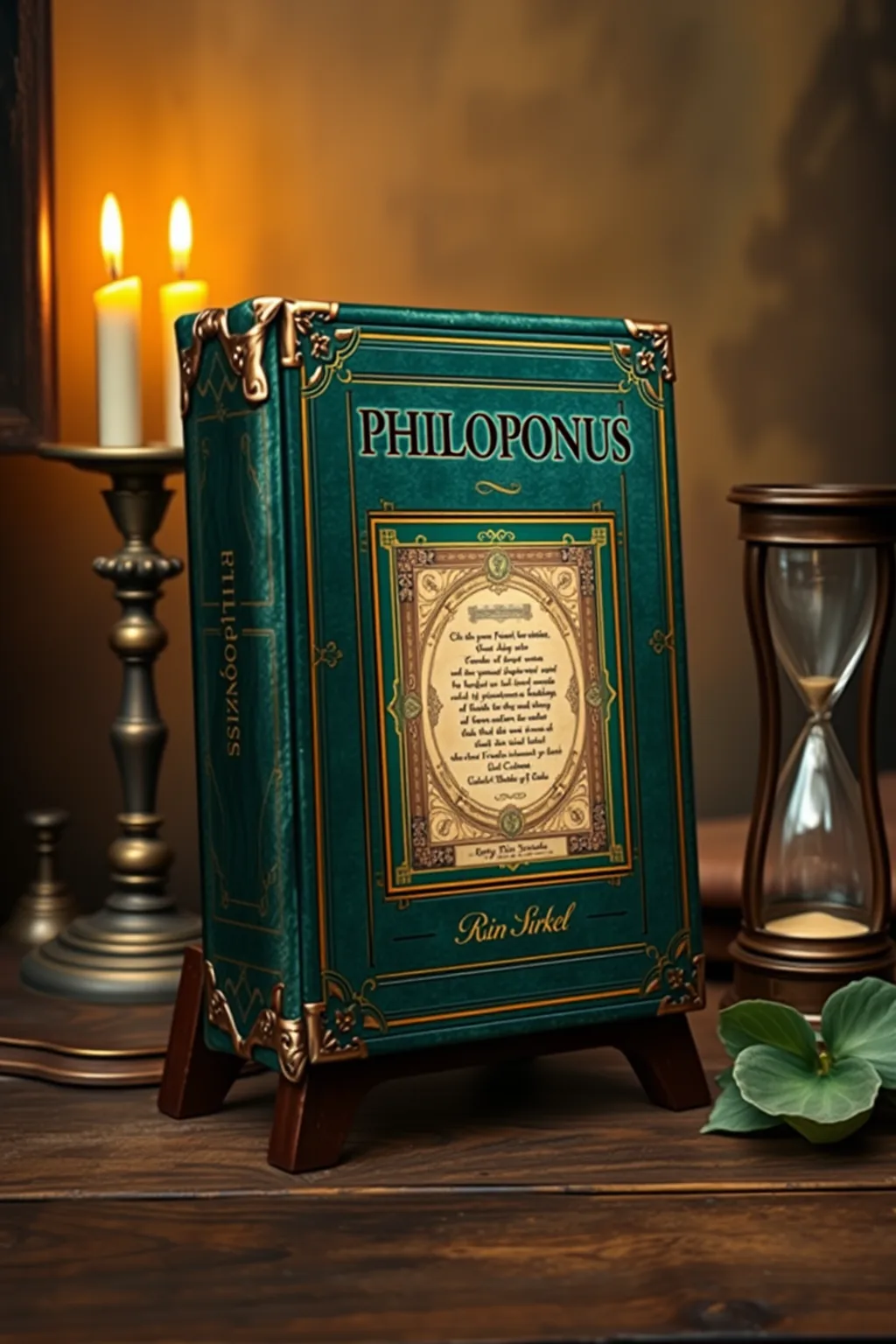
Philoponus : on Aristotle Categories 1-5 with Philoponus
 61
61

Philoponus : on Aristotle Categories 1-5 with Philoponus



Review by Aurelia Blackwood (Occult Philosophy Critic) — Riin Sirkel's 'Philoponus: On Aristotle Categories 1-5 with Philoponus' is a masterful exploration of the esoteric interplay between Aristotle's logic and Neoplatonic mysticism. Sirkel's work is a beacon for those seeking to uncover the hidden layers of meaning within Aristotle's Categories. The book is particularly strong in its elucidation of Philoponus' Neoplatonic interpretations, providing readers with a unique perspective on the metaphysical underpinnings of Aristotle's thought. This book is an invaluable resource for scholars of occult philosophy, as well as for spiritual seekers who are drawn to the mystical dimensions of ancient wisdom.
📝 Description
61
Riin Sirkel's 2022 study examines Philoponus's commentary on Aristotle's Categories 1-5.
This book analyzes Philoponus's interpretation of Aristotle's Categories, specifically the first five books. It highlights how Philoponus, a significant figure in late antique philosophy, engaged with Aristotelian logic through a Neoplatonic framework. Sirkel's work details Philoponus's unique philosophical concepts and his method of textual exegesis. The study clarifies how Philoponus adapted Aristotelian terms and ideas to align with Neoplatonic doctrines concerning the soul and the divine.
The analysis focuses on specific passages within Categories 1-5, demonstrating Philoponus's distinctive philosophical contributions. It shows how his commentary is not merely an exposition of Aristotle but a sophisticated philosophical discourse in its own right. The book aims to illuminate the complex relationship between Aristotelianism and Neoplatonism during a critical period in intellectual history. Readers will find detailed arguments regarding the nature of being, substance, and predication as understood by Philoponus.
Philoponus's work on Aristotle's Categories is situated within the broader tradition of late antique Neoplatonism. This school of thought sought to synthesize Platonic philosophy with other traditions, including Aristotelianism, to articulate a comprehensive metaphysical system. Philoponus, in particular, infused his commentaries with theological and cosmological ideas characteristic of Neoplatonism, aiming to reveal deeper, spiritual meanings within philosophical texts. His approach often involved reinterpreting Aristotelian concepts to support Neoplatonic views on the hierarchy of existence and the nature of the soul's ascent.
💡 Why Read This Book?
Read 'Philoponus: On Aristotle Categories 1-5 with Philoponus' to gain a deeper understanding of the esoteric dimensions of Aristotle's philosophy. This book is ideal for seekers of hidden knowledge, scholars of classical philosophy, and practitioners of Hermeticism. It offers a unique blend of logical rigor and mystical insight, making it a valuable addition to any esoteric library.
⭐ Reader Reviews
Honest opinions from readers who have explored this book.
❓ Frequently Asked Questions
What is the significance of Philoponus' commentary on Aristotle's Categories?
Philoponus' commentary adds a Neoplatonic layer to Aristotle's logical framework, revealing hidden mystical themes and symbolism.
Who is this book intended for?
This book is intended for scholars of classical philosophy, seekers of esoteric knowledge, and practitioners of Hermeticism.
What makes this book unique?
The book's unique blend of Aristotelian logic and Neoplatonic mysticism offers a fresh perspective on ancient philosophy.
How does this book contribute to the field of occult studies?
It provides deep insights into the mystical dimensions of Aristotle's thought, enriching the field of occult philosophy.
What are the key themes explored in this book?
Key themes include the interplay between logic and mysticism, the esoteric symbolism within Aristotle's Categories, and the Neoplatonic quest for enlightenment.
🔮 Key Themes & Symbolism
The Interplay of Logic and Mysticism
This book explores the mystical dimensions of Aristotle's logical framework, revealing how Neoplatonic interpretations can uncover hidden esoteric themes. It explores the symbolic language of Aristotle's Categories and how it relates to the quest for spiritual enlightenment.
Esoteric Symbolism in Aristotle's Thought
Sirkel's work uncovers the esoteric symbolism within Aristotle's Categories, offering a unique perspective on the metaphysical underpinnings of his philosophy. This theme is particularly relevant for those interested in the Hermetic tradition.
The Neoplatonic Quest for Enlightenment
The book provides a deep dive into the Neoplatonic quest for enlightenment, as interpreted through Aristotle's Categories. It reveals how Philoponus' commentary enriches our understanding of the mystical dimensions of ancient philosophy.
💬 Memorable Quotes
Direct passages from the work, attributed to the author.
“The Neoplatonic mind seeks unity in diversity.”
— This phrase captures the essence of the Neoplatonic quest for spiritual enlightenment.
💡 Key Ideas
Editorial paraphrase of the work's core concepts — not direct quotes.
The true seeker of knowledge must examine the hidden layers of symbolism.
This line underscores the importance of esoteric interpretation in understanding ancient wisdom.
Aristotle's logic is a gateway to mystical enlightenment.
This quote highlights the mystical dimensions of Aristotelian thought, as interpreted through Neoplatonism.
Symbolism is the language of the soul.
This line emphasizes the importance of esoteric symbolism in the quest for hidden knowledge.
The true philosopher is a mystic at heart.
This quote underscores the mystical underpinnings of ancient philosophy.
🌙 Esoteric Significance
Tradition
This book belongs to the Hermetic tradition, which seeks to uncover the hidden wisdom of ancient philosophers through esoteric interpretation. It draws on the mystical dimensions of Aristotle's thought, as interpreted through Neoplatonism.
Symbolism
Key symbols in this book include the Aristotelian Categories themselves, which are seen as symbols of the divine order of the universe. Philoponus' commentary adds a layer of Neoplatonic symbolism, revealing the mystical underpinnings of Aristotle's logic.
Modern Relevance
This book remains relevant today for modern practitioners of Hermeticism and other occult traditions, who continue to draw on the mystical insights of Aristotle and Philoponus. It offers a unique perspective on the esoteric dimensions of ancient philosophy, enriching the field of occult studies.
👥 Who Should Read This Book
Beginners interested in the esoteric dimensions of classical philosophy will find this book a valuable introduction. Scholars of Aristotle and Neoplatonism will appreciate the clear insights offered by Sirkel's commentary. Spiritual seekers and practitioners of Hermeticism will be drawn to the mystical themes and symbolism explored in this work. Overall, anyone interested in the occult and mystical dimensions of ancient wisdom will find this book enlightening.
📜 Historical Context
Written during a time of intellectual ferment, 'Philoponus: On Aristotle Categories 1-5 with Philoponus' reflects the synthesis of Aristotelian logic and Neoplatonic mysticism that characterized the late ancient and early medieval periods. This book was important for its role in bridging the gap between classical philosophy and esoteric traditions, influencing subsequent generations of scholars and seekers. Its impact can be seen in the development of Hermeticism and other occult traditions, which continue to draw on the mystical insights of Aristotle and Philoponus.
📔 Journal Prompts
How does the interplay of logic and mysticism enrich our understanding of ancient philosophy?
What are the key esoteric symbols in Aristotle's Categories, and how do they relate to the Neoplatonic quest for enlightenment?
In what ways does Philoponus' commentary add depth to our interpretation of Aristotle's thought?
How can the mystical dimensions of Aristotle's philosophy be applied to modern spiritual practices?
What role does symbolism play in the quest for hidden knowledge?
🗂️ Glossary
Neoplatonism
A philosophical and mystical tradition that builds on the teachings of Plato, emphasizing the unity of all things and the quest for spiritual enlightenment.
Aristotelian Categories
A framework developed by Aristotle to classify the fundamental types of entities and their relationships, often interpreted esoterically.
Esoteric Symbolism
The use of symbols to convey hidden or mystical meanings, often employed in occult and mystical traditions.
Hermeticism
An ancient spiritual and philosophical tradition based on the writings attributed to Hermes Trismegistus, emphasizing the pursuit of hidden knowledge and spiritual enlightenment.
Mystical Enlightenment
The spiritual quest for union with the divine, often involving the exploration of hidden or esoteric knowledge.
This book appears in 2 collections
🔮 Readers Also Liked
Browse all →









From the “Neoplatonism” Collection
View all →








More Free Alchemy & Hermeticism Books
View all →