Midnight
 82
82

Midnight
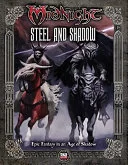
Midnight's primary strength lies in its direct utility for a specific gaming community. By explicitly tying itself to the Dungeons & Dragons Player's Handbook, third edition, it offers precisely what its target audience needs: more content for a beloved system. The limitation, however, is its inaccessibility to anyone not already invested in D&D 3e; it's not a book to be read for pleasure in isolation. A notable section details (or implies the need for) specific game mechanics, such as the integration of 'new classes' or 'expanded magic items' that directly alter player character options within the 3e framework. Ultimately, Midnight serves its intended purpose as a supplementary tool for role-players, offering no independent value beyond that context.
📝 Description
82
Published in 2005, Midnight serves as a supplement for Dungeons & Dragons 3rd Edition.
Midnight is not a standalone game but a supplement for the Dungeons & Dragons 3rd Edition ruleset. It requires the Player's Handbook to be used, adding new elements to gameplay. This book is intended for players and game masters already invested in D&D 3e. It offers expanded options for those looking to enrich their campaigns with novel scenarios or thematic content beyond the core rules.
This supplement appeared in 2005, a time when D&D 3e was the current system. This edition, also known as v.3.5, featured a more detailed approach to character creation and combat. Supplements like Midnight were common, providing tailored content for a dedicated player base and specific campaign needs within the fantasy genre. The era saw many third-party publishers creating content for Dungeons & Dragons.
The central idea of Midnight is augmentation. It expands on existing D&D 3e frameworks by introducing new character classes, magical items, spells, monsters, or plot hooks. This content integrates directly with the Player's Handbook, meaning all new material relies on the established mechanics of the game system.
This supplement falls within the tradition of game augmentation, a common practice in tabletop role-playing games. It builds upon an existing system, Dungeons & Dragons 3rd Edition, by adding new layers of rules and lore. This approach allows players and game masters to customize their experience, introducing specialized content that deepens engagement with the game's established mechanics and world. The practice reflects a desire to tailor the fantasy genre to specific tastes and playstyles.
💡 Why Read This Book?
• Gain access to expanded character options and game mechanics specifically designed for Dungeons & Dragons, third edition, enhancing tactical depth beyond the core Player's Handbook. • Discover new narrative hooks and world-building elements that can invigorate existing campaigns, drawing inspiration from the specific thematic content presented. • Understand the landscape of TTRPG supplements by examining a text created during the peak of D&D 3e's popularity, offering insight into the market for game expansions in 2005.
⭐ Reader Reviews
Honest opinions from readers who have explored this book.
❓ Frequently Asked Questions
What specific edition of Dungeons & Dragons does Midnight require?
Midnight explicitly requires the use of the Dungeons & Dragons Player's Handbook, third edition. This version was originally published by Wizards of the Coast, Inc. and is essential for understanding and implementing the content within Midnight.
Can Midnight be read as a standalone book?
No, Midnight is designed as a supplemental game resource. Its content is intrinsically linked to the rules and structure of the Dungeons & Dragons Player's Handbook, third edition, and cannot be fully appreciated or utilized independently.
What kind of content does Midnight typically add to a game?
As a supplement for Dungeons & Dragons, Midnight typically adds elements such as new character options, spells, items, monsters, or adventure hooks that integrate with the existing 3rd edition ruleset.
Who are the credited authors of Midnight?
The authors credited for Midnight are Iain J. Brogan, Eric Olson, and Wil Upchurch. The work was first published in 2005.
Is Midnight a fantasy novel or a game supplement?
Midnight is a game supplement. Its purpose is to enhance the gameplay experience of the Dungeons & Dragons role-playing game, specifically the third edition, rather than to be read as a narrative work.
What is the primary purpose of this book for gamers?
The primary purpose of Midnight is to provide additional rules, lore, or content for players and game masters running campaigns using the Dungeons & Dragons Player's Handbook, third edition.
🔮 Key Themes & Symbolism
Game System Integration
The central theme is seamless integration with an existing game system. Midnight's content is not designed to stand alone but to augment the Dungeons & Dragons Player's Handbook, third edition. This requires adherence to established mechanics, ensuring new spells, items, or character archetypes function within the 3e ruleset. The work explores how supplementary material can enrich a defined system without breaking its internal logic, focusing on expanded player options and GM resources that are immediately usable by those familiar with the core game.
Content Expansion for TTRPGs
This book exemplifies the concept of content expansion within the tabletop role-playing game (TTRPG) market, specifically for D&D 3e. It addresses the player and GM desire for more variety, offering new possibilities for character development, combat encounters, and plotlines. The work highlights how publishers catered to dedicated fan bases by providing structured additions that extend the lifespan and replayability of a specific game edition, fostering a community around shared rulesets and published materials.
Supplement Design Philosophy
Midnight's design reflects a philosophy of targeted supplementation. Its blurb explicitly states its dependency on the Player's Handbook, third ed., indicating a deliberate choice to create content that is modular and additive. This approach allows for focused additions—perhaps new prestige classes, magical effects, or bestiary entries—that cater to specific player interests or campaign needs without overhauling the core game. The work demonstrates how supplements can offer specialized content that caters to niche aspects of a larger system.
Tabletop Gaming Resources
The book functions as a practical resource for tabletop gamers. Its value is measured by its usability within a game session, providing concrete tools for players and Dungeon Masters. This focus on utility means that concepts are presented with mechanical implications in mind, whether they involve new rules for combat, character advancement, or magical effects. Midnight contributes to the broader ecosystem of gaming resources that support ongoing play and creative storytelling within a defined rules framework.
💬 Memorable Quotes
Direct passages from the work, attributed to the author.
“Requires the use of the Dungeons & Dragons player's handbook, third ed.”
— This statement underscores the book's nature as a dependent supplement. It is not a self-contained experience but an extension, necessitating familiarity with and possession of the core D&D 3e rulebook for its content to be relevant or usable.
“published by Wizards of the Coast, Inc.--Cover back.”
— This attribution clarifies the origin and publisher of the foundational D&D 3e Player's Handbook, reinforcing the specific edition required and the corporate entity behind the game system Midnight modifies.
“Original blurb implies new content for D&D 3e.”
— The original description points towards the book offering expanded elements such as spells, items, or character options, designed to be integrated into the existing framework of Dungeons & Dragons, third edition.
“First published 2005.”
— This publication date places Midnight within the active lifecycle of Dungeons & Dragons 3rd Edition, a period characterized by numerous official and third-party expansions for the popular role-playing game.
“Authors: Iain J. Brogan, Eric Olson, Wil Upchurch.”
— This lists the creative team behind the supplement, indicating the specific individuals responsible for crafting the additional content intended to enhance the Dungeons & Dragons 3rd Edition experience.
🌙 Esoteric Significance
Tradition
Midnight does not align with a specific esoteric tradition like Hermeticism or Kabbalah. Instead, its context is the modern esoteric practice of tabletop role-playing games (TTRPGs), which often incorporates elements drawn from various mystical, mythological, and occult sources. The 'esoteric' nature here lies in the creation of alternative realities and the exploration of symbolic systems within a game framework, rather than adherence to a historical lineage of occult philosophy. It represents a contemporary manifestation of engaging with archetypes and narrative structures often found in esoteric thought.
Symbolism
Within the context of TTRPGs, Midnight likely engages with symbols common to fantasy and occult literature. These could include archetypal figures (heroes, villains, mythical creatures), magical symbols (runes, sigils), or cosmological concepts (planes of existence, elemental forces). For instance, a 'shadow' motif, suggested by the title 'Midnight,' could symbolize hidden knowledge, the unconscious, or liminal states, interpreted through the game's mechanics and narrative. The 'player's handbook' itself acts as a grimoire, containing symbolic representations of power and potential.
Modern Relevance
Contemporary TTRPG designers and players continue to draw inspiration from Midnight's approach to content expansion for established systems. Thinkers and practitioners in the 'gamification' of learning, narrative design, and even certain forms of modern ritualistic practice that utilize symbolic systems might find conceptual parallels. While not directly cited by major contemporary esoteric authors, the underlying principle of creating structured symbolic systems for exploration and engagement remains relevant in digital and analog game design, influencing how modern audiences interact with archetypal narratives.
👥 Who Should Read This Book
• Players and Game Masters actively running campaigns using Dungeons & Dragons, third edition, seeking to expand their available options for characters, spells, or encounters. • Tabletop role-playing game historians or enthusiasts interested in the evolution of game supplements and third-party content during the D&D 3e era (circa 2000-2007). • Individuals exploring the intersection of narrative design, symbolic systems, and interactive entertainment, using TTRPG supplements as case studies.
📜 Historical Context
Published in 2005, Midnight arrived during the robust era of Dungeons & Dragons 3rd Edition (3e), which had been released in 2000 and updated to 3.5 in 2003. This period saw a significant surge in both official and third-party supplements designed to expand the 3e ruleset, catering to a dedicated player base eager for more content. Unlike the earlier, more narrative-driven editions, 3e emphasized detailed mechanics and character customization, making it fertile ground for supplements offering new classes, spells, and game mechanics. Midnight's existence reflects this trend, functioning as a specialized add-on rather than a standalone work. It engaged with the established intellectual currents of detailed game design prevalent in TTRPGs of the time, contrasting with simpler systems. While not subject to major controversy or censorship, its reception was likely tied to its utility within the specific D&D 3e community, with players and Dungeon Masters evaluating its mechanical contributions and thematic fit.
📔 Journal Prompts
The necessity of the Dungeons & Dragons Player's Handbook, third ed., for utilizing Midnight.
The thematic implications of the title 'Midnight' within a TTRPG supplement.
How does the publication year 2005 situate Midnight within the history of D&D supplements?
Consider the role of 'Wizards of the Coast, Inc.' in publishing foundational TTRPG rules.
Analyze the function of supplemental material in extending the lifespan of a game system.
🗂️ Glossary
Dungeons & Dragons Player's Handbook, third ed.
The core rulebook for the third edition of the popular tabletop role-playing game Dungeons & Dragons, published by Wizards of the Coast. It contains the fundamental rules for character creation, combat, magic, and adventuring.
Supplement
A publication designed to add new content, rules, or material to an existing game system. Supplements do not typically stand alone and require the base game's rulebooks to be used.
Tabletop Role-Playing Game (TTRPG)
A game in which players assume the roles of characters in a fictional setting. Players describe their characters' actions through dialogue with a game master (GM) or by rolling dice to determine outcomes, guided by a set of rules.
Game Master (GM)
The facilitator of a tabletop role-playing game. The GM describes the setting, narrates the story, controls non-player characters and monsters, and interprets the rules.
Ruleset
A specific set of rules and mechanics that govern how a particular game is played. Different editions or versions of a game often have distinct rulesets.
Third-party content
Game material for a popular TTRPG produced by companies other than the original game publisher. Often requires the official core rulebooks to be used.
Mechanics
The systems and rules that define how actions are resolved and how the game operates, such as dice rolling procedures, combat calculations, or spellcasting rules.
This book appears in 1 collection
🔮 Readers Also Liked
Browse all →







From the “Ritual Magic” Collection
View all →








More Free Magic & Ritual Books
View all →