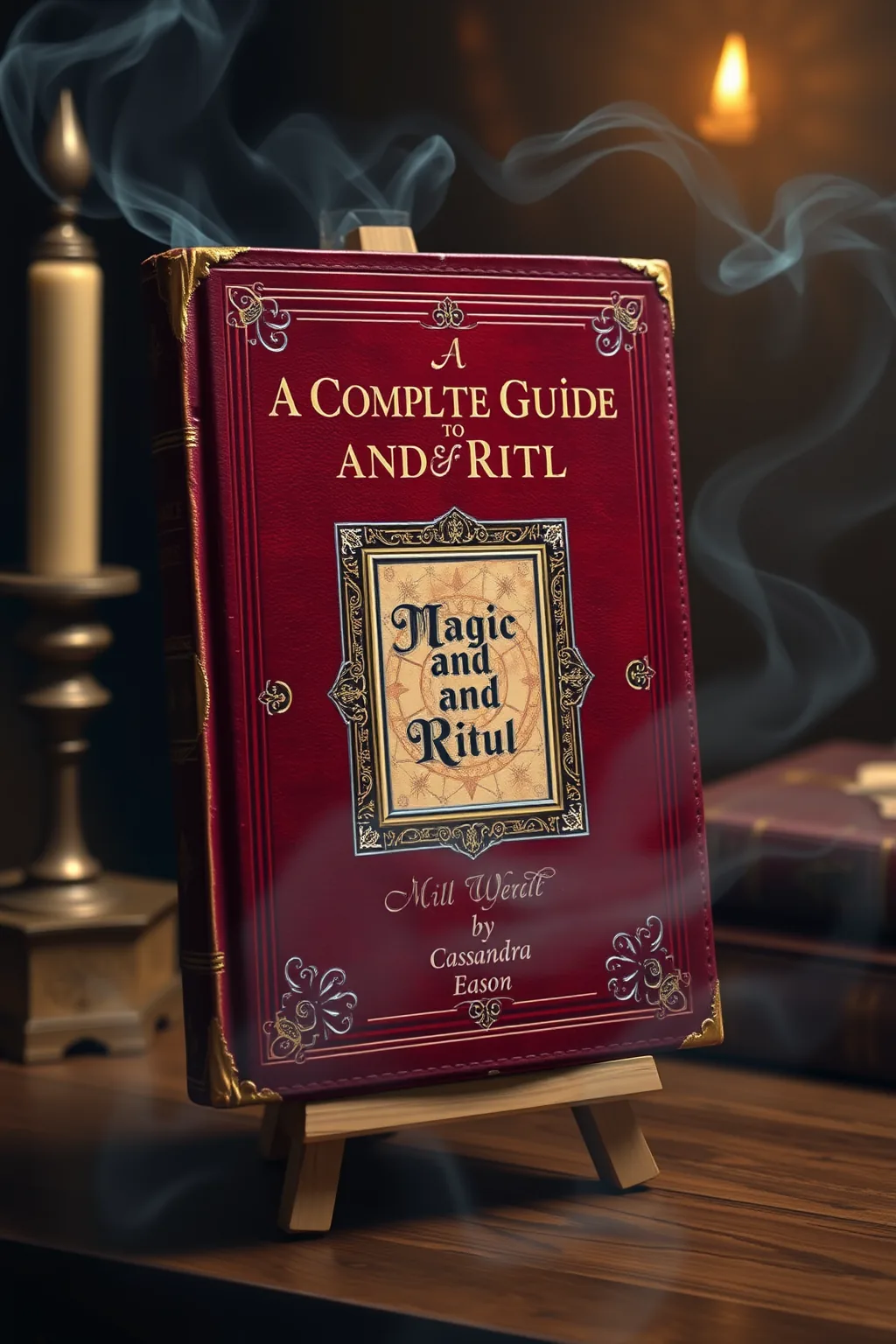
A Complete Guide to Magic and Ritual
 78
78

A Complete Guide to Magic and Ritual
Cassandra Eason’s 2000 publication, A Complete Guide to Magic and Ritual, attempts a broad survey of occult practices, a feat requiring careful curation and clear exposition. Eason succeeds admirably in presenting complex ideas like elemental correspondences and the mechanics of intention-setting in digestible terms, a significant strength for newcomers. The sections on ritual construction, in particular, offer practical advice that moves beyond mere theory. However, the sheer breadth of the subject matter means some areas, such as the detailed history of specific magical orders or deeper philosophical inquiries, are necessarily condensed. The work’s treatment of, for instance, the differences between ceremonial magic and folk magic, while present, could benefit from more nuanced historical distinctions. Despite this, the book provides a solid, accessible entry point into the study of Western esotericism. It is a competent, if not revolutionary, guide for the curious.
📝 Description
78
Cassandra Eason's 2000 guide maps magical practices from theory to application.
Published in 2000, A Complete Guide to Magic and Ritual aims to make occult traditions accessible. Eason organizes magical theory and practice for contemporary readers interested in esoteric subjects. The book covers the historical roots of various practices alongside their contemporary use.
It serves as a structured introduction for those new to magic and ritual. Beginners will find clear explanations of core concepts, while those with some experience can expand their knowledge of different magical systems. Readers interested in the historical and theoretical aspects of Western esotericism will also find this work informative.
The text explains fundamental magical principles such as energy, intention, and visualization. It discusses different ritual structures, from personal rites to group ceremonies. Eason also covers correspondences, the elements, and the role of archetypes in magical work.
Eason's guide appeared during a resurgence of interest in alternative spiritualities at the turn of the millennium. It follows a tradition of grimoires and compendiums, adapting their material for a modern audience. The book draws on psychological and anthropological views of ritual, making complex occult topics understandable.
💡 Why Read This Book?
• Gain a foundational understanding of magical principles, including the role of intention and visualization, as presented in Eason’s structured approach, allowing you to begin formulating your own ritual practices. • Learn about the historical development of Western esoteric traditions, understanding how practices evolved leading up to the year 2000, providing context for contemporary magical studies. • Acquire practical techniques for ritual construction, such as creating sacred space and utilizing correspondences, enabling you to design and perform meaningful personal ceremonies.
⭐ Reader Reviews
Honest opinions from readers who have explored this book.
❓ Frequently Asked Questions
When was A Complete Guide to Magic and Ritual first published?
A Complete Guide to Magic and Ritual by Cassandra Eason was first published in the year 2000, reflecting a surge of interest in esoteric subjects at the turn of the millennium.
What kind of magical traditions does Cassandra Eason cover?
Cassandra Eason's guide covers a wide range of Western esoteric traditions, including foundational concepts common to various magical practices, elemental work, and ritual structure.
Is this book suitable for absolute beginners in magic?
Yes, the book is designed to be accessible to beginners, offering clear explanations of core concepts and practical guidance for those new to the study of magic and ritual.
Does the book provide practical exercises?
Indeed, A Complete Guide to Magic and Ritual includes practical advice on constructing rituals, setting sacred space, and using visualization techniques, making it a hands-on resource.
What is the historical context of this book's publication?
Published in 2000, the book emerged during a period of increased interest in alternative spiritualities and esoteric studies, often termed the New Age movement, aiming to synthesize ancient wisdom for a modern audience.
What are some key concepts explored in the book?
The book explores key concepts such as the power of intention, the use of visualization, elemental correspondences, and the construction of ritual, providing a comprehensive overview of magical theory and practice.
🔮 Key Themes & Symbolism
Ritual Construction and Practice
The book emphasizes the practical construction of magical rituals, detailing steps from preparing the space to invoking energies and concluding the working. It breaks down the components of effective ritual, including the use of symbols, words of power, and visualization. Eason guides readers on how to imbue their actions with intent, a core part of many magical systems. This focus on practical application makes the esoteric accessible, allowing readers to engage directly with the material through personal practice.
Elemental Correspondences
A significant theme is the system of elemental correspondences, linking Earth, Air, Fire, and Water to various aspects of existence, tools, and psychological states. Eason explains how understanding and working with these elements can enhance magical efficacy. This concept, rooted in ancient Greek philosophy and central to Western Hermeticism, provides a framework for understanding the interconnectedness of the universe and for directing magical energy by working with specific elemental qualities.
The Power of Intention and Visualization
Central to Eason’s approach is the exploration of intention and visualization as primary tools in magic. The work details how focused intent, coupled with vivid mental imagery, can shape reality and manifest desired outcomes. This psychological aspect of magic is presented not as mere willpower, but as a sophisticated technique for aligning one’s consciousness with the forces of the universe. The book offers exercises to hone these abilities, essential for any serious practitioner.
Historical Roots of Magic
While practical, the guide frequently situates its teachings within their historical context, referencing ancient practices and the development of Western magical traditions. It acknowledges the lineage of magical knowledge, from ancient civilizations to the grimoires of the Renaissance and beyond. This historical grounding provides readers with a deeper appreciation for the continuity and evolution of magical thought, showing how contemporary practices are informed by centuries of esoteric inquiry.
💬 Memorable Quotes
Direct passages from the work, attributed to the author.
“The effectiveness of a ritual often lies in the clarity of the practitioner's intention.”
— This highlights a core principle in magic: that the focused will and clear purpose of the person performing the ritual are paramount to its success, more so than complex ceremonial details.
“Sacred space is not just a physical location, but a state of mind created by ritual.”
— This emphasizes the subjective and energetic nature of ritual space. It suggests that 'consecrating' an area involves a mental and spiritual shift, making any place potentially sacred through focused practice.
“Understanding elemental correspondences allows for a more nuanced approach to spellcraft.”
— This points to the system of associating qualities and energies with Earth, Air, Fire, and Water as a sophisticated tool that enhances the precision and effectiveness of magical workings.
“Visualization is the art of bringing the unseen into the mind's eye before it manifests in the physical world.”
— This defines visualization as a creative act, a bridge between imagination and reality. It posits that mental projection is a prerequisite for external manifestation in magical practice.
💡 Key Ideas
Editorial paraphrase of the work's core concepts — not direct quotes.
Every ritual has a beginning, a middle, and an end, mirroring natural cycles.
This paraphrased concept suggests that effective rituals follow a structured, cyclical pattern, akin to the phases of the moon or the seasons, providing a sense of completion and order.
🌙 Esoteric Significance
Tradition
This work primarily engages with the broad spectrum of Western Esotericism, drawing heavily on concepts prevalent in Neopaganism, Ceremonial Magic, and Hermeticism. While not strictly adhering to a single lineage, it synthesizes elements common across these traditions, focusing on universal principles of energy work, ritual, and intention. Eason presents these as interconnected facets of a larger magical worldview, making them accessible without requiring deep prior knowledge of specific Kabbalistic, Gnostic, or Theosophical doctrines.
Symbolism
Key symbols explored include the elements (Earth, Air, Fire, Water) as foundational forces and the circle as a representation of wholeness, infinity, and sacred space. The creation of a ritual circle, a common practice in many Western magical traditions, is explained as a means of establishing a contained, consecrated environment for focused magical work. These symbols function as archetypal anchors, facilitating connection with deeper energetic patterns and psychological states.
Modern Relevance
The book remains relevant for contemporary practitioners seeking a structured introduction to foundational magical concepts. Its emphasis on practical ritual construction and the psychological aspects of magic, such as visualization and intention, speaks to modern witchcraft, modern paganism, and self-initiation paths. Thinkers and practitioners focusing on accessible, non-dogmatic approaches to esotericism often cite such comprehensive guides as essential starting points for their own explorations.
👥 Who Should Read This Book
• Aspiring practitioners of Western magic and witchcraft seeking a foundational text that covers theory and practical application. • Individuals curious about the historical development and common principles of esoteric traditions, offering a broad overview from a pre-2000 perspective. • Students of comparative religion and spirituality interested in understanding the mechanics and structure of ritualistic practices within a magical framework.
📜 Historical Context
Cassandra Eason’s A Complete Guide to Magic and Ritual, published in 2000, arrived as the Western esoteric landscape was experiencing a resurgence, fueled by the internet and a growing dissatisfaction with mainstream materialism. This period, often characterized by the New Age movement, saw a demand for accessible guides to complex spiritual and magical systems. Eason’s work fits within a tradition of compendiums aiming to synthesize diverse occult knowledge, similar to earlier works like Agrippa's Three Books of Occult Philosophy (1531) but updated for a contemporary audience. It navigated a field populated by both academic interest in paganism and witchcraft, and a more popular, often eclectic, approach to magic. Unlike the more scholarly, historically focused works emerging from academic circles, Eason’s text prioritized practical application and a broad overview, making it a popular choice for individuals beginning their magical education. Its publication predates the more niche specialization seen in many modern esoteric circles, offering a more generalized introduction.
📔 Journal Prompts
Reflect on the concept of 'sacred space' as presented in the text and how it might be established in your own environment.
Analyze the described importance of 'intention' in ritual and formulate a clear, single-sentence intention for a hypothetical magical working.
Consider the role of 'visualization' in magical practice and list three distinct images you could use to represent the element of Fire.
Explore the elemental 'correspondences' discussed and identify which element you feel most drawn to and why.
Outline a simple ritual structure based on the book’s principles, focusing on its beginning, middle, and end phases.
🗂️ Glossary
Intention
The focused purpose or aim behind a magical act or ritual. It is considered a primary driving force in manifesting desired outcomes in many esoteric traditions.
Visualization
The mental practice of creating vivid images or scenes in the mind. In magic, it is used to focus energy, prepare sacred space, and manifest desired realities.
Sacred Space
An area, whether physical or energetic, that has been consecrated or set apart for magical or spiritual work, creating a protected and focused environment.
Correspondences
The system of symbolic relationships and affinities between different elements, objects, times, and concepts within magical and esoteric systems, such as the four elements.
Elements
The fundamental forces or building blocks of the universe in many esoteric traditions: typically Earth, Air, Fire, and Water, each associated with specific qualities and energies.
Ritual
A prescribed series of actions or words performed in a set order, often for religious or magical purposes, intended to create a specific effect or experience.
Grimoire
A textbook of magic, typically containing instructions on how to create magical tools, perform rituals, and cast spells, often dating from the medieval or Renaissance periods.
🔮 Readers Also Liked
Browse all →







More by Cassandra Eason
All books →




More Free Magic & Ritual Books
View all →