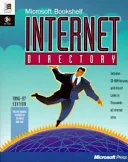
Microsoft Bookshelf Internet Directory
 74
74

Microsoft Bookshelf Internet Directory
The Microsoft Bookshelf Internet Directory for 1996 stands as a curious artifact of the early internet, a time when finding anything online required a more deliberate, almost cartographical approach. Its strength lies in its ambition to organize the chaos of 1996's World Wide Web into a manageable 5,000-entry directory, complete with a searchable CD-ROM. This was a genuine attempt to make the new digital frontier accessible. However, its primary limitation is its inherent ephemerality; by its very nature, a directory from 1996 is a snapshot of a world that has since transformed beyond recognition. The sheer volume of broken links and defunct sites would render much of its content obsolete today. The concept of direct links to 5,000 sites, while impressive for its time, now serves as a stark reminder of the internet's impermanence. It’s a historical document rather than a functional guide for contemporary users.
📝 Description
74
In 1996, Microsoft published a printed directory of 5,000 websites.
The Microsoft Bookshelf Internet Directory for 1996 was an effort to catalog the World Wide Web. Published by Microsoft Press alongside the Microsoft Bookshelf product, it functioned as a printed guide and a companion CD-ROM. The directory aimed to compile the most useful online resources of the time, granting direct access to about 5,000 websites. Its main purpose was to serve as a chosen gateway for users of the early internet.
This directory was for people and organizations wanting to understand and use the early internet. Students, researchers, and professionals who needed dependable online information would find it useful. Early internet adopters, the curious, and those overwhelmed by the growing number of websites would appreciate its organized method. It was a tool for anyone looking to build an online presence or simply to explore the digital world of the mid-1990s.
The directory appeared in 1996, a time of rapid internet growth. The World Wide Web was changing from a network for academics and the military into a public tool. Browsers like Netscape Navigator gained popularity, and businesses started creating their online presences. This guide was a significant attempt to bring order to this expanding digital space, providing a physical map of the online world before search engines became as sophisticated as they are today.
This directory represents a specific, almost forgotten, approach to information organization in the pre-search engine era. Its 'curated access' model stands in contrast to the algorithmic discovery prevalent today. By selecting and organizing a limited set of 'verified resources,' it embodies a philosophy of deliberate knowledge gathering, akin to a librarian assembling a collection rather than a search engine indexing the world. This tangible, printed artifact reflects a moment when the internet's vastness was still being charted, demanding human judgment to make sense of the digital frontier.
💡 Why Read This Book?
• Understand the early internet's structure by examining the 'Microsoft Bookshelf Internet Directory for 1996's' approach to cataloging 5,000 websites, revealing pre-search engine navigation methods. • Gain perspective on information management by studying the integration of a printed directory with a searchable CD-ROM, a common practice in the mid-1990s. • Appreciate the evolution of digital resources by contrasting the directory's curated list with today's dynamic web, highlighting the internet's rapid transformation since 1996.
⭐ Reader Reviews
Honest opinions from readers who have explored this book.
❓ Frequently Asked Questions
What was the primary purpose of the Microsoft Bookshelf Internet Directory 1996?
Its main goal was to provide a curated guide to the most useful online resources of 1996, offering direct links to approximately 5,000 websites via both a printed book and a searchable CD-ROM.
How many websites were listed in the 1996 directory?
The directory provided direct links to around 5,000 websites, aiming to serve as a comprehensive catalog of the internet's most valuable resources at the time.
Was the Microsoft Bookshelf Internet Directory 1996 available online?
While the directory itself was a physical book and a companion CD-ROM, it provided links to online resources. The concept was to guide users *to* the internet, not necessarily to be a fully online resource itself.
What kind of content could users expect to find in the directory?
Users could expect a curated selection of 'useful resources' on the internet, covering various categories deemed important in 1996, ranging from academic sites to early commercial ventures.
Is the Microsoft Bookshelf Internet Directory 1996 still relevant today?
As a functional guide, it is not. However, it serves as a valuable historical document illustrating the early organization and accessibility challenges of the World Wide Web in 1996.
Who published the Microsoft Bookshelf Internet Directory 1996?
It was a collaborative effort between Microsoft Press and the Microsoft Bookshelf product team, reflecting Microsoft's engagement with the burgeoning internet landscape.
🔮 Key Themes & Symbolism
The Early Web Frontier
This directory captures the nascent stage of the World Wide Web, a period characterized by rapid, unorganized growth. In 1996, the internet was a frontier, and resources like this book attempted to map it. It reflects a time when finding information online was an expedition, requiring curated lists and direct URLs rather than sophisticated search algorithms. The concept of 'useful resources' was subjective and rapidly evolving, making this directory a specific snapshot of what was considered valuable at that precise moment in digital history.
Information Architecture
The directory represents an early experiment in information architecture for the internet. Faced with an explosion of data, Microsoft Press and the Bookshelf team sought to impose order through categorization and direct linking. The integration of a printed volume with a searchable CD-ROM highlights a transitional phase, where physical media was still essential for accessing digital information. This approach underscores the challenges of organizing a decentralized network before the dominance of web search engines.
Digital Curation
In an era preceding ubiquitous search, 'digital curation' was paramount. The Microsoft Bookshelf Internet Directory for 1996 engaged in this practice by selecting approximately 5,000 'most useful' sites. This act of selection implies a judgment of value and relevance, a task now largely automated by search engine algorithms. The directory serves as a historical example of human-driven curation, offering insight into the gatekeeping and filtering processes that shaped early internet access.
The Medium is the Message
The format of the directory—a book and a CD-ROM—is as significant as its content. Published in 1996, it exemplifies the hybrid media field of the mid-1990s. The CD-ROM provided a searchable database and direct links, a technological leap for the time, yet it required a physical computer and specific software. The printed book offered a browsable overview, accessible without technology but static. This duality reflects the transitional period in how information was consumed and accessed.
💬 Memorable Quotes
Direct passages from the work, attributed to the author.
“The Microsoft/Bookshelf Internet Directory for 1996 provides... a directory of the most useful resources on the Internet.”
— This statement expresses the core mission: to identify and present 'useful' online destinations. In 1996, 'usefulness' was a subjective and rapidly evolving metric, highlighting the directory's role as a curated guide rather than an exhaustive index.
“This up-to-date directory and resource guide offers direct links to 5,000 sites in the directory...”
— The emphasis on 'up-to-date' and 'direct links' underscores the challenge and value proposition of the time. Maintaining currency in the rapidly changing web was a significant undertaking, and direct links offered efficient access.
“...and the searchable companion CD provides direct links to all the sites listed.”
— This highlights the technological integration of the era. The CD-ROM offered a more dynamic and searchable experience than the printed book, demonstrating the nascent convergence of physical media and digital access for internet navigation.
“jointly developed by Microsoft Press and the Microsoft Bookshelf product team.”
— This indicates a strategic collaboration within Microsoft, leveraging publishing expertise and the Bookshelf multimedia platform to address the growing need for internet guidance in 1996.
💡 Key Ideas
Editorial paraphrase of the work's core concepts — not direct quotes.
The directory aims to consolidate the most useful and relevant online resources.
This paraphrased concept speaks to the editorial process. 'Consolidating' implies gathering scattered information, and 'most useful and relevant' signifies a selective, curated approach to mapping the internet's burgeoning landscape.
🌙 Esoteric Significance
Tradition
While not overtly esoteric, this directory can be viewed through the lens of 'information occultism'—the practice of controlling or accessing hidden or difficult-to-obtain knowledge. In the mid-1990s, the internet was a new, vast, and often intimidating repository of information. This directory acted as a modern grimoire, a curated list of spells (URLs) to access desired digital realms, providing a structured path through the otherwise chaotic 'astral plane' of cyberspace.
Symbolism
The primary 'symbol' is the directory itself, acting as a modern-day index or catalog, akin to the *Thesaurus Linguae Graecae* or medieval library catalogs. The 'direct link' symbolizes a focused intention or magical pathway, cutting through the noise to reach a specific destination. The dual format of book and CD-ROM represents the alchemical union of the tangible (print) and the ephemeral (digital), a bridge between the physical world and the burgeoning virtual one.
Modern Relevance
Contemporary digital librarianship, archival efforts focused on 'link rot,' and even curated online communities draw parallels to this work. Thinkers exploring the 'history of the internet' and the evolution of information retrieval echo the challenges addressed by this directory. Practices involving digital decluttering or mindful internet use can find resonance in the directory's early attempt to define and isolate 'useful' online content, contrasting with today's information overload.
👥 Who Should Read This Book
• Digital historians and archivists seeking primary source material on early internet navigation and information architecture. • Researchers studying the evolution of technology and media, particularly the transition from print to digital information formats in the 1990s. • Individuals interested in the cultural history of computing and the early days of the World Wide Web, looking to understand pre-search engine internet usage.
📜 Historical Context
The Microsoft Bookshelf Internet Directory emerged in 1996, an important year for the World Wide Web's popularization. The internet was transitioning from an academic and research network to a commercial and public space, fueled by the rise of graphical browsers like Netscape Navigator. This period saw an exponential increase in websites, making navigation a significant challenge. The directory represented an attempt to impose order on this digital chaos, functioning as a printed and CD-ROM-based 'map' for early internet users. Its publication occurred amidst broader efforts by tech companies, including Microsoft, to establish dominance in the online realm. Unlike the decentralized, algorithm-driven search of today, the mid-90s relied heavily on curated lists and directories, such as those found in print encyclopedias or specialized guides. While not directly engaging with a competing school of thought, its existence implicitly countered the more anarchic, uncurated nature of early Usenet groups and FTP archives, offering a more structured alternative.
📔 Journal Prompts
The concept of 'useful resources' in the 1996 directory.
The dual format of book and CD-ROM as a transitional technology.
The challenge of 'curating' 5,000 internet sites in 1996.
Direct links as pathways in the early World Wide Web.
The historical context of the internet's rapid growth in 1996.
🗂️ Glossary
Microsoft Bookshelf
A multimedia software collection by Microsoft, typically including encyclopedias, dictionaries, and other reference works on CD-ROM, integrated with Windows operating systems.
Internet Directory
A catalog or list of websites and online resources, often organized by category, designed to help users find specific information or services on the internet.
Companion CD-ROM
A compact disc included with a book or software that contains supplementary digital content, such as searchable databases, multimedia files, or additional resources.
Direct Links
Hyperlinks (URLs) that lead directly to a specific webpage or online resource, bypassing intermediate pages or search results.
Searchable
Describes a digital resource, like a database or CD-ROM, that allows users to input keywords or queries to find specific information within its content.
World Wide Web
The global information system that uses the Internet and hypertext to link documents and resources, accessible via web browsers.
Resource Guide
A compilation of information that directs users to various sources or services relevant to a particular topic or need.