I Ching Guide for Beginners
 61
61

I Ching Guide for Beginners



Sophia Crane (Associate Editor) — Clarissa Lightheart's "I Ching Guide for Beginners" masterfully deciphers the intricate tapestry of the 'Book of Changes' for the modern seeker. Lightheart's prose is both accessible and imbued with an authentic reverence for this venerable oracle. She artfully navigates the profound philosophical underpinnings and the practical divination techniques, making the esoteric accessible without sacrificing its depth. This guide is an invaluable companion for anyone drawn to the I Ching's timeless wisdom, offering clear explanations of complex concepts and fostering a genuine connection to its symbolic language. A truly essential text for those beginning their journey into this ancient art.
📝 Description
61
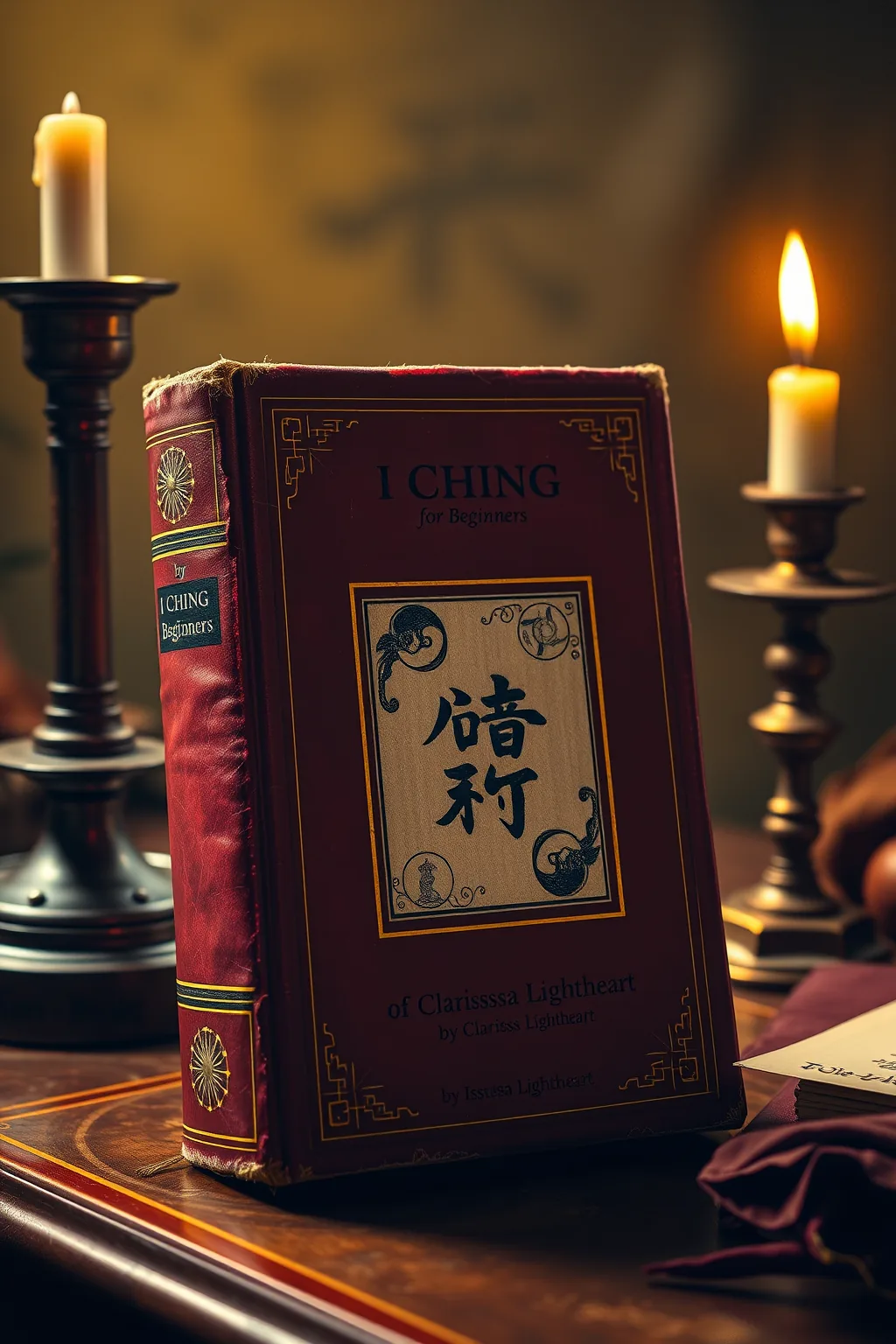
Clarissa Lightheart's 2023 guide simplifies the ancient Chinese divination text, the I Ching.
Clarissa Lightheart's "I Ching Guide for Beginners" aims to make the complex 'Book of Changes' accessible to newcomers. The book breaks down the core components, such as trigrams and hexagrams, and explains how they relate to the I Ching's philosophical underpinnings. It discusses the text's view on the cyclical nature of life and the interconnectedness of events. Lightheart details the historical use of the I Ching by various figures in East Asian history, from rulers to spiritual practitioners.
The guide is structured for individuals new to esoteric studies or Chinese philosophy. It seeks to present the I Ching not as a historical artifact, but as a practical tool for personal growth and understanding. The book covers the philosophical ideas, ethical considerations, and actionable advice found within the I Ching. It encourages readers to find a connection with broader principles that influence daily life and decision-making.
The I Ching, or 'Book of Changes,' is a central text in Chinese cosmology and divination, dating back over two millennia. Its philosophical core is deeply intertwined with Taoism and Confucianism, influencing East Asian thought on balance, change, and destiny. Traditional interpretations involve complex systems of casting coins or yarrow stalks to generate hexagrams, which are then read for guidance. The text's esoteric nature lies in its symbolic language and its application as an oracle, meant to reveal underlying patterns in the universe and offer counsel on human affairs.
💡 Why Read This Book?
Unlock the profound wisdom of the 'Book of Changes' and gain insight into life's unfolding patterns. This guide offers a clear, accessible entry point for beginners to understand the I Ching's symbolism and divinatory practices. Ideal for spiritual seekers, students of ancient philosophy, and anyone looking for profound self-reflection and guidance in navigating life's complexities.
⭐ Reader Reviews
Honest opinions from readers who have explored this book.
❓ Frequently Asked Questions
What is the I Ching?
The I Ching, or 'Book of Changes,' is an ancient Chinese divination text and philosophical classic. It comprises 64 hexagrams, each representing a fundamental situation or principle, offering guidance and insight into the dynamic nature of existence.
Is this book suitable for absolute beginners?
Absolutely. Clarissa Lightheart has specifically crafted this guide to demystify the I Ching for newcomers, breaking down complex concepts into understandable terms and providing practical steps for engaging with the text.
How can the I Ching help me in my daily life?
The I Ching acts as a mirror to your inner world and external circumstances. By consulting it, you can gain clarity on challenges, understand underlying influences, and make more informed decisions aligned with the natural flow of the Tao.
What are hexagrams and trigrams?
Trigrams are the eight basic symbols made of three lines (solid for yang, broken for yin), which are then combined to form the 64 hexagrams. Each hexagram is a unique configuration of yin and yang lines, representing distinct archetypal situations.
Can I use the I Ching for more than just prediction?
Indeed. While it can offer foresight, the I Ching is primarily a tool for wisdom, self-reflection, and understanding the universal principles of change and balance. Its philosophical insights are invaluable for personal growth and spiritual development.
🔮 Key Themes & Symbolism
The Philosophy of Change
Fundamentally, the I Ching is a profound exploration of the immutable principle of change. It teaches that life is a constant flux, and understanding the dynamics of these shifts is key to harmonious living. This section examines the cyclical nature of time, the interplay of opposing forces, and the importance of adapting to new circumstances rather than resisting them. It illuminates how the I Ching offers a cosmic perspective on personal challenges, revealing the opportune moments for action and the necessity of patience. This understanding fosters a deep acceptance of life's ebb and flow, leading to greater resilience and inner peace.
Decoding the Hexagrams
The 64 hexagrams are the archetypal language of the I Ching, each a complex symbol representing a universal situation or developmental stage. This theme focuses on explaining these intricate patterns of six lines, revealing their inherent symbolism and the wisdom they convey. Readers will learn how to interpret the meaning of each hexagram, understanding its associated imagery, judgments, and line texts. The exploration goes beyond mere memorization, encouraging an intuitive grasp of the hexagrams' essence, transforming them into potent tools for self-awareness and guidance in navigating life's myriad scenarios. It's an unveiling of profound cosmic archetypes.
Practical Divination and Self-Reflection
This theme bridges the gap between ancient theory and modern practice, empowering readers to actively engage with the I Ching as a divinatory tool. It provides clear, step-by-step instructions on how to cast the hexagrams using various methods, such as yarrow stalks or coins. More importantly, it guides the reader in formulating insightful questions and interpreting the resulting hexagrams for personal guidance. The focus is on using the I Ching not just for prediction, but as a catalyst for introspection, encouraging thoughtful contemplation of one's circumstances and fostering a deeper connection with one's inner wisdom.
💬 Memorable Quotes
Direct passages from the work, attributed to the author.
“Seek not to control the river, but to understand its flow.”
— This aphorism emphasizes the I Ching's teaching on acceptance and alignment with natural forces, advocating for wisdom and adaptability over futile resistance.
“Wisdom is not found in knowing the future, but in understanding the present.”
— This underscores the I Ching's role as a guide for present-moment awareness and decision-making, rather than a simple fortune-telling device.
💡 Key Ideas
Editorial paraphrase of the work's core concepts — not direct quotes.
The universe breathes in cycles, and so must we.
This quote captures the fundamental philosophy of the I Ching: that all phenomena, from the cosmic to the personal, are subject to natural rhythms and constant transformation.
Within every challenge lies the seed of opportunity.
Highlighting the optimistic and adaptive nature of the I Ching, this quote suggests that even difficult situations contain inherent potential for growth and positive change.
The stillness within reveals the movement without.
This quote points to the importance of inner contemplation and self-awareness as a means to understand and work through the external world and its ever-changing circumstances.
🌙 Esoteric Significance
Tradition
The I Ching is deeply rooted in Taoist and Confucian philosophical traditions, but its esoteric significance extends into broader mystical and hermetic currents. It is considered a foundational text for understanding the principles of cosmic order, the interplay of yin and yang, and the interconnectedness of all things. Its symbolic language and divinatory methods align with practices found in various esoteric traditions that seek to decode the hidden patterns of the universe and apply this knowledge for personal transformation and alignment with higher principles.
Symbolism
The I Ching's strong symbolism is its most potent esoteric feature. The trigrams (heaven, earth, thunder, water, mountain, wind, fire, lake) are archetypal representations of fundamental natural forces and human experiences. The 64 hexagrams, formed by combining trigrams, represent a comprehensive map of human situations and cosmic processes. Each line, solid (yang) or broken (yin), carries specific meaning, and their arrangement creates a dynamic narrative that speaks to the ever-changing nature of reality. This symbolic language serves as a key to unlocking deeper insights into the universe and oneself.
Modern Relevance
In the modern era, the I Ching continues to offer profound relevance as a tool for navigating complexity and uncertainty. Its emphasis on adaptability, balance, and understanding the natural flow of events provides a vital counterpoint to the often chaotic and disorienting nature of contemporary life. For those seeking spiritual guidance, psychological insight, or a deeper connection to universal principles, the I Ching remains an invaluable resource. Its philosophical depth encourages critical thinking and introspection, empowering individuals to make conscious choices and foster personal growth in an ever-evolving world.
👥 Who Should Read This Book
This guide is an indispensable resource for anyone beginning their I Ching journey, from the absolute novice curious about ancient wisdom to the seasoned practitioner seeking a clearer perspective. Scholars of Eastern philosophy and spirituality will find it a valuable primer for understanding this seminal text. Seekers of self-knowledge and personal growth will discover a profound tool for introspection and guidance. Practicing diviners will appreciate its accessible approach to a complex system, fostering a deeper connection with the 'Book of Changes.'
📜 Historical Context
The I Ching, or 'Book of Changes,' emerged from ancient Chinese shamanic traditions and philosophical inquiries, with its earliest layers dating back to the Shang Dynasty (c. 1600–1046 BCE). It evolved significantly through the Zhou Dynasty (c. 1046–256 BCE), with the Confucian school playing a central role in its systematic interpretation and integration into ethical and political thought. During the Han Dynasty (206 BCE–220 CE), the I Ching became firmly established as one of the Five Classics of Confucianism, solidifying its position as a core part of Chinese intellectual and spiritual life. Its influence extended across East Asia, profoundly shaping the philosophies, arts, and divinatory practices of Korea, Japan, and Vietnam. The text's enduring appeal lies in its ability to address the fundamental human concerns of change, destiny, and the search for balance in a complex world, making it a timeless source of wisdom.
📔 Journal Prompts
Reflect on a recent significant change in your life. How does the concept of 'change as constant' resonate with your experience?
Consider a current dilemma you are facing. If you were to consult the I Ching, what question would you ask, and why?
Explore the interplay of 'yin' (receptive, passive) and 'yang' (active, assertive) energies in your daily life. Where do you find balance and imbalance?
Choose one hexagram that particularly speaks to you. What aspects of its symbolism or judgment speak to your current life situation?
How can understanding the I Ching's philosophy of cyclical change help you approach future challenges with greater equanimity and wisdom?
🗂️ Glossary
I Ching
An ancient Chinese divination text and philosophical classic, also known as the 'Book of Changes.' It comprises 64 hexagrams used for guidance and insight into life's situations.
Hexagram
A symbol composed of six stacked lines, either solid (yang) or broken (yin). Each of the 64 hexagrams represents a fundamental archetypal situation or principle.
Trigram
A basic symbol composed of three lines (yang or yin). There are eight trigrams, which are the building blocks for the 64 hexagrams.
Yang
In I Ching philosophy, the active, masculine, light, and assertive principle, represented by a solid line (—).
Yin
In I Ching philosophy, the receptive, feminine, dark, and passive principle, represented by a broken line (--).
This book appears in 4 collections
🔮 Readers Also Liked
Browse all →






More by Clarissa Lightheart
All books →
From the “Remote Viewing” Collection
View all →

More Free Divination & Tarot Books
View all →