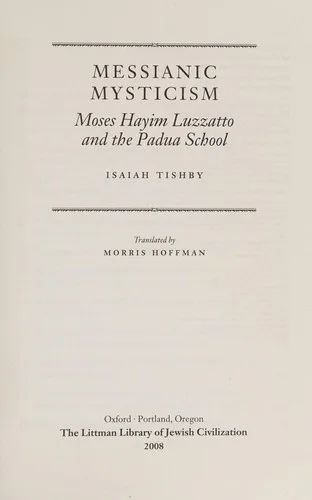
Isaiah Tishby
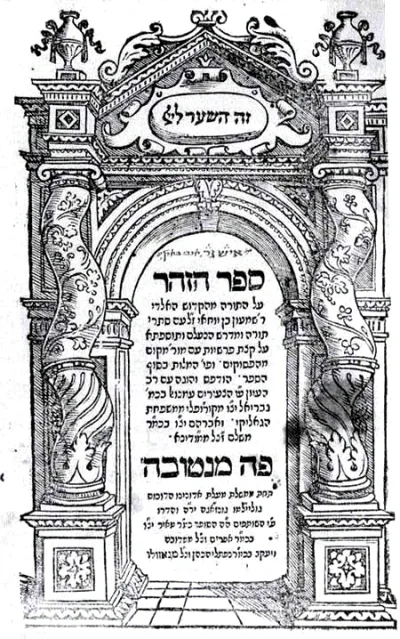
The Zohar, a foundational Kabbalistic text, is widely believed by scholars to have been authored by Moses de León in the 13th century.
The Zohar is a seminal collection of books central to Kabbalistic thought, exploring mystical interpretations of the Torah, the nature of God, the cosmos, souls, and the relationship between humanity and the divine. While initially presented as the teachings of the ancient sage Shimon ben Yochai, this attribution is contested by modern scholarship. Most scholars attribute the work to Moses de León, who claimed it was ancient, though some suggest it might be a composite of multiple medieval authors' works with some older material.
The language of the Zohar, a constructed dialect termed Zoharic Aramaic, is seen by scholars like Gershom Scholem as an artificial blend of existing Aramaic dialects, intentionally crafted with imperfect grammar and vocabulary to evoke an aura of ancient mystery. Some recent perspectives suggest Aramaic was chosen for literary or mystical impact rather than solely to conceal its origins. The text also incorporates Hebrew, particularly in sections like the Midrash haNe'elam, which exhibits characteristics of medieval Hebrew.
Historical accounts, notably from Isaac ben Samuel of Acre, suggest that de León's widow and daughter revealed he authored the Zohar himself, attributing it to Shimon ben Yochai for financial gain. Despite debates over its authenticity, the Zohar gained significant authority within Jewish communities by the 15th century, influencing theological arguments and ritual discussions, though some groups and scholars have historically questioned its origins.
Authorship and Authenticity Debates
The Zohar's authorship is a subject of significant scholarly debate. While Moses de León publicly presented it as an ancient work by Shimon ben Yochai, modern scholars largely reject this claim. The prevailing view is that de León himself authored the Zohar, possibly between 1280 and 1286, though some theories propose it may be a collaborative effort by several medieval writers, potentially incorporating some older elements. Evidence supporting de León's sole authorship comes from accounts, such as that of Isaac ben Samuel of Acre, who reported that de León's family disclosed he wrote the Zohar and attributed it to Shimon ben Yochai to profit from its sale. Despite these claims, the Zohar's profound influence led to its acceptance by many, though some communities and scholars have consistently questioned its authenticity.
Linguistic Characteristics
The Zohar is notable for its unique linguistic style, primarily written in a constructed dialect known as Zoharic Aramaic. Scholars like Gershom Scholem describe this language as an artificial fusion, drawing from the Babylonian Talmud and Targum Onkelos, but characterized by de León's imperfect grammar and limited vocabulary, incorporating loanwords from contemporary languages. This linguistic construction is believed by some to have been intended to create an impression of ancient and obscure knowledge, though alternative views suggest Aramaic was chosen for specific literary or mystical purposes. The text also features Hebrew, particularly in sections like the Midrash haNe'elam, which exhibits features of medieval Hebrew rather than earlier forms.
Mystical and Philosophical Content
The Zohar delves deeply into mystical interpretations of the Torah, offering scriptural commentaries and exploring themes of cosmology, mythical origins, and the nature of the soul. It discusses profound theological concepts, including the essence of God, the structure of the universe, the destiny of souls, and the path to redemption. A central focus is the intricate relationship between the individual's ego, the concept of 'darkness,' and the attainment of one's 'true self' through connection with 'the light of God.' The text's philosophical underpinnings often present humanity as the pinnacle of creation, with immortality contingent on moral conduct, contrasting with views that emphasize intellectual development as the path to eternal existence.
Key Ideas
- Mystical interpretation of the Torah
- Nature of God and the universe
- Origin and structure of the cosmos
- Nature of souls and redemption
- Relationship between ego, darkness, and the true self
- Humanity as lord of creation
- Immortality dependent on morality
Books by Isaiah Tishby
6 free public domain books · Read online or download