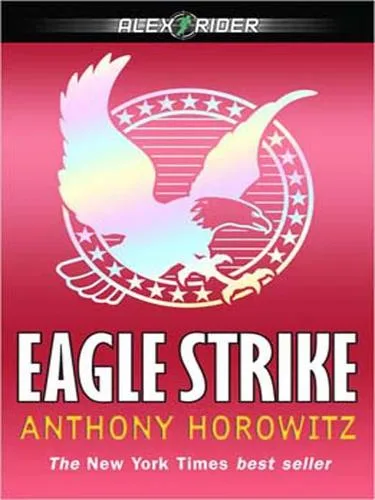
Eagle Strike
 74
74

Eagle Strike
Eagle Strike delivers on its promise of a high-octane adventure, a hallmark of Anthony Horowitz's writing. The intricate plotting, particularly the way Alex Rider is drawn into a complex international conspiracy involving arms dealing and biological weapons, remains a strength. Horowitz excels at creating palpable tension, especially in the sequences detailing Rider's infiltration and evasion tactics. However, the narrative occasionally strains credulity, with Rider’s repeated survival against overwhelming odds bordering on the formulaic. A particularly memorable sequence involves the elaborate trap set by Yassen Gregorovich, showcasing the author’s knack for elaborate set pieces. While not a text for deep metaphysical inquiry, it functions effectively as a study in applied strategy and the consequences of power. It is a well-constructed thriller that prioritizes action and suspense.
📝 Description
74
Anthony Horowitz's 2003 novel, Eagle Strike, uses a teenage spy to examine hidden power structures.
Eagle Strike, published in 2003, follows teenage spy Alex Rider as he navigates international threats. While framed as a thriller, the novel delves into how information functions as a weapon and the precarious nature of trust in clandestine operations. Horowitz crafts a plot centered on espionage and high-stakes action, where Alex confronts adversaries who operate beyond normal legal boundaries.
The story highlights the importance of operational readiness and the psychological pressures faced by those in espionage. Alex must acquire specialized skills and understand enemy tactics to succeed. The book suggests that specialized knowledge itself is a form of power, crucial for leveraging intelligence against opponents. It also touches upon the personal cost of this profession, particularly the isolation that can arise when maintaining close relationships becomes difficult.
Published in 2003, Eagle Strike emerged during a period of heightened global security concerns, a context that informed its themes of espionage and international intrigue. The early 2000s saw a surge in popular fiction dealing with spies and secret agencies, reflecting contemporary anxieties and fascinations with the hidden mechanisms of power. Horowitz's work contributes to this trend, offering a fictional lens through which to examine the world of clandestine intelligence and the unseen forces that shape global events.
💡 Why Read This Book?
• Gain insight into the mechanics of clandestine operations as depicted in the confrontation with arms dealer Damian Cray, understanding the strategic maneuvers involved. • Experience the narrative tension generated by Alex Rider's infiltration of Cray's secluded island, appreciating the author's pacing and suspense-building. • Examine the symbolic representation of technological warfare, particularly the threat of the "Eagle" weapon system, and its implications for global security.
⭐ Reader Reviews
Honest opinions from readers who have explored this book.
❓ Frequently Asked Questions
What is the primary conflict in Anthony Horowitz's Eagle Strike?
The primary conflict involves teenage spy Alex Rider confronting international arms dealer Damian Cray, who plans to unleash a devastating weapon named 'Eagle' on the world, forcing Rider into a race against time to prevent a global catastrophe.
Who is the main antagonist in Eagle Strike?
The main antagonist is Damian Cray, a wealthy and influential arms dealer who uses his vast resources and technological innovations to orchestrate a plot to hold the world hostage with a biological weapon.
What is the significance of the title 'Eagle Strike'?
The title refers to the code name of the devastating biological weapon that the antagonist, Damian Cray, intends to deploy. The 'Eagle Strike' represents the catastrophic event he aims to unleash upon the world.
When was Eagle Strike first published?
Eagle Strike was first published in 2003, making it the fourth novel in the Alex Rider series by Anthony Horowitz.
What is Alex Rider's role in Eagle Strike?
Alex Rider, a reluctant teenage spy for MI6, is tasked with investigating and ultimately stopping Damian Cray's plot. He undertakes dangerous missions, utilizing his specialized training and resourcefulness to counter Cray's machinations.
Does Eagle Strike involve any specific locations known for espionage?
While the novel features international settings, a significant portion of the climax takes place on Damian Cray's heavily fortified private island, serving as the hub for his illicit operations and the deployment of the 'Eagle' weapon.
🔮 Key Themes & Symbolism
The Burden of Espionage
Eagle Strike looks at the immense pressure placed upon its young protagonist, Alex Rider. The narrative highlights the psychological toll of constant danger, the isolation that comes with secrecy, and the moral ambiguities inherent in espionage. Rider's journey showcases how operating in the shadows requires immense resilience and the ability to compartmentalize, often at personal cost. The novel explores the idea that even extraordinary skills come with a heavy price, particularly when wielded by someone so young in a world of adult conspiracies.
Technological Warfare and Control
The central conflict of Eagle Strike revolves around the threat of advanced weaponry, specifically the 'Eagle' biological weapon. This theme examines how technological prowess can be weaponized for destructive purposes and used as a tool for global extortion. The novel presents a world where scientific innovation, in the wrong hands, becomes a means of imposing control and generating fear. It touches upon the anxieties surrounding the proliferation of sophisticated weapons and the challenge of maintaining international stability against such threats.
The Nature of Adversaries
The antagonists in Eagle Strike, particularly Damian Cray and Yassen Gregorovich, represent different facets of the clandestine world. Cray embodies the wealthy, technologically advanced orchestrator of chaos, operating from a position of immense privilege. Gregorovich, on the other hand, represents the skilled, lethal operative, a figure of calculated menace. The novel explores how these figures leverage their resources, intelligence, and ruthlessness to achieve their objectives, highlighting the varied forms that threats can take in the field of international intrigue.
Youth in a Dangerous World
A core element of Eagle Strike is the juxtaposition of Alex Rider's youth with the adult world of espionage and international crime he navigates. The narrative consistently emphasizes his age and inexperience against the backdrop of deadly missions and complex conspiracies. This theme explores how resilience, adaptability, and a unique perspective can be assets, even when confronting seasoned adversaries. It questions the boundaries of responsibility and capability when young individuals are thrust into perilous situations.
💬 Memorable Quotes
Direct passages from the work, attributed to the author.
“He had been trained to be a spy, not a hero.”
— This statement highlights the core of Alex Rider's character arc. While he possesses the skills of an operative, the situations he faces often demand acts of bravery that transcend mere training, forcing him to confront the ethical and emotional demands of heroism.
“The world was a dangerous place, and ignorance was no protection.”
— This reflects the underlying premise of the Alex Rider series and the thriller genre. It suggests that awareness of threats, however unpleasant, is crucial for survival and action, especially for those involved in intelligence work.
“Cray's plan was not about money, but about power.”
— This interpretation of Damian Cray's motivations underscores the theme of control and influence. It posits that for some adversaries, the ultimate goal is not financial gain but the ability to dictate global events and exert dominance.
“He found himself alone, surrounded by enemies.”
— This captures the recurring motif of isolation and vulnerability in espionage narratives. It emphasizes the perilous nature of Alex Rider's missions, where trust is scarce and the protagonist often faces overwhelming odds single-handedly.
“The future was a weapon, and Cray intended to wield it.”
— This speaks to the concept of advanced technology and its potential for destruction. It frames Damian Cray's ambition not just as an act of violence, but as an attempt to control the very trajectory of future events through his weapon.
🌙 Esoteric Significance
Tradition
While Eagle Strike is primarily a contemporary thriller, its exploration of clandestine operations, hidden knowledge, and the manipulation of global systems can be viewed through a lens of modern Gnosticism or esoteric interpretations of power structures. The idea of a hidden elite (like arms dealers) controlling the masses through manufactured crises mirrors Gnostic themes of a demiurge and a hidden, true reality. The novel operates outside traditional esoteric lineages but touches upon the allure of secret knowledge and the power derived from understanding unseen mechanisms.
Symbolism
The 'Eagle' weapon system itself functions as a potent symbol of destructive power and potential global subjugation. The eagle, often associated with divine power, sovereignty, or predatory might, here represents a force of annihilation wielded by human hands. Damian Cray's island fortress can symbolize isolation and a detachment from the world he seeks to control, a common motif in narratives about hidden manipulators. The concept of advanced technology as a means of control also carries symbolic weight, representing the modern perversion of knowledge.
Modern Relevance
Contemporary thinkers and practitioners interested in critical analyses of power, surveillance, and the influence of the military-industrial complex might find resonance in Eagle Strike's depiction of global threats. While not directly citing esoteric texts, its portrayal of clandestine actors and sophisticated weaponry aligns with discussions in conspiracy theory circles and certain branches of geopolitical analysis that explore hidden influences. The novel’s themes of technological control and the manipulation of information remain relevant in an era of cyber warfare and disinformation campaigns.
👥 Who Should Read This Book
• Young adult readers who enjoy fast-paced adventure stories with elements of espionage and international intrigue. • Fans of the Alex Rider series looking to continue following the protagonist's missions and development. • Readers interested in narratives that explore themes of covert operations, technological threats, and the challenges faced by intelligence operatives.
📜 Historical Context
Published in 2003, Eagle Strike emerged within a landscape shaped by the post-9/11 world, where global security and the threat of unconventional warfare were at the forefront of public consciousness. Anthony Horowitz’s Alex Rider series, known for its blend of youthful protagonist and mature espionage themes, tapped into this zeitgeist. Contemporary authors like Robert Ludlum, whose Bourne series continued to be popular, explored similar themes of intricate conspiracies and skilled operatives, though often with a more cynical tone. The early 2000s also saw a rise in young adult fiction that tackled complex, often dark, subject matter, positioning Eagle Strike within a broader trend of engaging younger readers with challenging narratives. Reception at the time focused on its fast-paced action and intricate plotting, solidifying its place in the popular thriller market.
📔 Journal Prompts
Alex Rider's operational readiness against Damian Cray's machinations.
The symbolic weight of the 'Eagle' weapon in the narrative.
Reflecting on Yassen Gregorovich's role as a calculating operative.
The isolation experienced by Alex Rider during his mission.
Contrasting Damian Cray's pursuit of power with ethical leadership.
🗂️ Glossary
MI6
The United Kingdom's Secret Intelligence Service, responsible for gathering foreign intelligence. In Eagle Strike, it serves as the agency that reluctantly recruits and deploys the teenage spy, Alex Rider.
Damian Cray
The primary antagonist of Eagle Strike. Cray is an immensely wealthy and influential arms dealer who plans to use a devastating biological weapon to hold the world ransom.
Yassen Gregorovich
A recurring antagonist in the Alex Rider series, known for his lethal skills and enigmatic nature. He serves as a formidable adversary for Alex in Eagle Strike, representing a more direct physical threat.
Eagle Weapon
The code name for the advanced biological weapon developed by Damian Cray. Its deployment is the central threat that Alex Rider must prevent in the novel.
Clandestine Operations
Secret activities undertaken by intelligence agencies or individuals, often involving espionage, sabotage, or covert actions. Eagle Strike is replete with such operations.
Arms Dealer
An individual or entity that sells weapons. Damian Cray is portrayed as a high-level arms dealer operating on a global scale with devastating technological advancements.
Espionage
The practice of spying or of using spies, typically by governments to obtain political and military information. Alex Rider's role is central to this theme.
🔮 Readers Also Liked
Browse all →









More by Anthony Horowitz
All books →





More Free Occult Philosophy Books
View all →