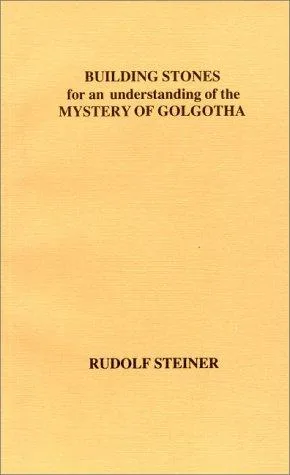
MENTAL ALCHEMY

 81
81

MENTAL ALCHEMY
B. Brown Williams' "Mental Alchemy" offers a rigorous, almost alchemical, framework for internal transformation. Unlike many contemporary self-help volumes, it avoids platitudes, instead presenting a structured approach to mental discipline. The strength lies in its systematic presentation of concepts that encourage genuine introspection, particularly its detailed exploration of thought-forms and their impact. However, the prose, while clear, can occasionally feel dense, demanding sustained attention from the reader. A passage discussing the 'dissolution' of unwanted mental habits is particularly striking for its directness. Williams eschews vague encouragement for concrete principles. This work serves as a potent manual for those committed to serious inner work.
📝 Description
81
B. Brown Williams's Mental Alchemy, published in 2016, details techniques for altering consciousness.
Mental Alchemy by B. Brown Williams offers a systematic method for personal change through the transformation of thought and consciousness. The book proposes that by mastering internal states, individuals can directly influence their external reality. Williams outlines specific principles for controlling thoughts, emotions, and beliefs, suggesting these are the tools for inner transmutation.
The text emphasizes the power of focused intention and visualization. It aims to provide actionable steps for readers interested in practical mental discipline. Those seeking abstract theories without concrete application might find it less suitable. The work connects these ideas to older philosophical currents that predated modern psychology.
This book draws from a tradition that views the mind as a primary agent of creation. Its ideas echo those found in New Thought and the work of figures like Phineas Quimby, which focus on the mind's capacity to shape experience. Mental Alchemy positions itself within contemporary esoteric thought by reasserting the relevance of these older concepts. It suggests a lineage of thought concerning mental alchemy that predates contemporary psychological frameworks.
💡 Why Read This Book?
• Learn practical techniques for mental transmutation, directly inspired by the structured approach presented in chapters dedicated to thought-form manipulation, offering a distinct method for personal development. • Understand the historical roots of mind-over-matter philosophy, specifically how ideas prevalent in the New Thought movement, and potentially earlier esoteric traditions, are synthesized in Williams' 2016 publication. • Gain a disciplined perspective on consciousness as a tool for reality shaping, moving beyond passive belief to active mental engagement as detailed in the book's core principles.
⭐ Reader Reviews
Honest opinions from readers who have explored this book.
❓ Frequently Asked Questions
What is the primary goal of "Mental Alchemy"?
The primary goal is to equip readers with systematic methods for transforming their consciousness and mental states, thereby influencing their external reality and achieving personal growth, as outlined in the book's core principles.
Is "Mental Alchemy" suitable for beginners in esoteric studies?
While accessible, the book demands focused study. Beginners will benefit from its structured approach, but a foundational interest in esoteric philosophy or psychology is recommended for full comprehension of the concepts presented.
What makes the 2016 edition of "Mental Alchemy" significant?
The 2016 edition ensures the preservation and accessibility of B. Brown Williams' work, recognizing its cultural importance and making it available to a new generation of scholars and practitioners interested in esoteric thought.
Does the book offer specific exercises for mental discipline?
Yes, "Mental Alchemy" presents concrete techniques and principles for mental discipline, focusing on focused intention and visualization, aiming to transmute limitations into strengths through systematic practice.
What is the relationship between "Mental Alchemy" and earlier esoteric movements?
The work draws upon and synthesizes concepts from established esoteric traditions, including elements reminiscent of the New Thought movement and broader philosophical inquiries into the mind's creative power.
Is this book in the public domain?
Yes, the original work is noted as being in the public domain in the United States, making it accessible for study and reproduction, though specific editions may retain copyright.
🔮 Key Themes & Symbolism
Consciousness as a Crucible
The central thesis posits consciousness not as a passive observer but as an active alchemical crucible. Williams explores how the individual's internal mental and emotional states can be deliberately transmuted, akin to metals undergoing refinement. This transforms limitations and challenges into catalysts for growth. The work details methods for consciously directing thought and intention to achieve this internal refinement, viewing the mind as the primary instrument for shaping personal reality and spiritual evolution.
Thought-Forms and Manifestation
This theme examines the nature of thoughts as energetic constructs, or 'thought-forms,' which possess the power to influence external circumstances. Williams provides insights into how persistent patterns of thinking and belief create tangible effects in an individual's life. The book guides readers in understanding and consciously shaping these thought-forms, moving from unconscious creation of undesirable outcomes to intentional manifestation of desired realities through focused mental discipline.
Systematic Mental Discipline
Unlike more intuitive approaches, "Mental Alchemy" emphasizes a structured, systematic method for mental training. It outlines specific principles and practices designed to cultivate focus, control over emotions, and clarity of intention. This disciplined approach is presented as essential for achieving the profound internal shifts required for true alchemical transformation, distinguishing it from more generalized motivational literature.
The Alchemy of Personal Reality
This theme connects the ancient practice of alchemy to the internal range of the mind. It proposes that the 'Great Work' is not about transmuting physical metals, but about refining the self through the mastery of consciousness. The book details how individuals can apply alchemical principles to their own mental and spiritual development, transforming their personal reality from one of limitation to one of potential and power.
💬 Memorable Quotes
Direct passages from the work, attributed to the author.
“The mind is the crucible wherein the base elements of experience are transmuted into the gold of wisdom.”
— This highlights the core alchemical metaphor applied to the inner life. It suggests that challenges and ordinary thoughts are raw materials that, through focused mental processes, can be refined into valuable insights and spiritual understanding.
“Focused intention acts as the alchemist's fire, shaping and directing the raw energies of thought.”
— This concept underscores the active role of directed will. It presents intention not as a passive wish, but as a dynamic force capable of molding and giving form to mental energy.
“The dissolution of limiting beliefs is the first step towards genuine mental liberation.”
— This points to the necessity of deconstruction. Before new mental structures can be built, the old, restrictive ones must be systematically dismantled or 'dissolved' to create space for growth.
“Mastery over the self precedes mastery over the external.”
— This aphorism asserts that true power and influence in the outer world are contingent upon achieving inner control and self-awareness, positioning personal discipline as the prerequisite for external achievement.
💡 Key Ideas
Editorial paraphrase of the work's core concepts — not direct quotes.
One's outer world is but a reflection of the inner state of consciousness.
This paraphrase emphasizes the principle of correspondence, suggesting that external circumstances are not random but are direct manifestations of an individual's prevailing thoughts, beliefs, and emotional patterns.
🌙 Esoteric Significance
Tradition
This work aligns with Hermetic and New Thought traditions, emphasizing the mind's sovereign power in shaping reality. It departs from purely mystical or ritualistic approaches by offering a systematic, almost psychological, methodology for internal transformation. The 'alchemy' here is psychological and spiritual, focusing on the transmutation of individual consciousness rather than external phenomena, fitting within a lineage that seeks inner perfection as the key to outer influence.
Symbolism
The core symbolism revolves around the alchemical process itself – the crucible, the fire, and the transmutation of base metals into gold. In "Mental Alchemy," these symbolize the mind, focused intention, and the transformation of limiting beliefs into wisdom and power, respectively. The concept of 'thought-forms' also acts as a symbolic representation of how mental energy coalesces into influential patterns that shape perception and reality.
Modern Relevance
Contemporary practitioners of consciousness-based self-help, manifestation coaches, and students of comparative spirituality often draw on principles similar to those articulated by Williams. His systematic approach offers a concrete framework for individuals seeking to apply metaphysical concepts practically. Thinkers and groups exploring quantum consciousness and the observer effect in physics may also find conceptual parallels, bridging esoteric thought with modern scientific inquiry.
👥 Who Should Read This Book
• Students of Hermeticism and New Thought seeking practical applications of mind-based philosophy. • Individuals interested in psychological alchemy and developing disciplined mental control for personal transformation. • Comparative religion scholars and metaphysical practitioners looking to understand the evolution of consciousness-focused doctrines.
📜 Historical Context
B. Brown Williams' "Mental Alchemy," first published in 2016, emerges within a contemporary resurgence of interest in esoteric philosophy and consciousness studies. While the book itself is recent, its conceptual framework is deeply rooted in earlier intellectual currents. It carries the mind-over-matter principles championed by the New Thought movement of the late 19th and early 20th centuries, figures like Emma Curtis Hopkins and Wallace Wattles being prominent proponents of similar ideas. Williams' work can be seen as a modern synthesis, potentially engaging with or refining concepts discussed by contemporaries in the broader metaphysical field. The work's grounding in older philosophical traditions suggests a lineage that predates modern psychology, offering an alternative to purely materialistic explanations of reality. Its re-publication acknowledges the enduring appeal and perceived efficacy of these mind-centric doctrines in spiritual and self-development circles.
📔 Journal Prompts
The concept of consciousness as a crucible: How have your experiences been transmuted into wisdom?
Analyzing your own thought-forms: What recurring patterns emerge from your daily mental activity?
The role of focused intention: Identify a goal and map out the mental steps for its manifestation.
Reflecting on 'dissolution': What limiting belief do you most need to dismantle for personal growth?
The alchemy of personal reality: How does your inner state currently mirror your outer circumstances?
🗂️ Glossary
Crucible
In this context, the mind is seen as a vessel where thoughts, emotions, and beliefs are subjected to processes of refinement and transformation.
Thought-Form
An energetic construct created by focused thought, believed to influence the external environment and personal experience.
Transmutation
The process of changing one substance or state into another, here referring to the transformation of limiting mental states into empowering ones.
Intention
A directed purpose or aim, considered a powerful force in shaping mental energy and influencing outcomes.
Dissolution
The act of breaking down or dissolving, applied here to the dismantling of ingrained, limiting beliefs and mental patterns.
Consciousness
The state of being aware of oneself and one's surroundings, presented as the fundamental ground of reality and the site of alchemical change.
Manifestation
The process by which thoughts and intentions become tangible realities in the external world.
This book appears in 1 collection
🔮 Readers Also Liked
Browse all →








From the “Mental Alchemy” Collection
View all →








More Free Alchemy & Hermeticism Books
View all →