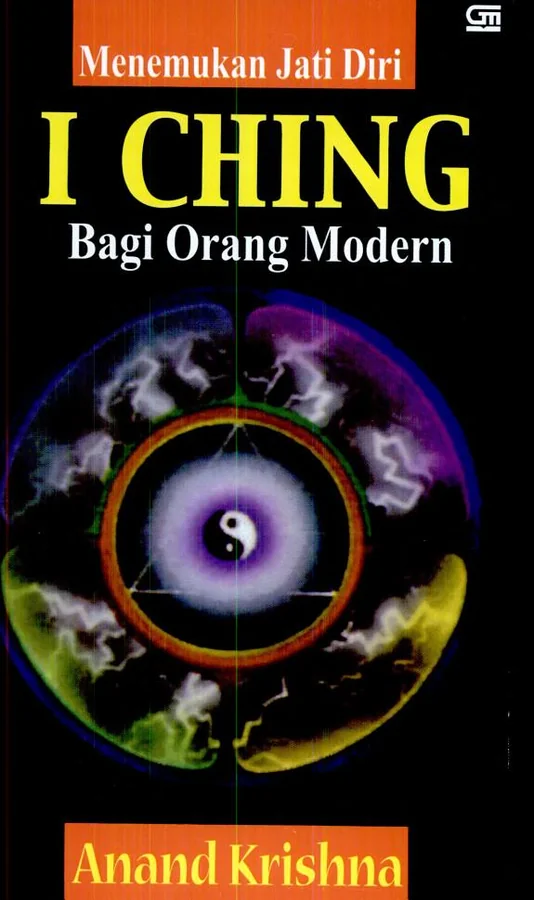
Menemukan jati diri I Ching bagi orang modern
 77
77

Menemukan jati diri I Ching bagi orang modern
Anand Krishna's "Menemukan jati diri I Ching bagi orang modern" sidesteps the common pitfall of presenting the I Ching as an arcane oracle. Instead, it foregrounds the text's utility as a mirror for the modern psyche. The strength lies in its accessible re-framing of complex symbolic language into relatable contemporary challenges. However, the limitation is a certain lack of scholarly depth; those seeking rigorous historical analysis or detailed exegesis of specific hexagrams might find it wanting. A notable passage that encapsulates its approach is the interpretation of hexagrams not as predetermined fates but as dynamic states of being that one can observe and influence through conscious awareness, a concept that resonates with contemporary mindfulness practices. It offers a fresh perspective, albeit one that prioritizes personal application over academic rigor.
📝 Description
77
Anand Krishna's 2000 book reframes the I Ching for 21st-century self-discovery.
Anand Krishna's "Menemukan jati diri I Ching bagi orang modern" (Discovering the I Ching's Identity for Modern People) is not a direct translation or academic analysis of the ancient Chinese text. Instead, Krishna presents the I Ching's hexagrams and accompanying wisdom as a practical tool for personal growth and self-understanding in today's world. The book seeks to connect the I Ching's historical roots with the specific challenges individuals face in the 21st century.
This work is for anyone interested in exploring their inner world and their place in the broader context of existence. It will appeal to those drawn to Eastern philosophies, comparative spirituality, or the practical use of ancient systems for modern life. Readers looking for methods of self-reflection, guidance in decision-making, or a search for meaning beyond material pursuits will find Krishna's approach relevant. It is especially suited for those who feel Western psychological models do not fully address their needs or who wish to incorporate divination practices into their personal development.
The I Ching, with origins in the Western Zhou dynasty, is a cornerstone of Chinese philosophy, linked to Confucianism and Taoism. While figures like Richard Wilhelm brought it to Western attention, and Carl Jung explored its psychological dimensions, Anand Krishna's approach, published in 2000, aligns with a later wave of global spiritual thought. This period saw a rise in cross-cultural dialogue and efforts to synthesize Eastern traditions with contemporary psychological and existential questions, moving beyond purely academic or ritualistic interpretations.
💡 Why Read This Book?
• Gain practical methods for self-reflection using the I Ching's hexagrams, drawing directly from Anand Krishna's 2000 publication, to understand personal challenges. • Explore the I Ching not as a predictive tool but as a framework for psychological insight, similar to how Carl Jung viewed archetypes. • Discover how ancient Chinese philosophical concepts, specifically the interplay of Yin and Yang as depicted in the I Ching's structure, can offer guidance for decision-making today.
⭐ Reader Reviews
Honest opinions from readers who have explored this book.
❓ Frequently Asked Questions
What is the primary goal of "Menemukan jati diri I Ching bagi orang modern"?
The book's main aim is to present the I Ching as a practical tool for modern self-discovery and personal growth, rather than solely as an ancient divination text.
Who is the author, Anand Krishna, and when was this book first published?
Anand Krishna is a spiritual teacher and author. "Menemukan jati diri I Ching bagi orang modern" was first published in the year 2000.
Does this book offer traditional I Ching interpretations?
It offers a contemporary interpretation, focusing on psychological and existential applications relevant to modern life, rather than strictly adhering to historical or purely divinatory methods.
What is the I Ching, and why is it relevant today?
The I Ching, or Book of Changes, is an ancient Chinese text of divination and wisdom. It remains relevant for its insights into patterns of change and human nature, applicable to modern decision-making.
Is this book suitable for beginners to the I Ching?
Yes, it is designed to make the I Ching accessible to modern readers, guiding them on how to use its principles for self-understanding without requiring prior deep knowledge.
What distinguishes Anand Krishna's approach to the I Ching?
Krishna emphasizes the I Ching's role in fostering self-awareness and navigating personal challenges, integrating its wisdom into contemporary psychological frameworks.
🔮 Key Themes & Symbolism
I Ching as a Mirror
The work frames the sixty-four hexagrams of the I Ching not as predictions but as symbolic representations of universal human experiences and psychological states. This perspective encourages readers to see the hexagrams as a mirror reflecting their inner world and current life situations. By engaging with the I Ching's imagery and advice, individuals can gain objective insights into their challenges, motivations, and potential paths forward, fostering a deeper connection with their authentic self. It moves beyond mere fortune-telling to become a tool for profound introspection.
Modern Application of Ancient Wisdom
A central theme is the bridging of ancient Chinese philosophy with the demands and complexities of contemporary life. The book argues that the fundamental principles and archetypal patterns described in the I Ching remain relevant for understanding human behavior and navigating modern dilemmas. It provides a framework for integrating this ancient wisdom into daily decision-making, personal development, and spiritual growth, demonstrating that timeless insights can offer practical guidance in a rapidly changing world.
Self-Discovery and Transformation
The ultimate goal presented is personal transformation through enhanced self-awareness. By consulting the I Ching, readers are guided to understand the cyclical nature of change, the interplay of opposing forces (Yin and Yang), and the importance of timely action or non-action. This process is presented as a path to discovering one's true identity and potential, enabling individuals to make more conscious choices and live a more fulfilling life aligned with universal principles.
Bridging East and West
The book implicitly engages with the cross-cultural dissemination of Eastern philosophies. While rooted in Chinese tradition, its approach aims for universal appeal, making concepts accessible to a global audience unfamiliar with specific cultural contexts. It reflects a broader trend in the late 20th and early 21st centuries of synthesizing Eastern spiritual traditions with Western psychological and philosophical frameworks, creating a dialogue between different wisdom systems.
💬 Memorable Quotes
Direct passages from the work, attributed to the author.
“The I Ching offers not answers, but questions that guide self-understanding.”
— This interpretation highlights the book's stance on the I Ching as a catalyst for introspection rather than a source of definitive pronouncements. It suggests that the value lies in the process of inquiry it provokes within the individual.
“Hexagrams represent archetypal situations, not fixed destinies.”
— This emphasizes the dynamic and symbolic nature of the I Ching's sixty-four configurations. It encourages readers to view them as patterns applicable to various life circumstances, empowering them to respond consciously rather than passively accept fate.
“Modern challenges require ancient wisdom re-contextualized.”
— This concept underscores the book's core mission: to demonstrate the enduring relevance of the I Ching's principles by showing how they can be applied to contemporary issues and thought processes.
“Understanding Yin and Yang is key to perceiving life's dualities.”
— This interpretation points to the fundamental Taoist concept of complementary opposites. The book uses this principle, as expressed through the I Ching's structure, to help readers grasp the interconnectedness and balance within life's inherent tensions.
“Consulting the I Ching is an act of inner dialogue.”
— This suggests that the process of using the I Ching is as much about connecting with one's inner self and intuition as it is about interpreting the text itself, fostering a more personal and meaningful engagement.
🌙 Esoteric Significance
Tradition
While not strictly adhering to a single Western esoteric lineage like Hermeticism or Kabbalah, this work draws upon the deep philosophical and divinatory traditions of Taoism and Chinese metaphysics. It fits within the broader esoteric interest in oracular systems and wisdom texts that provide frameworks for understanding cosmic and human order. It departs from purely ritualistic or predictive uses by emphasizing psychological integration and self-awareness, aligning with modern trends in esoteric thought that prioritize personal gnosis and transformation.
Symbolism
The primary symbolism revolves around the Yin (broken line, receptive) and Yang (solid line, active) principles, forming the trigrams and ultimately the sixty-four hexagrams. These represent fundamental forces and archetypal situations in the cosmos and human life. Another key motif is the concept of cyclical change, inherent in the I Ching's structure, which symbolizes the impermanence of all phenomena and the natural flow of transformation that individuals must learn to align with.
Modern Relevance
Contemporary thinkers and practitioners in fields like transpersonal psychology, comparative spirituality, and modern mindfulness practices often find value in the I Ching's archetypal framework. Anand Krishna's accessible approach speaks to individuals seeking practical tools for self-reflection and decision-making that transcend purely materialist or Western psychological models. The emphasis on understanding patterns of change and balance aligns with current discussions on systems thinking and ecological consciousness.
👥 Who Should Read This Book
• Individuals interested in comparative spirituality and Eastern philosophies seeking practical applications beyond academic study. • Personal development enthusiasts looking for alternative methods of self-reflection and decision-making that incorporate ancient wisdom. • Practitioners of meditation and mindfulness who wish to explore symbolic systems for deeper psychological insight and personal growth.
📜 Historical Context
Anand Krishna's "Menemukan jati diri I Ching bagi orang modern," published in 2000, emerged during a period of burgeoning global interest in Eastern philosophies and their application to Western psychology and self-help. The I Ching itself, with its roots in the Western Zhou dynasty (c. 1046–771 BCE) and philosophical development intertwined with Confucianism and Taoism, had seen significant Western engagement in the 20th century. Key figures like Richard Wilhelm, whose translation was crucial, and Carl Jung, who explored its synchronicity principle, had already established a Western framework for understanding the text. Krishna's work positioned itself within this lineage but aimed for a more direct, personal application for individuals seeking meaning in the post-millennial era. It engaged with a broader spiritual marketplace that included New Age thought and comparative religion studies, offering an alternative to purely academic or esoteric interpretations prevalent at the time.
📔 Journal Prompts
The nature of change as depicted in Hexagram 24 (Return).
Reflecting on the interplay of Yin and Yang in a recent decision.
How the concept of 'Obstruction' (Hexagram 3's interpretation) manifests in your life.
The role of 'The Joyous' (Hexagram 58) in fostering connection.
Identifying patterns of 'The Wanderer' (Hexagram 56) in your experiences.
🗂️ Glossary
I Ching
An ancient Chinese divination text and philosophical classic, also known as the Book of Changes, composed of sixty-four hexagrams used for wisdom and guidance.
Hexagram
A figure composed of six stacked horizontal lines, each line being either Yang (solid) or Yin (broken). There are 64 unique hexagrams in the I Ching.
Yin
In Taoist philosophy, the passive, receptive, dark, and feminine principle, represented by a broken line (--) in I Ching hexagrams.
Yang
In Taoist philosophy, the active, creative, light, and masculine principle, represented by a solid line (—) in I Ching hexagrams.
Trigram
A symbol consisting of three stacked lines, each either Yin or Yang. The eight trigrams form the building blocks of the 64 hexagrams.
Synchronicity
A concept proposed by Carl Jung, referring to the meaningful coincidence of two or more events where something other than the probability of chance is involved. Often associated with I Ching consultations.
Self-Discovery
The process of gaining a deeper understanding of one's own character, motives, and aspirations, often facilitated through introspection and external tools like the I Ching.
This book appears in 1 collection
🔮 Readers Also Liked
Browse all →








From the “I Ching” Collection
View all →









More Free Divination & Tarot Books
View all →