The Antidote
 76
76

The Antidote
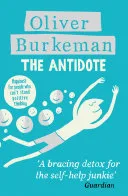
Oliver Burkeman’s *The Antidote* offers a bracingly sensible, if at times slightly uneven, critique of the modern happiness cult. The book’s central argument – that chasing positive feelings is a losing game, and that embracing life’s inherent messiness is the true path to contentment – is powerfully articulated. Burkeman’s strength lies in his ability to synthesize philosophical ideas, particularly from Stoicism, with contemporary observations. A passage discussing the futility of trying to control external outcomes, echoing Marcus Aurelius's meditations on what lies within our power, stands out. However, the book occasionally feels like it’s circling a point without fully landing, and some readers might find the relentless focus on negativity a touch bleak. Despite this, Burkeman provides a much-needed antidote to the vapid optimism that saturates much self-help literature. It's a valuable corrective for anyone tired of being told to just 'think positive'.
📝 Description
76
Oliver Burkeman's 2012 book, The Antidote, argues that chasing happiness often leads to misery.
Published in 2012, Oliver Burkeman's *The Antidote* questions the modern obsession with positive thinking and relentless optimism. Burkeman contends that the very methods people use to achieve happiness frequently result in greater dissatisfaction. He suggests that true contentment is found not by avoiding negative experiences, but by confronting and accepting them.
This book is for anyone tired of conventional self-help advice that promises a life without discomfort. It appeals to those who suspect that the constant pursuit of happiness is a flawed goal and seek a more realistic approach. Readers interested in philosophical critiques of psychology and well-being will find Burkeman's arguments engaging.
*The Antidote* emerged when positive psychology was highly popular, with many books promoting systematic happiness cultivation. Burkeman's work provides a counterpoint, using Stoic and existentialist ideas to question this optimistic framework. Its reception indicated a growing unease with superficial happiness doctrines.
While not strictly esoteric in the occult sense, *The Antidote* draws from philosophical traditions that offer alternative perspectives on human experience, diverging from mainstream self-help. It engages with Stoicism, a school of Hellenistic philosophy, and existentialist thought, both of which emphasize confronting life's difficulties rather than seeking constant pleasure. These traditions, though ancient, provide a framework for understanding suffering and finding meaning that can be considered 'esoteric' in its departure from common, superficial understandings of happiness and well-being.
💡 Why Read This Book?
• You will learn to reframe your relationship with negative emotions, understanding how embracing uncertainty and pessimism, as discussed in relation to Stoic philosophy, can paradoxically lead to greater resilience and a more stable sense of well-being. • You will gain practical strategies for disengaging from the exhausting pursuit of constant happiness, a core concept Burkeman addresses by advocating for acceptance of life's inherent difficulties, as outlined in his critique of the “happiness industry.” • You will discover how to find effectiveness and contentment by confronting rather than avoiding perceived failures and insecurities, a central tenet of the book that challenges conventional self-help wisdom.
⭐ Reader Reviews
Honest opinions from readers who have explored this book.
❓ Frequently Asked Questions
What is Oliver Burkeman’s core argument in *The Antidote*?
Burkeman argues that the relentless pursuit of happiness and positive thinking is counterproductive. He suggests that true contentment and effectiveness are achieved by embracing life's inherent difficulties, such as uncertainty, pessimism, and failure, rather than trying to avoid them.
When was *The Antidote* first published?
*The Antidote* was first published on June 21, 2012, positioning it as a significant critique during a period of widespread interest in positive psychology.
What philosophical traditions influence *The Antidote*?
The book draws heavily on Stoic philosophy, particularly the ideas of Marcus Aurelius and Epictetus, and also engages with existentialist thought to challenge modern notions of happiness.
How does *The Antidote* differ from typical self-help books?
Unlike many self-help books that focus on achieving constant positivity, *The Antidote* advocates for accepting negative experiences and finding value in discomfort, offering a more realistic and less anxiety-inducing path to well-being.
What does Burkeman mean by 'embracing uncertainty'?
Embracing uncertainty involves acknowledging that many aspects of life are beyond our control and that striving for absolute certainty is futile. It means finding peace and effectiveness within this inherent unpredictability, a concept explored through Stoic principles.
Is *The Antidote* a book about being miserable?
No, the book is about finding a more robust and sustainable form of well-being by accepting the full spectrum of human experience, including negative emotions and difficult circumstances, rather than promoting misery itself.
🔮 Key Themes & Symbolism
The Futility of Positive Thinking
Burkeman meticulously deconstructs the modern obsession with positive thinking, arguing that it creates a fragile and unsustainable form of happiness. By attempting to suppress or ignore negative emotions and experiences, individuals often amplify their distress. The book posits that this relentless optimism, a hallmark of much 21st-century self-help culture, is not only ineffective but actively detrimental to genuine well-being. The work suggests that true resilience and contentment stem from a more honest engagement with life's inherent challenges.
Embracing Uncertainty and Failure
A central tenet of *The Antidote* is the value of confronting what we typically seek to avoid: uncertainty, insecurity, pessimism, and failure. Burkeman draws parallels with Stoic philosophy, particularly the ideas of Epictetus, to illustrate how accepting the uncontrollable aspects of existence leads to greater freedom and effectiveness. Instead of seeking a life free from problems, the book proposes that developing the capacity to deal with problems is the key to a more meaningful and less anxious existence.
Counter-Intuitive Contentment
The book offers an alternative path to success and contentment that stands in stark opposition to conventional self-help narratives. By shifting the focus from the pursuit of positive outcomes to the acceptance of negative ones, readers can cultivate a more robust psychological foundation. This approach, rooted in philosophical inquiry rather than simplistic affirmations, suggests that a life lived with a clear-eyed acknowledgment of its difficulties can be profoundly more satisfying and productive than one spent chasing an elusive ideal of perpetual happiness.
Critique of the Happiness Industry
Burkeman provides a sharp critique of the commercial 'happiness industry' that emerged in the late 20th and early 21st centuries. He argues that this industry thrives on promoting an unattainable ideal of constant bliss, leading consumers down a path of perpetual dissatisfaction. The book questions the underlying assumptions of positive psychology and its popular interpretations, suggesting that they often serve commercial interests more than genuine human flourishing. It encourages readers to question the pervasive messages about achieving happiness.
💬 Memorable Quotes
Direct passages from the work, attributed to the author.
“The more you try to be happy, the less happy you become.”
— This statement expresses Burkeman's core thesis: the direct pursuit of happiness is often self-defeating. The very act of desperately seeking positive feelings can create anxiety and a sense of failure, leading away from the desired state.
“To be less unhappy, you must be willing to be unhappy.”
— This highlights the paradoxical nature of true contentment. It suggests that accepting and experiencing negative emotions, rather than fighting them, is the necessary step towards a more stable and resilient form of well-being.
“The goal is to become less interested in the outcome.”
— This concept, deeply influenced by Stoic philosophy, emphasizes focusing on one's own actions and intentions rather than fixating on external results, which are often beyond control. This shift reduces anxiety and increases effectiveness.
“The best way to deal with the future is to accept that you can’t control it.”
— This reflects a core Stoic principle: distinguishing between what is within our power (our thoughts, judgments, actions) and what is not (external events, the future). Accepting this limitation is key to peace of mind.
“We get what we deserve from the world by giving up on getting what we want.”
— This provocative idea suggests that by relinquishing the desperate need to control and attain specific outcomes, we can paradoxically achieve a more fulfilling existence. It's about finding satisfaction in the process, not just the prize.
🌙 Esoteric Significance
Tradition
While not explicitly aligned with a single esoteric lineage, *The Antidote* resonates strongly with Stoicism, often considered a philosophical precursor to Western esoteric traditions. Its emphasis on inner control, acceptance of fate (amor fati), and detachment from external outcomes echoes Hermetic and Gnostic principles of recognizing what is within one's true domain versus the illusory nature of the material world. Burkeman's work offers a secularized interpretation of these ancient wisdoms for a modern audience.
Symbolism
The book itself functions as an 'antidote,' a symbolic representation of a remedy against a perceived illness – the modern affliction of obsessive happiness-seeking. 'Uncertainty,' 'pessimism,' and 'failure' are symbolically reframed not as negative states to be eradicated, but as necessary components of a grounded existence, akin to the alchemical concept of the *nigredo* (blackening) phase, a necessary precursor to transformation.
Modern Relevance
Burkeman's ideas are highly relevant to contemporary mindfulness and acceptance-based therapies (like ACT - Acceptance and Commitment Therapy), which also encourage confronting difficult thoughts and feelings. Thinkers and practitioners exploring secular spirituality, existential psychology, and critical approaches to well-being often cite his work. His critique of the 'cult of positivity' continues to inform discussions about mental health and societal pressures.
👥 Who Should Read This Book
• Individuals feeling overwhelmed by the pressure to be constantly happy: You will gain a framework for understanding why this pursuit is exhausting and discover alternative paths to contentment by learning about the Stoic concept of accepting uncontrollable outcomes. • Skeptics of conventional self-help literature: You will find a rigorous, philosophically grounded critique of the 'happiness industry' and practical advice on reframing your relationship with negative experiences, as discussed in relation to the 'antidote' concept. • Students of philosophy and psychology: You will appreciate the book's synthesis of ancient Stoic thought with modern psychological observations, offering a unique perspective on well-being and human nature informed by figures like Epictetus.
📜 Historical Context
Published in 2012, *The Antidote* arrived as the 'happiness industry' reached a fever pitch. Positive psychology, championed by figures like Martin Seligman, had gained significant traction, promoting techniques for cultivating happiness. Burkeman’s book offered a contrarian voice, drawing heavily on ancient philosophies like Stoicism and existentialism, which had been largely sidelined in mainstream self-help discourse. It questioned the scientific and cultural underpinnings of relentless optimism. While not facing censorship, the book’s reception highlighted a growing public fatigue with superficial positivity. Its arguments found an intellectual home among those disillusioned with the promises of the era’s dominant self-help paradigms, contrasting sharply with the prevailing mood exemplified by books like Tal Ben-Shahar’s *The Happiness Advantage* (2010).
📔 Journal Prompts
The concept of 'embracing uncertainty' and its application to daily anxieties.
Reflecting on the paradox: how direct pursuit of happiness leads away from it.
Analyzing the 'happiness industry's' influence on personal expectations.
The symbolic meaning of the 'antidote' in relation to personal struggles.
Strategies for focusing on controllable actions over uncontrollable outcomes.
🗂️ Glossary
Positive Thinking
A mindset that focuses exclusively on desirable outcomes and positive aspects, often to the exclusion or suppression of negative realities. Burkeman critiques this as a potentially harmful oversimplification.
The Happiness Industry
A term for the commercial and cultural phenomenon promoting the idea that happiness can be easily achieved through specific products, techniques, or mindsets, often simplifying complex psychological needs.
Stoicism
An ancient Greek and Roman school of philosophy emphasizing virtue, reason, and the acceptance of what cannot be controlled as the path to a tranquil life.
Amor Fati
Latin for 'love of fate.' A Stoic concept encouraging the acceptance and even embrace of everything that happens, both good and bad, as necessary.
Existentialism
A philosophical movement emphasizing individual existence, freedom, and choice, often grappling with themes of meaning, anxiety, and the human condition.
Counter-Intuitive
Contrary to what common sense or intuition might suggest. Burkeman's approach to happiness is often described as counter-intuitive because it advocates embracing difficulty.
Contentment
A state of satisfaction and peace, often seen as a more stable and realistic goal than constant happiness, achieved through acceptance and realistic expectations.