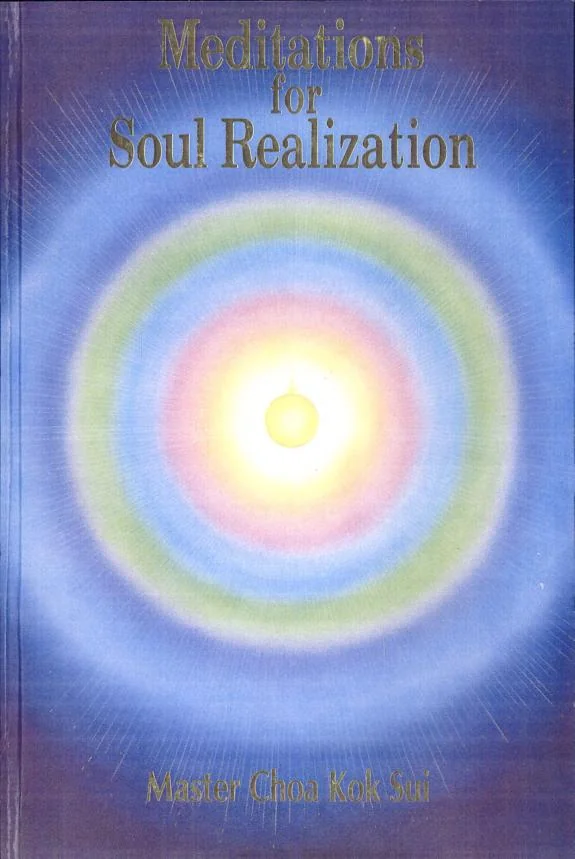
Meditations for Soul Realization
 77
77

Meditations for Soul Realization
Kok Sui Choa's 2000 publication, Meditations for Soul Realization, offers a series of exercises intended to cultivate a direct experience of the soul. The text is notably devoid of biographical flourish or elaborate metaphysical speculation, focusing instead on the mechanics of inner work. Its strength lies in this directness; the exercises are clearly delineated, providing a practical framework for self-inquiry. However, the book’s primary limitation is its inherent repetition. While repetition is often key to meditative practice, the conceptual ground covered in the early chapters is revisited extensively throughout, potentially leading to a sense of stagnation for some readers. A passage detailing the "Purification of the Emotions" exemplifies the book's approach, offering concrete steps to observe and release negative emotional states. Ultimately, this is a functional manual for those seeking a structured, no-nonsense guide to self-realization.
📝 Description
77
Published in 2000, Meditations for Soul Realization by Kok Sui Choa offers a structured approach to inner work.
This book is a collection of exercises and contemplative practices, not a narrative. Kok Sui Choa designed it to guide readers toward a deeper understanding of their spiritual essence. The work emphasizes practical application, with techniques meant to be integrated into daily life. Its goal is to clarify the relationship between individual consciousness and universal consciousness, facilitating a personal realization of the soul's nature.
It is intended for individuals committed to spiritual self-discovery who seek systematic methods for introspection. The book appeals to those who find traditional meditation techniques insufficient or desire a more direct path to understanding their innermost being. Readers looking for concrete practices over abstract philosophy will find this volume especially useful. Consistent application of the presented exercises and a willingness for self-reflection are required.
Kok Sui Choa's work emerged in 2000, a time when interest in Eastern spiritual philosophies and Western esoteric traditions was growing. While it does not directly mirror the Theosophical Society's early 20th-century aims or Golden Dawn ritualism, it shares the common objective of spiritual self-realization. The book appeared in a cultural sphere influenced by New Age thought, presenting a blend of psychological introspection and spiritual goals.
💡 Why Read This Book?
• Learn specific visualization techniques for emotional purification, directly addressing the methods presented in the "Purification of the Emotions" chapter to gain greater control over your inner state. • Understand the distinction between the personality and the soul through Choa's framework, enabling a clearer perception of your core identity beyond daily experiences. • Engage with practical contemplative exercises designed for consistent daily practice, fostering a disciplined approach to spiritual growth as outlined in the book's structured approach.
⭐ Reader Reviews
Honest opinions from readers who have explored this book.
❓ Frequently Asked Questions
When was Meditations for Soul Realization first published?
Meditations for Soul Realization was first published in the year 2000 by Kok Sui Choa, positioning it within the spiritual literature of the early 21st century.
What is the primary goal of the meditations in this book?
The primary goal is to guide the reader toward 'Soul Realization,' which means achieving a direct, experiential understanding of one's true spiritual essence and identity.
Does the book require prior knowledge of esoteric concepts?
While prior knowledge can be helpful, the book is structured to be accessible. It explains concepts as they are introduced, focusing on practical application rather than deep theoretical background.
What makes Kok Sui Choa's approach unique?
Choa's approach is unique in its emphasis on systematic, practical exercises and its direct focus on the realization of the soul, often bypassing more complex philosophical or ritualistic frameworks.
Can these meditations be practiced by beginners?
Yes, the book is designed for individuals on a spiritual path, and its structured nature makes it suitable for beginners willing to engage in consistent practice and self-reflection.
What kind of 'realization' does the book aim for?
It aims for an experiential realization of the soul, meaning a deep, felt understanding of one's true nature, rather than an intellectual or theoretical comprehension.
🔮 Key Themes & Symbolism
The Nature of the Soul
The work posits the soul as the true, eternal essence of an individual, distinct from the transient personality and the physical body. It guides readers to perceive this higher self, suggesting that ordinary consciousness is often obscured by the limitations of the ego and worldly attachments. The text aims to facilitate an experiential recognition of this soul-presence, emphasizing that such realization is the ultimate goal of spiritual practice, leading to a profound shift in perspective and being.
Practical Contemplative Techniques
Central to the book are the structured meditative and contemplative exercises designed for direct application. These are not mere theoretical discussions but actionable practices involving focused attention, visualization, and introspective inquiry. The book provides specific methodologies for purifying emotions, clarifying the mind, and cultivating inner peace, aiming to systematically dismantle psychological barriers that prevent the direct experience of the soul's reality.
Spiritual Self-Realization
The overarching theme is the attainment of 'Soul Realization' – a state of profound self-awareness where one identifies not with the limited self but with the boundless, divine nature of the soul. This realization is presented as an achievable state through dedicated inner work. The book outlines a path toward this ultimate aim, suggesting that consistent practice can lead to an unshakeable understanding of one's inherent spiritual identity and its connection to the Universal Consciousness.
Inner Purity and Illumination
A significant focus is placed on the process of inner purification, particularly concerning emotional states and mental patterns. The book offers techniques to identify and transmute negative emotions and limiting beliefs, viewing them as obstacles to realizing the soul. By clearing these inner obstructions, the reader is guided toward a state of inner illumination, where the soul's light can shine forth unhindered, leading to greater wisdom and spiritual clarity.
💬 Memorable Quotes
Direct passages from the work, attributed to the author.
“The soul is the true essence, eternal and divine.”
— This statement expresses the core premise that our fundamental identity lies not in our physical form or personality, but in an enduring spiritual aspect that is inherently pure and connected to a higher source.
“Purify the emotions to see the soul clearly.”
— This suggests that negative or turbulent emotional states act as veils, obscuring the direct perception of one's soul. The practice of emotional cleansing is presented as a prerequisite for spiritual insight.
“Realization is an experience, not just a thought.”
— This highlights the book's emphasis on direct, embodied knowing over mere intellectual assent. True understanding of the soul comes through practice and inner transformation, not solely through conceptual grasp.
“Differentiate between the personality and the soul.”
— This points to a key exercise: learning to observe the characteristics and limitations of the everyday personality (ego, mind, emotions) to recognize the distinct, higher nature of the soul.
“Consistent practice leads to inner illumination.”
— This underscores the practical, disciplined approach advocated by the author, indicating that sustained effort in contemplative exercises is the pathway to spiritual awakening and clarity.
🌙 Esoteric Significance
Tradition
This work draws from a broad stream of practical spirituality that emphasizes direct inner experience over strict adherence to a single lineage. It aligns with perennialist philosophies that suggest core spiritual truths are universal, accessible through various traditions. While it doesn't explicitly align with Hermeticism, Gnosticism, or Kabbalah, it shares their ultimate aim of achieving higher consciousness and self-knowledge, offering a more distilled, practice-oriented path.
Symbolism
The book frequently employs the symbolism of light and darkness to represent spiritual awareness and ignorance, respectively. 'Illumination' signifies the dawning of soul-consciousness, while 'darkness' refers to the obscuring effects of the ego and negative emotions. The concept of the 'true self' or 'soul' itself acts as a central symbol, representing an unblemished, eternal core of being that practitioners strive to recognize and embody.
Modern Relevance
Contemporary practices focusing on mindfulness, self-awareness, and emotional intelligence echo the core principles of Meditations for Soul Realization. Thinkers and practitioners in fields ranging from positive psychology to secular spirituality often utilize similar techniques for stress reduction and personal growth, demonstrating the enduring appeal of structured contemplative methods for achieving inner balance and clarity.
👥 Who Should Read This Book
• Individuals seeking structured, practical exercises for spiritual self-discovery, who prefer actionable steps over abstract philosophical discourse. • Aspiring practitioners of meditation and contemplation who want to deepen their understanding of the self and cultivate inner peace through consistent daily practice. • Students of comparative spirituality looking to explore a direct, experiential approach to realizing the soul that complements other esoteric or religious traditions.
📜 Historical Context
Meditations for Soul Realization emerged in 2000, a period marked by the widespread accessibility of spiritual teachings online, yet still valuing printed texts for in-depth study. While not directly tied to the lineage of Helena Blavatsky's Theosophy or the ceremonial magic of the Hermetic Order of the Golden Dawn, Choa's work shared the broad goal of spiritual self-improvement prevalent in esoteric circles. It arrived as many were exploring mindfulness and meditation, influenced by Eastern traditions but often seeking secular or generalized spiritual frameworks. Unlike the more academic or occult-focused publications of earlier decades, Choa's approach leaned towards practical, personal development, finding resonance with the New Age movement's emphasis on inner experience and self-empowerment.
📔 Journal Prompts
The distinction between personality and soul, as presented in the text.
Identifying and purifying specific emotional patterns.
The experience of inner illumination during practice.
Recognizing the soul's presence beyond daily concerns.
The impact of consistent contemplative effort on self-perception.
🗂️ Glossary
Soul Realization
The direct, experiential understanding and identification with one's true spiritual essence, distinct from the personality or ego.
Personality
The composite of the mind, emotions, and physical body that constitutes the temporary, individual self, often mistaken for the true identity.
Higher Self
Synonymous with the soul; the spiritual, eternal, and divine aspect of an individual, possessing greater wisdom and consciousness.
Inner Illumination
A state of heightened spiritual awareness and clarity achieved through contemplative practice, where the soul's nature becomes evident.
Contemplation
A focused, introspective practice aimed at deepening self-understanding and spiritual insight, often involving meditation and visualization.
Purification
The process of cleansing the mind and emotions of negative patterns, limiting beliefs, and attachments that obscure spiritual awareness.
Ego
The sense of self derived from the personality, often characterized by self-centeredness and a false identification with the temporary aspects of being.
This book appears in 1 collection
🔮 Readers Also Liked
Browse all →









From the “Pranic Healing” Collection
View all →








More Free Spiritual Development Books
View all →