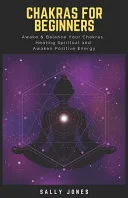
Chakras for Beginners
 78
78

Chakras for Beginners
Sally Jones’s “Chakras for Beginners” attempts to demystify a complex esoteric subject, offering a primer for the uninitiated. Its primary strength lies in its straightforward presentation; the author avoids overly academic jargon, making the seven primary chakras and their associated qualities digestible for a lay audience. The section on practical application, particularly the suggested breathing exercises for grounding, is commendable for its directness. However, the text occasionally falters by oversimplifying the profound philosophical underpinnings of the chakra system, bordering on a purely self-help manual rather than a deeper exploration of consciousness. The blurb’s aggressive sales pitch, "Buy Paperback and get eBook for FREE!", also detracts from the serious tone one might expect from an esoteric text. Despite these limitations, for someone seeking an initial, uncomplicated introduction to chakra concepts, it serves as a functional starting point.
📝 Description
78
Sally Jones's 2010 book breaks down the chakra system for newcomers.
Chakras for Beginners, written by Sally Jones, introduces the concept of the seven primary chakras, which are understood as subtle energy centers influencing one's physical, emotional, and spiritual state. The book simplifies this often complex topic, making it approachable for individuals new to spiritual or esoteric studies. It moves past theoretical explanations to provide practical techniques designed for everyday use. Readers learn to recognize imbalances within their energy system and are shown simple methods, including meditation and specific breathing exercises, to foster inner peace and balance, particularly when dealing with the pressures of daily life.
The work also briefly touches on the historical background of chakra philosophy. It traces the origins of this system within ancient Indian spiritual traditions, placing it within a larger philosophical context that has shaped various contemplative practices over many centuries. The ultimate goal of 'Chakras for Beginners' is to enable readers to become more aware of their own internal energy. By comprehending the role and interaction of the seven main chakras, individuals are guided towards deeper self-awareness and a more balanced, holistic way of living.
This book engages with the yogic and tantric traditions of India, where the chakra system originates. These traditions view the body as containing subtle energy channels (nadis) and psychospiritual centers (chakras) that are central to both physical health and spiritual awakening. The concept of chakras as vortices of energy, influencing consciousness and well-being, is a key element in these ancient Indian philosophical and meditative systems. Jones's work situates these concepts within a beginner-friendly framework, drawing from this lineage of spiritual development.
💡 Why Read This Book?
• You will learn specific guided meditation techniques for each of the seven chakras, a practical skill not always detailed in broader spiritual texts, allowing for direct energetic cultivation. • You will gain an understanding of how the Muladhara (Root Chakra) and its associated grounding principles can be applied to manage anxiety, a concept directly addressed by the author. • You will discover simple breathwork exercises, as outlined in the book's practical application sections, to achieve mental calm, offering immediate tools for daily stress reduction.
⭐ Reader Reviews
Honest opinions from readers who have explored this book.
❓ Frequently Asked Questions
What are the seven main chakras according to Sally Jones's book?
Sally Jones's 'Chakras for Beginners' details the seven primary chakras: the Root (Muladhara), Sacral (Svadhisthana), Solar Plexus (Manipura), Heart (Anahata), Throat (Vishuddha), Third Eye (Ajna), and Crown (Sahasrara), explaining their location and general function.
Can 'Chakras for Beginners' help with anxiety relief?
Yes, the book suggests that understanding and balancing the chakras, particularly through techniques like meditation and breathwork, can be an effective self-help method for managing anxiety and promoting inner peace.
What is the historical origin of chakra concepts mentioned in the book?
The book briefly touches upon the historical roots of chakra theory within ancient Indian spiritual traditions, acknowledging its long-standing presence in contemplative practices.
Are there practical exercises in 'Chakras for Beginners'?
Absolutely. The book includes practical exercises such as guided meditations and specific breathwork techniques designed to help beginners identify and address imbalances in their energy centers.
Is this book suitable for someone with no prior knowledge of chakras?
Yes, the title 'Chakras for Beginners' indicates its suitability for individuals new to the subject. It aims to simplify complex ideas into easily understandable steps for newcomers.
What is the main goal of understanding chakras as presented by Sally Jones?
The main goal, as presented by Sally Jones, is to achieve greater self-awareness, emotional balance, and holistic well-being by understanding and harmonizing one's internal energy system.
🔮 Key Themes & Symbolism
The Seven Primary Chakras
The core of this work focuses on the seven primary chakras, often visualized as spinning wheels of energy along the spine. Jones details each chakra, from the grounding Muladhara (Root) at the base to the transcendent Sahasrara (Crown) at the top of the head. The book explains their specific locations, associated colors, Sanskrit names, and the physical, emotional, and spiritual qualities each governs, providing a foundational map for understanding the body's energetic architecture.
Energetic Imbalance and Self-Help
A significant theme is the concept of energetic imbalance within the chakra system and its correlation with physical ailments and emotional states. Jones presents this not as an unchangeable fate but as an area amenable to self-directed healing. The book offers practical, beginner-friendly techniques like affirmations, visualizations, and specific breathing exercises aimed at restoring equilibrium and promoting overall well-being.
Chakras and Daily Well-being
This text emphasizes the practical integration of chakra knowledge into everyday life. It explores how understanding the energetic flow can help individuals read through the stresses of modern living, improve mental clarity, and foster a deeper connection with themselves. The focus is on accessible methods that can be implemented without extensive prior experience or complex rituals.
Introduction to Subtle Energy
For those unfamiliar with esoteric concepts, the book serves as an introduction to the idea of subtle energy bodies and their influence. It clarifies concepts like prana (life force) and the energetic pathways through which it flows, framing the chakras as crucial nodal points within this system. This lays the groundwork for further exploration into more advanced metaphysical topics.
💬 Memorable Quotes
Direct passages from the work, attributed to the author.
“Is it effective for self-help anxiety?”
— This question highlights the book's practical focus, directly addressing a common concern for readers seeking tangible benefits from esoteric practices like chakra work.
“Can I calm my mind using the Chakras?”
— This query points to the book's aim of providing accessible techniques for mental tranquility through the understanding and balancing of the body's energy centers.
“These questions are usually found on the one who studies or hear about Chakra and would like to get inner peace to calm their mind from the busy day.”
— This observation accurately captures the target audience: individuals seeking respite and inner calm from the pressures of contemporary life through the study of chakras.
“They are sources of airy activity that will absolute the anatomy to do some absolute accomplishments that are benign to one's perception, acquaintance and viewpoint.”
— This phrasing, though somewhat abstract, suggests the chakras are centers of vital energy that empower the body and mind towards positive actions and broadened perspectives.
“Buy Paperback and get eBook for FREE!”
— This promotional offer, while a common marketing tactic, frames the acquisition of the book as a value-driven purchase, encouraging wider accessibility to its content.
🌙 Esoteric Significance
Tradition
The work draws from the Tantric traditions of India, specifically the yogic understanding of subtle energy centers (chakras) and their role in spiritual development. It adapts these concepts for a Western audience, often framing them within a framework of personal well-being and psychological balance, a common characteristic of modern esoteric adaptations that prioritize self-help over strict adherence to original ritual or cosmology.
Symbolism
Key symbols include the lotus flower, often depicted with varying numbers of petals corresponding to specific chakras, representing spiritual unfolding and purity. The colors associated with each chakra (e.g., red for Root, blue for Throat) are also significant, acting as visual anchors for their energetic qualities and aiding in visualization practices. The serpent imagery, often linked to Kundalini energy coiled at the base of the spine, symbolizes dormant potential awaiting awakening.
Modern Relevance
Contemporary wellness culture, mindfulness practices, and energy healing modalities frequently incorporate chakra concepts. Therapists, yoga instructors, and coaches often use chakra balancing as a tool for emotional and physical health. This book's approach appeals to modern practitioners seeking practical, non-denominational spiritual tools for self-improvement and stress management.
👥 Who Should Read This Book
• Absolute beginners curious about energy work and subtle body anatomy, seeking a clear, non-intimidating introduction to the chakra system. • Individuals experiencing stress or seeking practical self-help techniques for emotional balance and mental clarity through accessible meditation and breathwork. • Aspiring yoga practitioners or holistic wellness enthusiasts looking to deepen their understanding of the energetic principles underlying physical and mental well-being.
📜 Historical Context
Published in 2019, Sally Jones's "Chakras for Beginners" entered a contemporary spiritual landscape heavily influenced by the New Age movement, which had popularized Eastern concepts like chakras in the West since the mid-20th century. The book aligns with a broader trend of making esoteric knowledge accessible through simplified guides, following in the footsteps of authors like Anodea Judith, whose work on chakras gained prominence in the late 20th century. While Jones's work does not engage directly with academic discourse or specific historical reception events, it reflects the ongoing secularization and therapeutic application of spiritual traditions. Its accessibility contrasts with earlier, more rigorous academic or traditional interpretations, indicating a shift towards a wellness-oriented approach to ancient philosophies, a departure from the more theosophical or philosophical underpinnings explored by figures like Helena Blavatsky in the late 19th century.
📔 Journal Prompts
The Muladhara (Root Chakra)'s connection to grounding and security.
Visualizing the Svadhisthana (Sacral Chakra) and its association with creativity.
Exploring the function of the Anahata (Heart Chakra) in relationships.
Reflecting on the Ajna (Third Eye Chakra) and intuitive awareness.
Considering the Sahasrara (Crown Chakra)'s role in spiritual connection.
🗂️ Glossary
Chakra
A Sanskrit term meaning 'wheel' or 'vortex,' referring to the energy centers within the subtle body believed to influence physical, emotional, and spiritual well-being.
Prana
The vital life force or energy that flows through the subtle body, often associated with breath. Chakras are considered focal points for the distribution of prana.
Muladhara
The first or Root Chakra, located at the base of the spine. It is associated with grounding, security, and physical survival.
Svadhisthana
The second or Sacral Chakra, located in the lower abdomen. It governs creativity, sexuality, and emotional expression.
Anahata
The fourth or Heart Chakra, located in the center of the chest. It is associated with love, compassion, and emotional balance.
Ajna
The sixth or Third Eye Chakra, located between the eyebrows. It is associated with intuition, insight, and psychic abilities.
Sahasrara
The seventh or Crown Chakra, located at the top of the head. It represents spiritual connection, consciousness, and enlightenment.