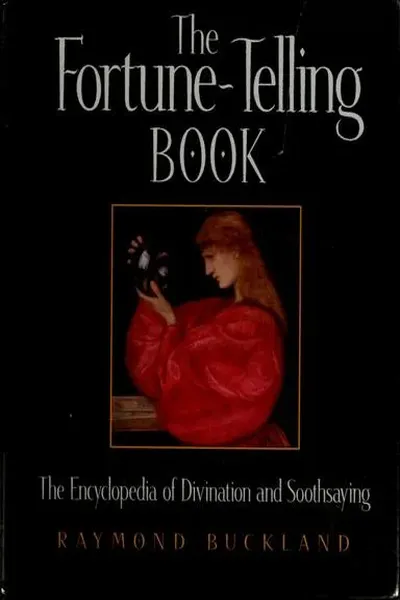
Meditations divine & morall
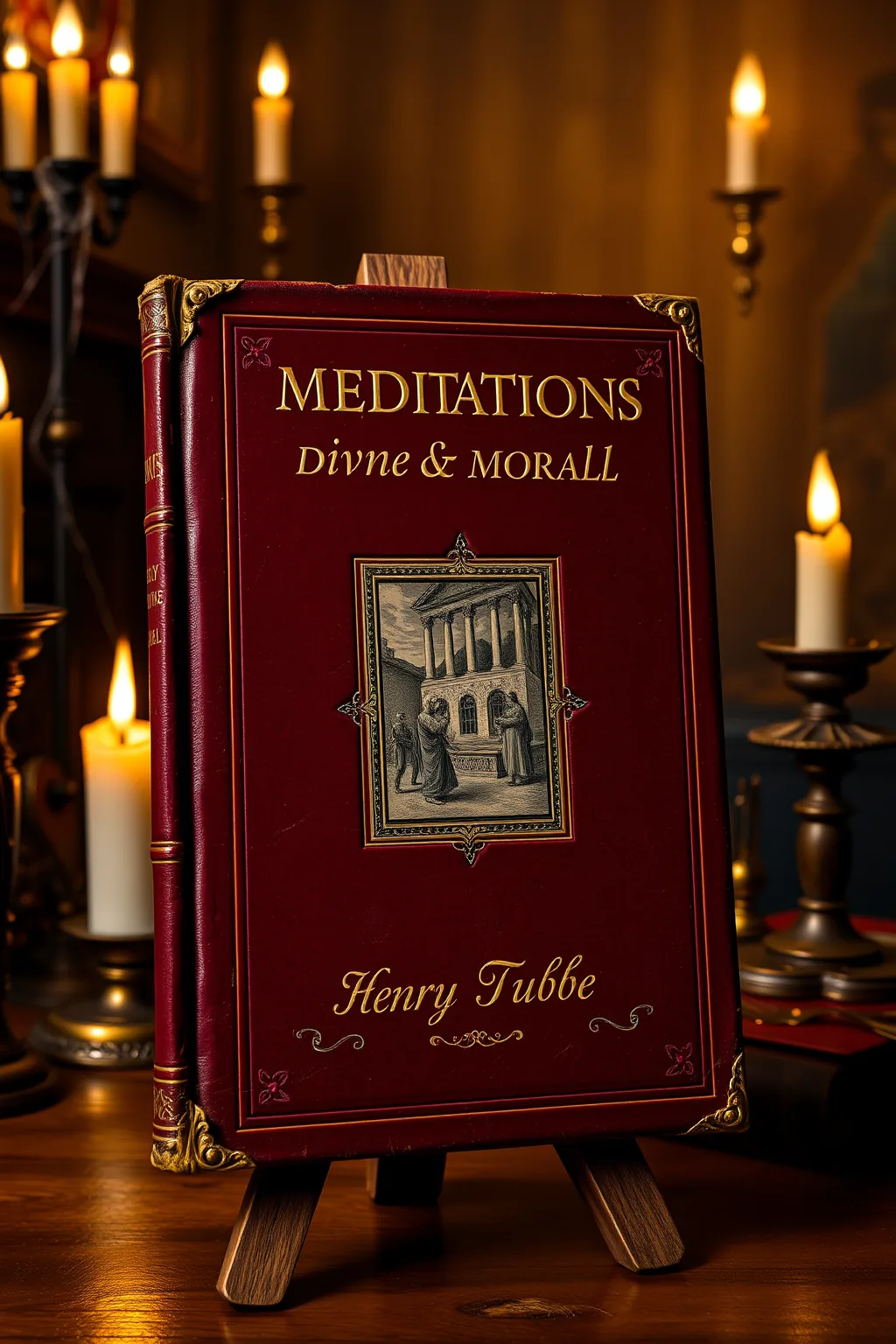
 62
62

Meditations divine & morall



Sophia Crane (Associate Editor) — 'Meditations Divine & Morall' by Henry Tubbe is a gem unearthed from the annals of contemplative literature. Tubbe’s prose, imbued with the spirit of early 17th-century spiritual exploration, offers a unique lens through which to view the interconnectedness of the divine and the moral fabric of existence. This work is particularly valuable for its subtle explorations of inner alchemy and the symbolism embedded within everyday life, resonating with hermetic and alchemical traditions. It’s an essential read for students of early modern mysticism, those interested in the philosophical underpinnings of spiritual practice, and anyone seeking profound, introspective guidance. A truly illuminating experience.
📝 Description
62
Henry Tubbe published 'Meditations Divine & Morall' around 1650, a personal collection of spiritual reflections.
Published circa 1650, Henry Tubbe's 'Meditations Divine & Morall' gathers his personal spiritual writings. Tubbe, who lived through the English Civil War, reflects on inner life and divine matters with a unique blend of personal piety and intellectual curiosity. The book is not a systematic treatise but a series of discrete meditations, each offering a distinct point of contemplation. Tubbe examines the relationship between the physical world and the spiritual, using symbolism to connect the mundane to the transcendent. His writings reveal an engagement with hermetic ideas and metaphysical concepts current in his time.
These meditations aim to foster self-awareness and a deeper understanding of existence. Tubbe’s approach is direct, inviting readers to consider complex ideas through focused reflection. The text acts as a guide for introspection, moving from difficult thoughts toward clearer insight. It remains a window into the spiritual landscape of a particular individual during a turbulent historical period, offering a glimpse into private devotion and philosophical inquiry.
Henry Tubbe's 'Meditations Divine & Morall' emerged from a period of intense spiritual and philosophical ferment in England. While not overtly occult, the work engages with concepts found in hermeticism and early modern metaphysics, traditions that often informed esoteric thought. Tubbe's focus on inner transformation, divine correspondence, and symbolic understanding aligns with currents found in Renaissance Neoplatonism and later mystical traditions. His personal reflections, though grounded in Christian piety, touch upon universal principles of spiritual inquiry that resonated with those seeking alternative or deeper modes of religious experience.
💡 Why Read This Book?
Engage with the foundational contemplative practices of early modern England. Uncover potent symbolism and hidden wisdom that bridges the gap between the divine and the mundane. Ideal for spiritual seekers, philosophy students, and those drawn to the rich tapestry of historical esoteric thought. This book offers profound insights for cultivating inner peace and understanding life's deeper currents.
⭐ Reader Reviews
Honest opinions from readers who have explored this book.
❓ Frequently Asked Questions
What is the primary focus of 'Meditations Divine & Morall'?
The book primarily focuses on introspective contemplation, exploring the intersection of divine principles and moral conduct. It delves into self-awareness, the nature of virtue, and the pursuit of spiritual enlightenment through reasoned reflection.
Who was Henry Tubbe?
Henry Tubbe was an English writer and scholar of the 17th century, known for his philosophical and spiritual writings. His work reflects the intellectual and religious currents of his era, often with a contemplative and introspective tone.
Is this book suitable for beginners in spiritual study?
While the language is of its time, the core themes of self-reflection and moral inquiry are universally accessible. Beginners may find it beneficial to approach with patience, perhaps alongside a guide or commentary, to fully appreciate its depth.
What kind of 'esoteric' elements can be found in this work?
The esoteric nature lies in its deep symbolic language, its exploration of inner states, and its implicit connection to hermetic and alchemical philosophies of transformation. It encourages a hidden wisdom accessible through contemplation.
How does this book relate to divination or Tarot?
While not directly about Tarot, its focus on introspection, symbolism, and divine insight aligns with the contemplative aspects of divination. The meditations can be seen as a precursor to internal systems of guidance and self-discovery.
🔮 Key Themes & Symbolism
The Inner Alchemist
Tubbe's meditations often act as a guide for the soul's internal transformation, akin to alchemical processes. He explores how through rigorous self-examination and moral discipline, one can refine their spirit, transmute base thoughts into virtuous ones, and achieve a higher state of consciousness. This theme looks at the idea that true spiritual growth is an internal work, a purification and elevation of the self, mirroring the alchemist's quest for the philosopher's stone.
Symbolism of the Mundane
A profound aspect of Tubbe's work is his ability to perceive divine messages and moral lessons within the ordinary fabric of life. He encourages readers to look beyond the surface of everyday occurrences, finding hidden meanings and spiritual allegories in the natural world, human interactions, and even simple objects. This theme emphasizes that the universe is a text, and attentive contemplation can reveal its sacred script and guide our moral compass.
The Divine Architecture of the Soul
Tubbe posits that the human soul is a microcosm, reflecting the grand design of the cosmos. His meditations guide the reader to understand the intricate structure of their own inner world, recognizing the presence of divine order and the potential for spiritual perfection. This theme explores the inherent sanctity of the soul and the journey of aligning one's will with the divine will, uncovering the blueprint for a virtuous and enlightened existence.
💬 Memorable Quotes
Direct passages from the work, attributed to the author.
“Virtue is the true gold, which can neither be tarnished nor consumed.”
— Here, virtue is presented as an incorruptible and eternal essence, superior to material wealth, aligning with alchemical ideals of purity and lasting value.
“Every creature is a book, wherein God hath writ His will.”
— This emphasizes a divinely inscribed universe, urging the reader to find spiritual lessons and divine guidance within the natural world and all existence.
“To know thyself is the first step to knowing God.”
— This aphorism underscores the importance of self-awareness as a foundational element for spiritual understanding and connection with the divine.
“The darkest night yields to the brightest dawn.”
— A message of hope and cyclical renewal, suggesting that periods of difficulty or spiritual darkness are temporary and will ultimately lead to illumination and spiritual clarity.
💡 Key Ideas
Editorial paraphrase of the work's core concepts — not direct quotes.
The soul is a looking-glass, wherein the face of God may be seen.
This quote highlights the belief in the soul's capacity for divine reflection, suggesting that through introspection, one can perceive the divine presence within themselves.
🌙 Esoteric Significance
Tradition
Tubbe's work resonates strongly with the Hermetic and Neoplatonic traditions, emphasizing the interconnectedness of the microcosm (human soul) and the macrocosm (universe). It aligns with the Renaissance ideal of the 'prisca theologia' – an ancient, universal wisdom that underlies all religions and philosophies. His introspective methods echo the contemplative practices found in various mystical paths seeking direct experience of the divine.
Symbolism
The text is rich with symbolic language, using metaphors drawn from nature, alchemy, and biblical narratives. The 'looking-glass' for the soul, 'virtue as gold,' and 'creatures as books' are potent symbols pointing towards hidden truths. This symbolism serves as a cipher, inviting the reader to decode deeper meanings and understand the spiritual architecture of existence through allegorical interpretation.
Modern Relevance
In a world often characterized by external distractions, Tubbe's emphasis on introspection and inner wisdom is profoundly relevant. His meditations offer a timeless framework for cultivating mindfulness, ethical living, and a deeper connection to oneself and the spiritual dimension. The symbolic language can inspire modern practitioners to find sacred meaning in their everyday lives, fostering a sense of wonder and purpose.
👥 Who Should Read This Book
This profound text is a treasure for multiple audiences. **Spiritual Seekers** will find a rich wellspring of contemplative exercises and useful insights into the nature of the soul and its relationship with the divine. **Students of Early Modern History and Philosophy** will gain invaluable perspective on the intellectual and religious range of 17th-century England. **Practitioners of esoteric traditions** will recognize elements of Hermetic and Neoplatonic thought, offering a foundational understanding of symbolic interpretation and inner alchemy. **Anyone yearning for deeper self-understanding and a more meaningful connection to the world** will discover guidance and illumination within Tubbe's timeless meditations.
📜 Historical Context
Written during the turbulent yet intellectually vibrant 17th century in England, 'Meditations Divine & Morall' emerges from a period of intense religious and philosophical ferment. This era witnessed the lingering influence of Renaissance humanism, the rise of Puritanism, and the early stirrings of the scientific revolution. Tubbe's work reflects a deeply personal engagement with faith, a common characteristic of the time, where individuals sought direct communion with the divine and wrestled with questions of morality and salvation. The contemplative tradition, rooted in earlier monastic practices and re-energized by figures like John Donne, provided a framework for such introspection. His writings stand as a evidence of the era's fascination with the inner life, symbolism, and the search for divine order amidst societal upheaval.
📔 Journal Prompts
Reflect on a time you found a spiritual lesson in an ordinary moment. What was the 'creature' that spoke to you?
How can you approach your own moral challenges as an alchemical process of refining your inner 'gold'?
In what ways is your soul a 'looking-glass'? What divine reflections can you perceive within yourself today?
Consider a 'darkest night' you have experienced. What lessons did it hold, and how did it prepare you for a 'brighter dawn'?
What everyday aspect of your life could you imbue with deeper symbolic meaning and divine contemplation?
🗂️ Glossary
Microcosm
In esoteric philosophy, the microcosm refers to the human being or the human soul, seen as a smaller reflection or representation of the larger universe (macrocosm).
Macrocosm
The universe or the totality of existence, considered as a vast and ordered system, within which the human being (microcosm) is seen as a part or reflection.
Hermeticism
A philosophical and religious tradition based primarily upon writings attributed to Hermes Trismegistus. It emphasizes mystical interpretations of divine truths and the interconnectedness of all things.
Neoplatonism
A philosophical system originating with the philosopher Plotinus, heavily influenced by Plato. It posits a hierarchical structure of reality originating from a supreme, transcendent 'The One'.
Prisca Theologia
Latin for 'ancient theology,' this concept refers to the belief in an ancient, universal wisdom that underlies all religions and philosophies, rediscovered and reinterpreted by Renaissance thinkers.
This book appears in 3 collections
🔮 Readers Also Liked
Browse all →






From the “Tarot” Collection
View all →









More Free Divination & Tarot Books
View all →