Essential Buddhism
 75
75

Essential Buddhism
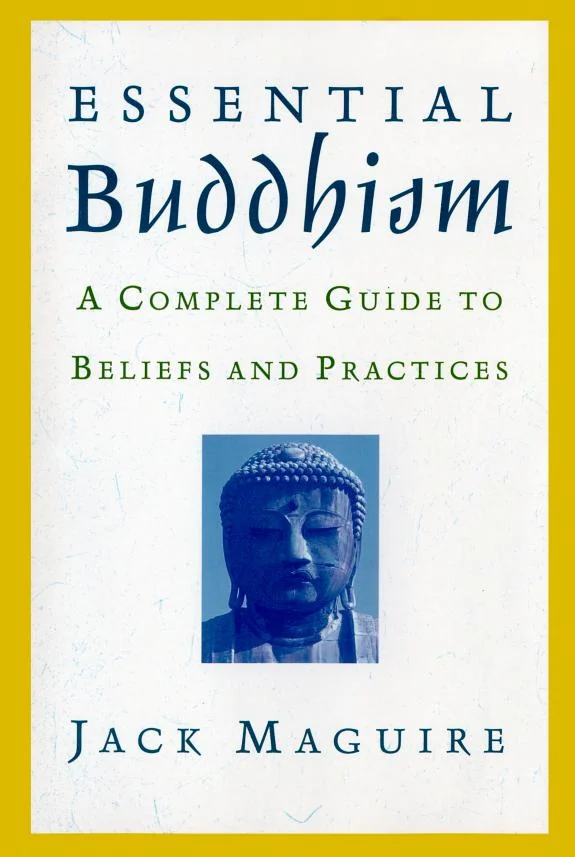
Jack Maguire’s *Essential Buddhism* confronts the challenge of presenting a vast spiritual tradition without succumbing to oversimplification. The book’s signal strength lies in its clear exposition of the lineages – Theravada, Mahayana, and Vajrayana – tracing their divergent paths from common roots. Maguire successfully illustrates how cultural adaptations shaped these forms, a crucial point often lost in introductory texts. However, the work occasionally feels more like a textbook summary than an exploration; the narrative pace can be somewhat relentless, leaving little room for contemplative engagement with the material. A particularly effective section details the concept of *anatta* (no-self), explaining its implications across different schools. While it provides a solid factual foundation, it lacks the evocative power that some readers might seek in exploring a spiritual path. Ultimately, *Essential Buddhism* serves as a competent, if somewhat dry, primer for understanding the structural diversity of Buddhist thought.
📝 Description
75
Jack Maguire's Essential Buddhism, published in 1997, maps the religion's core ideas and historical spread.
Jack Maguire's Essential Buddhism provides a clear introduction to the fundamental principles and historical development of Buddhist thought. The book details how the teachings of Siddhartha Gautama evolved into various traditions across different cultures. Maguire explains core concepts like the Four Noble Truths and the Eightfold Path in accessible language, making them understandable for a wide audience.
This work is especially useful for those new to Buddhism, including students of religion and philosophy. It also benefits readers interested in how Buddhist ideas have been applied historically and in contemporary life. Maguire traces the adaptation of Buddhist philosophy and practice through significant cultural and intellectual shifts, leading to the distinct schools of Buddhism seen today.
This book situates Buddhist concepts within their historical and philosophical development, a necessary step for understanding its contemplative and mystical dimensions. By detailing the Four Noble Truths and the Eightfold Path, it lays out the framework for practices aimed at liberation. The distinctions between major schools like Theravada, Mahayana, and Vajrayana highlight different approaches to achieving enlightenment, some of which are more directly aligned with esoteric traditions. Understanding these foundational elements is key to appreciating the deeper contemplative practices within Buddhism.
💡 Why Read This Book?
• Gain a clear understanding of the Four Noble Truths, the bedrock of Buddhist philosophy, as presented in Chapter 2, enabling you to grasp the core diagnosis of suffering and its cessation. • Differentiate between Theravada, Mahayana, and Vajrayana Buddhism by examining their historical emergence and distinct practices, as detailed in the comparative sections, to appreciate the tradition's diverse expressions. • Grasp the concept of *anatta* (no-self) and its philosophical weight, a central teaching discussed throughout the book, to critically engage with notions of identity and existence.
⭐ Reader Reviews
Honest opinions from readers who have explored this book.
❓ Frequently Asked Questions
When was Jack Maguire's Essential Buddhism first published?
Jack Maguire's *Essential Buddhism* was first published in June 2001. This edition provides a foundational overview of Buddhist principles and their historical development.
What are the three main branches of Buddhism discussed in the book?
The book details the three principal formats of Buddhism: Theravada, Mahayana, and Vajrayana. It explains how these traditions evolved from the original teachings through diverse cultural adaptations.
Does Essential Buddhism cover the historical Buddha?
Yes, the book covers the origins of Buddhist concepts, tracing them back to Siddhartha Gautama, the historical Buddha, and examining the evolution of his teachings.
Is Essential Buddhism suitable for beginners?
Absolutely. The book is designed for individuals new to Buddhist philosophy and practice, offering a clear, structured introduction to its core concepts and historical context.
What key philosophical concepts are explained in Essential Buddhism?
Key concepts such as the Four Noble Truths, the Eightfold Path, karma, rebirth, *anatta* (no-self), and *dukkha* (suffering) are systematically explained.
Does the book discuss Buddhist meditation practices?
While the book focuses on the philosophical and historical evolution of Buddhist thought, it touches upon practices as they relate to the development of Theravada, Mahayana, and Vajrayana traditions.
🔮 Key Themes & Symbolism
The Threefold Path
Maguire's work systematically delineates the three major branches of Buddhism: Theravada, Mahayana, and Vajrayana. The book highlights how each tradition interprets and practices the Dharma, originating from the teachings of Siddhartha Gautama. It explores their distinct philosophical nuances, ritualistic expressions, and geographical spread. Understanding these divergences is crucial for appreciating the vast range of Buddhist thought and practice that has developed over two millennia, adapting to diverse cultural contexts while retaining core principles.
Karma and Rebirth
Central to the Buddhist worldview presented is the concept of karma, the principle of cause and effect governing actions and their consequences, and rebirth, the cyclical process of existence. Maguire explains how these interconnected doctrines shape the understanding of suffering (*dukkha*) and the path to liberation. The book explores how different schools interpret the mechanics of karma and the nature of the rebirth process, offering insights into the ethical framework and soteriological goals of Buddhism.
The Nature of Self
A profound philosophical exploration within *Essential Buddhism* concerns the doctrine of *anatta*, or no-self. Maguire explains this key teaching, which challenges conventional notions of a permanent, independent ego. The book details how the understanding and application of *anatta* vary across Buddhist traditions, offering a critical perspective on identity, consciousness, and the illusion of self as a root cause of suffering.
The Four Noble Truths
The foundational framework of Buddhist teaching, the Four Noble Truths, is systematically presented. Maguire outlines the truth of suffering (*dukkha*), its origin, its cessation, and the path leading to its cessation (the Eightfold Path). This core teaching serves as the diagnostic and therapeutic engine of Buddhism, guiding practitioners toward enlightenment by understanding the nature of dissatisfaction and the means to overcome it.
💬 Memorable Quotes
Direct passages from the work, attributed to the author.
“The principal concepts and practices originated and evolved through diverse cultural adaptations into three formats: Theravada, Mahayana, and Vajrayana.”
— This statement captures the book's core thesis: Buddhism is not monolithic. Maguire emphasizes the historical and cultural forces that shaped its divergent traditions, making the evolution and adaptation of its teachings a central theme.
“The Four Noble Truths form the bedrock of Buddhist teaching.”
— This highlights the foundational importance of the Buddha's first discourse. It positions these truths as the essential starting point for understanding the Buddhist analysis of human existence and the path to liberation.
“Karma dictates the cycle of cause and effect.”
— This concise interpretation focuses on the law of karma. It implies the book explains how actions lead to consequences, influencing the continuous process of rebirth and the individual's journey toward enlightenment.
💡 Key Ideas
Editorial paraphrase of the work's core concepts — not direct quotes.
Anatta, or no-self, challenges conventional notions of a permanent ego.
This paraphrase points to a key philosophical tenet. It suggests the book explores the Buddhist critique of a fixed, independent self, which is central to understanding Buddhist psychology and liberation.
The Eightfold Path offers a practical guide to ending suffering.
This paraphrase emphasizes the practical aspect of the Buddha's teachings. It suggests the book outlines the Noble Eightfold Path as the prescribed method for achieving spiritual freedom and overcoming *dukkha*.
🌙 Esoteric Significance
Tradition
While *Essential Buddhism* focuses on the mainstream historical development of Buddhism, its explication of concepts like karma, rebirth, and the nature of consciousness aligns with the broader metaphysical inquiries found in many esoteric traditions. It provides a foundational understanding of a system that has influenced various esoteric lineages, particularly those exploring consciousness, impermanence, and liberation from material existence, even if it does not explore Vajrayana's more overtly mystical or tantric aspects.
Symbolism
The book touches upon symbols implicitly through its discussion of practices and philosophies. For instance, the concept of the Eightfold Path itself can be seen as a symbolic map for spiritual progress, with each element representing a crucial aspect of ethical conduct, mental discipline, and wisdom. The Buddha image, while not detailed, serves as a universal symbol of enlightenment and the potential for awakening inherent within all beings.
Modern Relevance
Contemporary thinkers and practitioners in mindfulness, secular Buddhism, and comparative philosophy continue to draw on the foundational principles outlined by Maguire. His clear distinctions between the major Buddhist schools remain relevant for understanding modern Buddhist movements, from Western monasticism to engaged Buddhism initiatives seeking to apply ancient wisdom to contemporary social and environmental challenges.
👥 Who Should Read This Book
• Academic researchers studying comparative religion or Asian philosophies, who require a clear, factual overview of Buddhist history and its primary divisions. • Individuals new to Buddhist concepts, seeking an accessible introduction to core teachings like the Four Noble Truths and the Eightfold Path without sectarian bias. • Students of esoteric traditions who wish to understand the philosophical underpinnings of a major world religion that has influenced various metaphysical systems.
📜 Historical Context
Published in 2001, *Essential Buddhism* arrived at a time when interest in Eastern religions was high in the West, spurred by figures like the Dalai Lama and the growing popularity of meditation. The intellectual landscape featured extensive academic study of Buddhism alongside New Age interpretations. Maguire's work sought to provide a structured, historically grounded account, differentiating itself from more purely devotional or esoteric interpretations. While scholars like Richard Gombrich were publishing seminal works on early Buddhism around this period, and figures like Thich Nhat Hanh were popularizing Zen, Maguire's book aimed for a comprehensive yet accessible overview of the three major historical branches, Theravada, Mahayana, and Vajrayana, which had been subject to extensive scholarly analysis since the late 19th century.
📔 Journal Prompts
The Four Noble Truths as a framework for understanding personal dissatisfaction.
The concept of anatta and its implications for personal identity.
How cultural adaptations shaped Theravada, Mahayana, and Vajrayana.
The practical application of the Eightfold Path in daily life.
The doctrine of karma and its role in shaping ethical decision-making.
🗂️ Glossary
Anatta
A core Buddhist doctrine signifying 'no-self' or 'non-ego.' It posits that there is no permanent, unchanging, independent self or soul.
Dukkha
Often translated as 'suffering,' this term encompasses a broader range of dissatisfaction, unease, stress, and imperfection inherent in conditioned existence.
Eightfold Path
The Noble Eightfold Path is the practical guide to end suffering and achieve enlightenment, comprising Right Understanding, Right Thought, Right Speech, Right Action, Right Livelihood, Right Effort, Right Mindfulness, and Right Concentration.
Four Noble Truths
The foundational teachings of Buddhism: 1. The truth of suffering (Dukkha), 2. The truth of the origin of suffering (craving), 3. The truth of the cessation of suffering (Nirvana), 4. The truth of the path to the cessation of suffering (Eightfold Path).
Karma
The principle of cause and effect; actions (physical, verbal, mental) create consequences that influence present and future lives.
Mahayana
One of the major branches of Buddhism, characterized by the ideal of the Bodhisattva, who seeks enlightenment for all beings.
Theravada
The 'School of the Elders,' the oldest surviving branch of Buddhism, emphasizing individual liberation through adherence to the original teachings of the Buddha.
Vajrayana
A branch of Mahayana Buddhism that utilizes tantric practices, rituals, and meditations to achieve enlightenment rapidly.
This book appears in 1 collection
🔮 Readers Also Liked
Browse all →









From the “Buddhism” Collection
View all →







More Free Occult Philosophy Books
View all →