Matrix of Creation
 72
72

Matrix of Creation
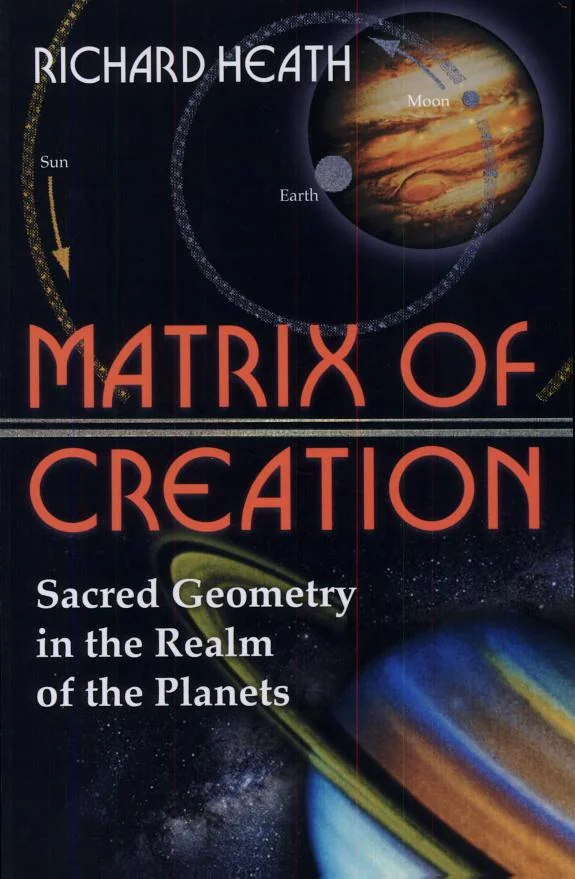
Richard Heath's 'Matrix of Creation' offers a compelling argument for the primacy of number in shaping the perceived world. The author meticulously details how ancient cultures, far from being primitive, possessed a sophisticated grasp of mathematical principles that informed their cosmologies and sacred sites. Heath's strength lies in his detailed exposition of these concepts, drawing connections between celestial mechanics, natural forms, and the numerical systems employed by early civilizations. He particularly shines when discussing the concept of 'cosmic proportion,' illustrating how specific ratios were believed to encode universal truths. However, the book's primary limitation is its occasional tendency towards assertion without always providing definitive, universally accepted historical evidence for every claimed ancient understanding. For instance, the interpretation of certain megalithic structures as purely numerical expressions might feel speculative to some readers. A particularly memorable passage explores how the perceived order of the planetary system itself is presented as a direct consequence of number. Ultimately, 'Matrix of Creation' is a valuable, if sometimes challenging, investigation into the numerical foundations of reality for those willing to engage with its intricate arguments.
📝 Description
72
Richard Heath's 2004 book, 'Matrix of Creation,' argues that numbers are fundamental to cosmic structure.
Published in 2004, 'Matrix of Creation' examines the role of numbers in the perceived order of the cosmos. Heath suggests ancient civilizations understood sacred geometry and numerology, seeing the universe as a system governed by mathematical principles rather than chance. He details how these numerical relationships appear in nature, the movement of stars, and the passage of time. The book contends that this understanding has faded in modern eras, resulting in a separation from this underlying order.
This work is intended for dedicated students of occult philosophy, comparative mythology, and ancient cosmology. It offers substantial material for those interested in the history of ideas about number, proportion, and their sacred importance. The book is especially useful for understanding the philosophical basis of ancient architecture, religious symbols, and calendars through a mathematical perspective. Readers seeking an intellectually rigorous examination of the origins of form and order will find Heath's approach valuable.
Emerging in the early 21st century, 'Matrix of Creation' fits within a late 20th century revival of interest in ancient wisdom and esoteric studies. This period saw renewed examination of classical texts and archaeology, influenced by figures like Helena Blavatsky and the Theosophical movement. Heath's focus on the mathematical and proportional aspects of creation myths and sacred sites contributes to this ongoing reinterpretation of ancient cosmologies.
💡 Why Read This Book?
• Understand the concept of 'cosmic proportion' as detailed in the book, learning how ancient thinkers believed specific ratios formed the blueprint for natural and celestial order, a perspective distinct from modern scientific materialism. • Gain insight into Richard Heath's thesis regarding the forgotten knowledge of number, exploring how ancient cultures allegedly used numerical systems to comprehend time and the creation of the world, a focus often overlooked in contemporary studies. • Examine the book's argument that numbers are the active creators of form, not just abstract descriptors, offering a unique metaphysical framework that challenges conventional views on the nature of reality as presented in the 2004 publication.
⭐ Reader Reviews
Honest opinions from readers who have explored this book.
❓ Frequently Asked Questions
When was Richard Heath's 'Matrix of Creation' first published?
Richard Heath's 'Matrix of Creation' was first published on May 15, 2004, offering a contemporary exploration of ancient numerical principles.
What is the central thesis of 'Matrix of Creation'?
The central thesis is that sacred numbers, derived from observations of the heavens, represent the secrets of cosmic proportion and alignment, and that these numbers fundamentally create the forms of the world.
Does the book discuss specific ancient civilizations?
While not detailing specific civilizations exhaustively, the work generally refers to 'ancient man' and their understanding of celestial observation and the perfection of ratio within the natural world.
What kind of knowledge has been forgotten, according to the book?
The book posits that the understanding of how numbers and their properties create the forms of the world, a knowledge once held by ancestors, has been largely forgotten.
Is 'Matrix of Creation' suitable for beginners in esoteric studies?
The book is quite dense and intellectually rigorous, making it more suitable for those with a foundational interest in esoteric philosophy or comparative cosmology rather than absolute beginners.
What does the book say about the planetary system?
It suggests that the planetary system, along with time itself, is a creation of number, reflecting an ancient understanding of cosmic order based on mathematical principles.
🔮 Key Themes & Symbolism
The Divine Architect
This theme posits that numbers are not merely descriptive tools but the active agents in creation. Heath argues that the universe's structure, from the smallest particle to the grandest celestial arrangement, is a direct manifestation of numerical laws. This perspective elevates mathematics from an abstract science to a foundational metaphysical principle, suggesting a divinely ordered cosmos where proportion and alignment are paramount. The book explores how this understanding was allegedly held by ancient peoples, who perceived numerical patterns as divine blueprints for existence.
Forgotten Numerical Wisdom
A central argument of 'Matrix of Creation' is the loss of ancient humanity's profound connection to numerical truths. Heath contends that our modern disconnection from this knowledge has led to a diminished understanding of the universe's inherent order. The book acts as a call to re-discover this lost science, suggesting that by understanding the properties of sacred numbers, we can reconnect with the fundamental principles that govern reality, time, and natural phenomena. This rediscovered wisdom is presented as key to comprehending the world's underlying harmony.
Cosmic Proportion and Natural Law
Heath investigates the concept of 'cosmic proportion,' asserting that the perfection observed in the natural world is a direct result of inherent mathematical ratios. This theme highlights the belief that celestial systems and earthly cycles are governed by precise numerical relationships, reflecting a cosmic intelligence. The book examines how ancient cultures allegedly observed and utilized these proportions, seeing them as evidence of a universe designed with inherent beauty and order, linking astronomical cycles directly to the perfection of natural forms.
Number as the Fabric of Time
The work explores the idea that time itself is not an arbitrary flow but a construct of number. Heath suggests that ancient civilizations understood the cyclical nature of time and its relationship to specific numerical sequences and planetary movements. This perspective frames time as an ordered, quantifiable aspect of the universal matrix, rather than an elusive or purely subjective experience. The book implies that a deeper understanding of these numerical underpinnings can unlock secrets about the past, present, and future.
💬 Memorable Quotes
Direct passages from the work, attributed to the author.
“The ancients understood that the ripeness of the natural world is the perfection of ratio and that the planetary system--and time itself--is a creation of number.”
— This highlights the ancient perception of nature's cycles and the cosmos as governed by perfect mathematical ratios. It suggests a holistic view where natural growth, planetary orbits, and the very passage of time are all intrinsically numerical and ordered phenomena.
“We have forgotten what our ancestors once knew: that numbers and their properties create the forms of the world.”
— This statement points to a perceived loss of ancient knowledge in modern times. It asserts that the fundamental creative power of numbers, understood by our predecessors, has been overlooked, leading to a diminished comprehension of reality's underlying architecture.
“The perfection of ratio is the ripeness of the natural world.”
— This concise phrase suggests that the optimal state or 'ripeness' of natural phenomena is intrinsically linked to harmonious mathematical proportions. It implies that balance, growth, and health in nature are expressions of underlying numerical order.
“The planetary system--and time itself--is a creation of number.”
— This emphasizes the book's metaphysical stance, proposing that the vast celestial mechanics and the very construct of time are not accidental but are fundamentally born from numerical principles. It underscores the idea of a mathematically ordered universe.
💡 Key Ideas
Editorial paraphrase of the work's core concepts — not direct quotes.
Sacred numbers arose from ancient man's observation of the heavens, and represent the secrets of cosmic proportion and alignment.
This quote expresses the book's core premise: that ancient wisdom saw a direct link between celestial phenomena, numerical understanding, and the fundamental structure of the universe. It highlights the sacred nature of numbers, not as mere tools, but as keys to cosmic secrets.
🌙 Esoteric Significance
Tradition
This work draws heavily from the Pythagorean tradition, emphasizing the ancient Greek belief in the primacy of numbers as the fundamental essence of reality. It also aligns with Hermetic and Neoplatonic thought, which posit a divinely ordered cosmos accessible through intellectual and contemplative means. Heath's approach can be seen as a modern reinterpretation of these ancient streams, seeking to demonstrate their continued relevance in understanding the 'matrix of creation' and the underlying mathematical principles that govern existence.
Symbolism
Key symbols explored include geometric forms, particularly those derived from sacred geometry, which are presented as divine blueprints. Numbers themselves function as potent symbols, representing not just quantity but fundamental cosmic principles and forces. The celestial bodies and their movements are also symbolic, representing an ordered, numerical dance that reflects the universal mind, as understood by ancient cosmologies.
Modern Relevance
Contemporary interest in fields like sacred geometry, consciousness studies, and the philosophical underpinnings of physics often revisits themes similar to those in 'Matrix of Creation.' Thinkers exploring fractal geometry, the golden ratio in art and nature, and the concept of a mathematically structured universe may find Heath's arguments foundational. The book appeals to those seeking a metaphysical framework that integrates scientific observation with ancient philosophical insights into the nature of reality and order.
👥 Who Should Read This Book
• Students of comparative cosmology and ancient philosophy seeking to understand historical perspectives on the universe's structure through the lens of number. • Practitioners of sacred geometry and numerology interested in the theoretical basis and historical roots of these disciplines as presented in the book. • Readers of esoteric literature exploring the idea of a divinely ordered cosmos and the potential for rediscovering lost ancient knowledge about creation.
📜 Historical Context
Published in 2004, 'Matrix of Creation' emerged during a period of renewed interest in esoteric philosophies and ancient cosmologies, a trend amplified by the internet's accessibility to diverse texts. This era saw a flourishing of works that sought to connect modern understanding with perceived lost wisdom, often drawing from Pythagoreanism, Hermeticism, and Neoplatonism. Richard Heath's contribution sits within this lineage, focusing specifically on numerology and sacred geometry as foundational elements of creation. His work implicitly engages with scholars and mystics like John Michell, whose writings on earth mysteries and ancient sites explored similar themes of hidden order. While not facing overt censorship, such works often occupied a niche, sometimes viewed as fringe by mainstream academia but finding a dedicated audience among spiritual seekers and alternative historians. The book's focus on number as a creative force aligns with a broader philosophical inquiry into the nature of reality that continued throughout the late 20th and early 21st centuries, contrasting with purely materialistic scientific paradigms.
📔 Journal Prompts
The ancient understanding of numbers as creators of form, as discussed in 'Matrix of Creation'.
The concept of 'cosmic proportion' and its manifestation in the natural world.
The idea that the planetary system is a 'creation of number'.
Reflecting on the forgotten knowledge of how numbers create the forms of the world.
The connection between observing the heavens and understanding sacred numbers.
🗂️ Glossary
Sacred Numbers
Numbers perceived by ancient cultures not just as quantities but as fundamental principles or divine forces that structure reality and hold cosmic secrets.
Cosmic Proportion
The belief that the universe, its celestial bodies, and natural phenomena are governed by perfect mathematical ratios and alignments, reflecting divine order.
Matrix of Creation
The underlying numerical and geometrical framework or blueprint from which the universe and all its forms are said to originate, according to ancient wisdom.
Ratio
In the context of the book, refers to the proportional relationships between numbers and forms, seen as essential to the perfection and order found in nature and the cosmos.
Observation of the Heavens
Ancient practices of studying celestial bodies and their movements, believed to reveal fundamental truths about the universe and its numerical underpinnings.
Forms of the World
The physical shapes, structures, and phenomena that constitute reality, which the book posits are directly created by the properties and principles of numbers.
Planetary System
The celestial arrangement of planets and other bodies orbiting a star, which the book suggests is an ordered construct originating from numerical laws.
This book appears in 1 collection
🔮 Readers Also Liked
Browse all →









From the “Sacred Geometry” Collection
View all →







More Free Occult Philosophy Books
View all →