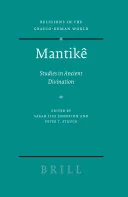
Mantikê
 76
76

Mantikê
Sarah Iles Johnston and Peter T. Struck's edited collection, Mantikê, performs a valuable service by consolidating diverse scholarly perspectives on ancient divination. Its strength lies in the breadth of periods and practices covered, moving beyond simple descriptions to analyze the cultural work divination performed. The chapter on sortition in both pagan and Christian contexts, for instance, effectively highlights the continuity and transformation of such practices. However, the collection's academic rigor, while commendable, can at times render the material dense for the non-specialist reader. A more explicit discussion of the ethical dimensions of divination, beyond its interpretive function, might have added another layer of engagement. Ultimately, Mantikê stands as a solid reference for understanding the multifaceted role of divination in the ancient world.
📝 Description
76
Published in 2005, Mantikê examines divination in ancient Greece, Rome, and Egypt.
This collection of studies offers a scholarly look at divination's widespread role in ancient Greek, Roman, and Egyptian societies. The essays cover various periods of Graeco-Roman history, from the Archaic era to late antiquity. It investigates different oracular practices, such as lotteries and dice divination, and how these methods interacted with other interpretive techniques used at the time.
The book is intended for academic researchers and advanced students in classics, religious studies, and ancient history. It will appeal to those interested in the history of belief, ritual practices, and the intellectual life of the ancient Mediterranean. Readers seeking detailed analysis of specific divinatory techniques and their cultural importance will find extensive material within its pages.
Mantikê contributes to the study of ancient divination, a practice central to many religious and intellectual traditions of the past. It moves beyond simple cataloging to analyze the conceptual frameworks that gave meaning to these practices. The book addresses how divination was understood as a way to access divine knowledge or uncover hidden truths, reflecting a broader human desire to understand the unknown through various interpretive systems.
💡 Why Read This Book?
• Gain a structured understanding of how divination was integrated into civic and personal life in ancient Greece and Rome, as exemplified by discussions of dice oracles and the fortunes of independent diviners. • Grasp the complex relationship between divination and other interpretive practices in antiquity, such as astrology or dream analysis, as explored in specific case studies. • Analyze the evolution of divinatory practices across different historical periods, from the Archaic period to the late Roman Empire, as detailed through scholarly essays.
⭐ Reader Reviews
Honest opinions from readers who have explored this book.
❓ Frequently Asked Questions
What historical periods does Mantikê cover regarding ancient divination?
Mantikê examines divination across a wide span of Graeco-Roman history, from the Archaic period (roughly 800-500 BCE) through the late Roman Empire, encompassing significant shifts in religious and political landscapes.
What types of divination are discussed in Mantikê?
The book covers various forms, including dice oracles, sortition (drawing lots), omen interpretation, and the practices of independent diviners, illustrating the diversity of methods used to seek divine guidance.
Who are the primary authors or scholars whose work is referenced in Mantikê?
While an edited collection, Mantikê draws upon and contributes to the work of leading scholars in the field of ancient religion and history, building upon existing research on Graeco-Roman belief systems.
Does Mantikê discuss divination in a purely historical or also a practical context?
The focus of Mantikê is primarily historical and analytical, exploring the cultural, social, and intellectual functions of divination in antiquity rather than providing practical instruction.
What is the significance of the term 'Mantikê' itself?
'Mantikê' is the Greek term for divination, encompassing the art, practice, and science of foretelling future events or discerning hidden knowledge through various means.
How does Mantikê address the overlap between divination and other ancient interpretive practices?
The book explores how divination intersected with fields like astrology, dream interpretation, and even early forms of historiography, demonstrating a complex web of knowledge-seeking practices.
🔮 Key Themes & Symbolism
Oracular Institutions
The collection thoroughly investigates the prominent oracular sites and institutions of the ancient world, such as the Oracle of Delphi, and examines their societal roles. It analyzes how these centers of prophecy functioned not only as religious hubs but also as political advisory bodies, influencing state decisions and public opinion throughout various periods of Graeco-Roman history.
Independent Diviners
Mantikê dedicates attention to the often-overlooked category of independent diviners who operated outside formal religious structures. It explores their social standing, the techniques they employed, and the public's perception of their abilities, highlighting the diverse field of prophetic practice beyond established temples and priesthoods.
Divination and Interpretation
A significant theme is the intricate overlap between divination and other methods of interpretation in antiquity. The book scrutinizes how practices like dream analysis, astrology, and the interpretation of omens were conceptually linked to, and sometimes conflated with, direct prophetic utterances, forming a complex system of understanding the world.
Sortition and Fate
The role of sortition, or the use of drawing lots, is explored in both pagan and Christian contexts. This theme looks at how chance was perceived as a mechanism for divine intervention or the revelation of fate, tracing its application in decision-making processes and its theological implications across different belief systems.
💬 Memorable Quotes
Direct passages from the work, attributed to the author.
“The fortunes of independent diviners.”
— This phrase points to the social and economic realities faced by individuals who practiced divination outside of established religious or state institutions, suggesting an exploration of their livelihood and public reception.
“Overlap between divination and other interpretive practices.”
— This concept highlights the scholarly focus on the blurred lines between different methods of seeking knowledge in antiquity, such as astrology, dream interpretation, and omen reading, and their shared conceptual ground.
“Treatments of dice oracles.”
— This indicates a specific focus within the book on a particular form of divination involving dice, likely examining its mechanics, cultural significance, and historical presence in ancient societies.
“Sortition in both pagan and Christian contexts.”
— This suggests a comparative analysis of the practice of drawing lots, demonstrating its persistence and adaptation across different religious frameworks and historical eras within the ancient Mediterranean world.
“Divination as a central phenomenon.”
— This framing emphasizes the book's argument that divination was not a marginal activity but a fundamental aspect of belief, social structure, and intellectual life in ancient Greece, Rome, and Egypt.
🌙 Esoteric Significance
Tradition
While not strictly aligning with a single esoteric lineage like Hermeticism or Kabbalah, Mantikê contributes significantly to the broader esoteric tradition by providing rigorous historical context for practices often relegated to the occult. It grounds esoteric studies in verifiable historical research, demonstrating how divination was a core component of ancient worldviews, influencing philosophical and religious thought that later informed Western esotericism.
Symbolism
The book implicitly touches upon symbols associated with divination, such as the *omphalos* stone at Delphi representing the world's center, or the astragali (knucklebones) used in dice divination, which symbolized fate and chance. These objects and locations served as conduits for divine communication, embodying the ancient belief in a cosmos where hidden knowledge could be accessed through specific rituals and artifacts.
Modern Relevance
Contemporary practitioners of modern witchcraft, neopaganism, and even some forms of psychological divination draw upon the historical understanding of these ancient practices. Mantikê provides a scholarly foundation for understanding the roots of techniques like scrying, augury, and the interpretation of signs, informing modern approaches to accessing intuition and perceived supernatural guidance.
👥 Who Should Read This Book
• Advanced students and scholars of Classics and Religious Studies seeking in-depth analyses of ancient divinatory practices and their cultural significance. • Researchers interested in the history of belief systems and interpretive methods in the ancient Mediterranean world, from Greece to Rome. • Individuals curious about the historical underpinnings of prophecy, oracles, and fate-casting, looking for scholarly perspectives beyond popular occult literature.
📜 Historical Context
Published in 2005, Mantikê arrived at a time when the study of ancient religion was increasingly sophisticated, moving beyond purely mythological accounts to explore lived religious experience. The collection synthesizes a range of scholarship that examines divination not merely as superstition, but as a crucial social, political, and intellectual practice. It engages with ongoing debates concerning the nature of belief in antiquity and the function of prophecy within diverse cultural milieus. The work implicitly builds upon and responds to earlier foundational studies by scholars like Walter Burkert, who explored Greek religion with a focus on ritual and its social underpinnings. Mantikê specifically addresses the period from the Archaic era through late antiquity, a temporal scope that allows for tracing developments and continuities in divinatory practices and their reception.
📔 Journal Prompts
The role of sortition in pagan and Christian contexts.
Independent diviners and their public fortunes.
Intersections between divination and other interpretive practices.
The conceptualization of dice oracles in antiquity.
Divination as a central phenomenon in ancient life.
🗂️ Glossary
Mantikê
The Greek term for divination, encompassing the art, practice, and theory of foretelling future events or discerning hidden knowledge.
Sortition
A method of selection or decision-making by drawing lots, considered a way to access divine will or determine fate in ancient societies.
Dice Oracles
Forms of divination that involved casting dice, interpreting the patterns or numbers rolled to gain insight into future events or divine intentions.
Independent Diviners
Individuals who practiced divination outside of established religious institutions or state-sponsored oracular sites, often operating as private consultants.
Interpretive Practices
A broad category encompassing various methods used in antiquity to understand signs, dreams, celestial events, or other phenomena as conveying meaning or divine messages.
Archaic Period
The earliest period of ancient Greek history covered in the book, generally considered to run from around 800 BCE to 500 BCE, a time of significant cultural and political development.
Graeco-Roman
Pertaining to the cultures and history of ancient Greece and Rome, often used to describe the Hellenistic and Roman periods where Greek influence was widespread.
This book appears in 1 collection
🔮 Readers Also Liked
Browse all →









From the “Divination” Collection
View all →![EBOOK COLLECTION ( PART 8) [ CSI][h 33t]](/img/thumb/ebook-collection-part-8-csi-h-33t.webp)








More Free Divination & Tarot Books
View all →