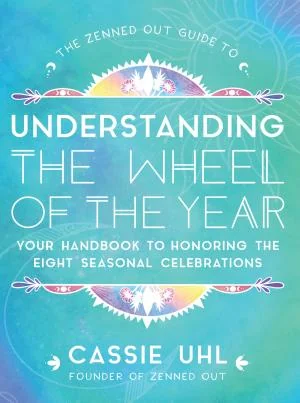
The Zenned Out Guide to Understanding the Wheel of the Year
 79
79

The Zenned Out Guide to Understanding the Wheel of the Year
Cassie Uhl's "The Zenned Out Guide to Understanding the Wheel of the Year" attempts to distill complex seasonal lore into an accessible format. The strength of the book lies in its straightforward presentation of the eight Sabbats, offering clear explanations of their significance and associated practices. Uhl's approach is refreshingly grounded, avoiding overly ornate language. A particular passage detailing the transition from Samhain to Yule effectively captures the melancholic beauty of late autumn and the anticipation of winter's deep rest. However, the guide occasionally feels a touch too generalized, especially for readers already familiar with Pagan traditions who might seek deeper historical or comparative analysis. The 2021 publication date places it within a recent wave of accessible Pagan literature, but it doesn't significantly push the boundaries of established discourse. For newcomers, it serves as a competent, if somewhat conventional, primer on seasonal observance.
📝 Description
79
Cassie Uhl's 2021 book demystifies the eight major seasonal festivals in Pagan and Wiccan traditions.
This guide breaks down the eight seasonal festivals, known as the Sabbats, that mark the turning points of the year in many Pagan and Wiccan paths. Uhl details each festival, from Samhain in the autumn to Beltane in the spring, explaining their associated energies and archetypes. The book aims to make the significance and practice of these observances clear for readers. It covers the cyclical nature of the year, connecting the Sabbats to the broader rhythms of the earth. The author's approach is practical, intended to help individuals understand and integrate these seasonal celebrations into their spiritual lives.
It is written for those new to earth-based spirituality, Wicca, or modern Paganism. The text offers a straightforward introduction to the Wheel of the Year, assisting readers who wish to align their practices with the changing seasons. It balances actionable advice with an understanding of esoteric concepts, encouraging a deeper connection to the natural world. The book covers Samhain, Yule, Imbolc, Ostara, Beltane, Litha, Lughnasadh, and Mabon, detailing the unique character of each.
The concept of the Wheel of Year, as it is understood in contemporary Paganism, gained prominence in the mid-20th century. Influenced by figures like Gerald Gardner and later writers such as Aidan Kelly, it organizes seasonal festivals within a cyclical framework. Uhl's work engages with this lineage, offering a modern perspective on these established markers. The book acknowledges that many of these festivals have roots in pre-Christian traditions, which have been adapted and reinterpreted across different spiritual practices over time. This publication presents a contemporary interpretation of these historical and evolving seasonal observances.
💡 Why Read This Book?
• You will learn to identify and celebrate the unique energetic qualities of each of the eight Sabbats, from Samhain to Yule, enabling a more grounded, nature-attuned spiritual practice. • You will gain practical methods for ritual and contemplation tailored to each festival, as described in the sections on Ostara and Litha, fostering a deeper connection with the cyclical year. • You will understand the historical and mythological underpinnings of these seasonal celebrations, providing context for modern Pagan observances beyond simple folklore.
⭐ Reader Reviews
Honest opinions from readers who have explored this book.
❓ Frequently Asked Questions
What is the Wheel of the Year as explained in Cassie Uhl's book?
The Wheel of the Year, as presented in Uhl's 2021 guide, is a framework representing the eight seasonal festivals of the Pagan calendar. It illustrates the cyclical nature of life, death, and rebirth through the progression of seasons from Samhain to Yule and back again.
How does 'The Zenned Out Guide' approach the Sabbats?
The book treats each of the eight Sabbats—Samhain, Yule, Imbolc, Ostara, Beltane, Litha, Lughnasadh, and Mabon—as distinct periods with unique energies, themes, and associated practices, offering guidance for contemporary observance.
Is this book suitable for absolute beginners in Paganism?
Yes, Cassie Uhl's guide is structured to be accessible for those new to Paganism or earth-based spirituality, providing foundational knowledge without assuming prior esoteric experience.
What kind of practices does the book suggest for the festivals?
The guide offers suggestions for rituals, correspondences, and journaling prompts relevant to each Sabbat, aiming to help readers connect with the seasonal energies in practical ways.
When was 'The Zenned Out Guide to Understanding the Wheel of the Year' first published?
The book was first published on November 2, 2021, positioning it as a relatively recent contribution to contemporary Pagan literature.
Does the book cover the historical origins of the Sabbats?
It touches upon the historical roots and mythological associations of the festivals, contextualizing them within ancient traditions and their evolution into modern Pagan observances.
🔮 Key Themes & Symbolism
Seasonal Cycles and Energies
The core of this work is the cyclical nature of the year as represented by the Wheel of the Year. Uhl details the distinct energetic shifts that occur as one Sabbat transitions into the next, from the deep introspection of winter at Yule to the burgeoning life of spring at Ostara. The book emphasizes how understanding these energies allows for greater alignment with natural rhythms, influencing personal growth and spiritual practice throughout the year.
The Eight Sabbats
Each of the eight primary festivals—Samhain, Yule, Imbolc, Ostara, Beltane, Litha, Lughnasadh, and Mabon—receives dedicated attention. Uhl explores their traditional significance, mythological connections, and modern applications. The book provides practical guidance for observing each Sabbat, including suggested rituals, correspondences (colors, herbs, etc.), and thematic explorations, making these ancient markers relevant for contemporary practitioners.
Practical Esoteric Application
Beyond theoretical understanding, Uhl focuses on the practical application of seasonal wisdom. The guide offers actionable advice for incorporating the Wheel of the Year into daily life and personal spiritual practice. This includes journaling prompts, ritual ideas, and contemplative exercises designed to help readers connect with the archetypal energies of each festival and harness them for personal development.
Nature-Based Spirituality
This book champions a nature-based approach to spirituality, grounding esoteric concepts in the observable cycles of the earth. It encourages readers to observe the natural world around them as a source of wisdom and guidance. By aligning spiritual practices with the solstices, equinoxes, and cross-quarter days, the book promotes a deeper, more embodied connection to the planet and its rhythms.
💬 Memorable Quotes
Direct passages from the work, attributed to the author.
“The Wheel of the Year is a continuous cycle of birth, growth, death, and rebirth.”
— This statement captures the fundamental concept of the book: the cyclical nature of time and life as observed through the seasons. It suggests a holistic perspective where endings are beginnings and vice versa, a core tenet in many earth-based spiritual traditions.
“Samhain marks the end of the harvest and the beginning of the new year.”
— This highlights the liminal nature of Samhain, often associated with the Celtic New Year. It signifies a time of introspection, honoring ancestors, and acknowledging the descent into the darker, quieter half of the year, setting the stage for the subsequent festivals.
“Yule celebrations often involve themes of light returning after the longest night.”
— This points to the symbolic significance of the Winter Solstice (Yule). It represents hope and renewal during the deepest part of winter, focusing on the promise of longer days and the eventual return of spring.
“Ostara is a time of balance and burgeoning new life.”
— This describes the Spring Equinox, emphasizing its dual nature of equal day and night and its association with fertility, growth, and the awakening of the natural world after winter's dormancy.
“Beltane honors the height of spring and the promise of summer's abundance.”
— This captures the essence of the May Day festival, a celebration of fertility, passion, and the vibrant energy of late spring as the earth reaches its peak growth before the summer solstice.
🌙 Esoteric Significance
Tradition
This work primarily aligns with modern Wicca and contemporary Paganism, traditions that heavily utilize the Wheel of the Year. It draws upon the synthesis of seasonal festivals, many with pre-Christian European roots, adapted into a cyclical model. While not strictly Hermetic or Kabbalistic, it shares with these traditions an interest in symbolic representation and cyclical understanding of cosmic and terrestrial processes.
Symbolism
Key symbols include the Wheel itself, representing the cyclical passage of time and the interconnectedness of the Sabbats. The interplay of light and dark is crucial, particularly evident in Yule (Winter Solstice) where the return of light is celebrated, and Samhain where darkness deepens. Fertility and growth symbols are prominent around Beltane and Ostara, reflecting the life-affirming energies of spring and early summer.
Modern Relevance
Contemporary practitioners of earth-based spirituality, Wiccans, and eclectic Pagans frequently reference and utilize the Wheel of the Year framework. Uhl's guide contributes to this ongoing discourse by offering a modern, accessible take on these ancient cycles, making them relevant for individuals seeking connection to nature and seasonal rhythms in the 21st century.
👥 Who Should Read This Book
• Aspiring Wiccans and Pagans: Individuals beginning their spiritual journey who need a clear, foundational understanding of the eight seasonal festivals and their significance. • Nature Enthusiasts: Those seeking to deepen their connection with the earth's cycles and integrate natural rhythms into their daily lives and spiritual practices. • Modern Spiritual Seekers: Individuals interested in exploring alternative spiritual frameworks that emphasize seasonal awareness, ritual, and personal growth through nature's patterns.
📜 Historical Context
Cassie Uhl's "The Zenned Out Guide to Understanding the Wheel of the Year" (2021) enters a field significantly shaped by mid-20th century Pagan revivalism. The popularization of the Wheel of Year concept is often attributed to figures like Gerald Gardner and later academic work by Aidan Kelly, who synthesized various seasonal traditions into a cohesive framework in the 1970s and 80s. Uhl's work builds upon this foundation, offering a contemporary, accessible interpretation. It engages with the legacy of earlier writers such as Doreen Valiente, who helped codify Wiccan practices. While not explicitly engaging in polemics, the book implicitly responds to a need for clear, practical guides in an era where modern Paganism has moved beyond its fringe origins. The reception of such works within the broader Pagan community often centers on their clarity and applicability, with less emphasis on academic debate and more on lived practice.
📔 Journal Prompts
Reflect on the Samhain transition into winter's introspection.
Consider the balance of light and dark during Ostara.
Explore the vibrant energy of Beltane and its connection to growth.
Analyze the symbolic meaning of the harvest at Mabon.
Contemplate the returning light celebrated during Yule.
🗂️ Glossary
Wheel of the Year
A cyclical model representing the eight principal festivals observed in many modern Pagan traditions, marking the progression of the seasons and their associated energies.
Sabbat
One of the eight major festivals in the Wheel of the Year, including the four solstices/equinoxes (Yule, Ostara, Litha, Mabon) and the four cross-quarter days (Imbolc, Beltane, Lughnasadh, Samhain).
Samhain
The festival marking the end of the harvest season and the beginning of the 'dark half' of the year, often considered the Pagan New Year; typically celebrated around October 31st.
Yule
The festival celebrating the Winter Solstice, the longest night of the year, and the subsequent return of the sun and increasing daylight; typically celebrated around December 21st.
Imbolc
A festival celebrating the first stirrings of spring and the lengthening days, often associated with purification and new beginnings; typically celebrated around February 2nd.
Ostara
The festival marking the Spring Equinox, a time of balance between day and night, and the awakening of fertility and new life; typically celebrated around March 20th.
Beltane
A festival celebrating the height of spring and the union of the masculine and feminine, often associated with fertility and abundance; typically celebrated around May 1st.
This book appears in 1 collection
🔮 Readers Also Liked
Browse all →








From the “Wicca” Collection
View all →





More Free Occult Philosophy Books
View all →