Brian Luke Seaward, Brian L. Seaward
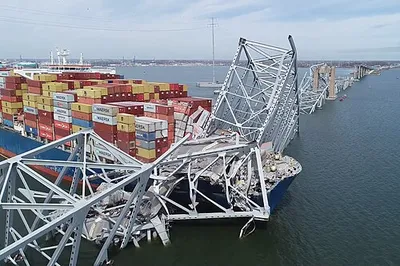
The Francis Scott Key Bridge in Baltimore collapsed on March 26, 2024, after being struck by the container ship Dali.
The Francis Scott Key Bridge, a major steel arch truss bridge opened in 1977, collapsed on March 26, 2024, when it was struck by the container ship Dali. The Dali experienced a total power failure shortly after departing the Port of Baltimore, losing propulsion and control. Despite a mayday call and efforts to slow traffic, the ship collided with a pier, causing the bridge to break apart. The collapse resulted in the deaths of six maintenance workers and significantly disrupted shipping through the Port of Baltimore, which is a vital economic hub. Initial estimates for replacing the bridge have escalated considerably.
The bridge was a critical part of the Baltimore Beltway, carrying approximately 34,000 vehicles daily, including many trucks transporting hazardous materials. It spanned a key shipping route connecting the Port of Baltimore to the Atlantic Ocean. The Port of Baltimore is a major center for foreign cargo, coal, and vehicles, supporting numerous jobs and generating significant economic activity. The Dali, a large container vessel, had undergone multiple inspections globally without major issues reported prior to the incident. Engineering analyses and preliminary reports suggest that while the bridge had some protective measures, its design might not have been sufficient to withstand an impact from a vessel of the Dali's size.
Bridge Design and Vulnerability
The Francis Scott Key Bridge, completed in 1977, was a continuous steel arch-shaped truss bridge. Its engineering relied on the overall structure for integrity, making it 'fracture critical' as it lacked redundancy if a support was removed. While federal regulations for bridge protection against ship collisions were updated in 1991, existing structures like the Key Bridge were exempt from these newer requirements due to a grandfather clause. Consequently, its piers lacked the advanced fender systems or island barriers mandated for newer bridges. Although the bridge was deemed compliant with building codes at the time of its collapse and had some protective measures, engineering experts debate whether even enhanced protection systems could have prevented the disaster given the immense size and force of the Dali.
The Incident and Immediate Aftermath
On March 26, 2024, the container ship Dali suffered a catastrophic power outage approximately 10 minutes after leaving the Port of Baltimore. This loss of control led the vessel to drift into the shipping channel and strike a pier of the Francis Scott Key Bridge. Despite a mayday call and efforts by authorities to halt traffic, the collision occurred, causing the main spans of the bridge to collapse into the Patapsco River. The impact was substantial, with forces estimated to be significantly greater than the thrust of a Saturn V rocket. Six workers on the bridge were killed in the collapse, with one rescued from the river and another from the remaining structure. The event immediately blocked vital shipping routes, causing significant economic disruption.
Economic and Shipping Impact
The collapse of the Francis Scott Key Bridge had an immediate and profound impact on the Port of Baltimore and the surrounding region. The bridge's destruction effectively halted most maritime traffic to and from the port for over 11 weeks, a situation described by Maryland's governor as a 'global crisis.' The economic fallout was substantial, with daily losses estimated at $15 million. The Port of Baltimore is a critical U.S. trade gateway, handling millions of tons of foreign cargo valued in the tens of billions of dollars annually, and serving as a leading port for automobiles and coal. The closure threatened thousands of jobs directly and indirectly supported by port operations, underscoring the bridge's importance to national and international commerce.
Books by Brian Luke Seaward, Brian L. Seaward
2 free public domain books · Read online or download