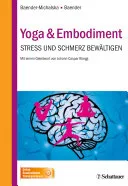
Yoga und Embodiment
 75
75

Yoga und Embodiment
The Baenders' "Yoga und Embodiment" offers a rigorous exploration of the mind-body unity central to yoga. Its strength lies in the clear, systematic presentation of stress physiology, followed by a well-articulated argument for yoga's therapeutic efficacy. The initial chapters, detailing stress mechanisms, are particularly illuminating, grounding abstract concepts in concrete biological responses. However, the practical program, while useful, feels somewhat detached from the depth of the theoretical discussion; the transition could be smoother. A standout section is the detailed explanation of how specific yogic techniques, like controlled breathing, directly impact the autonomic nervous system. The book serves as a solid academic bridge between yogic tradition and modern psychosomatic understanding, avoiding the pitfalls of New Age jargon. It provides a valuable, if somewhat dry, resource for those seeking a scientifically informed perspective on yoga's embodied dimensions.
📝 Description
75
Published in 2014, Yoga und Embodiment by Baender-Michalska and Baender connects yoga practice with the philosophical concept of embodiment.
This book examines the relationship between yoga and embodiment, defined as the integration of mind and body. It traces the origins of stress, its effects on individuals and society, and then explains yoga's role in prevention and therapy. The authors offer a structured way to understand how physical and mental states interact.
Instructors of yoga will find a deeper theoretical basis for their teaching and its impact. Psychotherapists and healthcare workers interested in somatic approaches will find it valuable. Individuals dealing with stress or seeking personal growth through the mind-body connection will discover practical uses and a solid theoretical foundation. Academic researchers in phenomenology, somatics, and the psychology of religion will find a thorough look at embodied consciousness.
While embodiment studies gained academic attention in the late 20th century, this 2014 work places yoga within a broader philosophical discourse on conscious experience. It moves beyond viewing yoga solely as physical exercise, recognizing it as a system for cultivating embodied awareness. This aligns with traditions that see physical practice as a path to deeper self-understanding and altered states of perception.
💡 Why Read This Book?
• Gain a structured understanding of stress physiology and its impact on both mental and physical health, as detailed in the book's initial sections on stress mechanisms. • Learn how specific yogic practices, particularly the breathing exercises outlined in Part 3, directly influence the nervous system for stress reduction and improved well-being. • Explore the concept of "Verkörperung" as presented by Baender-Michalska and Baender, which clarifies how integrating physical and mental states is foundational to yogic practice and overall health.
⭐ Reader Reviews
Honest opinions from readers who have explored this book.
❓ Frequently Asked Questions
What is "Embodiment" according to Yoga und Embodiment?
Embodiment, or "Verkörperung," as explored in this book, signifies the fundamental unity of the physical body and the mind. It emphasizes experiencing oneself as an integrated whole, a core principle upon which yoga is built and which the book seeks to elucidate.
How does the book explain the effects of stress?
The book provides a comprehensive overview of the origins of stress, detailing its physiological and social consequences. It explains the biological pathways activated by stress and their subsequent impact on an individual's overall health and well-being.
What is the practical component of Yoga und Embodiment?
Part 3 of the book features a practical program. This section includes a series of physical (asana) and breathing (pranayama) exercises designed for direct implementation, allowing readers to experience the principles discussed in the theoretical parts of the text.
Who authored Yoga und Embodiment?
The book "Yoga und Embodiment" was authored by Elisabeth Baender-Michalska and Rolf Baender. It was first published in 2014.
What is the primary benefit of studying yoga through the lens of embodiment?
Studying yoga through embodiment, as this book presents, allows for a deeper understanding of how physical practices directly influence mental states and vice versa, fostering a holistic approach to health and self-awareness beyond mere physical exercise.
Is this book suitable for beginners in yoga?
While it offers practical exercises, the book's strength lies in its theoretical and scientific explanation of yoga's effects. It is particularly suited for those who want to understand the 'why' behind yoga practices, including instructors and therapists, as well as dedicated practitioners seeking depth.
🔮 Key Themes & Symbolism
The Unity of Mind and Body
The central thesis of "Yoga und Embodiment" is the concept of "Verkörperung," or embodiment, which posits that true well-being is achieved through the seamless integration of physical and mental states. This is presented not as a New Age ideal but as a fundamental aspect of human experience that yogic practices are designed to cultivate. The book systematically explores how this unity is disrupted by stress and how yoga, through its physical postures and breathwork, actively works to restore this coherence, leading to improved psychological and physiological health.
Stress Physiology and Yogic Intervention
A significant portion of the book is dedicated to a thorough examination of stress. It details the biological origins of stress responses, exploring the physiological and social consequences that arise from chronic activation of the stress system. Following this detailed analysis, the authors elucidate the specific mechanisms by which yoga acts as a powerful countermeasure. They explain how yogic techniques, such as controlled breathing (pranayama) and mindful movement, directly influence the autonomic nervous system, thereby mitigating the harmful effects of stress.
Practical Application of Embodied Yoga
Beyond its theoretical framework, "Yoga und Embodiment" offers a practical guide for readers to engage directly with the principles discussed. Part 3 of the book presents a structured program of exercises, encompassing both physical postures (asanas) and breathwork techniques. This section is designed to be readily applicable, enabling readers to translate the book's insights into tangible personal practice. The aim is to empower individuals to actively cultivate embodiment and manage stress through consistent engagement with these yogic methods.
Yoga as Therapy and Prevention
The book positions yoga not merely as a form of exercise or spiritual pursuit, but as a potent tool for both preventing illness and treating existing conditions, particularly those related to stress. It details how the embodied awareness fostered through yoga can enhance interoception – the sense of the internal state of the body – and improve emotional regulation. By understanding the psychophysiology of stress and the direct impact of yogic interventions, readers are equipped to utilize yoga as a proactive strategy for maintaining health and as a supportive therapy for recovery.
💬 Memorable Quotes
Direct passages from the work, attributed to the author.
“Embodiment (d.h. "Verkörperung") meint die Einheit von Physis und Geist, worauf insbesondere Yoga beruht.”
— This foundational statement defines embodiment as the core principle of unity between the physical and mental realms, directly linking it to the essence of yoga. It sets the stage for understanding yoga not just as physical postures but as a holistic practice addressing the integrated self.
“Das Buch ist gut strukturiert, Schaubilder, Diagramme und...”
— This fragment suggests the book's pedagogical approach, highlighting its clear organization and the use of visual aids like charts and diagrams. This indicates an effort to make complex physiological and philosophical concepts accessible and easy to grasp for the reader.
“Funktionsweise und Wirkung von Yoga in Prävention und Therapie eindrucksvoll erläutert.”
— This highlights the book's dual focus on yoga's role in both preventing illness and serving as a therapeutic intervention. It promises a detailed explanation of the mechanisms through which yoga achieves these beneficial effects, appealing to both practitioners and healthcare professionals.
“Anschliessend werden Funktionsweise und Wirkung von Yoga in Prävention und Therapie eindrucksvoll erläutert.”
— This phrase underscores the book's systematic approach, moving from the problem (stress) to the solution (yoga). It emphasizes that the explanation of yoga's preventative and therapeutic capabilities is presented in a compelling and detailed manner.
“Dieses Fach- und Praxisbuch klärt zunächst umfassend über die Entstehung und die gesundheitlichen sowie sozialen Folgen von Stress auf.”
— This indicates the book's comprehensive scope, beginning with an in-depth exploration of stress – its origins and many-sided consequences. This thorough grounding in the problem sets the stage for understanding the necessity and efficacy of the yogic solutions presented later.
🌙 Esoteric Significance
Tradition
While "Yoga und Embodiment" engages with the practical and therapeutic aspects of yoga, its emphasis on "Verkörperung" (embodiment) aligns with deeper esoteric traditions that view the physical body as a vehicle for spiritual realization and a microcosm of the universe. Many esoteric lineages, including certain branches of Hermeticism and Neoplatonism, have explored the body not as a mere shell but as a sacred instrument. Yoga, in this context, becomes a method for purifying and attuning this instrument to higher frequencies or divine principles, moving beyond purely physical or psychological benefits towards a more integrated spiritual development.
Symbolism
The primary symbolism in "Yoga und Embodiment" revolves around the concept of integration itself. The human form, depicted abstractly or through anatomical references, symbolizes the unified self that yoga seeks to cultivate. Breath (prana) serves as a potent symbol of life force and the connection between the conscious and unconscious, the internal and external. The structured exercises and diagrams can be seen as symbolic maps, guiding the practitioner from a state of fragmented stress to one of embodied wholeness and balance, mirroring alchemical processes of separation and conjunction.
Modern Relevance
Contemporary thinkers and practitioners in fields such as somatics, trauma-informed care, and embodied cognition frequently draw upon the principles explored in "Yoga und Embodiment." Schools of therapy that emphasize the body's role in healing, like Sensorimotor Psychotherapy or Somatic Experiencing, find resonance in the book's focus on the mind-body connection. Furthermore, modern yoga instruction, increasingly seeking evidence-based approaches, benefits from the book's clear articulation of yoga's physiological and psychological effects, bridging the gap between ancient practice and contemporary scientific understanding.
👥 Who Should Read This Book
• Yoga instructors and advanced practitioners seeking to deepen their theoretical understanding of yoga's impact on the mind-body system and stress management. • Psychotherapists, counselors, and healthcare professionals interested in incorporating somatic approaches and the therapeutic benefits of yoga into their practice. • Individuals experiencing stress-related health issues or those curious about the scientific and philosophical underpinnings of embodiment and its role in well-being.
📜 Historical Context
Published in 2014, "Yoga und Embodiment" emerged during a period of significant growth in the academic study of contemplative practices and their integration into Western psychology and medicine. The late 20th and early 21st centuries witnessed a surge of interest in mind-body disciplines, moving beyond earlier, often superficial, engagements with Eastern traditions. Thinkers like Antonio Damasio, with his work on somatic markers (popularized in the 1990s), were bringing biological and neurological perspectives to embodiment, complementing philosophical inquiries. While the Baenders' work focuses on yoga, it existed alongside a broader intellectual current that included the burgeoning field of mindfulness-based stress reduction (MBSR), pioneered by Jon Kabat-Zinn in the late 1970s, which also emphasized the body's role in psychological well-being. The book's detailed approach to stress physiology and yogic intervention distinguishes it by providing a structured, empirically-grounded perspective within this evolving field of mind-body science.
📔 Journal Prompts
The concept of "Verkörperung" as the unity of physis and Geist: How does your daily life reflect or contradict this unity?
Stress activation pathways: Identify one personal stressor and map its potential physiological and social consequences as described in the book.
The role of breath (prana) in embodiment: Reflect on how conscious breathing exercises might alter your current state of mind and body.
Yogic practice for prevention and therapy: Consider which specific yogic techniques discussed might best address a current health challenge you face.
The structure of the book: How did the progression from stress analysis to yogic intervention inform your understanding of embodied practice?
🗂️ Glossary
Embodiment (Verkörperung)
The state of being consciously integrated and unified in one's physical body and mental experience. It signifies the holistic sense of self derived from the seamless connection between mind and matter.
Stress
A state of mental or emotional strain or tension resulting from adverse or demanding circumstances. The book explores its physiological origins, triggers, and wide-ranging health consequences.
Yoga
A holistic discipline originating in ancient India, encompassing physical postures (asanas), breath control (pranayama), meditation, and ethical principles, aimed at achieving physical, mental, and spiritual well-being.
Asana
Specifically refers to the physical postures or exercises practiced in yoga. These are presented not just as physical movements but as tools for cultivating awareness and influencing physiological states.
Pranayama
The practice of controlling breath, involving specific breathing techniques within yoga. It is highlighted as a key method for regulating the nervous system and enhancing vitality.
Interoception
The sense of the internal state of the body, such as hunger, pain, or heart rate. The book suggests that yoga enhances interoceptive awareness, contributing to better emotional regulation and self-understanding.
Autonomic Nervous System (ANS)
The part of the nervous system controlling involuntary bodily functions like heart rate, digestion, and respiration. The book explains how yogic practices, particularly pranayama, can modulate ANS activity.