The Ouija Board
 75
75

The Ouija Board
Gruss and Hotchkiss's "The Ouija Board" offers a sober, if somewhat dated, exploration of a device often relegated to Halloween novelty. The strength lies in its attempt to contextualize the board within the broader history of spiritualism and psychic phenomena, moving beyond mere anecdote. The authors meticulously detail the mechanics and purported uses, providing a solid foundation for understanding *how* people interact with the board. However, the work's primary limitation is its 1975 publication date, which means it predates much of the modern psychological and neuroscientific research into consciousness and ideomotor action. A passage discussing the board's potential for generating shared delusion, while present, could benefit from contemporary insights. Ultimately, it serves as a valuable historical document on the phenomenon, rather than a definitive modern analysis.
📝 Description
75
Published in 1975, Edmond C. Gruss and John G. Hotchkiss's "The Ouija Board" examines the planchette device beyond sensationalism.
This volume, "The Ouija Board," by Edmond C. Gruss and John G. Hotchkiss, offers a focused examination of the controversial planchette device. Originally published in 1975, the book moves beyond mere sensationalism to examine the phenomenon of automatic writing and spirit communication through the Ouija board. It details the mechanics of the board, the conditions under which it is purportedly used, and the various interpretations surrounding its efficacy, from psychological suggestion to genuine psychic contact. The work is intended for serious students of esoteric phenomena, parapsychology, and the history of spiritualism. It caters to those seeking a structured understanding of the Ouija board's place within occult traditions and its impact on popular culture. Readers interested in the intersection of consciousness, belief, and the unexplained will find substantial material for contemplation. It is less for the casual dabbler and more for the dedicated researcher.
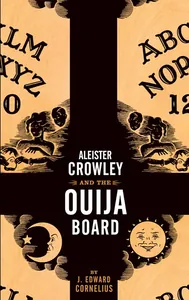
The Ouija board emerged from the spiritualist movements of the mid-19th century, gaining widespread popularity by the late 1800s and early 1900s. This period saw a surge of interest in contacting the deceased, fueled by figures like the Fox sisters and the proliferation of séances. The Ouija board, patented in 1890, offered a more accessible, parlor-friendly method for spirit communication, distinct from mediumistic trance states. Gruss and Hotchkiss's 1975 publication arrived during a resurgence of interest in the occult and paranormal, following the counterculture movements of the 1960s and influenced by authors like Aleister Crowley and writers exploring altered states of consciousness.
The Ouija board gained traction during the spiritualist movements of the 19th century, offering a novel method for communication with the deceased. Emerging from a milieu that included séances and belief in an afterlife, its popularity grew by the late 1800s. Gruss and Hotchkiss's 1975 work contextualizes the board within this history, appearing as occult and paranormal interests revived in the post-counterculture era. This book addresses the device's place in occult traditions and its influence on popular understanding of consciousness and unexplained phenomena.
💡 Why Read This Book?
• Understand the historical roots of the Ouija board, tracing its rise from the spiritualist movements of the 19th century, a context far richer than its modern association with parlor games. • Grasp the concept of ideomotor action as presented by the authors, a key explanation for how the planchette moves without conscious direction, offering a psychological lens. • Explore the book's documentation of early 20th-century spiritualist practices, providing concrete examples of how the Ouija board was integrated into attempts at spirit communication.
⭐ Reader Reviews
Honest opinions from readers who have explored this book.
❓ Frequently Asked Questions
When was "The Ouija Board" by Edmond C. Gruss and John G. Hotchkiss first published?
The book "The Ouija Board" by Edmond C. Gruss and John G. Hotchkiss was first published on January 1, 1975.
What is the ideomotor action theory regarding the Ouija board?
The ideomotor action theory suggests that the movements of the Ouija board planchette are caused by unconscious, subtle muscular movements of the participants, rather than external forces or spirits.
What historical period does the book primarily cover regarding the Ouija board?
The book primarily covers the historical period from the emergence of spiritualist movements in the mid-19th century through the popularization of the Ouija board in the late 19th and early 20th centuries.
Does the book offer scientific explanations for the Ouija board's operation?
While the book discusses psychological explanations like ideomotor action, it also explores spiritual and parapsychological interpretations prevalent in its original publication era, reflecting a broader historical context rather than purely modern scientific consensus.
Is "The Ouija Board" suitable for beginners interested in the occult?
Yes, it provides a solid historical and conceptual foundation for understanding the Ouija board's place within esoteric traditions and spiritualism, making it suitable for beginners seeking structured knowledge.
What are the main themes explored in "The Ouija Board"?
The book explores themes such as spirit communication, automatic writing, the psychology of belief, the history of spiritualism, and the concept of ideomotor action as it relates to the Ouija board.
🔮 Key Themes & Symbolism
Spirit Communication
The book meticulously examines the Ouija board as a tool for purported communication with spirits. It examines historical accounts from the spiritualist era, where individuals and groups used the board in attempts to contact deceased loved ones or entities. Gruss and Hotchkiss analyze the phenomenology of these communications, considering both believers' testimonies and skeptical analyses, framing the board as a focal point for exploring the boundaries between the physical and non-physical realms.
Ideomotor Action and Psychology
A central theme is the exploration of the ideomotor principle as a potential explanation for the Ouija board's movements. The authors discuss how unconscious muscular impulses, influenced by expectation and suggestion, might cause the planchette to move. This perspective grounds the phenomenon in psychological processes, contrasting with purely spiritual interpretations and highlighting the intricate relationship between the mind, body, and perceived external forces.
Historical Spiritualism
"The Ouija Board" situates the device within the broader context of 19th and early 20th-century spiritualism. It connects the board's popularity to the era's fascination with séances, mediumship, and the desire to bridge the gap between the living and the dead. The work provides a historical overview, detailing how the Ouija board became a mass-market manifestation of spiritualist inquiry, reflecting societal anxieties and beliefs of the time.
The Nature of Consciousness
Beyond the mechanics of the board, the book implicitly probes the nature of consciousness itself. By examining phenomena attributed to both external spirits and the subconscious mind, it raises questions about the source of knowledge, intention, and communication. The Ouija board becomes a case study for exploring the limits of subjective experience and the potential for tapping into deeper layers of awareness, whether personal or collective.
💬 Memorable Quotes
Direct passages from the work, attributed to the author.
“The planchette moves under the hands of the sitters.”
— This straightforward statement expresses the core observation of Ouija board use, highlighting the direct physical interaction involved and setting the stage for exploring the forces, conscious or unconscious, that drive its motion.
“Interpreting the messages requires careful consideration.”
— This emphasizes that the output from the Ouija board is not always clear-cut. It suggests a need for analytical thought and contextual understanding when deciphering the 'communications' received, whether attributed to spirits or the subconscious.
“The Ouija board emerged from the spiritualist milieu.”
— This places the device firmly within its historical and cultural context, linking its development and popularity to the widespread interest in spiritualism and contacting the deceased during the late 19th and early 20th centuries.
“Psychological factors play a significant role.”
— This points towards the ideomotor theory and suggestion as key elements in understanding the board's operation, suggesting that the users' own minds are a primary driver of the phenomena observed.
“Users report varied experiences.”
— This acknowledges the subjective and often inconsistent nature of Ouija board sessions, implying that phenomena range from nonsensical scribbles to seemingly profound messages, reflecting diverse user expectations and psychological states.
🌙 Esoteric Significance
Tradition
This work fits within the esoteric tradition of psychical research and spiritualism, which flourished in the late 19th and early 20th centuries. While not strictly Hermetic or Kabbalistic, it engages with the broader occult interest in communication beyond the veil of ordinary perception. It represents a more accessible, democratized form of spirit communication compared to ceremonial magic or complex mediumistic trance work, reflecting a popular engagement with esoteric ideas.
Symbolism
The Ouija board itself functions as a potent symbol. The alphabet and numbers arranged in arcs represent the totality of earthly knowledge or communication. The planchette, a pointer, symbolizes the conduit or bridge between worlds – the physical and the unseen. The question mark often found on boards can symbolize the unknown or the quest for answers that drives users towards the board.
Modern Relevance
Contemporary practitioners of occultism and modern spiritualists continue to use the Ouija board, often drawing on historical texts like this one for context. Its principles are echoed in discussions of automatic writing within various magical traditions and in modern explorations of consciousness, collective unconscious, and psychological projection. The book remains relevant for understanding the origins of these ongoing practices and debates.
👥 Who Should Read This Book
• Students of parapsychology and psychical research: Gain historical context and analysis of phenomena attributed to the Ouija board from a mid-20th century perspective. • Occult history enthusiasts: Understand the board's place within the broader spiritualist movements and its cultural impact during its peak popularity. • Skeptics and researchers of consciousness: Examine the interplay of psychological suggestion, ideomotor action, and belief systems surrounding the Ouija board.
📜 Historical Context
Published in 1975, "The Ouija Board" by Gruss and Hotchkiss emerged during a period of renewed interest in the paranormal, fueled by the counterculture movement and a general questioning of established norms. The mid-1970s saw popular books and films exploring psychic phenomena, UFOs, and occultism, creating fertile ground for works examining devices like the Ouija board. This publication followed decades after the board's peak popularity in the early 20th century, which itself was a product of the widespread spiritualist movements following the American Civil War and World War I. Contemporaries exploring similar themes included parapsychologists like J.B. Rhine, whose work on extrasensory perception gained traction, and authors such as Colin Wilson, who wrote extensively on the paranormal and human potential. The Ouija board's reception has always been bifurcated: embraced by spiritualists and occultists, yet often dismissed by mainstream science and religion as a mere toy or a source of dangerous delusion, a tension Gruss and Hotchkiss likely navigated.
📔 Journal Prompts
The Ouija board's historical roots in spiritualism.
Ideomotor action as an explanation for planchette movement.
The symbolic meaning of the Ouija board's components.
Comparing user experiences documented in the book with modern accounts.
The role of expectation in Ouija board sessions.
🗂️ Glossary
Planchette
A small, heart-shaped piece of wood, often with casters, used as a pointer on a Ouija board to spell out messages.
Spiritism
A belief system centered on the idea that the spirits of the dead can communicate with the living, often through mediums or specific devices.
Ideomotor Action
A psychological concept suggesting that a person's thoughts and intentions can cause subtle, unconscious muscular movements, leading to involuntary actions.
Automatic Writing
The production of writing that appears to come from a source other than the conscious mind of the writer, often attributed to spirits or the subconscious.
Mediumship
The practice by which a person, the medium, supposedly communicates information from the spiritual realm to the living.
Séance
A meeting where people gather, typically in a darkened room, to attempt to contact spirits, often involving a medium.
Parapsychology
A field of study concerned with alleged psychic phenomena and paranormal claims, such as telepathy, clairvoyance, precognition, and psychokinesis.