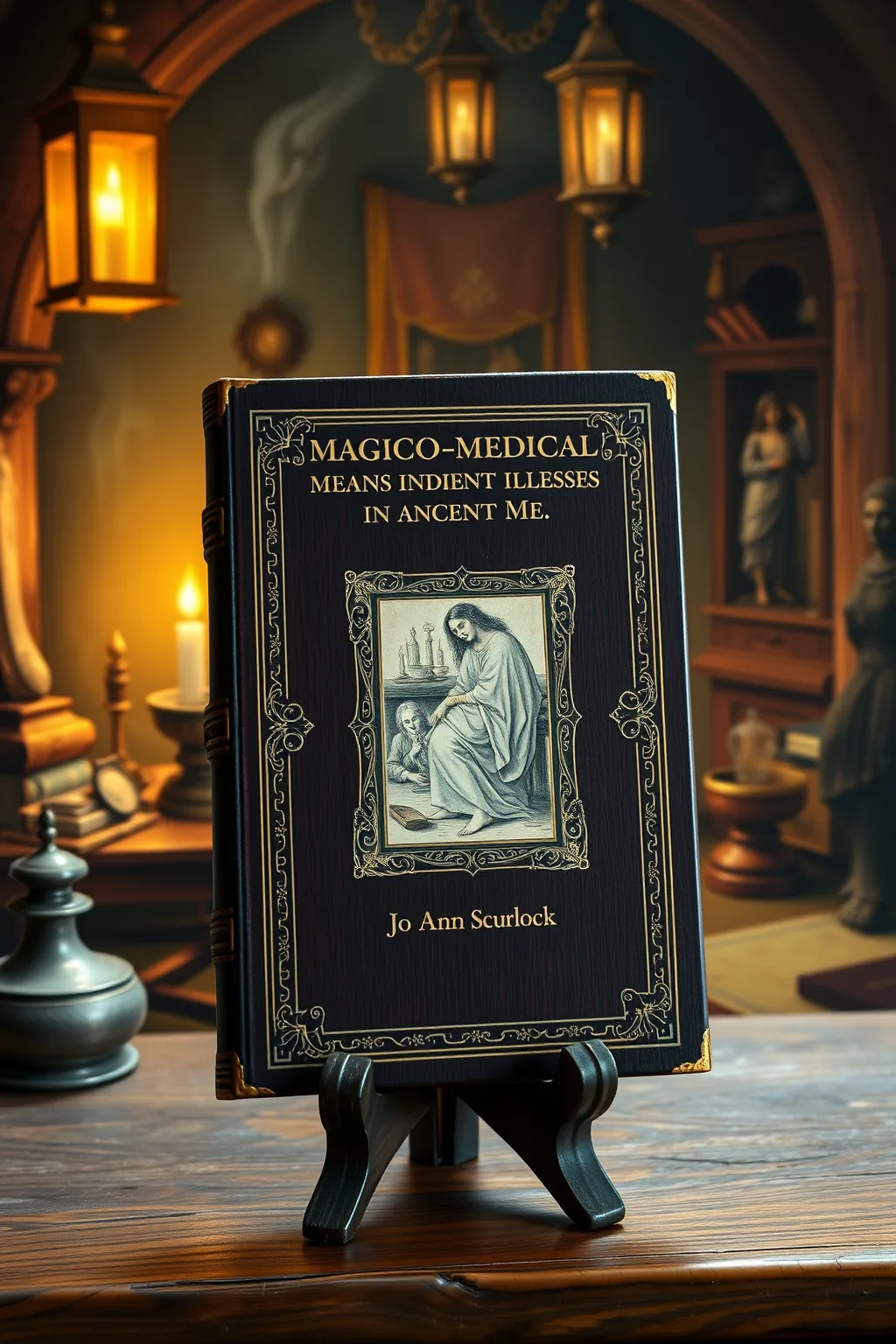
Magico-medical means of treating ghost-induced illnesses in ancient Mesopotamia
 61
61

Magico-medical means of treating ghost-induced illnesses in ancient Mesopotamia


Jo Ann Scurlock's "Magico-Medical Means of Treating Ghost-Induced Illnesses in Ancient Mesopotamia" is a seminal work, offering unparalleled insight into the esoteric healing practices of the ancient Near East. Scurlock masterfully navigates complex cuneiform texts, revealing the sophisticated understanding Mesopotamians possessed regarding the spiritual and psychological roots of illness. This book is indispensable for scholars of ancient Near Eastern studies, comparative religion, and the history of medicine. Its strength lies in its detailed analysis of specific rituals and remedies, demystifying practices that might otherwise appear arcane. For practitioners of esoteric arts and those seeking to understand the historical evolution of healing, this volume provides a rich, foundational text that highlights the enduring human quest for well-being through both material and metaphysical means.
📝 Description
61
Jo Ann Scurlock's 2009 book examines Mesopotamian ghost illnesses and their remedies.
This book investigates how ancient Mesopotamians treated illnesses attributed to ghosts and other supernatural agents. Jo Ann Scurlock details the magico-medical practices used, showing how healers combined ritual, incantation, and medicinal remedies. The work covers the diagnosis of spirit-induced afflictions, which often involved interpreting omens and understanding the malevolent forces believed to be at play.
Scurlock presents the various methods employed, including exorcisms, protective amulets, and specific medicinal recipes designed to combat demonic or spectral interference. The research highlights the close connection between magic, religion, and early medical understanding in Mesopotamia. It offers a window into a worldview where the spiritual and physical realms were deeply intertwined, and where appeasing unseen powers was as crucial as physical healing.
This work fits within the study of ancient Near Eastern religions and magic. It examines a specific aspect of Mesopotamian belief systems, where supernatural causation for illness was common. The book explores the practical application of beliefs about spirits and demons, demonstrating how these concepts shaped therapeutic approaches. It provides insight into the historical development of ideas about the body, mind, and spirit, and how these were managed through ritual and proto-medical means in a complex civilization.
💡 Why Read This Book?
Uncover the hidden pharmacopoeia and spiritual diagnostics of ancient Mesopotamia. This book is essential for seekers of occult history, practitioners of traditional healing arts, and scholars interested in the profound interplay between the material and spiritual realms. Explore the origins of ritualistic healing and gain a deeper appreciation for humanity's age-old quest to understand and combat suffering through esoteric knowledge.
⭐ Reader Reviews
Honest opinions from readers who have explored this book.
❓ Frequently Asked Questions
What types of illnesses were believed to be ghost-induced in ancient Mesopotamia?
Ancient Mesopotamians attributed a wide range of ailments to ghost-induced causes, including physical maladies like fevers, paralysis, and wasting diseases, as well as psychological distress such as nightmares, madness, and inexplicable sadness or fear.
What were the primary methods used to treat these illnesses?
Treatment involved a combination of magical rituals (incantations, exorcisms, purification rites), the use of amulets and protective charms, and the administration of specific medicinal concoctions derived from plants, minerals, and animal products.
What role did divination play in diagnosing ghost-induced illnesses?
Divination was crucial for identifying the specific spirit or entity causing the illness and determining the appropriate course of ritual or medicinal intervention. Methods included examining liver models, interpreting dreams, and observing celestial phenomena.
Are there any parallels between these ancient Mesopotamian practices and modern esoteric traditions?
Yes, while vastly different in context, echoes can be found in modern approaches to energy healing, psychospiritual therapy, and certain shamanic practices that address unseen influences on well-being.
Is prior knowledge of Akkadian or Sumerian required to appreciate this book?
No, the book is written for an English-speaking audience and thoroughly explains the concepts and terminology, making it accessible to anyone interested in the subject matter, regardless of linguistic background.
🔮 Key Themes & Symbolism
The Symbiotic Relationship of Magic and Medicine
This volume meticulously details how, in ancient Mesopotamia, the lines between what we now define as magic and medicine were virtually nonexistent. Illness was understood as a complex interplay of physical, spiritual, and psychological factors, necessitating a holistic approach to healing. Ritualistic practices, incantations, and the manipulation of symbolic energies were as vital as herbal remedies and surgical interventions. This section explores the efficacy attributed to these intertwined disciplines, demonstrating how Mesopotamian healers leveraged both the tangible and the intangible to restore balance and well-being, revealing a sophisticated worldview where the unseen forces were as potent as the physical ones.
The Spirit World as a Locus of Causality
Central to Mesopotamian understanding was the profound belief that the spirit world—populated by deities, demons, and the restless dead—was a primary source of earthly afflictions, particularly illness. This theme examines the diverse pantheon of spectral entities believed to cause disease and the intricate systems developed to identify, appease, or banish them. It studies the diagnostic tools, such as divination and dream interpretation, used to discern the specific spiritual agent responsible for a malady, highlighting the pervasive influence of the supernatural on the daily lives and health of individuals in this ancient civilization.
Ritualistic Therapeutics and Esoteric Pharmacopoeia
This theme focuses on the practical application of esoteric knowledge in healing. It uncovers the rich 'esoteric pharmacopoeia'—a compendium of rituals, prayers, incantations, amulets, and medicinal recipes—employed by Mesopotamian physicians and priests. The book details specific ceremonies designed for exorcism, purification, and spiritual protection, alongside the preparation and application of remedies believed to counteract spectral influences. Understanding these practices offers a window into the practical application of ancient Mesopotamian cosmology and their profound understanding of energetic and symbolic healing modalities.
💬 Memorable Quotes
Direct passages from the work, attributed to the author.
“To heal the body, one must first commune with the unseen.”
— This highlights the holistic Mesopotamian approach to medicine, suggesting that effective treatment required addressing the spiritual or metaphysical roots of an illness, not just its physical manifestations.
“Incantations were the keys that unlocked the gates of health.”
— This metaphor underscores the perceived power of spoken spells and ritualistic language in Mesopotamian healing practices, viewing them as direct instruments for influencing spiritual forces and restoring well-being.
“The diviner's eye saw the ghost in the sickness.”
— This illustrates the crucial role of divination in diagnosing illnesses, positing that specialized practitioners could identify the spectral origin of a malady through various divinatory techniques.
“Amulets were shields against the whispers of the underworld.”
— This phrase conveys the protective function of amulets, suggesting they served as tangible barriers against the malevolent influences or spectral 'whispers' emanating from the area of the dead.
💡 Key Ideas
Editorial paraphrase of the work's core concepts — not direct quotes.
The shadow of the spirit cast a longer pall than any physical ailment.
This quote emphasizes the profound Mesopotamian belief that spiritual or supernatural forces were often perceived as the primary and most potent cause of suffering and illness, overshadowing purely corporeal explanations.
🌙 Esoteric Significance
Tradition
This text provides a foundational exploration of esoteric practices within the ancient Mesopotamian tradition, a civilization whose spiritual and magical systems profoundly influenced later Western and Middle Eastern esoteric thought. It reveals a worldview where the material and spiritual realms were inextricably linked, and healing was a process of restoring cosmic and personal balance through ritual, symbolic action, and an understanding of unseen forces. The emphasis on incantations, exorcisms, and the manipulation of spiritual energies forms a crucial early chapter in the history of Western esotericism.
Symbolism
The book illuminates the potent symbolism embedded in Mesopotamian healing practices. Amulets often bore divine imagery or protective signs, acting as conduits of power. Ritualistic gestures and the use of specific materials—herbs, minerals, animal parts—held deep symbolic meaning, representing purification, warding off malevolent forces, or invoking divine aid. The very act of diagnosing through liver divination, for instance, was a symbolic reading of divine will and the intricate connections within the cosmos, demonstrating a rich semiotic system applied directly to health and well-being.
Modern Relevance
The exploration of magico-medical practices in ancient Mesopotamia offers useful insights into the enduring human need to understand and address illness through holistic means. While the specific beliefs differ, the underlying principle of addressing psychological and spiritual well-being alongside physical health speaks to contemporary approaches in integrative medicine, psychotherapy, and alternative healing modalities. It reminds us that the human experience of suffering and healing has always involved navigating both the visible and invisible dimensions of existence, offering a historical perspective on timeless quests for balance and restoration.
👥 Who Should Read This Book
This book is an essential resource for scholars of ancient Near Eastern history, comparative religion, and the history of medicine. It will deeply appeal to practitioners of esoteric arts, occultists, and those interested in the ancient roots of shamanism and ritualistic healing. For the curious seeker, it offers a captivating glimpse into a worldview where the spiritual and material were one, providing a rich understanding of humanity's age-old efforts to combat suffering and maintain well-being through esoteric means.
📜 Historical Context
This work is situated within the body of ancient Mesopotamian civilizations, primarily focusing on the Assyrian and Babylonian periods (roughly 2000 BCE to 600 BCE). This era witnessed the development of some of the world's earliest complex societies, characterized by sophisticated legal systems, monumental architecture, advanced mathematics, and intricate religious beliefs. Within this context, medicine was deeply intertwined with religion and magic. The understanding of disease was not solely based on observable physical symptoms but was heavily influenced by a worldview that saw the cosmos as populated by powerful spiritual entities—gods, demons, and ghosts—who could directly intervene in human affairs, including causing illness. The practice of healing was therefore a multidisciplinary endeavor, often undertaken by priests, sorcerers, and physicians who employed a combination of ritual, incantation, divination, and pharmacological knowledge to diagnose and treat ailments, particularly those believed to have supernatural origins.
📔 Journal Prompts
Reflect on the concept of 'illness' in ancient Mesopotamia versus modern Western perspectives. Where do they converge and diverge?
Imagine you are a Mesopotamian healer. Describe a ritual you would perform to treat a patient suffering from a ghost-induced fever.
How does the Mesopotamian understanding of the spirit world as a cause of illness inform or challenge your own beliefs about health and well-being?
Consider the symbolic power of objects like amulets or specific herbs in ancient healing. How can we harness symbolic power in contemporary self-care practices?
What does the integration of magic and medicine in ancient Mesopotamia suggest about the holistic nature of human experience and healing?
🗂️ Glossary
Incantation
A series of words said or sung as a magic spell or charm, believed in ancient Mesopotamia to have the power to influence spirits or alter reality.
Exorcism
A ritual performed to expel evil spirits or malevolent entities from a person or place, often involving prayers, incantations, and symbolic actions.
Amulet
An object worn or carried as a charm against evil or to bring good luck, believed in Mesopotamia to possess protective or beneficial magical properties.
Divination
The practice of seeking knowledge of the future or the unknown by supernatural means, extensively used in Mesopotamia to diagnose illnesses and identify spiritual causes.
Cuneiform
The system of writing used in ancient Mesopotamia, employed on clay tablets to record laws, literature, and medical and magical texts.
This book appears in 3 collections
🔮 Readers Also Liked
Browse all →





From the “Ritual Magic” Collection
View all →






More Free Magic & Ritual Books
View all →