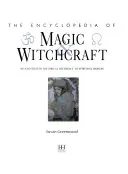
Magic, witchcraft and the otherworld

 76
76

Magic, witchcraft and the otherworld
Susan Greenwood's "Magic, Witchcraft and the Otherworld" offers a refreshing departure from sensationalized accounts of witchcraft. Instead, it grounds the subject in rigorous anthropological fieldwork, particularly focusing on the subjective experiences of contemporary practitioners. Greenwood’s strength lies in her ability to convey the intricate personal cosmologies that witches construct. The book’s primary limitation, however, is its academic tone, which, while precise, can sometimes obscure the very lived realities it seeks to illuminate for a less specialized audience. A passage discussing the construction of the 'otherworld' through shared ritual and storytelling, for instance, effectively demonstrates how belief is collectively built, yet could benefit from more direct engagement with practitioners’ own voices. It is a valuable, if dense, contribution to understanding modern magical belief.
📝 Description
76
Susan Greenwood's 2000 book examines contemporary witchcraft through an anthropological lens.
Magic, Witchcraft and the Otherworld analyzes modern witchcraft practices, connecting them to older belief systems. Susan Greenwood moves past simple definitions to look at how witches experience and understand their cosmology. Using anthropological methods, she studies how people build and maintain their spiritual lives, paying attention to the link between individual belief and group practice.
This book is for students of the occult, religious anthropology, and folklore. It suits those interested in the academic study of modern paganism and witchcraft, not just practical guides. Readers wanting to grasp the social and psychological aspects of current magical beliefs will find it useful. It also considers the changes in spiritual practices around the end of the 20th century.
Published in 2000, this study arrived when Neo-Paganism and contemporary witchcraft drew considerable academic and public attention. It acknowledges earlier figures like Gerald Gardner and Doreen Valiente, who helped establish witchcraft as a religious movement. Greenwood's work, however, applies a detailed anthropological perspective, placing these practices within larger discussions about belief, ritual, and the creation of the sacred in societies that were becoming less religious.
💡 Why Read This Book?
• Gain insight into the anthropological methodology used to study contemporary witchcraft, understanding how scholars like Greenwood analyze belief systems through participant observation and interviews, a technique detailed in her fieldwork. • Grasp the concept of the 'otherworld' not as a physical place but as a subjective, often collectively constructed, spiritual dimension, as explored through the experiences of the individuals she interviewed. • Appreciate the nuanced distinction between historical witch trials and modern self-identified witchcraft, learning how Greenwood contextualizes contemporary practices within evolving cultural and religious landscapes.
⭐ Reader Reviews
Honest opinions from readers who have explored this book.
❓ Frequently Asked Questions
When was Magic, Witchcraft and the Otherworld first published?
Magic, Witchcraft and the Otherworld by Susan Greenwood was first published in the year 2000, marking its emergence during a period of growing academic interest in Neo-Paganism.
What academic discipline does Susan Greenwood's book primarily draw from?
Susan Greenwood's book primarily draws from the discipline of anthropology, utilizing ethnographic methods to explore the beliefs and practices of contemporary witches.
Does the book focus on historical witchcraft or modern practices?
The book focuses on contemporary witchcraft practices and how modern adherents perceive and interact with their spiritual beliefs and the 'otherworld'.
What is the 'otherworld' concept as presented in Greenwood's work?
In Greenwood's work, the 'otherworld' is presented as a perceived spiritual reality, often constructed through shared ritual and belief, rather than a literal, external dimension.
Is this book a practical guide to performing magic?
No, this book is an academic and anthropological study of witchcraft, not a practical guide for performing magical rituals. It analyzes the social and psychological aspects of belief.
Who are some key figures or movements discussed in relation to witchcraft in the late 20th century?
While not focusing on specific individuals from earlier eras like Gerald Gardner, Greenwood's work contextualizes modern practices within the broader Neo-Pagan movement and the academic discourse surrounding it.
🔮 Key Themes & Symbolism
The Constructed Otherworld
Greenwood examines the 'otherworld' not as a fixed metaphysical realm but as a dynamic, subjectively experienced, and often collectively negotiated space. Through ethnographic detail, she illustrates how contemporary witches create and access this dimension through ritual, storytelling, and shared belief. This challenges essentialist notions of a singular spiritual plane, highlighting the personal and communal construction of meaning and sacredness in modern magical practice.
Subjectivity and Embodiment in Practice
A central theme is the emphasis on the individual practitioner's lived experience and embodied knowledge. The book explores how personal encounters, intuition, and sensory perceptions inform a witch's understanding of magic and their connection to the 'otherworld'. Greenwood argues that these subjective experiences are foundational to the formation and maintenance of magical belief systems, moving beyond purely intellectual or dogmatic approaches.
Social Dynamics of Covens
The work studies the social architecture of witchcraft groups, exploring how covens function as sites for the co-creation of belief, ritual, and community identity. Greenwood analyzes the negotiation of authority, the transmission of knowledge, and the establishment of shared cosmologies within these small groups. This highlights the sociological underpinnings of magical practice and its role in fostering belonging and shared reality.
Witchcraft as a Modern Spiritual Path
Greenwood positions contemporary witchcraft as a valid and evolving spiritual path, distinct from historical stereotypes and accusations. The book engages with the academic discourse surrounding Neo-Paganism, offering an insider's anthropological perspective on how practitioners define their traditions, ethics, and relationship to the sacred in the late 20th century.
💬 Memorable Quotes
Direct passages from the work, attributed to the author.
“The otherworld is perceived as a space where one can encounter spirits, ancestors, or deities.”
— This statement underscores the book's focus on how practitioners conceptualize spiritual realities. It highlights the 'otherworld' as a dynamic locus of interaction, crucial for understanding the experiential basis of contemporary witchcraft.
“Ritual acts are central to constructing and reinforcing shared beliefs about the cosmos.”
— This emphasizes the performative aspect of magical belief. It suggests that through repeated actions and ceremonies, practitioners solidify their understanding of the universe and their place within it, creating a communal framework for their spiritual lives.
“Personal experience is a primary source of knowledge and authority in witchcraft.”
— This highlights the subjective and individualistic nature of modern magical paths. It challenges hierarchical structures by valuing direct experience as a valid means of spiritual knowing and personal authority.
“Witches often distinguish their practices from historical persecutions.”
— This points to the modern reclamation of the term 'witch'. It acknowledges the conscious effort by contemporary practitioners to define their identity separate from the negative connotations imposed by historical witch hunts.
“The coven serves as a micro-society where spiritual understanding is developed collectively.”
— This emphasizes the communal dimension of witchcraft. It frames the coven not just as a group for ritual, but as an incubator for shared cosmology and social identity, where beliefs are mutually shaped and reinforced.
🌙 Esoteric Significance
Tradition
While not strictly adhering to a single established esoteric lineage like Hermeticism or Kabbalah, Greenwood's work explores the emergent traditions of modern witchcraft and Neo-Paganism. It fits within the broader field of the anthropology of religion, particularly concerning the study of new religious movements and folk magic. The book examines how practitioners draw upon diverse, often syncretic, sources to build their own cosmological frameworks, representing a departure from older, more codified esoteric systems.
Symbolism
The concept of the 'otherworld' itself functions as a primary symbol, representing a subjective spiritual dimension accessed through altered states and ritual. Greenwood also touches upon the symbolism inherent in natural cycles and the elements, common motifs in many earth-based spiritualities. The act of ritual itself becomes symbolic, representing the practitioner's intentional engagement with the sacred and their own inner landscape.
Modern Relevance
Greenwood's work remains relevant for contemporary scholars and practitioners interested in the lived experience of magic and witchcraft. Her focus on the subjective construction of reality and the social dynamics of spiritual groups informs current research in the anthropology of religion and the sociology of belief. Thinkers and practitioners exploring embodied spirituality, neo-shamanism, and the phenomenology of religious experience often find her ethnographic approach and theoretical underpinnings valuable.
👥 Who Should Read This Book
• Anthropologists and sociologists of religion seeking case studies on the formation and maintenance of belief systems in contemporary spiritual movements. • Students and practitioners of modern witchcraft and Neo-Paganism interested in an academic, yet empathetic, examination of their traditions' underlying philosophies and social structures. • Researchers of esoteric studies and comparative religion looking to understand the intersection of personal experience, ritual, and cosmology in non-traditional spiritual paths.
📜 Historical Context
Published in 2000, Susan Greenwood's "Magic, Witchcraft and the Otherworld" arrived at a time when academic interest in Neo-Paganism and contemporary witchcraft was gaining momentum. The late 20th century saw a proliferation of studies attempting to understand these emergent spiritualities, often moving beyond earlier, more sensationalist accounts. Greenwood's work engaged with anthropological theories of belief and ritual, situating modern witchcraft within broader discussions of secularization and the revitalization of religious experience. Contemporaries like Marion Bowman were also contributing significant ethnographic work on British Neo-Paganism. Greenwood's approach, focusing on the subjective construction of the 'otherworld,' offered a nuanced perspective that diverged from purely historical analyses or prescriptive magical texts, contributing to a more sophisticated academic understanding of the phenomenon.
📔 Journal Prompts
The construction of the 'otherworld' through shared ritual.
Personal experience as a source of magical authority.
The social dynamics within a contemporary coven.
Distinguishing modern witchcraft from historical persecution narratives.
The role of embodied knowledge in magical practice.
🗂️ Glossary
Otherworld
A perceived spiritual dimension or realm, often conceptualized by practitioners as a space for encountering supernatural entities or accessing deeper consciousness, constructed through belief and ritual.
Coven
A group of witches, typically small, who meet for the purpose of practicing witchcraft, sharing knowledge, and fostering community and shared spiritual understanding.
Neo-Paganism
A broad category of modern spiritual paths that often draw inspiration from pre-Christian European religions, emphasizing nature, polytheism, and ritual practice.
Ethnography
The systematic study of people and cultures through their descriptions of the things they do, the way they do things, and what they think about the things they do.
Cosmology
A framework of beliefs concerning the origin and development of the universe; a theory or doctrine of the order and constitution of the universe.
Subjectivity
A person's unique perspective or way of experiencing the world, emphasizing individual consciousness and personal interpretation over objective reality.
Embodied Knowledge
Knowledge gained through direct physical experience and sensory engagement, often considered intuitive or instinctual, as opposed to purely intellectual understanding.
🔮 Readers Also Liked
Browse all →







More by Susan Greenwood
All books →



More Free Witchcraft & Paganism Books
View all →