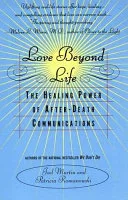
Love Beyond Life
 81
81

Love Beyond Life
Joel Martin and Patricia Romanowski's Love Beyond Life offers a compassionate examination of love's perceived persistence after death. The strength of the work lies in its extensive collection of personal testimonies, which lend a palpable human dimension to abstract concepts of the afterlife. The authors present these accounts with sensitivity, allowing the narratives to speak for themselves. However, the book sometimes treads a fine line between reporting and advocacy, occasionally lacking a critical distance that might have strengthened its scholarly appeal. A particularly resonant aspect is the exploration of how these perceived connections aid in the grieving process, offering a unique perspective on mourning that moves beyond simple remembrance to active, ongoing relationship. Love Beyond Life serves as a valuable, if occasionally uncritical, compilation for those seeking evidence of enduring bonds.
📝 Description
81
Love Beyond Life, published in 1998, studies love that continues after physical death.
Joel Martin and Patricia Romanowski's 1998 book, Love Beyond Life, examines accounts of individuals who believe they maintain a connection with deceased loved ones. It compiles narratives and reflections on how these experiences affect grief and one's view of life after death. The work is intended for readers coping with loss and seeking understanding beyond conventional approaches to bereavement. It will interest those curious about parapsychology, near-death experiences, and the continuation of consciousness.
The book emerged during the late 1990s, a time when public fascination with the paranormal and spiritual phenomena was growing. It added to a wider discussion on life after death, coinciding with New Age ideas and academic studies of consciousness. At this cultural moment, personal spiritual experiences were becoming more recognized, often apart from established religious beliefs. Love Beyond Life addresses this space where personal experiences inform beliefs about the afterlife.
Published in 1998, Love Beyond Life touches upon spiritualist traditions that posit a continued existence and connection beyond physical demise. It engages with phenomena often discussed in parapsychology and near-death experience research, fields that explore consciousness outside the material body. The book's focus on personal accounts of communication with the deceased aligns with historical spiritualist practices of seeking contact with departed spirits, contributing to a modern discourse on the nature of the soul and the afterlife.
💡 Why Read This Book?
• Learn about the concept of "afterlife visits" as described by individuals like those interviewed in the book, gaining specific examples of perceived contact beyond the veil. • Understand how the 1998 publication contextualizes the discourse on life after death during a period of heightened public interest in spiritual phenomena. • Explore the practical application of "love beyond life" experiences in overcoming grief, as detailed through the personal accounts presented within the book.
⭐ Reader Reviews
Honest opinions from readers who have explored this book.
❓ Frequently Asked Questions
What is the primary focus of Love Beyond Life?
The book primarily focuses on personal accounts and experiences of love that are believed to continue after physical death, exploring how these encounters can aid in processing grief and understanding life after death.
Who are the authors of Love Beyond Life?
The authors are Joel Martin and Patricia Romanowski. The book was first published in 1998.
Does the book offer scientific proof of life after death?
Love Beyond Life presents anecdotal evidence and personal testimonies rather than scientific proof. It compiles narratives of perceived encounters and communications from deceased loved ones.
How does the book address grief?
It addresses grief by exploring how experiences of continued connection with deceased individuals can provide comfort, aid in healing, and foster a deeper understanding of life's continuity.
What kind of experiences are documented in the book?
The book documents a range of experiences, including perceived apparitions, messages, dreams, and strong feelings of presence from deceased loved ones, often referred to as 'afterlife visits'.
Is Love Beyond Life a spiritual or psychological study?
It can be viewed as both. It delves into spiritual beliefs and experiences related to the afterlife while also touching upon the psychological impact and healing aspects for those grieving.
🔮 Key Themes & Symbolism
Persistence of Love
The core theme is the enduring nature of love beyond the cessation of physical life. The book compiles numerous personal accounts where individuals report feeling the continued presence, guidance, or communication from deceased loved ones. This suggests that emotional bonds and spiritual connections can transcend the boundary of death, offering solace and a sense of ongoing relationship that actively aids in the grieving process, reframing death not as an absolute end but as a transition.
Afterlife Communication
This theme centers on the various ways deceased individuals are perceived to communicate with the living. The book details experiences ranging from vivid dreams and sensory perceptions (like smells or touches) to visual apparitions and intuitive feelings of presence. These accounts are presented as evidence of a continued, albeit non-physical, interaction, allowing individuals to receive comfort, closure, or even warnings from the other side.
Grief and Healing
Love Beyond Life explores how these perceived connections significantly impact the grieving process. The book posits that experiencing 'afterlife visits' or continued communication can transform profound sorrow into a form of healing. By feeling that their loved ones are still present or communicating, individuals can move through stages of grief more effectively, finding peace and a renewed sense of purpose by integrating these experiences into their understanding of life and loss.
Continuity of Consciousness
Underpinning many of the narratives is the concept that consciousness, or the soul, persists after the body dies. The book suggests that the love experienced and shared in life creates a spiritual tether that allows this consciousness to remain connected and accessible. This perspective challenges materialistic views of consciousness and aligns with many spiritual traditions that assert the soul's immortality and its capacity for continued existence and interaction.
💬 Memorable Quotes
Direct passages from the work, attributed to the author.
“Love's connection doesn't cease with physical departure.”
— This statement captures the book's central thesis, suggesting that the emotional and spiritual bonds formed in life create a lasting connection that transcends death and physical separation.
“Bereaved individuals often report feeling the presence of their loved ones.”
— This highlights a common phenomenon documented in the book, where those who have lost someone describe a palpable sense of presence, indicating a perceived continuation of relationship beyond death.
“Afterlife visits can bring profound comfort and aid in healing.”
— This interpretation focuses on the therapeutic aspect of these perceived encounters, suggesting they offer significant emotional relief and facilitate the process of coming to terms with loss.
“Understanding life after death through personal accounts.”
— This statement underscores the book's methodology, relying on individual narratives and testimonies to provide insights into the nature of existence beyond physical death.
💡 Key Ideas
Editorial paraphrase of the work's core concepts — not direct quotes.
The book explores how love bridges the gap between life and death.
This paraphrased concept emphasizes the book's exploration of love as a powerful force that is not limited by mortality, acting as a conduit between the physical and spiritual realms.
🌙 Esoteric Significance
Tradition
While not strictly adhering to a single esoteric lineage, Love Beyond Life draws heavily from spiritualist traditions that emphasize the persistence of the soul and the possibility of communication between the living and the deceased. It aligns with concepts found in Theosophy and certain branches of Western esotericism that posit a non-physical reality and the continuation of consciousness after physical death, often focusing on love as a binding spiritual force.
Symbolism
The primary symbolism revolves around the concept of the "veil" between life and death, which these perceived encounters are seen to momentarily lift. Another motif is the "presence" of loved ones, often symbolized by specific scents, sounds, or feelings that are incongruous with the physical environment, acting as tangible signs of an intangible connection and reinforcing the idea of spiritual continuity.
Modern Relevance
In contemporary discussions on grief counseling, consciousness studies, and the philosophy of mind, the experiences documented in Love Beyond Life continue to be relevant. Thinkers and practitioners exploring non-dualistic perspectives on consciousness, as well as those in fields like transpersonal psychology, often reference anecdotal evidence of afterlife communication as support for theories that consciousness is not solely a product of the physical brain.
👥 Who Should Read This Book
• Individuals grappling with profound grief who are seeking comfort and a sense of continued connection with lost loved ones. • Students of parapsychology and consciousness studies interested in anecdotal evidence of life after death and communication beyond the physical realm. • Readers exploring spiritual and metaphysical themes who wish to understand how personal experiences can shape beliefs about mortality and the afterlife.
📜 Historical Context
Published in 1998, Love Beyond Life emerged during a period when interest in the paranormal and spiritual phenomena was experiencing a resurgence. The late 20th century saw a growing acceptance, or at least curiosity, regarding concepts like near-death experiences (NDEs) and out-of-body experiences, partly influenced by researchers like Raymond Moody and Elisabeth Kübler-Ross. This cultural climate, often characterized by the burgeoning New Age movement, provided fertile ground for books exploring life after death and spiritual continuity. Love Beyond Life contributed to a broader conversation that included figures like John Edward, who gained popularity around the same time for his psychic mediumship, though Martin and Romanowski's work focused more on compilation and analysis of personal accounts rather than direct mediumistic claims. The book's reception occurred within a landscape where comparative religion and psychology were also grappling with the nature of consciousness and belief, sometimes alongside more skeptical scientific viewpoints.
📔 Journal Prompts
The concept of love's persistence beyond physical departure.
Personal experiences of perceived presence or communication from deceased loved ones.
The role of "afterlife visits" in the grieving and healing process.
Reflecting on the idea of consciousness continuity after death.
How the book's accounts challenge conventional views on mortality.
🗂️ Glossary
Afterlife Visits
Experiences reported by individuals where they perceive the presence, communication, or visitation of a deceased loved one. These can manifest in various ways, such as dreams, apparitions, or sensory phenomena.
Bereavement
The state of experiencing loss, typically the death of a loved one. The book explores how perceived connections can influence the process of mourning and emotional recovery.
Consciousness Continuity
The belief or theory that consciousness or the soul persists after the physical body has died. This is a foundational concept for the experiences described in the book.
Grief Process
The emotional and psychological journey undertaken by individuals after experiencing a loss. The book suggests that perceived contact can significantly alter this process.
Spiritual Tether
A metaphorical connection believed to exist between a living person and a deceased loved one, often thought to be forged by love and shared experiences, allowing for continued influence or communication.
The Veil
A metaphor used in spiritualist and esoteric contexts to describe the barrier or separation between the physical world and the spiritual or afterlife realms.
Transcendence
The state or act of going beyond ordinary limits or scope. In this context, it refers to love and connection extending beyond physical life and death.