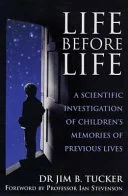
Life Before Life
 73
73

Life Before Life
Jim B. Tucker's Life Before Life offers a compelling, if sometimes understated, compilation of cases suggesting continuity of consciousness. The sheer volume of detailed accounts, particularly the case of a young boy in Africa recalling specific village names and personal histories without prior exposure, is striking. Tucker’s methodical approach, building on the foundational work of Ian Stevenson, lends an air of scholarly rigor. However, the book occasionally feels constrained by its attempt to remain strictly within empirical observation, sometimes glossing over the profound existential implications of the evidence presented. While the limitations of current scientific paradigms for fully explaining such phenomena are acknowledged, the reader is left wanting a more direct engagement with the philosophical quandaries. Nonetheless, Life Before Life stands as a significant, sober collection for those open to exploring the edges of human experience.
📝 Description
73
Jim B. Tucker's 2006 book, Life Before Life, documents children's detailed past life memories.
Jim B. Tucker's "Life Before Life" presents extensive research into young children who report detailed memories of previous lives. Tucker meticulously documents cases where these children exhibit knowledge of individuals and events they could not have encountered in their current existence. The book synthesizes years of investigation into a structured examination of these phenomena, analyzing over 250 cases from his own research and that of his predecessor, Dr. Ian Stevenson.
Published in 2006, the work emerged during a time of renewed academic interest in consciousness studies. Tucker's research builds upon earlier investigations into reincarnation, offering contemporary evidence and analysis that engages with scientific skepticism. The book addresses core concepts such as xenoglossy (speaking an unlearned language), spontaneous past-life memories, birthmarks corresponding to previous lives, and children identifying deceased individuals. Tucker details the criteria used to validate these cases, emphasizing consistency and verifiable details.
Jim B. Tucker's research into children's past life memories fits within the broader esoteric tradition of exploring consciousness beyond the physical body. It engages with concepts like reincarnation, a belief held across many spiritual and religious systems for millennia. Tucker's work specifically builds upon the empirical approach established by Dr. Ian Stevenson, aiming to collect and verify anecdotal evidence for phenomena that challenge materialistic explanations of mind and identity. This tradition often seeks to understand the nature of the soul or consciousness as distinct from, and potentially surviving, the physical organism.
💡 Why Read This Book?
• You will learn about the specific criteria Jim B. Tucker uses to evaluate past-life memory claims, providing a framework for assessing such phenomena beyond anecdotal evidence, as seen in his analysis of the case involving a boy in Africa. • You will gain an understanding of xenoglossy and birthmarks that correspond to past-life injuries, offering concrete examples of anomalous phenomena studied by Tucker and his predecessor, Ian Stevenson. • You will encounter detailed case studies, such as the one involving a child who accurately identified deceased individuals and their family members, prompting reflection on the nature of consciousness.
⭐ Reader Reviews
Honest opinions from readers who have explored this book.
❓ Frequently Asked Questions
What is the primary research methodology used in Life Before Life by Jim B. Tucker?
Tucker employs a rigorous case-study approach, meticulously documenting children's spontaneous past-life memories. He verifies details through interviews, records, and direct confirmation from surviving relatives and witnesses, aiming for objective validation of claimed past-life information.
How does Jim B. Tucker's work relate to Ian Stevenson's research on reincarnation?
Tucker's work is a continuation and expansion of the research initiated by Dr. Ian Stevenson. He uses similar methodologies and builds upon Stevenson's extensive catalog of reincarnation cases, further investigating and documenting similar phenomena.
What is xenoglossy as discussed in Life Before Life?
Xenoglossy, as explored in the book, refers to the phenomenon where individuals, particularly children in Tucker's studies, speak or write a language they have not learned in their current lifetime, often attributed to memories from a past life.
Are there specific geographical regions where these cases are more prevalent?
While cases are documented globally, Tucker's research, and Stevenson's before him, has identified clusters in certain cultures where reincarnation beliefs are prevalent, such as parts of India, Sri Lanka, and West Africa. However, cases also arise in Western countries.
What are birthmarks and birth defects discussed in the context of reincarnation?
The book details instances where children have birthmarks or congenital defects that correspond to wounds (like bullet holes or scars) on the body of the deceased person whose life the child claims to remember.
Does Life Before Life present definitive proof of reincarnation?
The book presents compelling evidence and meticulously documented cases that challenge conventional explanations for memory and identity. While it doesn't claim absolute 'proof' in a universally accepted scientific sense, it offers substantial material for consideration.
🔮 Key Themes & Symbolism
Children's Past-Life Memories
The central theme revolves around young children spontaneously recalling details of lives they supposedly lived before their current birth. These memories often include names of people, places, and events, sometimes spanning decades and geographical distances. Tucker meticulously verifies these recollections, seeking corroboration from families and witnesses, presenting these cases as evidence for the continuity of consciousness.
Xenoglossy and Language Acquisition
A significant aspect explored is xenoglossy, the phenomenon of speaking or writing a language unknown to the individual in their current life. The book examines cases where children demonstrate fluency in foreign tongues or dialects, suggesting these abilities are residual memories from previous existences. This challenges standard linguistic theories and points towards memory existing independently of the physical brain.
Birthmarks and Birth Defects
Tucker details how birthmarks and congenital defects in children sometimes correspond precisely to fatal wounds or significant injuries sustained by the individual whose past life the child claims. These physical markers serve as tangible, verifiable links between the child's present existence and the alleged prior life, strengthening the case for reincarnation.
Methodology of Case Verification
The book emphasizes the rigorous methodology employed to investigate these cases, building on the work of Ian Stevenson. This involves careful documentation, cross-referencing testimonies, and ruling out alternative explanations like fraud, suggestion, or cryptomnesia. The focus is on presenting objective data that withstands critical scrutiny.
💬 Memorable Quotes
Direct passages from the work, attributed to the author.
“A child may begin to speak about a previous life around the age of two, and the memories typically start to fade by the time the child is seven or eight.”
— This observation highlights a developmental pattern in children's past-life memories, suggesting a finite window during which these recollections are accessible and coherent before integration into their current identity.
“When a child gives information about a previous life that is later verified, it can be a powerful experience for the family.”
— This speaks to the emotional and psychological impact of validated past-life memories, not just for the child but for the entire family unit, potentially offering comfort, closure, or a reevaluation of reality.
“The cases often involve children who exhibit behaviors or phobias related to their alleged previous lives.”
— This points to the complex nature of past-life recall, extending beyond mere factual knowledge to include emotional and behavioral patterns that seem incongruous with the child's current environment.
“Birthmarks that correspond to wounds from a previous life are one of the most compelling types of evidence.”
— This emphasizes the physical, seemingly immutable nature of these birthmarks as strong indicators, suggesting a biological link or imprint from a past existence that is difficult to dismiss.
“The challenge is to find cases where the information provided is specific and can be independently verified.”
— This underscores the researcher's commitment to empirical evidence, indicating that vague claims are insufficient; the focus is on precise details that can be fact-checked against historical records or witness accounts.
🌙 Esoteric Significance
Tradition
While not strictly adhering to a single esoteric lineage, Tucker's work interfaces with traditions that posit the soul's transmigration, such as certain branches of Hinduism, Buddhism, and Theosophy. It offers empirical data that can be interpreted through these frameworks, providing modern, Western-oriented case studies that complement ancient doctrines of rebirth and karmic continuity.
Symbolism
Key symbols emerge from the cases themselves: birthmarks often function as stigmata, physical marks linking the present to past trauma or identity. The child's innocent yet knowledgeable discourse acts as a symbol of the soul's persistence beyond physical death. Geographic locations mentioned by children also function symbolically, representing the tangible reach of a consciousness that transcends physical boundaries.
Modern Relevance
Tucker's research continues to influence contemporary discussions on consciousness, identity, and the possibility of life after death. It is frequently cited by thinkers in fields ranging from transpersonal psychology to New Age spirituality. Modern proponents of consciousness integration and reincarnation research often draw upon his case studies as foundational evidence for exploring non-local consciousness.
👥 Who Should Read This Book
['• Researchers in parapsychology and consciousness studies seeking detailed case documentation and methodological rigor in the study of reincarnation.', '• Skeptics and open-minded individuals interested in examining empirical evidence that challenges conventional materialist explanations of memory and identity.', '• Students of comparative religion and philosophy exploring diverse perspectives on life, death, and the nature of the self across cultures.']
📜 Historical Context
Published in 2006, Jim B. Tucker's Life Before Life arrived during a period when consciousness studies were gaining traction, albeit with significant skepticism from mainstream academia. The book stands as a continuation of the decades-long research pioneered by Dr. Ian Stevenson at the University of Virginia, who meticulously documented thousands of cases of children's alleged past-life memories. Tucker's work engaged with a scientific community often resistant to paranormal claims, offering a structured, empirical approach. While figures like Carl Jung had explored concepts of the collective unconscious, Tucker focused on specific, verifiable instances rather than broader archetypal theories. The reception within parapsychology circles was positive, recognizing it as a vital update to Stevenson's foundational work. However, it faced the persistent challenge of convincing a broader scientific audience, many of whom adhered to materialistic explanations of mind and consciousness, viewing such phenomena through the lens of cryptomnesia or cultural suggestion.
📔 Journal Prompts
The child's recalled name from a past life: what resonance does this carry?
Consider the birthmark corresponding to a past injury: how does physical evidence connect to consciousness?
The phenomenon of xenoglossy: reflect on language as a potential carrier of identity beyond current learning.
Tucker's verification process: analyze the strength of corroborated details in establishing credibility.
A child's fear linked to a past-life event: explore the emotional elements of previous existence.
🗂️ Glossary
Xenoglossy
The purported ability to speak or write a language that one has not learned in their current lifetime, often cited as evidence for past-life memories.
Cryptomnesia
A form of amnesia where forgotten memories resurface without the person being aware that they are recalling something previously learned or experienced.
Case Study
An in-depth investigation and analysis of a single individual, group, or event, often used in research to understand complex phenomena.
Spontaneous Past-Life Memory
Memories of a previous life that emerge naturally in young children without prompting or suggestion from adults.
Verification
The process of confirming the accuracy and truthfulness of information, especially details provided by children about alleged past lives.
Birthmark/Birth Defect
Physical anomalies present at birth, which in the context of reincarnation research, are often claimed to correspond to wounds or conditions from a previous life.
Personality Traits
Distinctive patterns of behavior, thought, and emotion that characterize an individual, sometimes reported to carry over from a previous existence.
This book appears in 1 collection
🔮 Readers Also Liked
Browse all →









From the “Reincarnation” Collection
View all →







More Free Occult Philosophy Books
View all →