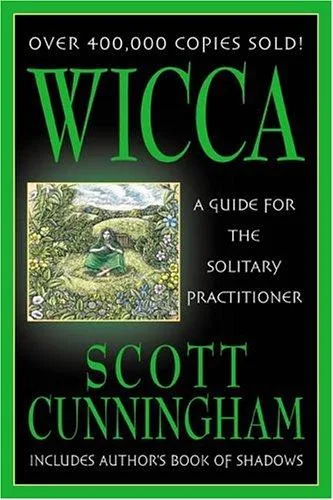
Wicca
 73
73

Wicca
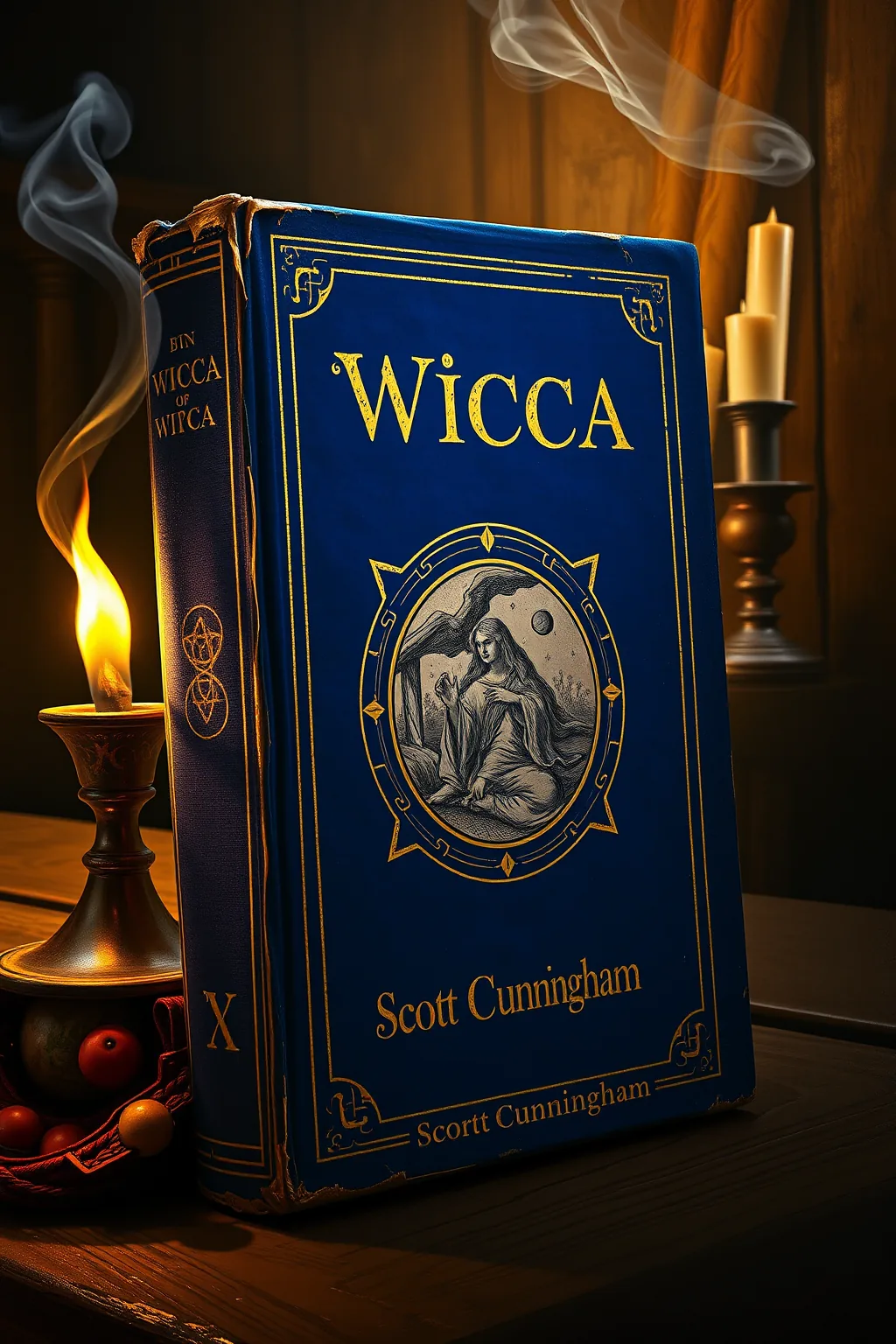
Scott Cunningham's "Wicca" functions less as an academic treatise and more as a gentle, inviting handbook for the uninitiated. Its primary strength lies in its clarity and its focus on a nature-based spirituality, making the often-misunderstood Craft approachable. Cunningham avoids the more theatrical or arcane elements that can alienate newcomers, instead offering a path focused on personal connection and ethical living. One particularly effective passage details the Sabbats, explaining their connection to natural cycles in a way that feels both ancient and immediately relevant. However, the book's simplicity, while a strength for beginners, can feel somewhat superficial to those already familiar with Wiccan lore or other esoteric traditions. It offers a broad overview rather than deep dives into specific magical theory or historical nuances. Ultimately, "Wicca" serves as a well-intentioned and effective primer for those tentatively exploring the path.
📝 Description
73
Scott Cunningham published "Wicca" in 1988 to explain the Craft practically.
Scott Cunningham's "Wicca," published in 1988, offers a practical introduction to the Craft, aiming to clarify Wiccan beliefs and practices for a modern audience. The book moves past sensationalized views to present a clear guide to core tenets, rituals, and ethics, all framed within a naturalistic worldview. It is suited for individuals curious about modern witchcraft and Paganism who seek a gentle, non-dogmatic path, and those interested in a personal connection with nature and the divine. It also serves students of comparative religion and those studying occult history. The book is not for advanced practitioners but provides a solid starting point.
Cunningham focuses on several key ideas. These include the polarity of the divine, often seen as God and Goddess, and the cyclical nature of life and death, represented by the Wheel of the Year. The book also details the Wiccan Rede, an ethical guideline stating, "An it harm none, do what ye will." Cunningham also discusses spellcasting, emphasizing the power of intention and visualization over elaborate tools.
Published in 1988, Cunningham's "Wicca" arrived during a growing public interest in Neopaganism and the occult. While figures like Gerald Gardner and Doreen Valiente had previously shaped modern Wicca, Cunningham's work helped to consolidate and popularize these traditions for a wider audience. It emerged as esoteric subjects moved from subcultures into more visible forms, contributing to the ongoing definition of contemporary Wiccan practices.
💡 Why Read This Book?
• Gain a clear, non-dogmatic understanding of Wiccan principles, including the ethical guideline of the Wiccan Rede, allowing for personal spiritual exploration. • Learn about the eight major Wiccan festivals, known as the Sabbats, and their connection to the natural cycles of the year as described by Cunningham. • Discover practical approaches to spellcasting and ritual, focusing on intention and visualization as presented in the book's accessible methodology.
⭐ Reader Reviews
Honest opinions from readers who have explored this book.
❓ Frequently Asked Questions
What is the core philosophy behind Scott Cunningham's "Wicca"?
Cunningham's "Wicca" centers on a nature-based spirituality, emphasizing the divine within the natural world and the cycles of life. It promotes personal empowerment, ethical conduct (the Wiccan Rede), and a connection to the Goddess and God.
Is Scott Cunningham's "Wicca" suitable for complete beginners?
Yes, the book is widely considered an excellent starting point for those new to Wicca. Cunningham's writing style is clear, accessible, and avoids complex jargon, making the core concepts easy to grasp.
What are the Sabbats mentioned in "Wicca"?
The Sabbats are eight major festivals celebrated in Wicca, marking significant points in the solar and agricultural year. Cunningham details each one, connecting them to seasonal changes and mythological themes.
Does "Wicca" by Scott Cunningham discuss deities?
Yes, the book introduces the concept of a dualistic divinity, often referred to as the God and the Goddess. It presents them as complementary forces inherent in nature and the universe.
What is the significance of the Wiccan Rede?
The Wiccan Rede is a central ethical code, famously stated as 'An it harm none, do what ye will.' Cunningham explains this as a guideline for responsible magical practice and ethical living.
When was Scott Cunningham's "Wicca" first published?
Scott Cunningham's "Wicca" was first published in 1988, positioning it as a key text in the popularization of Wicca during the late 20th century.
🔮 Key Themes & Symbolism
Nature-Centric Spirituality
Cunningham grounds Wicca firmly in the natural world, presenting the divine not as a distant entity but as immanent within the earth, seasons, and celestial bodies. The book emphasizes the cyclical nature of life, death, and rebirth, mirrored in the Wheel of the Year. This perspective encourages practitioners to find spiritual connection through observation and interaction with their environment, aligning personal rituals with natural rhythms and harvests. It offers a counterpoint to more anthropocentric or abstract religious systems.
The Wiccan Rede
Central to Cunningham's presentation is the ethical framework of the Wiccan Rede, famously articulated as 'An it harm none, do what ye will.' This principle serves as a reference for responsible practice, guiding actions and intentions. The book interprets this not merely as a prohibition but as a call to mindful living, emphasizing the interconnectedness of all beings and the potential consequences of one's actions. It provides a clear moral compass for those engaging with magical or spiritual pursuits.
Accessible Ritual and Spellcraft
Rather than focusing on elaborate ceremonial magic, Cunningham's "Wicca" introduces simplified rituals and spellcasting techniques. The emphasis is placed on personal intention, visualization, and the inherent energies within nature and the individual. Concepts like consecrating tools, casting circles, and performing spells for common needs are explained in a straightforward manner. This approach makes the practice of Wicca feel achievable for individuals without requiring extensive training or specialized knowledge.
The God and Goddess
The book presents the Wiccan understanding of divinity through the archetypal figures of the God and the Goddess. These are not viewed as anthropomorphic deities in the traditional sense but as representations of natural forces and cosmic principles – the masculine and feminine, the sun and moon, life and death. Cunningham explores their interplay and symbolism, offering a balanced perspective on the divine that is both immanent and cyclical, reflecting the dualities found throughout the natural world.
💬 Memorable Quotes
Direct passages from the work, attributed to the author.
“The Wiccan faith is a religion of peace, love, and joy.”
— This statement captures Cunningham's vision of Wicca as an inherently positive and life-affirming spiritual path, emphasizing its benevolent and joyful aspects over any perceived darkness or negativity.
“The Wiccan Rede is the only creed.”
— This highlights the foundational importance of the ethical principle 'An it harm none, do what ye will' within Wicca, suggesting it serves as the primary guiding tenet for practitioners.
“The Goddess is the soul of the world.”
— This interpretation underscores the immanent nature of the divine in Cunningham's presentation, viewing the Goddess as the animating spirit or essence that pervades all of existence.
“The Wheel of the Year is the path of the sun.”
— This links the eight Wiccan festivals (Sabbats) directly to the sun's journey through the year, emphasizing the astronomical and seasonal basis of these celebrations.
“Magic is the art of drawing down the power of the universe.”
— This defines magic not as manipulation but as a natural process of channeling and utilizing inherent cosmic energies for specific purposes.
🌙 Esoteric Significance
Tradition
Cunningham's work aligns with the modern Wiccan tradition, which draws inspiration from earlier occult revival movements and anthropological studies of witchcraft. While not strictly Hermetic, Gnostic, or Kabbalistic, it incorporates elements of Western esotericism, particularly its emphasis on symbolic language, ritual, and the idea of an underlying universal energy. It departs from stricter ceremonial magic traditions by prioritizing naturalistic spirituality and personal intuition over complex hierarchies or arcane systems.
Symbolism
Key symbols in Cunningham's "Wicca" include the pentagram, often presented as a symbol of protection and the elements, and the Wheel of the Year, representing the cyclical nature of life, death, and rebirth tied to seasonal changes. The duality of the God and Goddess serves as a primary symbolic representation of the divine, embodying masculine and feminine energies inherent in the cosmos and nature.
Modern Relevance
Cunningham's accessible approach continues to influence contemporary Pagan and Wiccan practitioners, especially those seeking a gentle introduction to the Craft. His emphasis on nature-based spirituality and the Wiccan Rede speaks to modern ecological concerns and ethical philosophies. Many online communities and beginner-focused Wiccan groups still cite his works as essential reading for understanding the core tenets of the religion.
👥 Who Should Read This Book
• Individuals new to witchcraft seeking a clear, non-intimidating introduction to Wiccan beliefs and practices. • Spiritual seekers interested in nature-based religions and connecting with the cycles of the earth. • Students of comparative religion or cultural studies examining the development of modern Pagan movements.
📜 Historical Context
Scott Cunningham's "Wicca," released in 1988, emerged during a significant period of growth and diversification within Neopaganism. Following the foundational work of figures like Gerald Gardner in the mid-20th century and subsequent popularizers like Raymond Buckland, Cunningham's book offered a particularly accessible and nature-focused interpretation of the Craft. It appeared at a time when esoteric traditions were increasingly being discussed in popular culture and gaining academic attention, moving beyond the underground circles of earlier decades. The book provided a gentle counter-narrative to more sensationalized or dogmatic portrayals of witchcraft, emphasizing personal spirituality and ethical conduct. Its publication helped solidify Wicca's image as a peaceful, nature-based religion for many, contributing to its wider acceptance and practice in the late 20th and early 21st centuries.
📔 Journal Prompts
Reflection on the natural cycles of the Wheel of the Year and personal connections to each Sabbat.
Exploration of the meaning and personal application of the Wiccan Rede ('An it harm none, do what ye will').
Identification of personal symbols representing the God and Goddess in nature.
Consideration of how to integrate nature-based spirituality into daily life.
Practicing simple visualization techniques for intention setting, as described in the book.
🗂️ Glossary
Wicca
A modern Pagan religion characterized by belief in a dualistic God and Goddess, reverence for nature, and the practice of magic, often guided by the Wiccan Rede.
Wiccan Rede
The central ethical code of Wicca, famously stated as 'An it harm none, do what ye will,' emphasizing responsible action and minimal harm.
Sabbats
The eight major festivals celebrated in Wicca, marking significant points in the solar and agricultural year, such as Samhain, Yule, and Beltane.
God and Goddess
The primary divine figures in Wicca, representing complementary masculine and feminine energies, often associated with natural forces and cycles.
Pentagram
A five-pointed star, often used in Wicca as a symbol of the elements (earth, air, fire, water, and spirit) and as a protective charm.
Wheel of the Year
A diagram representing the cycle of eight seasonal festivals observed in Wicca and other Neopagan traditions, reflecting the earth's annual journey.
Spellcraft
The practice of directing energy and intention, often through ritualistic means, to achieve a desired outcome or effect.
🔮 Readers Also Liked
Browse all →






More by Scott Cunningham
All books →


More Free Magic & Ritual Books
View all →