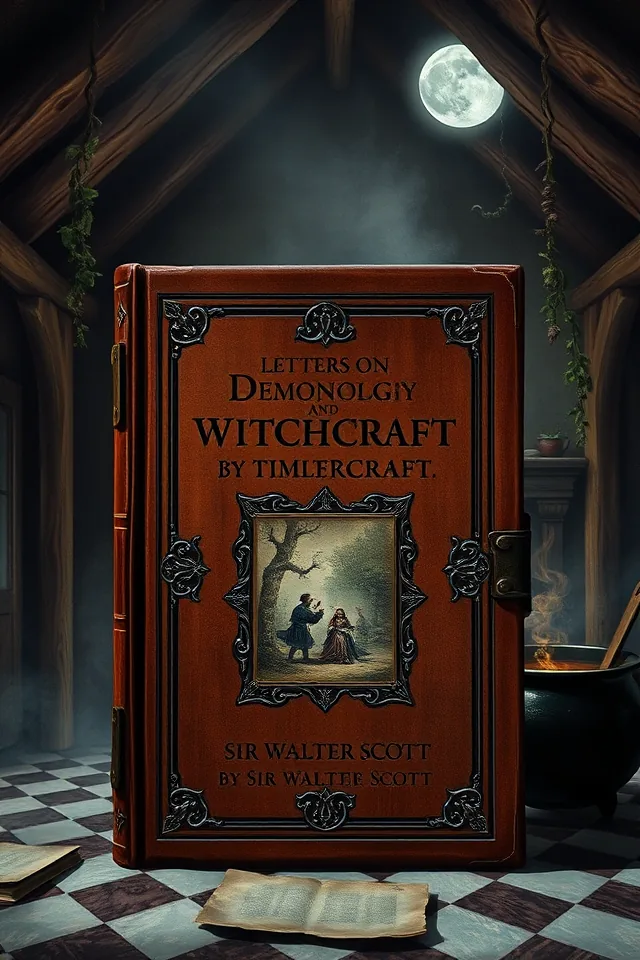
Letters on demonology and witchcraft
 74
74

Letters on demonology and witchcraft
Scott's "Letters on Demonology and Witchcraft" is a curious artifact, less a deep dive into the occult and more a historical survey of how societies have *perceived* the occult. His examination of the 'Fairy Faith,' for instance, attempts to categorize supernatural encounters beyond simple demonic pacts, offering a nuanced view for its time. However, the prose can feel dated, and the inherent biases of an early 19th-century Scottish gentleman viewing older superstitions are palpable. The section discussing the physical stigmata attributed to witches, while historically informative, reads with a disquieting detachment. Scott’s work serves best as a window into the evolving scholarly approach to folklore and demonology, rather than a definitive text on the subject itself.
📝 Description
74
Published in 1830, Sir Walter Scott's "Letters on Demonology and Witchcraft" examines historical beliefs about the supernatural.
Sir Walter Scott's "Letters on Demonology and Witchcraft" offers a historical survey of beliefs concerning supernatural phenomena. Originally appearing in 1830, this collection of essays details Scott's observations on folklore, purported demonic interactions, and the societal effects of witchcraft accusations. It functions not as a practical guide to occult practices but as a scholarly review of past credences and their expressions across various cultures and time periods. Scott addresses the concept of the 'Fairy Faith,' differentiating it from direct diabolical possession. He analyzes the legal and social processes that resulted in widespread witchcraft accusations, often stemming from misinterpretations of natural events or societal anxieties. The author also considers the physical and psychological traits attributed to those accused of witchcraft, reflecting the prevailing views of his time. This work is suitable for historians of religion, folklorists, and students of early modern European history. It will particularly interest those who study the development of belief systems and the psychological roots of mass hysteria and superstition. Readers focused on understanding the cultural background of demonology and witchcraft accusations, rather than on occult instruction, will find value here.
Scott wrote "Letters" during a period of growing interest in medievalism and the supernatural. The book emerged from a Victorian intellectual climate that was processing Enlightenment rationalism alongside a romantic fascination with the darker aspects of human history. The work engages with contemporary discussions about the nature of evidence and the trustworthiness of historical accounts of alleged supernatural occurrences. Scott was also aware of earlier treatises on witchcraft, such as those by Heinrich Kramer and Jacob Sprenger, and his perspective is more skeptical, though still engaged.
Published in the early 19th century, Scott's "Letters" engaged with a burgeoning interest in historical occult beliefs and folklore. While not a practitioner's text, it contributed to the intellectual climate that explored the history of magic, demonology, and supernatural belief. Scott's work provided a historical and often skeptical lens through which to view earlier periods, situating beliefs about witchcraft and demonic influence within their cultural and psychological contexts. It stands as a historical examination rather than an endorsement of occult practices, reflecting a scholarly approach to a subject often relegated to superstition.
💡 Why Read This Book?
• Gain insight into the historical understanding of demonology as presented in the 1830s, specifically Scott's attempt to differentiate between 'Fairy Faith' and diabolism. • Understand the societal mechanisms and anxieties that fueled witchcraft accusations by examining Scott's analysis of legal and social processes in the 16th and 17th centuries. • Explore Scott's early academic approach to folklore by studying his categorization of supernatural beliefs and alleged demonic interactions prevalent in Europe.
⭐ Reader Reviews
Honest opinions from readers who have explored this book.
❓ Frequently Asked Questions
When was Sir Walter Scott's "Letters on Demonology and Witchcraft" first published?
Sir Walter Scott's "Letters on Demonology and Witchcraft" was first published in 1830, reflecting a significant interest in folklore and supernatural beliefs during that era.
Is "Letters on Demonology and Witchcraft" a practical guide to occult practices?
No, the book is a historical and folkloric examination of beliefs surrounding demonology and witchcraft, not a manual for occult practices. It analyzes past credences and societal reactions.
What is the 'Fairy Faith' as discussed by Scott?
Scott discusses the 'Fairy Faith' as a belief system prevalent in certain regions, involving interactions with supernatural beings distinct from direct demonic possession or diabolical pacts.
Does Scott present a skeptical view of witchcraft in his letters?
Scott adopts a more scholarly and analytical perspective than many earlier writers, attempting to explain the historical phenomena of witchcraft accusations through social, psychological, and folkloric lenses, though he acknowledges the existence of belief.
What historical periods does Scott cover regarding witchcraft?
Scott's "Letters" primarily examine the period of intense witchcraft accusations in Europe, particularly focusing on the 16th and 17th centuries, analyzing the beliefs and legal proceedings of that time.
Who was Sir Walter Scott?
Sir Walter Scott (1771-1832) was a prolific Scottish historical novelist and poet, famous for works like 'Ivanhoe' and 'Waverley.' He was also a collector of ballads and a historian.
🔮 Key Themes & Symbolism
The Nature of Supernatural Belief
Scott meticulously dissects how societies have historically interpreted and responded to phenomena they attributed to supernatural forces. He differentiates between various forms of perceived otherworldly influence, such as direct demonic intervention versus encounters with entities like fairies. This theme is crucial for understanding the intellectual currents of the early 19th century, which sought to categorize and rationalize even the most arcane beliefs, moving beyond simple acceptance towards historical analysis.
Societal Anxieties and Witchcraft Accusations
A significant portion of the work addresses the social and psychological factors that propelled waves of witchcraft accusations. Scott highlights how periods of crisis, religious fervor, or widespread fear could manifest in identifying scapegoats. His examination of the legal processes and the supposed 'evidence' used against the accused provides a stark look at mass hysteria and the mechanisms of persecution, reflecting broader historical patterns of societal fear externalized.
Folklore and the 'Fairy Faith'
Scott dedicates considerable attention to what he terms the 'Fairy Faith,' a complex of beliefs concerning supernatural beings distinct from the Christian devil. He analyzes regional variations in these stories and their potential origins, suggesting a layer of folklore that predates or runs parallel to orthodox demonological narratives. This exploration of fairy lore offers a window into pre-Christian or folk-animistic traditions that persisted despite dominant religious structures.
Historical Interpretation of Demonic Activity
The letters explore historical accounts of alleged demonic pacts, possessions, and visitations, analyzing them through the lens of contemporary understanding and later skepticism. Scott examines how these narratives evolved and were often influenced by religious doctrine, popular superstition, and the desire to explain misfortune. His approach reflects a growing academic interest in critically evaluating historical sources concerning the supernatural.
💬 Memorable Quotes
Direct passages from the work, attributed to the author.
“Scott's interpretation of the 'Fairy Faith' contrasted with diabolical influence.”
— This highlights Scott's attempt to categorize supernatural encounters, suggesting a spectrum of belief that included interactions with beings distinct from the Christian devil, thereby offering a more nuanced historical perspective.
“The work explores how societal anxieties fueled witchcraft trials.”
— This points to Scott's analysis of the social and psychological underpinnings of witch hunts, linking accusations to periods of fear and instability rather than solely to supernatural agency.
“Scott's examination of physical characteristics attributed to witches.”
— This refers to his discussion of the supposed physical marks or stigmata that were often cited as evidence during witchcraft trials, reflecting the superstitions and diagnostic methods of the era.
“The book analyzes the legal and social mechanisms of persecution.”
— This indicates Scott's focus on the procedural and societal frameworks that enabled and perpetuated the prosecution of individuals accused of witchcraft across historical periods.
“Scott differentiates between folklore and orthodox demonology.”
— This signifies his effort to distinguish between ancient or regional folk beliefs, such as those concerning fairies, and the more systematized theological doctrines of demonology prevalent in his time.
🌙 Esoteric Significance
Tradition
While not strictly an esoteric text in the sense of providing magical instruction, Scott's "Letters" engages with traditions of folk magic, demonology, and belief systems that lie adjacent to many Western esoteric lineages. It fits within a broader historical interest in understanding the non-mainstream spiritual and supernatural beliefs that have coexisted with, and often informed, Hermetic, Gnostic, and folk magical practices throughout history. It represents an early attempt at academic classification of these phenomena.
Symbolism
The book implicitly touches upon symbols associated with witchcraft and demonology, such as pacts with the devil, familiars (often depicted as animals), and the physical marks attributed to practitioners. Scott's discussion of the 'Fairy Faith' also engages with the symbolism of nature spirits and otherworldly realms, which have long been motifs in esoteric traditions and folklore, often representing liminal spaces between the material and spiritual worlds.
Modern Relevance
Contemporary scholars of folklore, anthropology, and religious studies continue to reference Scott's work for its historical overview of demonological beliefs and witchcraft accusations. Modern occult practitioners and historians of magic may find value in his early attempts to categorize and contextualize these phenomena, offering a baseline against which to compare more modern interpretations and practices within Western Esotericism and Neo-Paganism.
👥 Who Should Read This Book
• Students of early modern European history seeking to understand the social and psychological drivers behind witch trials and demonological beliefs. • Folklorists and scholars of comparative religion interested in historical interpretations of supernatural phenomena and non-mainstream belief systems. • Readers of Sir Walter Scott interested in his broader intellectual contributions beyond his fictional works, particularly his engagement with historical superstitions.
📜 Historical Context
Sir Walter Scott's "Letters on Demonology and Witchcraft," published in 1830, emerged during a period of intense romanticism and a revival of interest in medievalism and folklore. The early 19th century saw intellectuals grappling with the legacy of the Enlightenment's rationalism while simultaneously exploring the darker, more mysterious aspects of human history and belief. Scott, already a celebrated novelist, brought his considerable reputation to bear on the study of supernatural phenomena. His work engaged with contemporary discussions on the nature of evidence and the historical reliability of accounts of witchcraft, a subject that had been extensively debated since the Reformation. He was writing in a landscape shaped by earlier, more credulous treatises on the subject, such as the Malleus Maleficarum (1487), and was part of a broader scholarly movement to collect and analyze folk tales and superstitions. Unlike some of his contemporaries who might have been more overtly spiritualist, Scott's approach was analytical, seeking to understand the historical and social conditions that gave rise to these beliefs, positioning his work within an emerging field of comparative folklore and cultural history.
📔 Journal Prompts
The 'Fairy Faith' as described by Scott and its distinction from diabolism.
Societal anxieties during the 16th and 17th centuries that may have fueled witchcraft accusations.
Scott's analysis of the legal and social mechanisms used in witchcraft trials.
The evolution of beliefs surrounding demonic possession across historical periods.
The perceived physical characteristics used as evidence against accused witches.
🗂️ Glossary
Demonology
The study of demons or beliefs about demons. In historical contexts, it often refers to theological and philosophical systems concerning the nature, hierarchy, and influence of evil spirits.
Witchcraft
The practice of magic or sorcery, especially in relation to the Devil. Historically, it often referred to the alleged use of supernatural powers for malevolent purposes, leading to widespread accusations and persecutions.
Fairy Faith
A complex of beliefs concerning supernatural beings, often associated with nature spirits or entities from an otherworldly realm, distinct from orthodox Christian demonology. Scott explored its prevalence in certain regions.
Diabolism
Worship or invocation of the Devil. In the context of witchcraft, it specifically refers to the belief that witches made pacts with the Devil and received supernatural powers from him.
Folklorist
An individual who studies folklore, which includes the traditions, beliefs, customs, stories, songs, and sayings of a community or nation, passed down through generations.
Mass Hysteria
A phenomenon characterized by the appearance of multiple individuals experiencing similar physical or psychological symptoms without a clear organic cause, often triggered by fear or anxiety within a group.
Superstition
A belief or practice resulting from ignorance, fear of the unknown, trust in magic or chance, or a false conception of causation. Often associated with folk beliefs.
🔮 Readers Also Liked
Browse all →





![The Works of Edgar Allan Poe [68 stories, 31 poems]](/img/thumb/the-works-of-edgar-allan-poe-68-stories-31-poems-edgar-allan-poe-092903.webp)



More by Sir Walter Scott
All books →





More Free Occult Philosophy Books
View all →