Demonata #2, The: Demon Thief

 77
77

Demonata #2, The: Demon Thief
Darren Shan’s *Demon Thief* opens not with a whimper, but a visceral shriek. The early depiction of Grubbs Grady’s involuntary transformation, a grotesque ballet of bone and flesh, immediately signals this is not standard YA fare. Shan excels at rendering horror that feels both alien and disturbingly personal, exploring the terror of losing control of one's own body. The introduction of the arcane order, the Disciples of the Wake, provides a much-needed anchor against the overwhelming chaos, though their exposition can sometimes feel slightly heavy-handed. While the pacing occasionally falters under the weight of lore-dumps, the sheer imaginative force of the demonic entities and the raw emotional core of Grubbs’s plight remain compelling. The work's strength lies in its unflinching portrayal of horror’s psychological impact. The verdict: a grim, gripping, and thoroughly unsettling entry into dark fantasy.
📝 Description
77
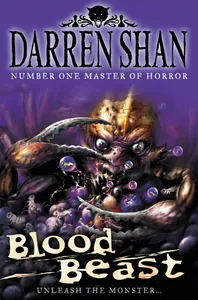
Darren Shan's 2007 novel, Demon Thief, details Grubbs Grady's horrifying transformation.
Demon Thief, the second book in Darren Shan's Demonata series, published in 2007, centers on Grubbs Grady. He faces a terrifying metamorphosis and the emergence of demonic powers within him. The story follows his desperate struggle to comprehend and manage these awakening demonic forces. Shan constructs a world where the lines between human and monstrous become indistinct, setting up a conflict that goes beyond simple survival.
This novel explores ideas of identity, the weight of inherited curses, and the fight against seemingly insurmountable challenges. It is aimed at young adult readers who like dark fantasy with strong supernatural elements and horror. The book will appeal to those who value detailed world-building and characters who wrestle with the psychological effects of extreme situations. Readers familiar with Shan's earlier work, like the Cirque du Freak series, will recognize a similar tone and thematic depth, though Demon Thief focuses more intensely on the visceral and the monstrous.
Published in 2007, Demon Thief arrived during a boom in young adult paranormal fiction. Unlike more romantic or traditional magic stories, Shan's Demonata series distinguished itself with a darker, more grotesque style. It examined the violence and psychological strain inherent in demonic possession and transformation. This work contributed to a growing interest in urban fantasy and darker speculative fiction in the early 21st century, specifically by confronting the darker aspects of supernatural encounters.
💡 Why Read This Book?
• You will learn about the visceral horror of involuntary physical and mental transformation, as seen in Grubbs Grady’s struggle with his burgeoning demonic nature after the events of 2007. • You will experience the profound psychological terror of identity erosion, as the book vividly illustrates the internal battle against demonic possession and the fear of becoming the very monsters one fights. • You will encounter a unique cosmology centered on the Demonata and the Veil, offering a specific take on interdimensional beings and their impact on the mortal realm, distinct from common angelic or demonic tropes.
⭐ Reader Reviews
Honest opinions from readers who have explored this book.
❓ Frequently Asked Questions
What is the primary conflict in Demonata #2: Demon Thief?
The primary conflict revolves around Grubbs Grady's terrifying transformation into a demonic entity and his desperate attempts to understand and control these new, monstrous powers while facing external threats from the Demonata.
Who are the main characters introduced in Demon Thief?
The central character is Grubbs Grady, who is undergoing a demonic transformation. Other key figures include the wise but enigmatic Glen, and the members of the Disciples of the Wake, an order dedicated to fighting the Demonata.
What is the significance of the 'Veil' in the Demonata series?
The Veil is a metaphysical barrier separating the human world from the realm of the Demonata. Its weakening or breaching allows demonic entities to enter and influence the mortal plane, which is a core element driving the plot.
Is Demon Thief suitable for younger readers?
While part of a young adult series, *Demon Thief* contains significant horror elements, gore, and mature themes of transformation and violence, making it more suitable for older teenagers and adults.
What is the publication year of Demon Thief?
Demon Thief was first published in 2007 as the second book in Darren Shan's Demonata series.
What makes the Demonata different from typical demons in fiction?
The Demonata are depicted as a distinct race from another dimension, possessing unique physiologies and motivations. Their influence often manifests as physical corruption and a loss of self, rather than solely spiritual temptation.
🔮 Key Themes & Symbolism
Body Horror and Transformation
The series' exploration of Grubbs Grady's involuntary transformation into a demonic entity is central. Shan vividly details the physical and psychological agony of this change, presenting it as a profound violation of self. Unlike typical tales of possession where the original personality might remain untouched, *Demon Thief* depicts a horrifying fusion and struggle. This focus on the grotesque metamorphosis aligns with certain body horror traditions in literature and film, emphasizing the loss of bodily autonomy and the terrifying implications of one's physical form betraying their identity. The narrative doesn't shy away from the visceral details, making the transformation a palpable source of dread.
Inherited Destiny and Identity
Grubbs Grady is not merely a victim of circumstance; he carries a legacy that fuels his demonic potential. The concept of inherited destiny, a common trope in fantasy, is twisted here into a source of horror. His identity is constantly under threat from the demonic forces within him, forcing a brutal internal conflict. The book questions whether one can escape their lineage or if they are doomed to repeat the destructive patterns of their ancestors. This exploration of identity crisis, amplified by supernatural elements, forces readers to consider the nature of free will versus predetermined fate in the face of overwhelming biological and mystical inheritance.
The Veil and Interdimensional Incursion
The metaphysical 'Veil' separating worlds serves as a critical plot device and thematic element. Its presence underscores the fragility of reality and the constant threat of invasion from beings beyond human comprehension. The weakening of this barrier in 2007 symbolizes a breakdown of order, allowing chaos to seep into the mundane. The Demonata are not simply abstract evils but tangible entities capable of physical manifestation and destruction once the Veil is breached. This concept provides a framework for understanding the supernatural conflict, portraying the world as a battleground for forces operating on different dimensional planes.
The Nature of Monsters
Shan challenges simplistic notions of good versus evil by blurring the lines between human and monster. Grubbs himself becomes a monster, yet retains his humanity, creating a complex moral landscape. The book explores whether monstrosity is inherent or a consequence of circumstance and environment. It suggests that even those who appear monstrous may possess relatable struggles, while seemingly human characters can harbor dark intentions. This nuanced approach forces readers to question their assumptions about who the true monsters are, moving beyond archetypal representations to examine the gray areas of morality and existence.
💬 Memorable Quotes
Direct passages from the work, attributed to the author.
“The Veil was thinning. The world was changing.”
— This statement highlights the central cosmic threat. It suggests a breakdown in the natural order, where the boundaries between dimensions are becoming permeable, allowing for the invasion of entities like the Demonata and signaling impending chaos.
“It wasn't a choice. It was a curse.”
— This reflects Grubbs's internal struggle with his inherited demonic nature. He perceives his transformation not as an action he took, but as an unavoidable, inherited affliction that dictates his fate, emphasizing themes of destiny and lack of agency.
“They called themselves the Disciples of the Wake. They fought the darkness.”
— This introduces the human element fighting against the encroaching demonic forces. The 'Wake' suggests an awareness of the spiritual battle, and their 'discipleship' implies a dedicated, organized resistance against the supernatural threat.
“My body was no longer my own.”
— A direct expression of the horror of losing control. This phrase conveys the profound violation experienced during demonic transformation, where the physical self becomes a vessel for something alien and terrifying, severing the connection between mind and body.
💡 Key Ideas
Editorial paraphrase of the work's core concepts — not direct quotes.
I was a demon. My blood was demon blood. My soul was a demon soul.
This quote captures the core existential horror of Grubbs's transformation. It signifies the complete and terrifying loss of his former identity, replaced by an alien and monstrous essence that permeates his very being, from his physical form to his spiritual core.
🌙 Esoteric Significance
Tradition
While not explicitly aligned with a single historical esoteric tradition, *Demon Thief* draws upon Gnostic and Hermetic concepts of a flawed creation and the struggle against malevolent cosmic forces. The idea of a 'Veil' separating realities echoes Gnostic cosmology, where ignorance or illusion (the Demiurge's creation) separates humanity from the true Divine. The struggle against an inherent 'curse' or inherited demonic nature can be seen as a fictionalized exploration of the concept of the shadow self or the fallen nature discussed in various mystical paths. The Demonata themselves function as archetypes of primal, chaotic energies that must be understood and integrated or repelled.
Symbolism
The primary symbol is the **transformation** itself, representing the alchemical process gone awry – not a transmutation towards higher states, but a descent into primal chaos and monstrousness. Grubbs's **shapeshifting** body symbolizes the breakdown of form and identity under the pressure of external and internal demonic forces. The **Veil** is a potent symbol of cosmic boundaries and the fragility of perceived reality; its thinning signifies a loosening of the structures that maintain order, allowing the 'other' to intrude. The **eyes** often become focal points, reflecting the shift in perception and the infiltration of demonic consciousness.
Modern Relevance
Contemporary practitioners of dark fantasy and horror literature continue to draw inspiration from Shan's bold approach to visceral storytelling and psychological terror. The series' exploration of the shadow self and the blurred lines between human and monster speaks to modern psychological approaches to understanding trauma and identity. Thinkers in fields like comparative mythology and demonology might study the *Demonata* as a modern fictional iteration of archetypal 'otherness' and invasion narratives. The series also serves as a touchstone for discussions on censorship and age-appropriateness in YA literature, given its often graphic content.
👥 Who Should Read This Book
• Young adult readers aged 15+ who are fans of dark fantasy and horror, seeking narratives that explore the visceral and psychological aspects of transformation and monstrous encounters. • Aspiring writers of speculative fiction interested in how to build complex, multi-volume mythologies and depict intense body horror with a focus on character development. • Comparative literature students examining contemporary YA trends, specifically those analyzing the evolution of horror tropes and the depiction of demonic entities in post-2000 fiction.
📜 Historical Context
Published in 2007, *Demon Thief* arrived during a fertile period for young adult speculative fiction, a landscape already shaped by the massive success of J.K. Rowling's *Harry Potter* series and Stephenie Meyer's *Twilight*. While many contemporaries focused on romance or more traditional magical systems, Darren Shan's *Demonata* series distinguished itself with its unflinching embrace of gothic horror, gore, and psychological distress. The early 21st century saw a rising interest in darker, more mature themes within YA literature, and Shan’s work catered to this demand by presenting a visceral exploration of demonic transformation and existential dread. The series’ intricate, overarching narrative structure, spanning ten volumes, demanded a different kind of reader engagement than standalone novels. It competed for attention in a market saturated with paranormal and fantasy offerings, yet carved out a dedicated following through its mix of extreme horror and compelling character arcs, offering a stark contrast to the often lighter fare found elsewhere.
📔 Journal Prompts
Grubbs Grady's internal conflict between his human self and his burgeoning demonic nature.
The symbolism of the thinning Veil and its implications for reality.
The Disciples of the Wake's methods for combating the Demonata.
The concept of inherited curses and their effect on identity.
Analyzing the physical and psychological manifestations of demonic transformation in the narrative.
🗂️ Glossary
Demonata
A race of powerful, often malevolent beings originating from a dimension separate from the human world. They are known for their grotesque forms and corrupting influence.
Grubbs Grady
The protagonist of the Demonata series, a young man who undergoes a terrifying physical and psychological transformation into a demonic entity.
The Veil
A metaphysical barrier that separates the human realm from the dimension inhabited by the Demonata. Its weakening allows for interdimensional incursions.
Demonisation
The process by which a human, or other being, takes on the physical and psychological characteristics of a Demonata, often involuntarily and painfully.
Disciples of the Wake
An arcane order dedicated to fighting the Demonata and protecting humanity from their influence. They possess knowledge of the supernatural world.
Shanville
A fictional location and a term associated with Darren Shan's fictional universe, often implying a place where strange or horrific events unfold.
Glen
An enigmatic character who acts as a mentor and guide to Grubbs, possessing significant knowledge of the Demonata and the supernatural world.
🔮 Readers Also Liked
Browse all →








More by Darren Shan
All books →



More Free Occult Philosophy Books
View all →