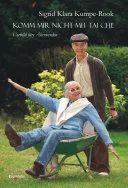
Komm mir nicht mit Tai Chi! Vorbild fürs Älterwerden
 73
73

Komm mir nicht mit Tai Chi! Vorbild fürs Älterwerden
Sigrid Klara Kumpe-Rook’s *Komm mir nicht mit Tai Chi!* is a welcome departure from the usual discourse on aging, which tends to oscillate between a desperate clinging to youth and a resigned acceptance of decline. Kumpe-Rook’s critique of superficial self-help, particularly her pointed dismissal of facile practices like Tai Chi as a mere panacea for aging, is sharp and necessary. The strength of the book lies in its philosophical depth, urging readers to consider age not as a biological endpoint but as a stage for profound inner work. However, the work occasionally suffers from a lack of concrete examples, leaving some of its more abstract concepts feeling somewhat ethereal. The discussion surrounding the integration of past life experiences into present consciousness, while conceptually rich, could have benefited from more illustrative anecdotes. Despite this limitation, the book offers a compelling alternative framework for understanding and embracing the later stages of life. It is a valuable, if demanding, read for those seeking meaning beyond the superficial.
📝 Description
73
Sigrid Klara Kumpe-Rook's 2013 book challenges conventional views on aging with an esoteric perspective.
Komm mir nicht mit Tai Chi! Vorbild fürs Älterwerden, published in 2013, offers a perspective on aging that moves beyond typical self-help advice. Kumpe-Rook encourages readers to reconsider societal ideas about elderhood and suggests a path toward a more integrated and spiritually aware life. The book is for individuals nearing or in their later years who seek a deeper understanding of this phase. It appeals to those dissatisfied with superficial aging advice and interested in esoteric or philosophical frameworks for personal growth. Readers desiring a contemplative, introspective approach, rather than solely physical or social guidance, will find value. It also speaks to anyone curious about how spiritual traditions can shape the experience of growing older.
Kumpe-Rook's work appeared in 2013, a time when aging discussions were increasing but often focused on maintaining youth or managing decline. Esoteric thought, though ancient, saw a resurgence in practical modern applications. This book fits within a larger trend in alternative spirituality to address existential questions tied to life stages. It presents an alternative to mainstream materialist views of aging and differs from clinical gerontological approaches. The book examines 'conscious aging,' which involves actively engaging with psychological and spiritual shifts during older age. It stresses the importance of integrating past experiences with present realities.
This work engages with esoteric traditions by framing aging not as decline, but as a period for conscious spiritual development. It draws upon a lineage of thought that views life stages as opportunities for inner transformation, diverging from purely material or psychological interpretations. The book suggests that spiritual frameworks can inform how one experiences and understands growing older, offering a perspective found in various contemplative and mystical paths that emphasize inner awareness and integration.
💡 Why Read This Book?
• Gain a new perspective on aging by understanding the concept of 'conscious aging,' which reframes elderhood as a period of active spiritual growth rather than passive decline, moving beyond generic wellness advice. • Explore the book's critique of superficial approaches to aging, specifically its rejection of simplistic solutions like Tai Chi, encouraging a deeper, more integrated approach to the latter half of life. • Understand how to integrate past life experiences into present awareness, a core theme that offers a method for finding inner peace and meaning as one grows older, as presented in the work.
⭐ Reader Reviews
Honest opinions from readers who have explored this book.
❓ Frequently Asked Questions
What is the central argument of Sigrid Klara Kumpe-Rook's 'Komm mir nicht mit Tai Chi!' regarding aging?
The book argues against superficial approaches to aging, such as mere physical exercise like Tai Chi, advocating instead for a conscious, spiritual integration of the aging process. It presents elderhood as an opportunity for profound inner growth and self-awareness.
When was 'Komm mir nicht mit Tai Chi!' first published?
Sigrid Klara Kumpe-Rook's book, 'Komm mir nicht mit Tai Chi! Vorbild fürs Älterwerden', was first published on April 5, 2013.
Who is the intended audience for this book on aging?
The book is for individuals approaching or experiencing later life who seek a deeper, philosophical, and spiritual understanding of aging, moving beyond conventional self-help or wellness strategies.
Does the book offer practical exercises for aging?
While not a manual of physical exercises, the book promotes 'conscious aging,' encouraging introspection and spiritual integration. Its practicality lies in reframing one's mindset towards aging, rather than providing prescriptive physical routines.
What does the title 'Komm mir nicht mit Tai Chi!' imply about the book's message?
The title, meaning 'Don't bother me with Tai Chi!', signals a rejection of simplistic, external solutions for the complex process of aging. It suggests the book will explore deeper, internal, and spiritual dimensions of growing older.
What is the core esoteric concept explored in the book?
The core concept is 'conscious aging,' which involves actively engaging with the psychological and spiritual transformations of later life, integrating past experiences, and finding inner peace through self-awareness, rather than solely focusing on physical or social aspects.
🔮 Key Themes & Symbolism
Conscious Aging
The book champions 'conscious aging,' a framework that posits elderhood not as a period of decline, but as a ripe stage for intensified spiritual awareness and integration. This involves actively confronting the psychological and existential shifts that accompany growing older, rather than passively succumbing to them. It encourages a proactive stance, viewing the aging process as an internal journey toward wisdom and self-understanding, challenging societal norms that often devalue or pathologize later life stages.
Critique of Superficiality
A central theme is the author's critique of simplistic, external solutions for the profound experience of aging. The title itself, 'Don't Bother Me with Tai Chi!', serves as a potent symbol for rejecting practices that offer mere physical distraction or a false sense of agelessness. Kumpe-Rook argues that true engagement with aging requires looking inward, addressing the deeper existential and spiritual questions that arise, rather than relying on surface-level remedies.
Integration of Life Experience
The work emphasizes the importance of integrating one's entire life experience into the present awareness of aging. This involves acknowledging and processing past events, relationships, and personal growth, not as relics of a former self, but as vital components that enrich the present. This process of integration is presented as key to achieving inner peace and a holistic sense of self as one navigates the later stages of life.
Spiritual Potential of Elderhood
Contrary to common perceptions, Kumpe-Rook posits that elderhood holds significant spiritual potential. This perspective reframes aging from a loss of vitality to a gain in wisdom, perspective, and the possibility of deeper connection to oneself and the world. The book encourages readers to recognize and cultivate this inherent potential, viewing later life as a unique opportunity for spiritual blossoming and profound self-discovery.
💬 Memorable Quotes
Direct passages from the work, attributed to the author.
“The superficial practices offered for aging merely distract from the essential inner work.”
— This interpretation points to the author's critique of external remedies. It suggests that activities often promoted for 'healthy aging,' like certain forms of exercise, can become avoidance mechanisms, preventing individuals from confronting the deeper psychological and spiritual dimensions of growing older.
“Rejecting age is rejecting a vital part of one's spiritual journey.”
— This interpretation captures the essence of the book's call for acceptance. It suggests that fighting against the natural process of aging is counterproductive and hinders spiritual development, as each life stage, including elderhood, holds unique lessons and opportunities for growth.
💡 Key Ideas
Editorial paraphrase of the work's core concepts — not direct quotes.
Aging is not a disease to be cured, but a transformation to be understood.
This paraphrased concept highlights the book's core argument: that aging should be approached not as a medical problem requiring a fix, but as a natural, profound process of change that demands conscious engagement and insight.
Wisdom is not accumulated like possessions, but realized through conscious presence.
This paraphrased concept emphasizes that true wisdom in aging comes not from simply gathering experiences, but from actively engaging with the present moment and the inner landscape, recognizing the profound potential for insight that elderhood offers.
True aging involves integrating the self, not dividing it into past, present, and future.
This paraphrased concept underscores the theme of integration. It implies that a mature approach to aging involves harmonizing all aspects of one's life and identity, recognizing the continuity of the self across different life stages, rather than seeing them as separate or conflicting.
🌙 Esoteric Significance
Tradition
While not explicitly aligning with a single named esoteric tradition, Kumpe-Rook's work draws from a broad wellspring of introspective and consciousness-oriented philosophies. Its emphasis on inner transformation, integration of the self, and the spiritual potential of life stages echoes themes found in depth psychology (particularly Jungian), Gnostic ideas of self-knowledge, and certain strands of Eastern philosophy that prioritize mindfulness and acceptance. It represents a modern synthesis, applying these timeless principles to the specific context of aging.
Symbolism
The title itself, 'Komm mir nicht mit Tai Chi!', functions symbolically, representing the rejection of superficial, external practices in favor of deeper internal work. Tai Chi, often idealized as a panacea for aging, here symbolizes the kind of facile solution that the book critiques. Another implicit symbol is the 'integrated self,' representing the wholeness and self-awareness that the book encourages readers to cultivate as they age, moving beyond fragmented identities.
Modern Relevance
In contemporary discussions around conscious living, mindfulness, and the spiritual aspects of aging, Kumpe-Rook's work remains highly relevant. It speaks to a growing number of individuals seeking meaning beyond material success and physical appearance. Thinkers and practitioners in fields like transpersonal psychology and integral theory, as well as various contemplative traditions, find resonance in its call for a deeper, more integrated approach to the later stages of life, offering a valuable counterpoint to the often youth-centric focus of modern culture.
👥 Who Should Read This Book
• Individuals in their later years seeking a philosophical and spiritual framework for aging, moving beyond conventional self-help guides. • Readers interested in psychological and esoteric perspectives on life transitions, particularly those who feel conventional advice on aging is insufficient. • Those who wish to critically examine societal attitudes towards elderhood and cultivate a more integrated, conscious approach to growing older.
📜 Historical Context
Sigrid Klara Kumpe-Rook's *Komm mir nicht mit Tai Chi! Vorbild fürs Älterwerden*, published in 2013, arrived in an era where the discourse on aging was increasingly dominated by a focus on maintaining youthfulness and combating physical decline. While popular psychology offered numerous self-help strategies, there was a growing undercurrent within alternative spirituality and esoteric thought seeking to address the existential and spiritual dimensions of life stages. This book can be seen as a response to that need, offering a counter-narrative to the often materialistic and superficial advice prevalent in mainstream gerontology and wellness industries. It emerged in a landscape where thinkers like Carl Jung had already explored the archetypal aspects of aging, but Kumpe-Rook applies these ideas to a more direct, personal, and critical examination of contemporary attitudes. The work’s specific reception or engagement by contemporary scholars is not widely documented, but its significance lies in its direct challenge to the pervasive cultural narrative that frames aging primarily as a problem to be managed rather than a stage of potential spiritual realization.
📔 Journal Prompts
The concept of conscious aging as a transformation.
Rejection of superficial practices like Tai Chi in favor of inner work.
Integrating past life experiences into present awareness.
The spiritual potential inherent in elderhood.
Personal reflection on societal views of aging versus internal experience.
🗂️ Glossary
Conscious Aging
A framework presented in the book that encourages active, spiritual engagement with the process of growing older, focusing on inner transformation and self-awareness rather than merely physical or social aspects.
Integration of Self
The process of harmonizing past experiences, present realities, and future outlook into a cohesive sense of identity, a key theme for navigating elderhood with wholeness.
Superficial Practices
External or simplistic methods (symbolized by Tai Chi in the title) that are critiqued for distracting from or failing to address the deeper psychological and spiritual dimensions of aging.
Spiritual Potential of Elderhood
The idea that later life offers unique opportunities for profound spiritual growth, wisdom, and self-realization, contrary to common perceptions of decline.
Inner Work
Refers to the introspective and psychological efforts required to understand and embrace the changes associated with aging, focusing on internal development rather than external solutions.
Transformation vs. Cure
A core distinction made in the book: aging is presented as a natural process of change (transformation) to be understood, not a problem (disease) to be fixed or cured.
Existential Questions
Profound questions about life, meaning, purpose, and mortality that often arise with greater intensity during later life stages, which the book encourages readers to confront.