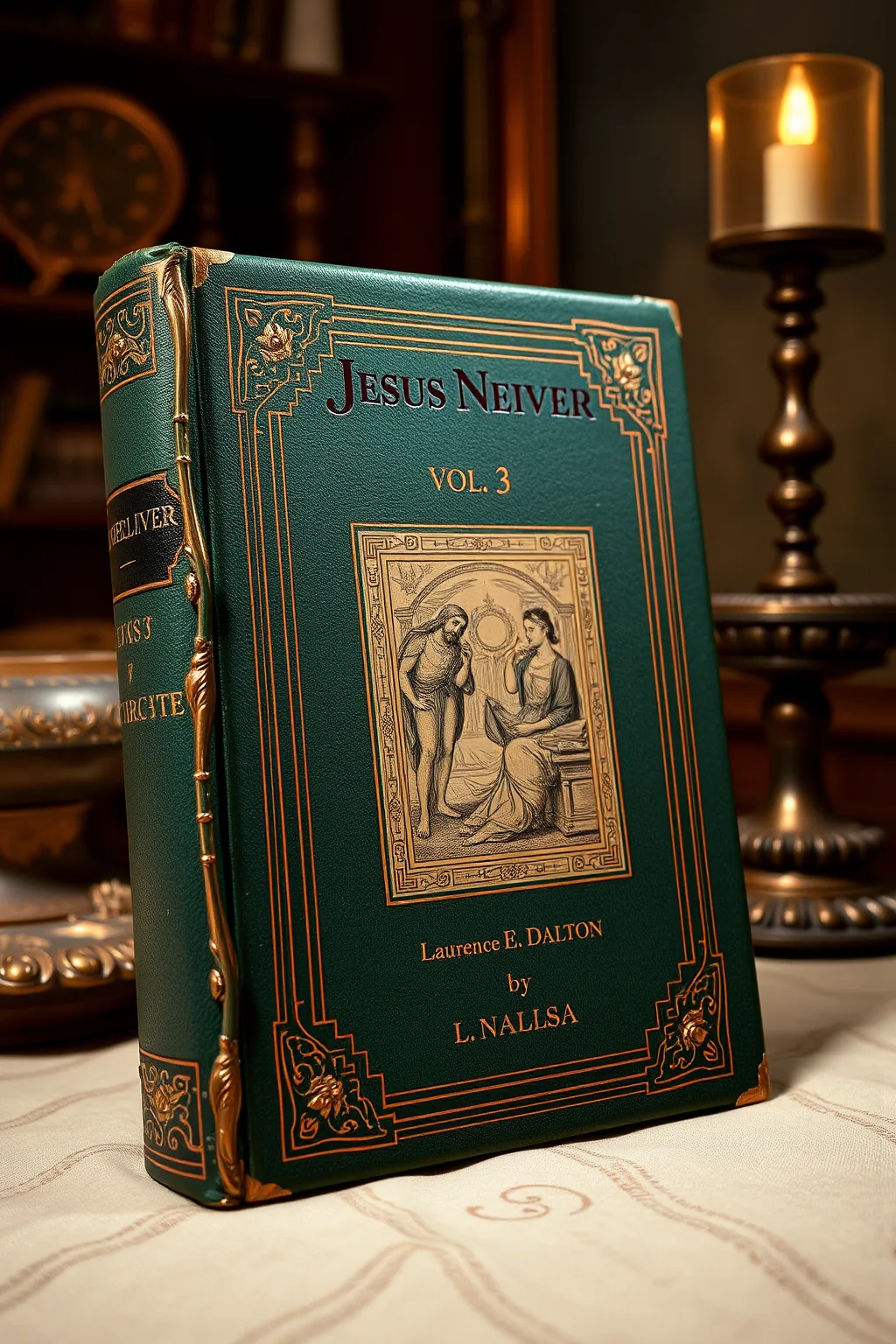
Jesus Never Lived Vol 3 The Pagan Morals of Jesus Christ
 75
75

Jesus Never Lived Vol 3 The Pagan Morals of Jesus Christ



Laurence E. Dalton's 'Jesus Never Lived Vol 3: The Pagan Morals of Jesus Christ' is a captivating journey into the occult and esoteric underpinnings of Christian ethics. By juxtaposing the teachings of Jesus with the Stoic ethics of Seneca, Dalton uncovers a rich tapestry of pagan influences that have shaped Western morality. This volume is a valuable addition to the esoteric literature, offering modern seekers a unique perspective on the hidden truths within religious texts. Dalton's scholarly approach and engaging writing style make this book accessible to both academic researchers and casual readers. For those interested in the occult, paganism, and the deeper meanings behind religious ethics, this book is an essential read.
📝 Description
75
Laurence E. Dalton's 2015 book argues Jesus's morals derive from pagan ethics.
In 'Jesus Never Lived Vol 3: The Pagan Morals of Jesus Christ,' Laurence E. Dalton examines the ethical framework attributed to Jesus. Dalton proposes that these teachings show significant overlap with the moral philosophy of ancient Stoics, particularly Seneca. The book analyzes the symbolic language and philosophical underpinnings of Christian doctrine, suggesting a connection to pre-Christian ethical systems. It invites a reevaluation of conventional religious history by drawing parallels between the moral codes of different eras and cultures.
The author's approach is to uncover potential influences on Western ethical thought that lie outside mainstream historical accounts. The work aims to stimulate intellectual curiosity about the roots of moral concepts. It is written for readers interested in comparative ethics and the historical development of religious ideas, encouraging a deeper look at the origins of widely accepted values.
This volume sits within the esoteric tradition that seeks hidden connections between world religions and ancient philosophies. It aligns with movements that investigate the pre-Christian roots of Western spiritual and ethical systems. Such scholarship often reinterprets religious history by highlighting syncretism and the transmission of ideas across cultures, particularly through symbolic and allegorical readings of sacred texts. Dalton's work contributes to this lineage by focusing on the ethical dimension.
✍️ Author

Laurence E. Dalton
John Dalton (; 5 or 6 September 1766 – 27 July 1844) was an English chemist, physicist, and meteorologist whose work laid the foundations of modern atomic theory and stoichiometric chemistry. Building on earlier ideas about the indivisibility of matter an…
💡 Why Read This Book?
Read 'Jesus Never Lived Vol 3: The Pagan Morals of Jesus Christ' to gain a deeper understanding of the esoteric and occult influences on Christian ethics. This book challenges conventional wisdom and offers a fresh perspective on the origins of religious morals. Whether you are a student of comparative religion, a practitioner of witchcraft, or simply curious about the hidden truths within religious texts, this book provides valuable insights and thought-provoking analysis.
⭐ Reader Reviews
Honest opinions from readers who have explored this book.
❓ Frequently Asked Questions
What is the main focus of 'Jesus Never Lived Vol 3'?
The main focus is the comparison of Jesus's ethical teachings with the Stoic ethics of Seneca, revealing pagan influences on Christian morality.
Who should read this book?
This book is ideal for students of comparative religion, practitioners of witchcraft, and anyone interested in the esoteric and occult dimensions of religious ethics.
How does this book differ from the previous volumes?
While the previous volumes explore the mythical and philosophical aspects of Jesus's teachings, this volume specifically focuses on the moral and ethical parallels with pagan philosophies.
🔮 Key Themes & Symbolism
Pagan Origins of Christian Ethics
Dalton examines the ancient Stoic ethics of Seneca, revealing how these pagan teachings influenced the moral and ethical framework of Christianity. This theme highlights the occult connections between pagan philosophy and Christian doctrine, offering a fresh perspective on the development of Western ethics.
Mystical Parallels
The book uncovers hidden parallels between the teachings of Jesus Christ and the Stoic ethics of Seneca, revealing a web of mystical knowledge that transcends religious boundaries. This theme explores the symbolic and philosophical connections that bind these seemingly disparate traditions.
Esoteric Scholarship
Dalton's work is a evidence of the depth of esoteric scholarship, blending philosophical rigor with mystical insight. This theme emphasizes the book's value as a resource for scholars and seekers of hidden knowledge, offering a unique perspective on the occult underpinnings of Western ethics.
💬 Memorable Quotes
Direct passages from the work, attributed to the author.
“Hidden knowledge reveals the true nature of ethics and morality.”
— Dalton's exploration of occult connections challenges conventional religious narratives.
“Stoic ethics provide a foundation for understanding Christian morality.”
— The comparison of Stoic and Christian ethics reveals a web of hidden knowledge.
“The occult underpinnings of Western ethics are a evidence of ancient wisdom.”
— Dalton's work invites readers to explore the mystical connections between pagan and Christian traditions.
💡 Key Ideas
Editorial paraphrase of the work's core concepts — not direct quotes.
The moral teachings of Jesus Christ are deeply rooted in the Stoic ethics of Seneca.
This quote underscores the book's central thesis, highlighting the pagan origins of Christian morality.
The wisdom of the ages is woven into the fabric of Western ethics.
This quote emphasizes the mystical and philosophical depth of the book's themes.
🌙 Esoteric Significance
Tradition
This book belongs to the Hermetic tradition, which emphasizes the occult connections between ancient wisdom and modern spirituality. Hermeticism seeks to uncover hidden knowledge and reveal the true nature of reality, making it a fitting framework for Dalton's exploration of pagan and Christian ethics.
Symbolism
Key symbols in the book include the Stoic virtues of wisdom, justice, courage, and temperance, which are compared to the moral teachings of Jesus Christ. These symbols represent the underlying principles of ethics and morality, revealing the mystical connections between pagan philosophy and Christian doctrine.
Modern Relevance
Today, this book matters because it invites readers to question conventional religious narratives and explore the occult origins of Western ethics. Modern practitioners of Hermeticism and other esoteric traditions use this book as a resource for deepening their understanding of the mystical and philosophical underpinnings of ethics and morality.
👥 Who Should Read This Book
Beginners interested in esoteric studies will find 'Jesus Never Lived Vol 3' an accessible introduction to the occult underpinnings of Western ethics. Scholars of religious studies and philosophy will appreciate the depth of Dalton's research and the clarity with which he presents his arguments. Spiritual seekers looking to explore the mystical connections between pagan and Christian traditions will find this book a valuable resource. Practitioners of Hermeticism and other esoteric traditions will use this volume to deepen their understanding of ancient wisdom and its modern relevance.
📜 Historical Context
Written in an era of growing interest in esoteric and occult studies, 'Jesus Never Lived Vol 3: The Pagan Morals of Jesus Christ' offers a timely exploration of the pagan origins of Christian ethics. The book's influence lies in its ability to challenge conventional religious narratives and reveal the hidden knowledge that binds ancient Stoic ethics with Christian morality. This volume is part of a broader series that examines the mystical and philosophical underpinnings of Western ethics, making it an essential read for scholars and seekers of hidden knowledge.
📔 Journal Prompts
Reflect on the Stoic virtues of wisdom, justice, courage, and temperance. How do they compare to the moral teachings of Jesus Christ?
Explore the occult connections between pagan philosophy and Christian doctrine. What hidden knowledge do these connections reveal?
Consider the historical context of 'Jesus Never Lived Vol 3'. How does this book challenge conventional religious narratives?
Think about the modern relevance of this book. How can its insights be applied to contemporary spiritual practices?
Write about your personal journey of spiritual seeking. How does this book contribute to your understanding of ethics and morality?
🗂️ Glossary
Stoic Ethics
The philosophical teachings of the Stoic school, emphasizing virtues such as wisdom, justice, courage, and temperance.
Hermeticism
An esoteric tradition that seeks to uncover hidden knowledge and reveal the true nature of reality.
Occult
Relating to mystical, spiritual, or supernatural phenomena that are beyond the range of ordinary knowledge or experience.
Esoteric
Intended for or likely to be understood by only a small number of people with a specialized knowledge or interest.
Mystical
Relating to experiences that are difficult or impossible to explain with words, involving a sense of connection to something greater than oneself.
This book appears in 2 collections
🔮 Readers Also Liked
Browse all →







From the “Witchcraft” Collection
View all →







More Free Witchcraft & Paganism Books
View all →