Kabbalah for dummies

 73
73

Kabbalah for dummies
Arthur Kurzweil's "Kabbalah for Dummies" succeeds in its stated goal of making an arcane subject approachable. The initial sections, detailing the Sefirotic Tree and the basic structure of Kabbalistic cosmology, are particularly clear. Kurzweil’s strength lies in his ability to translate complex ideas into everyday language, avoiding the dense jargon that often encumbers introductions to this subject. However, this simplification sometimes leads to a loss of nuance. For instance, the discussion on the practical application of Kabbalah, while intended to be illustrative, can feel somewhat superficial when compared to the depth found in classical Kabbalistic texts. The book's commitment to accessibility is its primary virtue, yet it may leave seasoned practitioners wanting more. For a beginner seeking a gentle introduction, it serves its purpose adequately.
📝 Description
73
Arthur Kurzweil's 2007 book offers a clear introduction to Kabbalistic thought for the uninitiated.
Kabbalah for Dummies, published in 2007, aims to make the complex ideas of Kabbalah accessible to a general audience. Arthur Kurzweil breaks down traditional mystical and philosophical concepts into understandable terms, avoiding the dense language often associated with the subject. The book covers the basic elements of Kabbalistic study, its historical development, and ways it can be understood in a contemporary setting.
This guide is designed for anyone curious about Kabbalah, regardless of their background in Jewish mysticism or religious studies. It is particularly helpful for those who find more academic or symbolic texts daunting. The book also appeals to readers interested in the philosophical or spiritual aspects of Jewish tradition without requiring strict adherence to religious practice.
Kabbalah, a tradition of Jewish mysticism, traces its origins to medieval Spain. Key texts like the Zohar laid groundwork for complex systems of understanding divine emanations and creation. Arthur Kurzweil's work engages with this deep historical and symbolic tradition, but adapts it for modern readers seeking accessible explanations. It bridges the gap between ancient esoteric teachings and contemporary curiosity about spiritual and philosophical systems.
💡 Why Read This Book?
• Gain an initial grasp of the Sefirot and the Tree of Life, understanding their symbolic representation of divine emanations as presented in Kurzweil's approachable diagrams. • Learn about the mystical significance of Hebrew letters, exploring how the book interprets their role in creation and divine communication. • Understand foundational Kabbalistic concepts like *Tzimtzum*, grasping the basic idea of divine self-limitation within the context of Kurzweil's simplified explanations.
⭐ Reader Reviews
Honest opinions from readers who have explored this book.
❓ Frequently Asked Questions
What is the primary goal of Arthur Kurzweil's "Kabbalah for Dummies"?
The book's main objective is to demystify Kabbalah for a general audience, presenting its complex philosophical and mystical concepts in an easy-to-understand format, making it accessible to beginners.
When was "Kabbalah for Dummies" first published?
Arthur Kurzweil's "Kabbalah for Dummies" was first published in 2007, aiming to meet a growing interest in esoteric studies among the general public.
Does the book require prior knowledge of Jewish mysticism?
No, the book is specifically designed for individuals with little to no prior knowledge of Kabbalah or Jewish mysticism, offering a foundational introduction.
What are some core concepts discussed in the book?
Key concepts covered include the Sefirot, the Tree of Life, the mystical properties of Hebrew letters, and foundational ideas like divine contraction (*Tzimtzum*).
Is this book suitable for academic study of Kabbalah?
While it provides a good overview, it is more of an introductory primer. More in-depth academic study might require consulting scholarly texts alongside this work.
Does the book offer practical Kabbalistic exercises?
The book touches upon practical applications in a simplified manner, aiming to illustrate concepts rather than providing detailed meditative or ritualistic instructions.
🔮 Key Themes & Symbolism
The Tree of Life Explained
The book meticulously breaks down the Kabbalistic concept of the Tree of Life, presenting it not just as a diagram but as a map of divine emanation and spiritual ascent. Kurzweil details the ten Sefirot—attributes or emanations of God—explaining their individual meanings and interrelationships. This central metaphor serves as the framework for understanding the divine structure of the universe and the human soul's journey. The work aims to clarify this intricate symbol, making its wide implications accessible to those unfamiliar with Kabbalistic terminology, illustrating how these divine energies manifest in the created world.
Mystical Hebrew Alphabet
Central to Kabbalistic thought is the profound significance attributed to the Hebrew alphabet. Kurzweil explores how each letter is not merely a character but a carrier of divine energy and conceptual meaning, integral to the act of creation itself. The book explores the idea that the letters possess a cosmogonic power, forming the building blocks of existence. Understanding these letters, their numerical values (Gematria), and their symbolic associations offers a unique lens through which to view the underlying structure of reality and the divine language that underpins it.
Divine Emanation and Contraction
A core tenet discussed is the Kabbalistic understanding of creation as a process involving divine emanation and, paradoxically, divine contraction (*Tzimtzum*). Kurzweil explains how the infinite divine essence, in order to make space for a finite creation, underwent a process of self-limitation. This concept is crucial for reconciling the presence of God in a world that appears separate from Him. The book simplifies this complex theological idea, offering readers a foundational understanding of how the finite and infinite can coexist within the Kabbalistic framework.
The Nature of the Soul
Kabbalah offers a sophisticated view of the human soul, often described in multiple levels or dimensions. Kurzweil's work introduces these different aspects of the soul, exploring their connection to the divine emanations and their potential for spiritual growth. The book touches upon the soul's journey, its purpose within the created order, and its ultimate aspiration towards reunification with the divine source. This exploration provides a framework for understanding human consciousness and spiritual development from a Kabbalistic perspective.
💬 Memorable Quotes
Direct passages from the work, attributed to the author.
“The Sefirot are like channels through which divine energy flows into the world.”
— This statement captures the essence of the Sefirot as conduits, emphasizing their role in distributing God's creative force and sustaining existence, making the divine accessible and active in the cosmos.
“Each Hebrew letter has a unique spiritual vibration and meaning.”
— This highlights the Kabbalistic belief that the Hebrew alphabet is not arbitrary but imbued with divine consciousness, with each letter possessing inherent symbolic and energetic properties.
“Understanding Kabbalah requires looking beyond the literal.”
— This suggests that the true meaning of Kabbalistic texts and symbols lies in their deeper, mystical, or allegorical layers, requiring intuition and spiritual insight to apprehend.
“Creation involved God making space for the world.”
— This interpretation simplifies the concept of *Tzimtzum*, explaining the idea that the infinite divine presence withdrew or contracted to allow for the existence of a separate, finite reality.
💡 Key Ideas
Editorial paraphrase of the work's core concepts — not direct quotes.
The Tree of Life is a blueprint for the universe and the human soul.
This paraphrased concept underscores the dual function of the Tree of Life: it maps both the structure of divine reality and the internal range of human consciousness and spiritual potential.
🌙 Esoteric Significance
Tradition
This work falls within the broad category of Western Esotericism, specifically aiming to introduce Kabbalistic concepts. Kabbalah itself is a tradition originating within Jewish mysticism, but Kurzweil's approach broadens its appeal beyond its religious origins. The book attempts to present Kabbalistic ideas in a manner that can be appreciated for their philosophical and psychological dimensions, aligning with how many esoteric traditions interpret and utilize Kabbalistic frameworks outside of strict religious observance.
Symbolism
The primary symbols explored are the Sefirot and the Tree of Life. The Sefirot are presented as divine emanations or attributes, often visualized as ten circles arranged on the Tree of Life. This Tree is a schematic representation of the divine structure, creation, and the path of spiritual ascent. Kurzweil also touches upon the mystical significance of Hebrew letters, viewing them as foundational elements of creation with inherent spiritual power and meaning, crucial for understanding the divine architecture.
Modern Relevance
While "Kabbalah for Dummies" is an introductory text, the concepts it unpacks continue to influence modern spiritual and psychological thought. Kabbalistic ideas, particularly those related to the Tree of Life and the Sefirot, are often integrated into Western Hermeticism, New Age spirituality, and depth psychology. Thinkers and practitioners exploring consciousness, archetypes, and spiritual development may find the simplified explanations of these core Kabbalistic motifs a useful starting point for further exploration.
👥 Who Should Read This Book
• Absolute beginners curious about Kabbalah, who want a simple, jargon-free introduction to its core ideas without needing prior religious or philosophical background. • Students of comparative religion or Western esotericism seeking a foundational understanding of Jewish mystical thought and its place within broader spiritual traditions. • Individuals interested in exploring concepts like the Tree of Life or the mystical significance of Hebrew letters from a philosophical or psychological perspective.
📜 Historical Context
Arthur Kurzweil's "Kabbalah for Dummies," published in 2007, arrived at a time when interest in esoteric and spiritual traditions was significant, fueled by New Age movements and a broader cultural curiosity about mysticism. Kabbalah, with its roots stretching back to medieval Spanish Kabbalah and texts like the Zohar, had already seen various popularizations. Kurzweil's work positioned itself within this trend, aiming for a more straightforward, secular-friendly introduction than many earlier or more academic treatments. It entered a market alongside works by authors like Philip Berg, who also sought to popularize Kabbalah, though often with a distinct Chabad Hasidic influence. The reception of such popular guides often involves a tension between accessibility and fidelity to the complex, often religiously embedded, original teachings.
📔 Journal Prompts
The Sefirot as divine attributes: How might understanding these emanations influence your perception of divine presence?
The Tree of Life as a cosmic map: Reflect on its potential as a guide for personal spiritual growth.
Hebrew letters as creative forces: Consider the symbolic power attributed to the alphabet in creation myths.
The concept of *Tzimtzum*: Explore the idea of divine limitation in making space for existence.
The soul's journey: Ponder the multi-layered nature of the soul as described in Kabbalistic thought.
🗂️ Glossary
Sefirot
The ten divine emanations or attributes through which God is said to have created the universe and continues to sustain it. They form the structure of the Kabbalistic Tree of Life.
Tree of Life
A central diagram in Kabbalah, representing the Sefirot and their interconnections. It serves as a map of creation, divine consciousness, and the path of spiritual development.
Tzimtzum
A Kabbalistic concept referring to the divine 'contraction' or withdrawal of God's infinite light to create a 'vacant space' necessary for the existence of the created world.
Hebrew Alphabet
In Kabbalah, the 22 letters of the Hebrew alphabet are considered sacred and possess mystical significance, seen as fundamental building blocks of creation and divine communication.
Gematria
A Kabbalistic method of interpreting the Hebrew Bible by calculating the numerical value of words and phrases, suggesting deeper connections between concepts with the same numerical sum.
Ein Sof
The Kabbalistic term for God as 'Without End' or 'Infinite' – the unknowable, transcendent aspect of the Divine that precedes all manifestation and existence.
Keter
The first Sefirah on the Tree of Life, often translated as 'Crown.' It represents the highest, most transcendent divine will and emanation, closest to Ein Sof.
🔮 Readers Also Liked
Browse all →




More by Arthur Kurzweil
All books →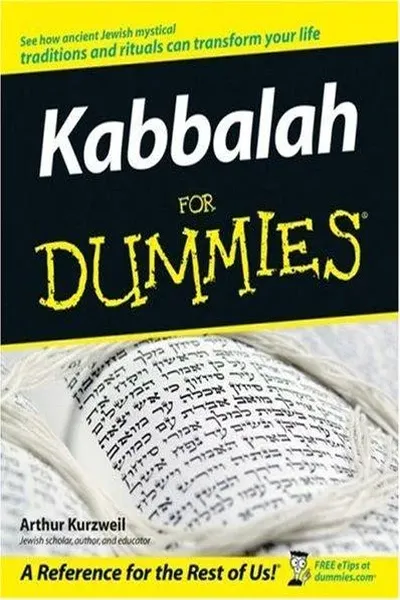
More Free Mysticism & Contemplation Books
View all →