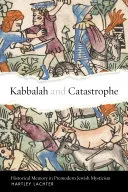
Kabbalah and Catastrophe
 74
74

Kabbalah and Catastrophe
Hartley Lachter's "Kabbalah and Catastrophe" offers a compelling analysis of how Jewish mystics reframed historical suffering through the lens of esoteric doctrines. Lachter skillfully demonstrates how concepts like soul reincarnation and sequential universes were not mere speculative wanderings but vital tools for constructing a coherent, divinely guided narrative of redemption amidst profound historical trauma. The section detailing the Lurianic Kabbalah's influence on interpreting exile is particularly illuminating, showing how the Zohar's mystical cosmology provided a framework for understanding the necessity of suffering. A minor point of critique might be that the dense theological arguments, while necessary, occasionally obscure the direct historical impact on the communities experiencing these catastrophes. Nevertheless, Lachter’s meticulous scholarship provides a vital perspective on how esoteric thought grappled with existential crises. The book is an essential resource for understanding the intellectual resilience of Jewish mysticism.
📝 Description
74
Hartley Lachter's Kabbalah and Catastrophe analyzes how Jewish mystics formulated theological responses to historical calamities.
Kabbalah and Catastrophe examines the theological frameworks that premodern Jewish mystics, especially Kabbalists, developed to make sense of historical disasters. These texts were not simple accounts of events but elaborate models of divine direction, suggesting a hidden plan guiding human affairs. The book details how these mystical doctrines attempted to reconcile suffering with a redemptive outlook, portraying misfortunes as necessary steps in a divine process.
This work is intended for scholars and advanced students of Jewish mysticism, Kabbalah, and religious history. It will interest those focused on how esoteric traditions, particularly within Judaism, dealt with philosophical and theological questions arising from historical trauma. Readers will learn about the use of concepts like the reincarnation of souls and successive universes to interpret collective suffering and divine justice, offering insights into the intellectual history of Jewish messianism and the interpretation of catastrophe.
The Kabbalistic writings discussed in the book often appeared during times of severe persecution and existential crises for Jewish communities across Europe and the Middle East. Historical pressures, from the aftermath of the Crusades to the Spanish expulsions of 1492, fueled the creation of complex mystical interpretations. Thinkers like Isaac Luria in the 16th century, whose Lurianic Kabbalah greatly shaped later mystical thought, confronted similar issues of exile and redemption. The intellectual climate of these periods, marked by deep religious devotion and social upheaval, created a fertile environment for these esoteric explanations of suffering.
This book is situated within the rich tradition of Kabbalah, a form of Jewish mysticism that developed complex symbolic and cosmological systems. Kabbalists sought to understand the divine nature and its relationship with the created world, often through esoteric interpretations of Jewish scripture and ritual. Their thought frequently engaged with concepts of exile, redemption, and the hidden workings of God, especially in response to periods of crisis and persecution within Jewish history. Lachter's work traces how these mystical traditions provided a framework for comprehending suffering not as random misfortune, but as part of a divinely orchestrated cosmic drama.
💡 Why Read This Book?
• Understand the esoteric rationale behind historical suffering by exploring the Kabbalistic concept of *gilgul neshamot* (soul reincarnation) and its role in framing misfortune as a necessary step toward redemption, as detailed in Lachter's analysis. • Grasp how mystical cosmologies offered a framework for divine providence during crises, focusing on Lachter's examination of successive universes as a means to integrate historical calamities into a larger salvific plan. • Connect with the intellectual responses to historical trauma by examining the specific theological innovations that emerged from periods of persecution, such as those influenced by 16th-century Kabbalists like Isaac Luria.
⭐ Reader Reviews
Honest opinions from readers who have explored this book.
❓ Frequently Asked Questions
What is the primary argument of Hartley Lachter's 'Kabbalah and Catastrophe'?
The book argues that premodern Kabbalistic texts used complex doctrines, including reincarnation and successive universes, not to chronicle history, but to demonstrate that Jewish historical misfortunes were integral steps toward eventual redemption within a divine plan.
What specific Kabbalistic concepts are analyzed in relation to historical events?
The work analyzes concepts such as *gilgul neshamot* (reincarnation of souls) and the notion of multiple successive universes as frameworks for understanding and reinterpreting historical calamities and Jewish suffering.
When was 'Kabbalah and Catastrophe' first published?
Hartley Lachter's 'Kabbalah and Catastrophe' was first published on October 22, 2024.
How did Kabbalists view misfortunes according to the book?
According to 'Kabbalah and Catastrophe', Kabbalists viewed misfortunes not as random events or divine abandonment, but as necessary, albeit painful, stages in a divinely orchestrated process leading to ultimate redemption.
Who is the intended audience for this book?
The book is primarily intended for scholars and advanced students of Jewish mysticism, Kabbalah, religious history, and those interested in esoteric responses to historical trauma and the philosophy of suffering.
What is the significance of Isaac Luria in the context of this book?
Isaac Luria, a 16th-century Kabbalist, is significant as his ideas, particularly within Lurianic Kabbalah, profoundly influenced subsequent mystical thought and provided frameworks for interpreting exile and redemption, which Lachter explores.
🔮 Key Themes & Symbolism
Divine Plan and Suffering
The central theme is how Kabbalistic thought constructed elaborate models of a secret divine plan to interpret historical calamities. The work explores doctrines like reincarnation and successive universes as theological tools used by Jewish mystics to demonstrate that misfortunes were not random but necessary steps toward a divinely ordained redemption, offering a framework for understanding suffering within a teleological worldview.
Cosmic Cycles and Redemption
This theme focuses on the Kabbalistic notions of multiple successive universes and the cyclical nature of existence, particularly *gilgul neshamot* (reincarnation of souls). These concepts were employed to integrate periods of historical catastrophe and Jewish suffering into a broader narrative of cosmic unfolding and eventual salvation, suggesting that present suffering held the key to future redemption.
Esoteric Hermeneutics of History
The book examines how Kabbalists developed unique interpretive methods to engage with historical events, particularly traumatic ones. Instead of viewing history through a purely empirical lens, they applied esoteric doctrines to reveal hidden divine meanings, arguing that calamities served an important role in the grand cosmic drama leading towards messianic redemption.
Mysticism and Existential Crisis
This theme examines the psychological and theological impact of historical crises on Jewish communities and how mysticism provided a coping mechanism. By positing a divine plan and the necessity of suffering for redemption, Kabbalah offered a framework that allowed adherents to maintain faith and hope amidst persecution and disaster.
💬 Memorable Quotes
Direct passages from the work, attributed to the author.
“Premodern kabbalistic texts provided elaborate models for understanding the secret divine plan guiding human affairs.”
— This highlights the core function of Kabbalah as presented in the book: not as a historical record, but as a system for interpreting divine will and purpose behind worldly events, especially suffering.
“Doctrines such as reincarnation and multiple successive universes sought to demonstrate that misfortunes were necessary steps toward redemption.”
— This expresses the book's argument about how specific esoteric concepts were strategically employed by Jewish mystics to reframe historical calamities, turning perceived failures into crucial components of a redemptive process.
“Misfortunes of Jewish history were in fact necessary steps toward redemption.”
— This interpretive statement emphasizes the book's focus on the teleological aspect of Kabbalistic thought, where even catastrophic events are understood as integral, purposeful elements in a larger divine timeline leading to salvation.
💡 Key Ideas
Editorial paraphrase of the work's core concepts — not direct quotes.
Kabbalistic doctrines offered elaborate models for understanding the secret divine plan guiding human affairs.
This paraphrased concept underscores the book's central thesis: that Kabbalah provided sophisticated theological frameworks to discern a hidden order and purpose behind the often chaotic and tragic events of human history.
The work analyzes innovative kabbalistic doctrines through which Jewish mystics sought to demonstrate that the misfortunes of Jewish history were in fact necessary steps toward redemption.
This interpretive statement summarizes the analytical approach of the book, focusing on how specific mystical ideas were utilized to construct a theological narrative that legitimized and explained historical suffering as essential for ultimate redemption.
🌙 Esoteric Significance
Tradition
This work is firmly rooted in the Kabbalistic tradition, a lineage of Jewish mysticism that flourished from the medieval period onwards. It examines how Kabbalists, building upon earlier texts like the Zohar and later developments such as Lurianic Kabbalah, employed their unique cosmological and theological frameworks. Lachter's analysis highlights how this tradition adapted its core concepts to address specific historical circumstances, particularly periods of intense suffering and exile, thereby demonstrating its dynamic engagement with existential realities.
Symbolism
Key symbols explored include *gilgul neshamot* (reincarnation of souls) and the concept of successive universes. *Gilgul* provided a means to understand personal and collective suffering as part of a soul's ongoing journey toward purification and eventual redemption. The idea of multiple, sequential cosmic cycles allowed mystics to situate historical catastrophes within a larger, divinely ordered process, suggesting that even periods of profound darkness were necessary stages in the unfolding of creation towards its ultimate perfection.
Modern Relevance
Contemporary scholars of religion and Jewish studies continue to engage with Lachter's findings, particularly regarding the theological resilience demonstrated through Kabbalistic interpretations of history. Thinkers exploring trauma studies, comparative mysticism, and the philosophy of religion find value in understanding how esoteric systems provide frameworks for making meaning out of suffering. The work's insights into cyclical cosmologies and redemptive narratives remain relevant for those studying alternative modes of historical consciousness and spiritual coping mechanisms in the face of adversity.
👥 Who Should Read This Book
• Scholars of Jewish mysticism and Kabbalah seeking in-depth analysis of theological responses to historical trauma. • Students of comparative religion interested in how esoteric traditions interpret suffering and divine providence. • Researchers in intellectual history examining the development of messianic thought and eschatology within premodern Jewish communities.
📜 Historical Context
The intellectual field of premodern Europe, particularly from the late medieval period through the early modern era, was profoundly shaped by religious upheaval and the persistent threat of persecution faced by Jewish communities. Hartley Lachter's "Kabbalah and Catastrophe" situates its analysis within this context, where events like the expulsions following the Reconquista (culminating in 1492) and ongoing pogroms spurred intense theological reflection. Kabbalistic thought, especially the Lurianic system developed by Isaac Luria in the 16th century, provided a sophisticated language to grapple with exile, suffering, and the elusive nature of divine justice. This mystical framework offered an alternative to purely historical or legalistic interpretations of calamity. While Renaissance Humanism and Christian theological debates flourished elsewhere, Jewish mystical circles were developing intricate cosmologies. The reception of these ideas was often internal, within specific communities, though their influence spread through manuscript circulation and later print. The work implicitly engages with competing schools of thought by demonstrating how Kabbalah offered a unique eschatological vision distinct from other Jewish philosophical or theological responses to crisis.
📔 Journal Prompts
The Kabbalistic concept of *gilgul neshamot* and its role in understanding historical misfortune.
Reflections on successive universes as a framework for interpreting collective suffering.
How Lurianic Kabbalah's interpretation of exile shapes understanding of divine plan.
The tension between immanent suffering and transcendent salvation in Kabbalistic thought.
Examining the necessity of catastrophe for redemption within esoteric narratives.
🗂️ Glossary
Kabbalah
A system of Jewish mysticism that explores the nature of God, creation, and the relationship between the divine and the human, often employing complex symbolic language and esoteric doctrines.
Gilgul Neshamot
A Kabbalistic doctrine concerning the transmigration or reincarnation of souls, viewed as a process of spiritual refinement and a means to understand the unfolding of justice and destiny across lifetimes.
Divine Plan
In Kabbalistic thought, the intricate and secret cosmic order or blueprint established by God that guides all of creation and history towards a predetermined end, often involving redemption.
Successive Universes
The Kabbalistic concept that creation may unfold through multiple distinct cosmic cycles or universes, each with its own processes and historical trajectory, leading eventually towards ultimate perfection.
Redemption
In Jewish theology and mysticism, the ultimate liberation and restoration of the Jewish people and the world, often envisioned as a messianic era characterized by peace, justice, and divine presence.
Lurianic Kabbalah
The influential system of Kabbalah developed by Isaac Luria in the 16th century, focusing on concepts like *Tzimtzum* (divine contraction), *Shevirat HaKelim* (shattering of the vessels), and *Tikkun* (rectification), which profoundly shaped subsequent Jewish mystical thought.
Hermeneutics
The theory and methodology of interpretation, especially the interpretation of texts; in this context, the esoteric methods used by Kabbalists to understand historical events and divine will.