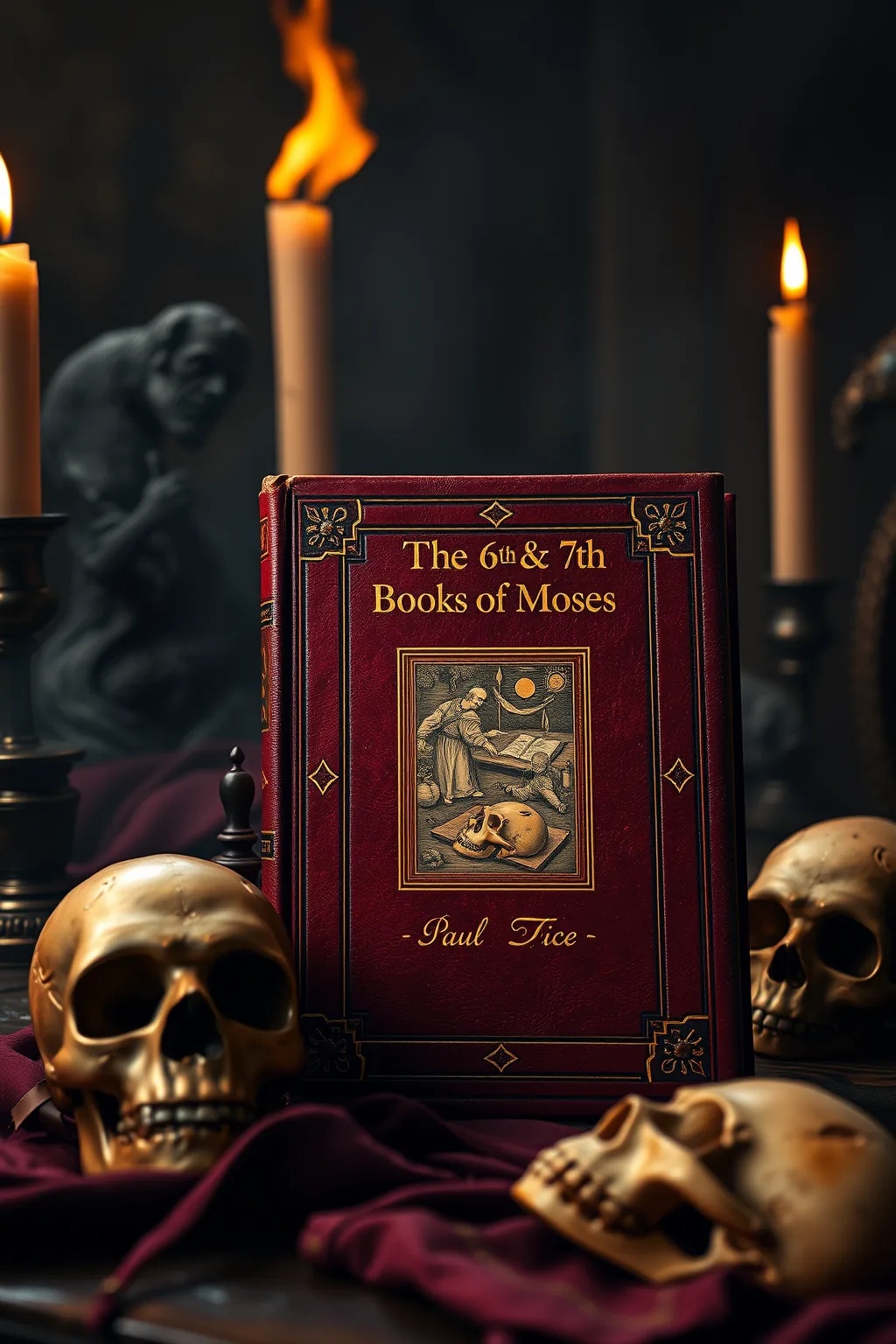
The 6th & 7th Books of Moses
 71
71

The 6th & 7th Books of Moses
Paul Tice's 1999 edition of The 6th & 7th Books of Moses presents a crucial, albeit challenging, artifact of Western esotericism. The text itself, originating in the late 18th century, is a dense compendium of magical formulae, divine names, and angelic invocations. Tice’s contribution lies in making this complex material accessible to a modern audience. A particular strength is the inclusion of numerous diagrams and seals, which are vital for understanding the operational aspects of the grimoire. However, the inherent difficulty of the source material remains a limitation; without extensive prior knowledge of Kabbalistic numerology and ceremonial magic, the instructions can be opaque. The section detailing the "Shemhamphorash" and its associated angelic powers offers a glimpse into the foundational beliefs driving these magical systems. This edition serves as a vital primary source for those studying the evolution of grimoires and their influence on modern magical practice, but it demands significant scholarly engagement.
This edition is a necessary, if dense, resource for serious occult scholars.
📝 Description
71
Published in 1795, The 6th and 7th Books of Moses purports to reveal divine names and angelic summoning techniques.
This grimoire, attributed to Moses, contains rituals, incantations, seals, and talismans. It claims to offer methods for protection, divination, and commanding supernatural entities. While presented as an ancient text, its current form draws from Kabbalistic, Hermetic, and folk magical traditions, coalescing in the 18th and 19th centuries. Its first known publication was in Hamburg, Germany, during a period of widespread interest in occultism and secret societies.
The work is structured for serious practitioners and historians of ceremonial magic and esoteric lore. The material is dense, and the rituals require careful and precise execution. Students of Western esotericism, particularly the grimoire tradition and its impact on contemporary magical practices, will find this an important, though demanding, text. It is not intended for casual readers.
The 6th and 7th Books of Moses is a product of the late European Enlightenment's fascination with hidden knowledge. It blends elements from various occult streams, notably Kabbalah's emphasis on divine names, Hermeticism's focus on celestial correspondences, and folk magic's practical applications. The text's structure and content reflect the grimoire tradition, a category of magical textbooks that flourished from the medieval period onwards, often compiling and reinterpreting earlier magical and religious sources. This particular work gained prominence in the 18th and 19th centuries, circulating within circles interested in ceremonial magic and secret doctrines.
💡 Why Read This Book?
• Gain direct access to the "Shemhamphorash," the 72-letter name of God, and understand its purported role in angelic invocation as detailed in the 18th-century grimoire tradition. • Study the intricate planetary seals and their associated celestial intelligences, learning how these specific symbols were historically intended to function in magical operations. • Explore the historical milieu of late 18th-century European occultism, understanding how texts like this emerged and circulated during a period of renewed interest in Kabbalah and Hermeticism.
⭐ Reader Reviews
Honest opinions from readers who have explored this book.
❓ Frequently Asked Questions
What is the origin of The 6th and 7th Books of Moses?
While attributed to Moses, the text as known today was compiled and first published in Germany around 1795. It draws heavily from Kabbalistic, Hermetic, and earlier grimoire traditions, reflecting the esoteric interests of the late 18th century.
Is The 6th and 7th Books of Moses considered a holy text?
No, it is not considered a holy text by mainstream religious traditions. It is classified as a grimoire, a book of magic, containing rituals and incantations rather than scripture.
What is the 'Shemhamphorash' mentioned in the book?
The 'Shemhamphorash' refers to the 72-letter name of God, derived from the biblical Book of Exodus. The 6th and 7th Books of Moses presents this name as a key to unlocking immense spiritual and magical power.
Are the rituals in The 6th and 7th Books of Moses dangerous?
The text describes potentially potent magical operations. Practitioners are advised to approach with extreme caution, respect, and a thorough understanding of the underlying principles, as with any complex magical system.
Who was Paul Tice in relation to this book?
Paul Tice is the editor and publisher of the 1999 edition of The 6th and 7th Books of Moses. His work aimed to make this historical grimoire more accessible to contemporary students of esoteric lore.
Where can I find information on the sigils and seals in the book?
The 1999 edition edited by Paul Tice includes numerous reproductions of the sigils and planetary seals detailed within the text, which are crucial for understanding and potentially performing the described rituals.
🔮 Key Themes & Symbolism
Divine Names and Incantations
Central to the grimoire is the belief in the power inherent in divine names, particularly the "Shemhamphorash." The text provides extensive lists of these names and associated angelic beings, alongside specific incantations intended to invoke them. This reflects a core tenet of many magical systems: that the correct utterance of sacred names acts as a key to accessing divine power and commanding spiritual forces. The focus is on the precise recitation and understanding of these powerful appellations for practical magical effect, a concept deeply rooted in Kabbalistic and Hermetic thought.
Angelic Hierarchy and Invocation
The books detail a complex hierarchy of angels and spirits, assigning them specific roles and powers. Detailed instructions are provided for their invocation, often requiring the use of specific seals, talismans, and ritualistic preparations. This systematic approach to contacting the angelic realms is a hallmark of ceremonial magic. The text aims to provide a practical guide for practitioners to establish communication and gain assistance or knowledge from these celestial entities, moving beyond theoretical discussion into operational magic.
Sigils, Seals, and Talismans
A significant portion of the grimoire is dedicated to the creation and use of magical sigils and planetary seals. These intricate designs are presented as conduits for spiritual energy and keys to unlocking specific magical effects, such as protection, healing, or influence. The book provides numerous examples, often linked to specific angels or divine names, emphasizing the visual and symbolic language of magic. The proper crafting and consecration of these objects are presented as vital steps in the magical process.
The Art of Magical Operations
Beyond theory, the text functions as a practical manual for performing magical operations. It outlines the necessary tools, materials, timing (often linked to astrological considerations), and procedures for achieving desired outcomes. This emphasis on practical application, the 'how-to' of magic, distinguishes it as a working grimoire. The book guides the practitioner through the steps required to manifest intentions through ritualistic means, bridging the gap between spiritual intent and tangible results.
💬 Memorable Quotes
Direct passages from the work, attributed to the author.
“Angelic seals must be drawn precisely on their appointed days and hours.”
— This interpretation emphasizes the importance of astrological timing and accurate execution of the symbolic diagrams (seals) presented in the text for successful invocation of angelic beings.
“Talismans inscribed with specific verses offer potent protection.”
— This interpretation focuses on the protective function of magical objects, suggesting that amulets or talismans bearing scriptural passages or divine names are imbued with the power to ward off harm.
💡 Key Ideas
Editorial paraphrase of the work's core concepts — not direct quotes.
The secret names of God and angels are keys to unlocking divine power.
This paraphrased concept highlights the book's core premise: that the correct pronunciation and understanding of sacred nomenclature, particularly the Shemhamphorash, grants access to supernatural forces and abilities.
The 72 names derived from the Tetragrammaton grant dominion over the elements and spirits.
This paraphrased concept refers to the Shemhamphorash, detailing its purported ability to grant the practitioner control over natural forces and the ability to command various spiritual entities.
Rituals require purity of intent and precise adherence to the prescribed form.
This paraphrased concept underscores the ethical and procedural requirements for effective magic, stressing that both the practitioner's inner state and the exact performance of the ritual are crucial for success.
🌙 Esoteric Significance
Tradition
This work is firmly rooted in the Western Esoteric Tradition, drawing heavily from Kabbalistic mysticism, Hermetic philosophy, and the medieval grimoire lineage. It represents a practical, operational manifestation of these traditions, seeking to harness divine power through specific names, numbers, and symbols. It departs from purely philosophical or theological interpretations by providing explicit instructions for magical workings, aiming to bridge the gap between the divine and the mundane through direct intervention.
Symbolism
Key symbols include the "Shemhamphorash," the 72-letter name of God, which is central to unlocking angelic powers and divine influence. Planetary seals, intricate geometric designs often incorporating divine names or angelic sigils, represent specific celestial forces and intelligences, acting as keys to invoke them. The Hebrew alphabet and specific divine names are also treated as potent symbols, believed to hold inherent power when correctly understood and applied in ritual.
Modern Relevance
Contemporary practitioners of ceremonial magic, chaos magic, and various forms of modern witchcraft often engage with The 6th and 7th Books of Moses. Its influence can be seen in modern spellcraft, sigil creation, and angelic magic practices. Thinkers and practitioners who explore the historical development of magical texts and their application continue to find value in its structured approach to invoking spiritual forces and its rich symbolic language.
👥 Who Should Read This Book
• Students of ceremonial magic and grimoire traditions: To understand the historical development of magical practices and gain access to detailed instructions for angelic invocation and talismanic magic. • Researchers of Western Esotericism: To analyze the confluence of Kabbalistic, Hermetic, and folk magic elements present in late 18th-century occult literature. • Aspiring practitioners of practical magic: For those seeking concrete methods and symbolic systems for working with divine names and angelic forces, provided they approach with diligence and respect.
📜 Historical Context
The 6th and 7th Books of Moses emerged from the fertile ground of late 18th-century European esotericism, a period marked by renewed interest in Kabbalah, Hermeticism, and grimoire traditions. First published in 1795 in Hamburg, Germany, it appeared during an era when figures like Emanuel Swedenborg and Franz Mesmer were influencing occult thought, and secret societies like the Freemasons and Rosicrucians held considerable sway. This text, however, represented a more direct engagement with practical magic than much contemporary philosophical speculation. It was printed in a period of widespread occult revival, partly a reaction to Enlightenment rationalism, and partly a continuation of older magical currents. Its survival and subsequent editions, including the 1999 version by Paul Tice, indicate its persistent appeal, often circulating alongside other seminal grimoires like the Key of Solomon, appealing to those seeking direct operational methods in magic.
📔 Journal Prompts
The significance of the "Shemhamphorash" for your understanding of divine power.
Reflect on the historical context of the 1795 Hamburg publication.
Analyze the structure of angelic invocations presented in the text.
Consider the symbolic meaning of the planetary seals in relation to their intended operations.
Evaluate the practical challenges of performing the rituals described in the book.
🗂️ Glossary
Shemhamphorash
A Hebrew term referring to the 72-letter name of God, believed to be derived from the Book of Exodus. The 6th and 7th Books of Moses presents this name as a powerful key to angelic invocation and magical influence.
Grimoire
A textbook of magic, typically containing instructions for performing rituals, casting spells, invoking spirits, and creating magical objects like talismans and amulets.
Sigil
A magical symbol or sign, often a stylized representation of an intention, entity, or concept, used in ritual magic to focus energy and communicate with spiritual forces.
Planetary Seal
Intricate geometric designs associated with the seven classical planets. These seals are believed to channel the energies of the corresponding planet and its ruling intelligences for magical purposes.
Invocation
The act of calling upon a deity, spirit, or angelic being, typically through prayer, chant, or ritual, with the intention of inviting their presence or influence.
Talismans
Objects inscribed with magical symbols, words, or images, believed to possess protective or empowering qualities when worn or kept by an individual.
Kabbalah
A system of Jewish mysticism that explores the nature of God and the universe through esoteric interpretations of scripture, often involving numerology (Gematria) and symbolic diagrams (like the Tree of Life).
🔮 Readers Also Liked
Browse all →

More by Paul Tice
All books →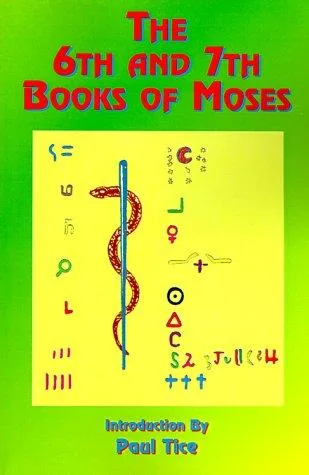
More Free Mysticism & Contemplation Books
View all →