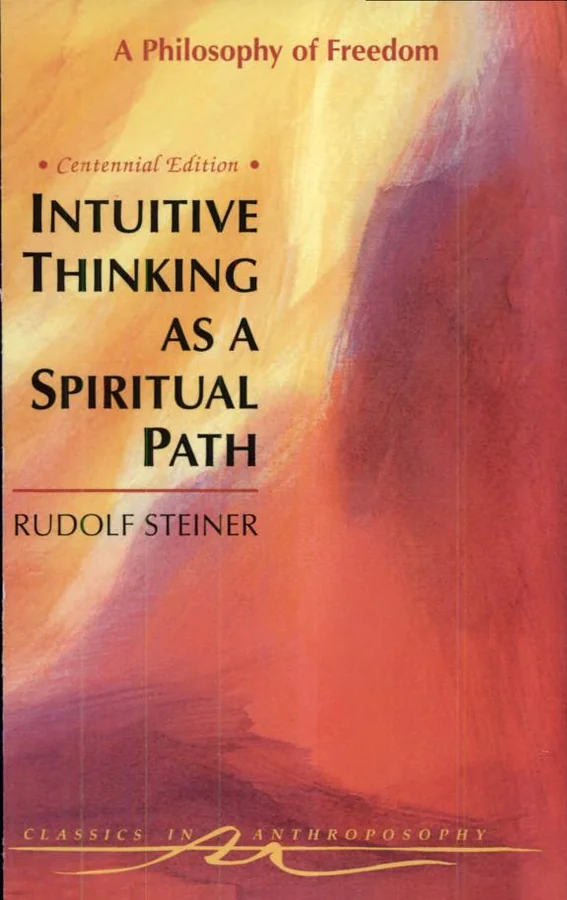
Intuitive Thinking as a Spiritual Path
 79
79

Intuitive Thinking as a Spiritual Path
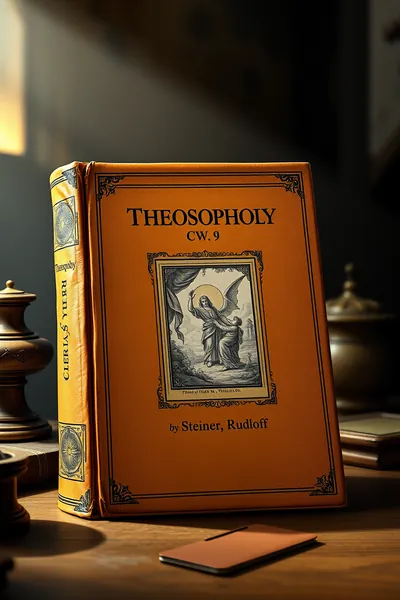
Rudolf Steiner's "Intuitive Thinking as a Spiritual Path" is less a gentle introduction and more an intellectual gauntlet. It posits that the very faculty of thinking, often seen as a tool for dissecting the material world, can be reoriented to perceive the spiritual. The work’s strength lies in its systematic, almost architectonic, presentation of how to achieve this shift. Steiner doesn't merely suggest a path; he meticulously maps it, detailing stages of consciousness development. The concept of 'living thinking' – thinking that is not merely abstract but actively creative and revelatory – is powerfully articulated. However, the density of the prose and the reliance on Steiner's specific terminology can be a significant hurdle. A reader might struggle with passages detailing the 'etheric body' or the precise nature of 'inspiration' without prior grounding in Anthroposophy. The book demands considerable commitment, but for those willing to undertake the mental discipline, it offers a unique framework for spiritual cognition.
Steiner's "Intuitive Thinking as a Spiritual Path" provides a demanding but potentially illuminating method for spiritual perception.
📝 Description
79
Rudolf Steiner published 'Intuitive Thinking as a Spiritual Path' in 1995, based on early 20th-century lectures.
Rudolf Steiner's "Intuitive Thinking as a Spiritual Path" details a method for transforming ordinary thought into direct spiritual perception. This is not a collection of anecdotes, but a systematic examination of consciousness. Steiner argues that conscious direction of the thinking process can lead to apprehension of supersensible realities. The book outlines how to develop this 'living thinking', moving beyond abstract intellect to an active, imaginative engagement with the spiritual world. It serves as a key text for understanding his broader philosophical and spiritual system.
This work is for those seeking a disciplined approach to spiritual development, especially individuals who value intellectual rigor. It is of interest to students of Anthroposophy, philosophers of consciousness, and anyone seeking explanations beyond materialism. Readers should be prepared for abstract concepts and sustained mental effort, aiming to build a spiritual life on verifiable inner experience rather than faith or emotion.
Emerging from the intellectual milieu of the late 19th and early 20th centuries, a time of tension between scientific materialism and spiritual inquiry, Steiner sought to establish a 'science of the spirit'. "Intuitive Thinking as a Spiritual Path" offers an alternative to purely empirical science and devotional mysticism. It aims to connect the intellect with the spiritual realm in a manner accessible to a modern, scientifically-minded audience, a core aim of his Anthroposophical movement.
💡 Why Read This Book?
• Learn to cultivate 'living thinking' as outlined in Steiner's method, transforming your cognitive faculties from passive reception to active spiritual apprehension, as detailed in the early chapters concerning the nature of consciousness. • Understand the specific faculties of 'imagination', 'inspiration', and 'intuition' as distinct stages of spiritual perception, moving beyond ordinary intellectual processes to grasp supersensible realities. • Gain a practical framework for spiritual development rooted in mental discipline, as presented in the exercises proposed by Steiner, which aim to build a verifiable inner life independent of dogma or emotionalism.
⭐ Reader Reviews
Honest opinions from readers who have explored this book.
❓ Frequently Asked Questions
What is 'living thinking' according to Rudolf Steiner in this book?
'Living thinking' refers to a conscious, active, and creative mode of thought that can directly apprehend spiritual realities, moving beyond abstract conceptualization to a form of spiritual perception.
When was "Intuitive Thinking as a Spiritual Path" first published?
While based on lectures given in the early 20th century, the compilation and first publication of "Intuitive Thinking as a Spiritual Path" occurred in 1995.
How does Steiner suggest developing spiritual perception?
Steiner proposes a rigorous mental discipline involving cultivating specific faculties like imagination, inspiration, and intuition through dedicated exercises and conscious effort.
Is this book suitable for beginners in esoteric studies?
It is suitable for beginners who are intellectually inclined and prepared for a disciplined, systematic approach, but it is dense and requires significant mental engagement.
What is Anthroposophy and how does this book relate?
Anthroposophy is a spiritual philosophy founded by Rudolf Steiner. This book is a foundational text for Anthroposophy, outlining its core principles regarding consciousness and spiritual perception.
Does the book offer practical exercises for developing intuition?
Yes, the work details specific mental exercises and practices designed to cultivate the faculties of imagination, inspiration, and intuition, as described throughout the text.
🔮 Key Themes & Symbolism
The Nature of Thinking
Steiner differentiates between ordinary, 'dead' thinking, which is reactive and bound to sensory experience, and 'living thinking,' an active, creative faculty capable of spiritual perception. This living thinking is not merely intellectual but a dynamic force that can apprehend supersensible realities. The book meticulously deconstructs the mechanics of conventional thought and provides a blueprint for its transformation, emphasizing conscious control and intentionality in mental processes.
Spiritual Faculties: Imagination, Inspiration, Intuition
The core of Steiner's method involves cultivating three distinct spiritual faculties. Imagination refers to the capacity to form concrete spiritual images, moving beyond mere visualization. Inspiration is the direct apprehension of spiritual processes and laws. Intuition is the highest faculty, enabling the grasp of spiritual substance and being. Developing these requires dedicated practice and a shift in consciousness away from reliance solely on the physical senses and intellect.
The Spiritual Path
This work presents a structured 'path' for spiritual development accessible through disciplined thinking. It asserts that the spiritual world is not a matter of faith but can be investigated and known through refined cognitive capacities. The path involves ethical self-development alongside intellectual training, leading to a direct, verifiable experience of spiritual realities and a more conscious participation in cosmic evolution.
Consciousness Transformation
Steiner's objective is to elevate human consciousness from its current state, often perceived as limited by materialism, to a higher, spiritual awareness. This transformation is achieved by understanding and mastering the thinking process. By engaging in the practices outlined, individuals can expand their perception, developing a more comprehensive understanding of themselves and the universe, bridging the gap between the material and the spiritual.
💬 Memorable Quotes
Direct passages from the work, attributed to the author.
“Thinking must become a spiritual organ.”
— This concise statement captures Steiner's central thesis: that the human faculty of thought is not merely an instrument for analyzing the material world but can be cultivated and refined to become a direct means of perceiving spiritual realities.
“Ordinary thinking grasps concepts, living thinking grasps realities.”
— This highlights the crucial distinction between abstract intellectualization and the active, reality-perceiving nature of intuitive thought. It suggests that true spiritual knowledge comes not from mere ideas but from direct apprehension of spiritual substances and processes.
“The path requires rigorous self-discipline.”
— This emphasizes that achieving spiritual insight through thinking is not passive but an active, demanding endeavor. It underscores the need for sustained mental effort and ethical self-development as integral components of the process.
“Imagination, inspiration, and intuition are the faculties to be developed.”
— This points to the specific tools or stages Steiner outlines for developing spiritual perception. It frames the journey as one of cultivating distinct, higher cognitive functions beyond ordinary reasoning.
“The spiritual world is accessible to purified thought.”
— This is a foundational claim asserting the knowability of the spiritual realm. It posits that through disciplined and transformed thinking, the unseen dimensions of reality can become as tangible and verifiable as the physical world.
🌙 Esoteric Significance
Tradition
This work is central to Anthroposophy, a spiritual path founded by Rudolf Steiner. While drawing from diverse esoteric traditions like Gnosticism and Hermeticism, Anthroposophy aims to synthesize spiritual knowledge with a modern scientific worldview. Steiner's emphasis on the evolution of consciousness and the development of specific cognitive faculties for perceiving the spiritual world positions "Intuitive Thinking" as a practical guide for implementing Anthroposophical principles.
Symbolism
While not heavily reliant on overt symbolism in the traditional sense, the book's core concepts function symbolically. 'Thinking' itself becomes a symbol for the potential gateway to the spiritual. The progression from ordinary to 'living' thinking represents the alchemical transformation of the self. The triad of 'imagination,' 'inspiration,' and 'intuition' can be seen as symbolic stages of spiritual ascent, mirroring archetypal journeys of knowledge acquisition.
Modern Relevance
Contemporary thinkers in fields ranging from consciousness studies to integral psychology draw upon Steiner's ideas. Practices inspired by his work are found in Waldorf education, biodynamic agriculture, and anthroposophical medicine. His rigorous approach to developing inner faculties continues to attract individuals seeking a disciplined, non-dogmatic path to spiritual understanding in an increasingly secularized world.
👥 Who Should Read This Book
• Aspiring practitioners of Anthroposophy seeking to understand the foundational principles of spiritual cognition as laid out by Rudolf Steiner. • Philosophers and psychologists interested in exploring non-dualistic models of consciousness and the potential for higher cognitive functions beyond empirical observation. • Individuals dissatisfied with purely materialistic worldviews who desire a structured, intellectual method for engaging with spiritual realities and verifiable inner experience.
📜 Historical Context
Rudolf Steiner's work on intuitive thinking emerged from the fertile intellectual ground of the late 19th and early 20th centuries, a period of intense spiritual seeking and philosophical innovation. As figures like Helena Blavatsky popularized Theosophy, and thinkers like William James explored the varieties of religious experience, Steiner sought to establish a 'science of the spirit' grounded in rigorous cognitive development. "Intuitive Thinking as a Spiritual Path" draws from lectures given in the early 1900s, offering an alternative to both the prevailing scientific materialism and the more emotionally driven spiritual movements. It aimed to provide a path for individuals who sought a verifiable, intellectual basis for spiritual knowledge. Steiner's approach stood apart from contemporary movements like Freudian psychoanalysis, which focused on the subconscious, by emphasizing the conscious cultivation of higher cognitive faculties. While not directly censored, Steiner's independent founding of the Anthroposophical Society in 1912 marked a departure from Theosophy, leading to distinct intellectual currents.
📔 Journal Prompts
The transformation of ordinary thinking into 'living thinking': what specific mental habits must be addressed?
Cultivating the faculty of imagination: what concrete images from nature or inner experience can serve as starting points?
Distinguishing inspiration from mere intellectual ideas: how can one test the source of a novel thought?
The role of ethical intention in developing intuitive capacities: how does moral development influence spiritual perception?
Grasping spiritual substance through intuition: what conceptual barriers prevent direct apprehension, and how can they be overcome?
🗂️ Glossary
Living Thinking
A form of conscious, active thought cultivated through specific spiritual exercises, capable of directly perceiving and interacting with supersensible realities, as distinct from passive, abstract conceptualization.
Imagination (Spiritual)
The faculty for forming direct, concrete spiritual images, a stage in developing spiritual perception that goes beyond mere visualization or mental representation.
Inspiration
The direct apprehension of spiritual processes, laws, and dynamic forces, representing a higher level of spiritual cognition than imaginative perception.
Intuition
The highest faculty of spiritual cognition, enabling the direct grasp of spiritual substance, essence, and being, often described as a form of spiritual knowing.
Anthroposophy
A spiritual philosophy and path of development founded by Rudolf Steiner, aiming to bridge the spiritual and material worlds through the cultivation of human capacities.
Etheric Body
In Anthroposophical understanding, a subtle energetic body responsible for life processes and growth, distinct from the physical body and accessible through developed spiritual senses.
Supersensible
Referring to realms, realities, or phenomena that lie beyond the reach of the ordinary physical senses and conventional scientific instruments.
This book appears in 1 collection
🔮 Readers Also Liked
Browse all →





From the “Anthroposophy” Collection
View all →





More Free Theosophy & Anthroposophy Books
View all →