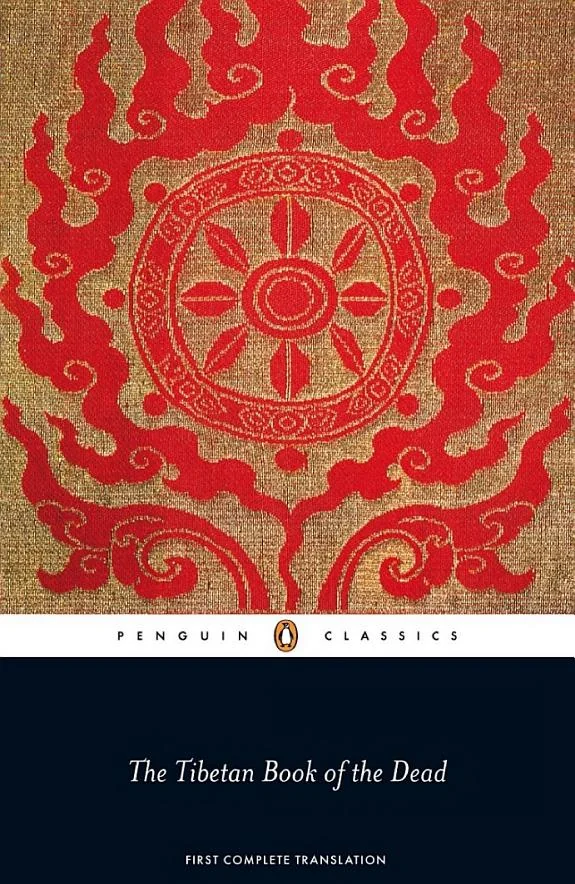
The Tibetan Book of the Dead
 80
80

The Tibetan Book of the Dead
Graham Coleman's translation of The Tibetan Book of the Dead offers a crucial service to Western readers by presenting the *entire* text with remarkable clarity. Previous English versions, notably the influential 1927 Evans-Wentz edition, were often abridged and filtered through a particular interpretive lens, sometimes obscuring the text's raw power. Coleman's edition allows the Bardo Thodol to speak more directly, revealing its intricate structure and potent imagery without significant dilution. The clarity of language is a significant strength, making accessible what can often be a dauntingly complex spiritual and philosophical work. However, the sheer density of the text and its reliance on specific Mahayana Buddhist concepts might still present a barrier for those completely unfamiliar with the tradition. The passages describing the wrathful deities, for instance, are particularly challenging but essential to the text's aim of confronting all manifestations of mind. This edition is a vital resource for anyone seriously engaging with Tibetan Buddhist literature or the profound questions of consciousness and mortality. It stands as a significant scholarly and spiritual contribution.
📝 Description
80
The Bardo Thodol, or Tibetan Book of the Dead, guides consciousness through the intermediate state after death.
This collection of Tibetan Buddhist ritual texts, specifically linked to the Nyingma school, serves as spiritual guidance for the deceased. Its main aim is to help consciousness navigate the bardo, the transitional period between death and rebirth. The text describes potential visions, deities, and experiences encountered in this state. It instructs the reader to recognize these phenomena as projections of their own mind, which can lead to liberation from the cycle of rebirth (samsara).
This work is valuable for students of Tibetan Buddhism, comparative religion, and death studies. It gives insight into Tibetan cosmology, consciousness, and the dying process. Scholars of tantric Buddhist funerary practices will find it particularly useful. Individuals contemplating mortality and the afterlife may also find its perspective on consciousness beyond the physical body offers a different way to think about these questions.
The Bardo Thodol is a 'terma' text, meaning it was traditionally considered to have been concealed by the tantric master Padmasambhava in the 8th century and rediscovered by Karma Lingpa in the 14th century. This practice of hidden teachings is a hallmark of the Nyingma school of Tibetan Buddhism, emphasizing the transmission of esoteric knowledge through cycles of concealment and revelation. Its teachings on the nature of mind and reality are central to Vajrayana Buddhist philosophy.
💡 Why Read This Book?
• Gain direct access to the complete Bardo Thodol text, unlike earlier partial translations, to understand the full scope of Tibetan Buddhist teachings on the death process, as detailed in its sections on the six bardos. • Grasp the concept of liberation through recognition of mind's nature, a core teaching presented through the descriptions of encountering peaceful and wrathful deities in the chosnyi bardo. • Explore the historical reception of this text in the West, beginning with the 1927 Evans-Wentz translation and Carl Jung's commentary, to appreciate its impact on comparative psychology and spirituality.
⭐ Reader Reviews
Honest opinions from readers who have explored this book.
❓ Frequently Asked Questions
What is the historical origin of The Tibetan Book of the Dead?
The Bardo Thodol is traditionally attributed to Padmasambhava, a key figure in 8th-century Tibetan Buddhism, and is considered a 'terma' text, meaning it was believed to have been concealed and later rediscovered, specifically by Karma Lingpa in the 14th century.
Why were earlier English translations incomplete?
Early translations, like the influential one by Walter Yeeling Evans-Wentz published in 1927, were often abridged and interpreted to fit Western philosophical or psychological frameworks, omitting significant portions of the original Tibetan text.
What does 'bardo' mean in the context of the text?
'Bardo' refers to the intermediate state between death and rebirth in Tibetan Buddhism. The text describes different bardos, including the moment of death, the state of experiencing reality, and the process leading to rebirth.
Who is Padmasambhava and what is his connection to the text?
Padmasambhava, also known as Guru Rinpoche, is revered as the 'second Buddha' in Tibet for bringing Buddhism to the country in the 8th century. The Bardo Thodol is traditionally believed to be one of his hidden teachings (terma).
How does the text help the deceased?
The text provides instructions and descriptions to guide the consciousness of the deceased through the intermediate states (bardos), enabling them to recognize visions and experiences as manifestations of their own mind, thus achieving liberation or a favorable rebirth.
What is the significance of the deities described in the text?
The peaceful and wrathful deities encountered in the bardo are not external beings but projections of the deceased's own consciousness. Recognizing them as such, and understanding their empty nature, is key to avoiding negative rebirths and achieving enlightenment.
🔮 Key Themes & Symbolism
The Bardo States
The core concept of the text revolves around the 'bardo,' the intermediate state between death and rebirth. It meticulously details three primary bardos: the chikhai (moment of death), the chosnyi (reality-revealing), and the sidpa (rebirth-producing). Each bardo presents distinct challenges and opportunities for the consciousness. The chosnyi bardo, in particular, is crucial for recognizing the nature of reality and avoiding karmic entanglement that leads to unfavorable rebirths. Understanding these states offers a unique perspective on the transition beyond physical life.
Recognition of Mind's Nature
A central esoteric teaching is that all experiences, particularly those in the bardo, are manifestations of one's own mind. This includes the appearance of wrathful and peaceful deities, which are not external entities but projections. The text instructs the deceased to recognize these apparitions as empty of inherent existence, akin to recognizing a dream for what it is. This understanding is key to liberation, preventing the ego from being overpowered by fear or attachment.
Path to Liberation
The ultimate goal of the Bardo Thodol is to guide the consciousness towards liberation from the cycle of samsara (birth, death, and rebirth). This is achieved not through external rituals alone, but through internal recognition and wisdom. By correctly identifying the nature of the bardo experiences and the deities within them, the deceased can avoid being swept away by karmic forces and instead attain a higher spiritual state or even nirvana.
Symbolism of Deities
The text describes a pantheon of deities, both peaceful and wrathful, that appear to the deceased. These are not to be feared but understood. The wrathful deities, often depicted with terrifying visages, represent the unacknowledged and powerful aspects of the mind. Their appearance is a test; recognizing them as projections of one's own enlightened nature, rather than demonic forces, is the path to transcending them and the cycle of rebirth they symbolize.
💬 Memorable Quotes
Direct passages from the work, attributed to the author.
“Recognize the wrathful deities as manifestations of your own mind.”
— This instruction is key, urging the reader to confront and integrate their own shadow aspects. Instead of fearing terrifying visions in the bardo, one should understand them as projections of untamed mind, holding the key to liberation if recognized correctly.
“The chosnyi bardo is the period when all phenomena appear as the clear light of reality.”
— This highlights the profound nature of the 'reality-revealing' bardo. It's a phase where the true, unadulterated nature of existence can be perceived directly, free from the illusions and obscurations of ordinary consciousness.
“Do not be frightened by the sounds, lights, and colours.”
— A direct admonition to maintain equanimity in the face of overwhelming sensory experiences during the transition. Fear is presented as the primary obstacle to reading through the bardo states successfully towards liberation.
“The moment of death is an opportunity to achieve enlightenment.”
— This transforms the often-feared event of death into a potent spiritual opportunity. The clarity and openness of the dying process, as described in the chikhai bardo, can be harnessed for profound spiritual realization.
💡 Key Ideas
Editorial paraphrase of the work's core concepts — not direct quotes.
All things experienced in the bardo are empty of inherent existence.
This quote expresses the Madhyamaka philosophical view underpinning the text. Understanding the emptiness of all phenomena, including the visions encountered after death, is the ultimate wisdom that frees one from the cycle of rebirth.
🌙 Esoteric Significance
Tradition
This text is firmly rooted in the Vajrayana tradition of Tibetan Buddhism, specifically the Nyingma school, which emphasizes the 'Great Perfection' (Dzogchen) teachings. While distinct from Western esoteric traditions like Hermeticism or Kabbalah, it shares a common goal of achieving liberation through direct knowledge of reality and the mind's true nature. Its tantric elements involve visualization practices and understanding subtle energies, aligning with esoteric methods aimed at transformation.
Symbolism
Key symbols include the 'clear light of reality,' representing primordial consciousness, and the array of peaceful and wrathful deities. These deities are not gods to be worshipped but psychological archetypes and manifestations of consciousness's inherent luminosity and power. The wrathful deities, in particular, symbolize the untamed, powerful aspects of the mind that must be recognized and integrated, not feared, to achieve liberation.
Modern Relevance
Contemporary thinkers and practitioners in fields ranging from consciousness studies to transpersonal psychology continue to draw from the Bardo Thodol. Its detailed descriptions of altered states of consciousness and the process of dissolution have influenced discussions on near-death experiences and the nature of awareness. Modern Buddhist scholars and practitioners also engage with it as a profound guide for meditation, understanding the mind, and preparing for death.
👥 Who Should Read This Book
• Students of Tibetan Buddhism seeking a comprehensive understanding of the path through death and rebirth, as outlined in the complete Bardo Thodol text. • Comparative religion scholars interested in funerary rites, consciousness studies, and the philosophical underpinnings of Eastern spiritual traditions. • Individuals exploring existential questions about mortality, the nature of consciousness, and the potential for spiritual realization beyond physical existence.
📜 Historical Context
The Tibetan Book of the Dead, or Bardo Thodol, emerged from the Nyingma school of Tibetan Buddhism, a tradition that traces its lineage back to the earliest dissemination of Buddhism in Tibet during the 8th century, primarily through figures like Padmasambhava. The text itself is a 'terma,' a rediscovered treasure, traditionally attributed to Padmasambhava and revealed by Karma Lingpa in the 14th century. Its introduction to the West, particularly the 1927 translation by Walter Yeeling Evans-Wentz, coincided with a period of intense Western interest in Eastern religions and esoteric philosophies. Evans-Wentz's edition, which included commentary from Carl Jung, framed the text within a psychoanalytic context, viewing the bardo experiences as symbolic representations of the unconscious. This Western reception, while popularizing the text, also led to its perception as solely a guide for the dying, overshadowing its broader tantric Buddhist significance and its place within a lineage of profound philosophical inquiry distinct from contemporary Western psychology.
📔 Journal Prompts
The appearance of peaceful and wrathful deities in the chosnyi bardo.
The concept of the 'clear light of reality' during the chikhai bardo.
Recognizing phenomena as manifestations of one's own mind.
The role of fear in the sidpa bardo.
The goal of liberation from samsara through bardo realization.
🗂️ Glossary
Bardo
An intermediate state between death and rebirth in Tibetan Buddhism. The text describes several bardos, including the moment of death, the experience of reality, and the state leading to rebirth.
Chikhai Bardo
The first bardo, referring to the moment of death and the experience of the 'clear light,' the fundamental nature of reality, appearing briefly.
Chosnyi Bardo
The second bardo, the 'reality-revealing' state, where visions of peaceful and wrathful deities arise, which are to be recognized as manifestations of one's own mind.
Sidpa Bardo
The third bardo, the 'rebirth-producing' state, where karmic impulses and desires lead to the selection of a new existence.
Terma
A category of texts in Tibetan Buddhism, particularly the Nyingma school, believed to have been hidden by masters like Padmasambhava to be discovered later by 'tertöns' (treasure revealers).
Samsara
The cycle of birth, death, and rebirth, driven by karma and ignorance, from which liberation is sought in Buddhist traditions.
Peaceful and Wrathful Deities
Visions encountered in the chosnyi bardo. They represent aspects of enlightened consciousness and the unacknowledged energies of the mind, to be recognized rather than feared.
This book appears in 1 collection
🔮 Readers Also Liked
Browse all →

![[Catalogue of Frederick Hockley's Book Sale]](/img/thumb/catalogue-of-frederick-hockley-s-book-sale-george-redway.webp)







From the “Tibetan Buddhism” Collection
View all →

More Free Occult Philosophy Books
View all →