Images of Enchantment
 76
76

Images of Enchantment
Sherifa Zuhur's *Images of Enchantment* offers a commendable effort to unify disparate artistic disciplines from the Middle East. Its strength lies in its ambitious scope, successfully linking the visual and performing arts with cinema, a feat rarely attempted with such breadth. The original publication date of 1998 is evident in its focus, though some contemporary theoretical frameworks might offer alternative lenses today. A notable strength is the exploration of how these arts are experienced and practiced abroad, challenging insular definitions of Middle Eastern culture. However, the sheer volume of material covered occasionally leads to a sense of breadth over depth in specific sections. The discussion on the evolution of the belly dance form, for instance, is informative but could benefit from deeper engagement with the socio-political shifts impacting its reception both within and outside the region. Ultimately, *Images of Enchantment* remains a valuable, if somewhat dated, contribution to understanding the interconnectedness of Middle Eastern artistic expression.
📝 Description
76
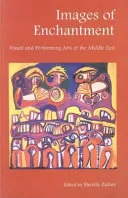
Sherifa Zuhur's 1998 book, Images of Enchantment, examines Middle Eastern artistic expression.
Published in 1998, Images of Enchantment by Sherifa Zuhur investigates artistic expressions originating from the Middle East and their wider global impact. The author deliberately blurs the lines between performance and visual arts, distinguishing between "high" and "low" culture, and questioning strict geographical origins. The book looks not only at traditional art forms but also at how they appear in modern cinema and within diaspora communities. Zuhur's work emerged when academic interest in post-colonial studies was growing, challenging Western-centric art historical accounts. Her approach offered an alternative to older scholarship that often separated Middle Eastern art into distinct categories. The book engages with intellectual discussions about authenticity and the value assigned to various art forms, especially as they are understood and shared internationally.
This book is for scholars of Middle Eastern studies, art historians, ethnomusicologists, and cultural theorists. It also speaks to artists who practice Middle Eastern forms and want a deeper understanding of their context. General readers interested in how art, culture, and identity connect across different places and times will also find it valuable. The core ideas concern the flexible nature of artistic categories, how diaspora influences art, and the critique of rigid boundaries in cultural analysis. Zuhur encourages readers to rethink how dance, music, painting, and cinema are studied and experienced, highlighting their connections and shared cultural roots, irrespective of their perceived origin or form.
While not strictly an esoteric text in the traditional sense, Images of Enchantment engages with themes that resonate within esoteric studies. It questions established categories and boundaries, suggesting that perceived divisions between art forms, cultures, and even "high" and "low" art are constructed. This aligns with esoteric traditions that often look beyond surface appearances to find underlying unity or interconnectedness. The book's focus on how artistic expressions manifest across different geographies and in diaspora communities can be seen as an exploration of how ideas and forms transform and persist, a concept explored in various esoteric philosophies concerning the transmission of knowledge and spiritual currents.
💡 Why Read This Book?
• Understand the interconnectedness of Middle Eastern arts by examining how dance, music, painting, and cinema are presented as unified expressions, a concept central to Zuhur's analysis. • Gain insight into the cultural impact of diaspora communities, as the book details how Middle Eastern artistic forms are experienced and practiced globally, a key focus from its 1998 publication. • Challenge conventional art historical categorizations by exploring how *Images of Enchantment* breaks down distinctions between 'high' and 'low' art and performer versus artist.
⭐ Reader Reviews
Honest opinions from readers who have explored this book.
❓ Frequently Asked Questions
When was Sherifa Zuhur's 'Images of Enchantment' first published?
Sherifa Zuhur's 'Images of Enchantment' was first published in 1998, offering a multidimensional approach to Middle Eastern arts.
What artistic disciplines does 'Images of Enchantment' cover?
The book covers dance, music, painting, and cinema, exploring their practice both within the Middle East and internationally.
Does Sherifa Zuhur's book focus only on traditional Middle Eastern arts?
No, 'Images of Enchantment' also addresses the experience and practice of Middle Eastern arts in cinema and abroad, moving beyond solely traditional forms.
What kind of distinctions does 'Images of Enchantment' aim to break down?
The book challenges artificial distinctions based on form, geography, 'high' vs. 'low' art, and the separation of performer and artist.
Who is the author of 'Images of Enchantment'?
The author of 'Images of Enchantment' is Sherifa Zuhur, who first published the work in 1998.
What is the primary contribution of 'Images of Enchantment' to the study of Middle Eastern arts?
Its primary contribution is a multidimensional approach that integrates various art forms and considers their global reception, as detailed since its 1998 release.
🔮 Key Themes & Symbolism
Artistic Synthesis
This theme examines how dance, music, painting, and cinema from the Middle East are not isolated phenomena but interconnected aspects of a broader cultural expression. Zuhur argues against compartmentalizing these art forms, suggesting that their study is enriched by acknowledging their mutual influence and shared roots. The book posits that understanding one art form benefits from an awareness of the others, fostering a holistic appreciation of artistic creation and reception.
Global Reach and Diaspora
The work critically analyzes the presence and practice of Middle Eastern arts beyond their geographical origin. It explores how these artistic traditions are experienced, adapted, and performed by diaspora communities, as well as their integration into global visual and performing arts scenes. This perspective challenges notions of fixed cultural boundaries and highlights the dynamic evolution of art forms through migration and intercultural exchange.
Deconstructing Art Hierarchies
A central argument in Images of Enchantment is the dismantling of artificial hierarchies that categorize art as 'high' or 'low,' or distinguish strictly between the roles of performer and artist. Zuhur advocates for a more fluid understanding that recognizes the value and complexity inherent in all forms of artistic expression, regardless of their perceived status or origin, a perspective particularly relevant since its 1998 publication.
Challenging Geographical Determinism
This theme critiques the tendency to confine artistic study to strict geographical boundaries. Zuhur emphasizes that the experience and practice of Middle Eastern arts transcend national borders, influenced by global trends and diasporic communities. The book encourages a view of cultural production as a network rather than isolated entities, recognizing the flow and transformation of artistic ideas across continents.
💬 Memorable Quotes
Direct passages from the work, attributed to the author.
“artistic culture… experienced and practiced not only within the Middle East but also abroad”
— This phrase expresses Zuhur's core argument against geographical limitations in art study, emphasizing the global presence and evolution of Middle Eastern artistic forms.
“breaks down the artificial distinctions--of form, geography, 'high' and 'low' art, performer and artist”
— This highlights the book's critical stance against conventional academic and cultural categorizations, advocating for a more integrated and less hierarchical approach to understanding art.
“deals in one volume with dance, music, painting, and cinema”
— This statement points to the ambitious scope of the work, aiming to provide a unified perspective on diverse artistic disciplines within a single text.
“a refreshing new approach to the study of the arts of the Middle East”
— This interpretation suggests that the book offers innovative methodologies and perspectives, moving beyond established or traditional scholarly frameworks for examining Middle Eastern artistic traditions.
“multidimensional book”
— Indicates that the work explores its subject matter from various angles and perspectives, refusing a singular or simplistic interpretation of Middle Eastern artistic culture.
🌙 Esoteric Significance
Tradition
While not overtly subscribing to a singular esoteric lineage, *Images of Enchantment* speaks to traditions that emphasize the interconnectedness of all creative forces and the symbolic power inherent in artistic expression. Its holistic approach to art forms echoes Gnostic or Hermetic ideals of unity and the underlying patterns that connect diverse manifestations of the divine or the human spirit.
Symbolism
The book implicitly engages with the symbolic dimensions of Middle Eastern arts. For instance, the intricate patterns in Islamic geometric art, often discussed in relation to painting, can be seen as symbolic representations of cosmic order or divine unity. Similarly, the rhythmic structures in music and the gestural language of dance can be interpreted as embodying specific spiritual states or narratives, reflecting a deeper, often esoteric, meaning.
Modern Relevance
Contemporary scholars and practitioners in fields like global performance studies, ethnomusicology, and critical art history continue to draw on Zuhur's framework. Her emphasis on breaking down artificial boundaries finds echoes in modern interdisciplinary research and artistic collaborations that seek to understand cultural expressions without rigid categorization, proving valuable for those exploring contemporary global art practices.
👥 Who Should Read This Book
• Students of Middle Eastern cultural studies and art history seeking a comprehensive overview that bridges disciplines. • Performing artists and musicians interested in understanding the broader historical and cultural contexts of their respective art forms. • Cultural theorists and researchers examining the impact of globalization and diaspora on artistic traditions worldwide.
📜 Historical Context
When *Images of Enchantment* was published in 1998, the academic landscape was increasingly grappling with post-colonial theory and the critique of Western-centric cultural narratives. Sherifa Zuhur's work entered this discourse by challenging the traditional, often fragmented, study of Middle Eastern arts. Prior to 1998, scholarship often treated dance, music, and visual arts in isolation, or viewed them through a lens that imposed external aesthetic judgments. Zuhur's integrated approach offered a significant departure, aligning with broader trends in cultural studies that sought to deconstruct hierarchies and explore cross-cultural influences. Her work can be seen as engaging with scholars like Edward Said, whose foundational text *Orientalism* (1978) profoundly impacted how the West perceived the 'Orient,' though Zuhur's focus was specifically on artistic production rather than broader cultural representation. The book's emphasis on the global diffusion and adaptation of these arts also resonated with emerging discussions on globalization and diaspora studies.
📔 Journal Prompts
The integration of dance, music, painting, and cinema within a single volume.
The concept of 'artificial distinctions' in artistic categorization.
The experience and practice of Middle Eastern arts abroad.
Examining the relationship between 'performer' and 'artist' across disciplines.
The role of geography in defining artistic culture.
🗂️ Glossary
Multidimensional Approach
A method of study that examines a subject from various perspectives, integrating different forms, contexts, and influences, as applied to Middle Eastern arts in this book.
Artificial Distinctions
Boundaries or categories imposed by analysis that do not inherently exist in the subject matter, such as separating 'high' art from 'low' art or defining art strictly by geography.
Diaspora
The dispersion of people from their homeland, and the communities formed by these displaced populations, often maintaining cultural traditions abroad.
Form
In art, refers to the specific characteristics of a medium or style, such as the visual structure of a painting or the rhythmic patterns of music.
Performer vs. Artist
A distinction often made between those who execute a work (performer) and those who create or conceive it (artist), a division the book seeks to question.
Middle Eastern Arts
A broad term encompassing the diverse artistic expressions—including dance, music, visual arts, and cinema—originating from or associated with the regions commonly defined as the Middle East.
Cultural Context
The social, historical, and environmental factors that surround and influence the creation and reception of artistic works.
This book appears in 1 collection
🔮 Readers Also Liked
Browse all →








From the “Enchantment” Collection
View all →






More Free Occult Philosophy Books
View all →